




Russia to Optimize Domestic Corporate Fleets
In addition to inefficient use, there are concerns of the government related to the ongoing expansion of automotive fleets of both federal and municipal offices, through the ongoing purchasing of cars.
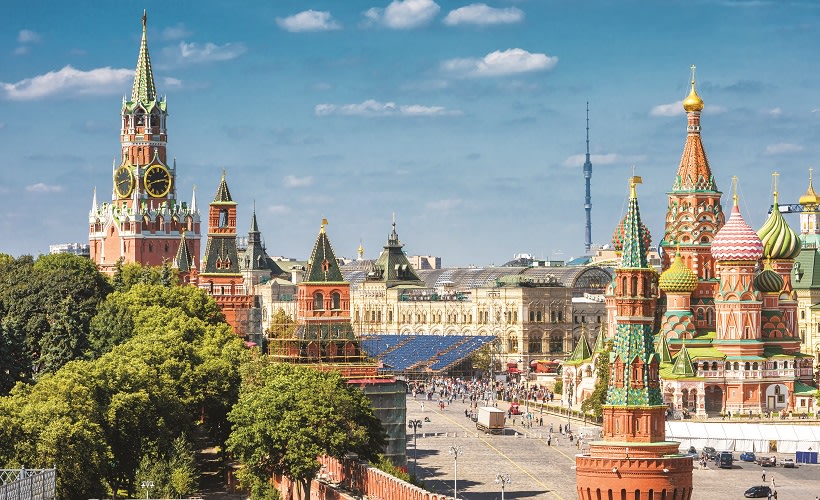
The number of personal cars, used by the officials of the Moscow city government in the last several months has been cut by at least one third (to 120 cars), while all the savings from the implementation of this measure have been re-directed to the social sphere. The amount of such savings amounted to RUB2 billion (US$30 million).
photo: ©istockphoto.com/scaliger
The Russian government is planning to conduct a massive optimization of corporate fleets that will be coupled with changes of the current principles of fleet management, according to recent statements by some of the senior state officials from the Ministry of Industry and Trade and local experts in the field of automotive management.
The government hopes that the implementation of these plans will make fleet management more efficient and cost effective, which is especially important due to the ongoing stagnation in the Russian national economy.
Russia’s Fleet Reform
The reform will also be pushed due to recent criticism of the current scheme of state-owned automotive fleet management, which has been expressed by Russia’s Prime-Minister Dmitry Medvedev.
There are huge volumes of unjustified state expenditures that are allocated for the maintenance and servicing of fleets, used by Russian officials of various levels, according to Medvedev.
In addition to inefficient use, there are concerns of the government related to the ongoing expansion of automotive fleets of both federal and municipal offices, through the ongoing purchasing of cars, mostly from global premium automakers, Medvedev added.
The most complex situation is currently observed in Chechnya and other regions in Southern Russia, according to the state press-service, where the number of new passenger cars purchased for the needs of local officials has significantly increased in recent years and already exceeded all the existing limits of this type of procurement.
In the case of Chechnya, there were some reports by local media about frequent purchases of luxury armored Mercedes vehicles, (along with a Toyota Land Cruiser 200 for their escorts) to local officials, from the funds, allocated to Chechnya by the Russian federal government, including for some social needs.
Meanwhile, an official spokesman of Anton Siluanov, the Minister of Finance of Russia, confirmed that the Russian government is unhappy with the way its federal and municipal authorities are spending on and managing their fleets and will consider solutions to optimize.
Planned Fleet Measures
A package of planned measures is being developed to address this by the Russian Ministry of Information and Communication together with the Ministry of Industry and Trade already by the second quarter of 2019.
One of the measures involves a switch of at least part of corporate fleets, used by Russian officials.
Meaning the cars will no longer be provided to officials on a permanent basis, but, rather, individually for specific purposes.
It is planned, that the scheme will be introduced on the regional level, and later on a federal scale.
To date, the Udmurtia Republic, a region in the Volga area of Russia, became the first region of the country, where a similar scheme was successfully implemented on a pilot basis.
This has been confirmed by local officials. According to Alexander Svinin, the First Deputy Prime Minister of Udmurtia, the experiment was recognized as successful and mostly applied to officials from some economical departments of the Udmurtia government.
He also added savings on state expenditures for the management and servicing of the fleet, used by Udmurtia officials. This experiment amounted to almost RUB 20 million (US$300,000).
In general, according to state plans, planned optimization should lead to a significant reduction of the automotive fleet usage by Russian officials.
For this purpose, excessively used vehicles will be put up for sale through auctions, and revenues that will be generated from their sale will be transferred to the Russian federal budget and the budgets of Russian regions.
The government would ideally like if one car would be able to service at least two officials.
So far, fleets of some Russian regions have already been reduced. For example, according to recent statements of Irina Smirnova, the Minister of Economy of the Moscow Region, the number of personal cars, used by the officials of the Moscow city government in the last several months has been cut by at least one third (to 120 cars), while all the savings from the implementation of this measure have been re-directed to the social sphere. Smirnova has also added the amount of such savings amounted to RUB2 billion (US$30 million).
In addition, a new federal law, which is currently jointly designed by the Russian government and Parliament (State Duma), will ban domestic officials, including members of the Parliament, from the use of passenger cars, priced at RUB 2 million (US$30,500) and higher, for their needs. The new law will also impose a ban on public procurements of such cars from state funds.
The Russian government also has plans to end with the practice of the provision of disposed fleet assets to officials and members of their families, instead of this, providing them for needs of districts hospitals, boarding schools and other social institutions.
Planned optimization will be in the form of replacement of high-priced executive cars, which have been traditionally purchased for Russian officials from premium global automakers, by cheaper cars of domestic origin.
At present, the passenger car fleet of Russian officials is mostly comprised of premium cars, supplied by such leading German automakers BMW, Mercedez-Benz, and Audi, as well as cars of Japanese auto brands (to a lesser extent). However, there is a possibility this replacement plan will be underway shortly. For example, the authorities of the same Udmurtia region have recently announced their plans to purchase several Lada Vesta cars, (which is a flagship sedan, produced by Russian automaker Avtovaz), that will replace the currently used luxury Audi A6, A7, and A8 sedan in its fleet.
Future Purchasing Decisions
Finally, another part of this optimization will also involve unification of Russia’s state-managed fleet, which means purchasing cars of the same brand with the same mileage. That will ensure additional savings on technical maintenance and spare parts for these cars.
In addition, the government plans to introduce some additional mandatory requirements for the cars that will be part of its corporate state fleets, which will include mandatory equipment with GLONASS technology, (a space-based satellite navigation system, which provides an alternative to GPS) as well as installation of certain energy-saving technologies, such as engines of certain eco-classes.
In the case of GLONASS, according to state plans, its installation will help to better assess the efficiency of the use of corporate fleet by domestic officials.
According to Yuriy Karyuchin, a former head of the office of the governor of the Russian Omsk region such practice has already been successfully used in the Omsk region, one of the largest regions in Russian Siberia.
“In regard to the Omsk region, we have developed a special program, which involves optimization of an automotive fleet, used by local officials,” said Karyuchin. “In accordance with it, the use of corporate vehicles without any restrictions is allowed only to the ministers, their first deputies as well as heads of the main directorates and departments. In addition, we have introduced an order system, thanks to which other officials can apply for a car in an electronic form. This helped to minimize the number of trips and increase control for the use of cars by officials.”
More Global Fleet
GeoFencing Adds to Your Truck Security Arsenal
Geofencing is a familiar fleet tool today, but its early adoption marked a major shift in vehicle tracking, route monitoring, and the debate over employee privacy.
Read More →
Holman Takes Full Ownership of ARIZA in Mexico
Holman is bringing its Mexican fleet management operation fully under its own brand after more than 30 years as a joint venture. The change gives multinational fleet customers a single Holman operation across the U.S., Canada, and Mexico.
Read More →
5 Tire Maintenance Tips to Help Prevent Work Truck Downtime
Regular tire checks can do more than extend tread life. These five maintenance practices can help work truck fleets catch problems early, reduce costs, and prevent downtime.
Read More →

Proven Ways to Reduce Work Truck Downtime
The age-old problem of downtime will always be a reality, but with new strategies at hand, fleets have more ways to keep trucks on the road longer.
Read More →


Cameras, Safety and Insurance: From Reactive Claims to Real-Time Prevention (Part 2 of 2)
Part Two: Commercial auto remains one of the most challenging and costly lines of coverage for fleet operators and insurers alike. Continue learning more about how to effectively address these issues from Onur Aksan, Enterprise Business Development Executive, Geotab
Read More →
Cameras, Safety and Insurance: From Reactive Claims to Real-time Prevention
Commercial auto remains one of the most challenging and costly lines of coverage for fleet operators and insurers alike. Learn more about how to effectively address these issues from Onur Aksan, Enterprise Business Development Executive, Geotab.
Read More →
Fleet Costs Are Rising: Here’s How Leaders Are Responding
Fleet leaders are under pressure to reduce costs, adapt to economic uncertainty, and make smarter decisions. See how peers across North America are responding with real data, proven strategies, and forward-looking insights. Download the 2026 Market Pulse Report to benchmark your strategy and uncover where you can gain an edge.
Read More →
Enterprise Fleet Management Surpasses 900,000 Vehicles in U.S. & Canada
Enterprise Mobility connects with mobility solutions around the globe
Read More →