





Miss This? Roush CleanTech Shows Off Ford F-650 at StreetsLA’s Center for Green Innovation
Roush Introduces Propane-Powered F-250/F-350
After the successful launch of the propane-powered F-150, Roush is introducing a liquid-propane conversion for the F-250 and F-350.
April 21, 2009
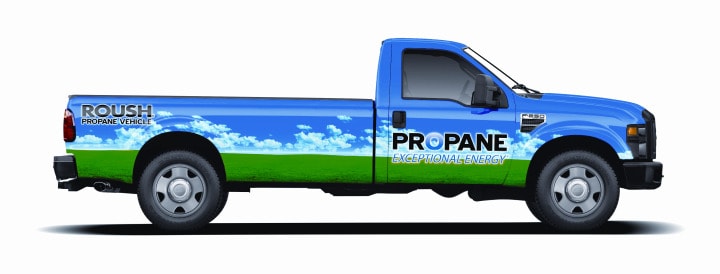
Roush is a specialty-vehicle company that combines race-proven technologies with advanced automotive engineering.
Photo: Roush
2 min to read
DeKalb County, Georgia, is among the early adopters of the Roush F-150 LPI Conversion, with 73 units currently in operation. The county began using liquefied propane gas (LPG) F-150s in 1996.
Roush is a specialty-vehicle company that combines race-proven technologies with advanced automotive engineering. The company developed a propane fuel system for the F-150 5.4L V-8. According to the company, propane works as well as gasoline, has very little impact on the environment, saves money, is reliable, safe, and domestically produced, among other benefits.
"Our first Roush units started arriving in May of 2008," said Kristie Swink, director of communications, DeKalb County. The fleet currently runs 129 LPG units in its approximately 3,500-unit fleet.
DeKalb selected the Roush Propane-Powered F-150 in a search for "a clean and convenient alternative fuel," said Swink. "We tried CNG, but the volume of area needed to store the gas was too large. We tried an electric Ford Ranger pickup, but it did not meet our dependability requirements."
DeKalb chose LPG because of availability, storage density, price, and adaptability to units in the county's fleet.
"We have experienced fuel cost savings, especially as the price of gasoline increased in the summer," said Swink.
The propane-powered F-150 improved DeKalb's gas mileage over gasoline-powered counterparts by 1.25 mpg (11.5 mpg average for LPG-powered units).
Infrastructure is the biggest challenge of the new technology.
"When we purchased the first units in '96, we installed five LPG refilling sites - simple 1,000 gallon tanks, a pump, and dispenser," said Swink. "There was a time when we had about 200 active units and were filling some tanks three times a week. Since that time, we have added another tank to each of the three busy sites."
Introducing Propane-Powered F-250/F-350
Roush recently announced the availability of the Roush Liquid Propane Injection (LPI) Conversion for 2009-2010 Ford F-250 and F-350 equipped with the 5.4L V-8 engine. Orders are being taken now. The new F-250/F-350 version is expected to hit showroom floors in August.
According to the company, the F-250 or F-350 equipped with Roush LPI technology experiences no loss in horsepower, torque, or towing capacity, compared to previous propane conversions. Older technology relied on vapor injection. The Roush system, which leaves propane in the liquid state until injection, is 30% more powerful than the older technology.
The F-250/F-350 LPI Conversion helps fleets trim operating costs and reduce vehicle emissions. According to Roush, compared to gasoline, propane reduces harmful emissions by significant amounts:
18% less greenhouse gases.
20% less nitrous oxide.
60% less carbon monoxide.
Fewer particulate emissions.
Topics:Ford F-150ROUSHFord F-350Ford F-250Propane AutogasPropane ConversionDieselAlternative FuelsGlobal Fleet
Originally posted on Work Truck Online
Subscribe to Our Newsletter
More Global Fleet

GeoFencing Adds to Your Truck Security Arsenal
Geofencing is a familiar fleet tool today, but its early adoption marked a major shift in vehicle tracking, route monitoring, and the debate over employee privacy.
Read More →
Holman Takes Full Ownership of ARIZA in Mexico
Holman is bringing its Mexican fleet management operation fully under its own brand after more than 30 years as a joint venture. The change gives multinational fleet customers a single Holman operation across the U.S., Canada, and Mexico.
Read More →
5 Tire Maintenance Tips to Help Prevent Work Truck Downtime
Regular tire checks can do more than extend tread life. These five maintenance practices can help work truck fleets catch problems early, reduce costs, and prevent downtime.
Read More →

Proven Ways to Reduce Work Truck Downtime
The age-old problem of downtime will always be a reality, but with new strategies at hand, fleets have more ways to keep trucks on the road longer.
Read More →


Cameras, Safety and Insurance: From Reactive Claims to Real-Time Prevention (Part 2 of 2)
Part Two: Commercial auto remains one of the most challenging and costly lines of coverage for fleet operators and insurers alike. Continue learning more about how to effectively address these issues from Onur Aksan, Enterprise Business Development Executive, Geotab
Read More →
Cameras, Safety and Insurance: From Reactive Claims to Real-time Prevention
Commercial auto remains one of the most challenging and costly lines of coverage for fleet operators and insurers alike. Learn more about how to effectively address these issues from Onur Aksan, Enterprise Business Development Executive, Geotab.
Read More →
Fleet Costs Are Rising: Here’s How Leaders Are Responding
Fleet leaders are under pressure to reduce costs, adapt to economic uncertainty, and make smarter decisions. See how peers across North America are responding with real data, proven strategies, and forward-looking insights. Download the 2026 Market Pulse Report to benchmark your strategy and uncover where you can gain an edge.
Read More →
Enterprise Fleet Management Surpasses 900,000 Vehicles in U.S. & Canada
Enterprise Mobility connects with mobility solutions around the globe
Read More →