




Peter Goldwasser is the executive director at Together for Safer Roads (TSR). As a global NGO, the organization brings together purpose-driven companies, government, and community stakeholders who actively work together to create safer roads.
Road Safety, Privacy Should Not Be Adversaries: Examining Illinois Biometric Information Privacy Act
While the Illinois Biometric Information Privacy Act is designed to safeguard individual privacy, the legislation has inadvertently also created an environment of increasing legal challenges against companies providing pivotal, third-party road safety technology.
by Peter Goldwasser, Together for Safer Roads
January 9, 2024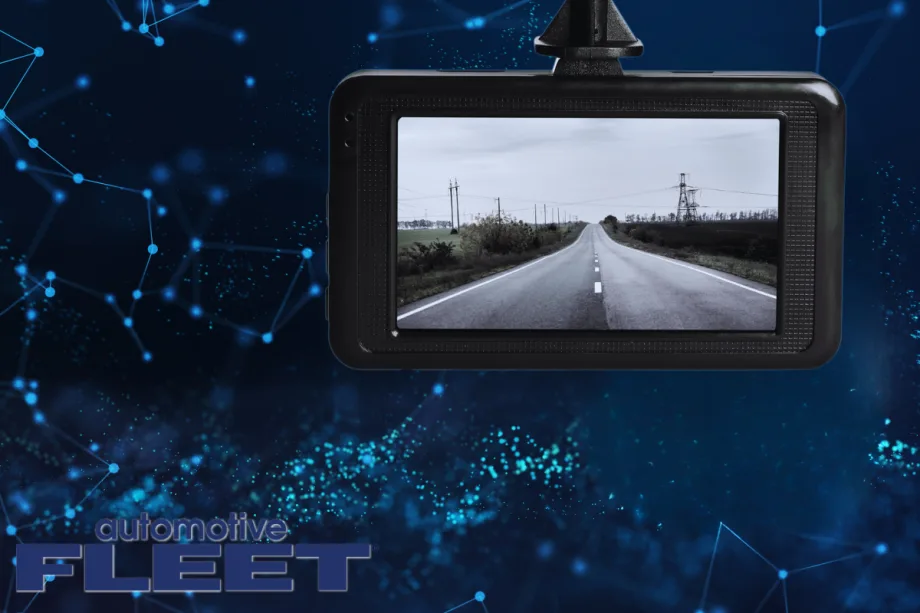
In-cab cameras are equipped to capture pivotal moments to help us better understand why crashes and/or near misses happen.
Photo: Automotive Fleet
3 min to read
In our continued pursuit of safer roads and protecting lives, we are confronted with a critical question: How can we best find the balance between embracing effective innovations in road safety technology, while giving ample consideration to the very real and important privacy concerns that these same technologies often raise for commercial drivers?
As the executive director of Together for Safer Roads (TSR), a non-profit organization committed to leveraging private-sector technology, data, and expertise to prevent traffic crashes globally, I find myself at the center of this issue, working to foster safety in fleet trucking through cross-sector partnerships.
This is most evident as we look to integrate the life-saving potential of in-cab camera technology into fleets and are confronted with a variety of obstacles, often exacerbated by the implications of certain privacy laws.
What is the Biometric Information Privacy Act?
At the heart of this complex landscape lies an instructive example: the Biometric Information Privacy Act (BIPA) in Illinois.
Designed with the intent of safeguarding individual privacy, this legislation has inadvertently also created an environment where we are seeing an ever-increasing number of legal challenges against companies providing pivotal, third-party road safety technology.
The purview of BIPA extends to encompass biometric data, a category that includes facial characteristics captured by in-cab cameras. While practical in intent, this has sowed seeds of doubt and mistrust, hampering the very adoption of technology that is helping to advance road safety in new and important ways.
Role of In-Cab Cameras
The intersection of BIPA and in-cab cameras therefore underscores a unique challenge in the execution and balance of privacy, road safety, and the larger complex ecosystem of relevant stakeholders.
In-cab cameras, aptly termed the “unbiased witnesses” of our modern roads, are equipped to capture pivotal moments to help us better understand why crashes and/or near misses happen.
By capturing and analyzing driver behavior and contextual external factors, fleet managers are provided with a wealth of critical data points and potential insights, information which can be used to subsequently create effective and personalized coaching strategies; an approach with a ripple effect on the entire safe road ecosystem, including enhanced driver performance and fewer crashes, injuries, and fatalities as well as potential reductions in insurance costs.
Road safety and privacy should not and need not be adversaries; they can coexist through innovation and nuanced legislation. Whether you are a commercial driver on the road each and every day, a legislator crafting privacy-related laws, or one of the millions of other stakeholders utilizing our nation’s highways, this issue ultimately affects us all.
Laws like BIPA, when applied in commercial driving situations, can lead to outcomes that are unworkable and ultimately frustrate the ability of professional drivers to have access to proven, safety technologies such as in-cab cameras.
In-cab cameras mean safer drivers, which means safer roads. The challenge for us all is to help create and inform privacy safeguards that in application do not remove these valuable tools from the road.
Subscribe to Our Newsletter
More Safety

Sponsored•October 1, 2026
Fleet Manager’s Ultimate Playbook: Navigating the New Standard in OEM Connectivity
Rising operating costs, driver safety concerns, and unplanned downtime are putting unprecedented pressure on modern fleets. Discover how fleet managers use embedded OEM connectivity and real-time vehicle data to cut TCO, prevent downtime, and protect drivers without aftermarket telematics hardware.
Read More →
From Driver Well-Being to EV Charging | AF News Recap
Mental health belongs in the fleet safety conversation. This week, we’re looking at five ways fleets can support employee well-being before a crisis, plus Holman’s expansion in Mexico, new one-day Fleet Forward passes, and why EV charging demand is outpacing infrastructure growth.
Read More →
Nexar-Nauto Merger Aims to Give Fleets Better Safety Intelligence Through Larger Driving Dataset
Stefan Heck tells Automotive Fleet that combining more than 10 billion miles of driving history with Nexar's AI models will give fleets deeper insights into driver risk and roadway conditions than either company could provide independently.
Read More →
Don't Wait for a Crisis: 5 Ways to Build Mental Health Into Your Fleet Safety Program
For Suicide Prevention Month, fleet and safety leaders have an opportunity to put mental health where it belongs: at the center of workplace safety.
Read More →
How Camera Data Can Strengthen a Fleet’s Insurance Renewal
Insights from a commercial insurance carrier and a broker show how fleets can turn video telematic data, driver coaching, and improved claims results into a stronger case at insurance renewal.
Read More →
The Safest Fleets Aren’t the Ones with the Most Technology
You’ve made the telematics investment. Here’s how to capture the other half of its value and build the safest fleet on the road.
Read More →
Sponsored•August 7, 2026
Hidden in Plain Sight: Fleet Compliance Risks
Fleet compliance isn't just about having policies — it's about consistently enforcing them. This practical guide reveals six hidden compliance risks common in public sector and shared fleet operations and outlines proven strategies to improve visibility, accountability, and audit readiness
Read More →
NETS Sets 2026 Fleet Safety Benchmark Conference for Indianapolis
The Sept. 15–17 program will feature fleet benchmarking data, case studies, emerging technologies, and implementation strategies while running alongside the NSC Safety Congress & Expo.
Read More →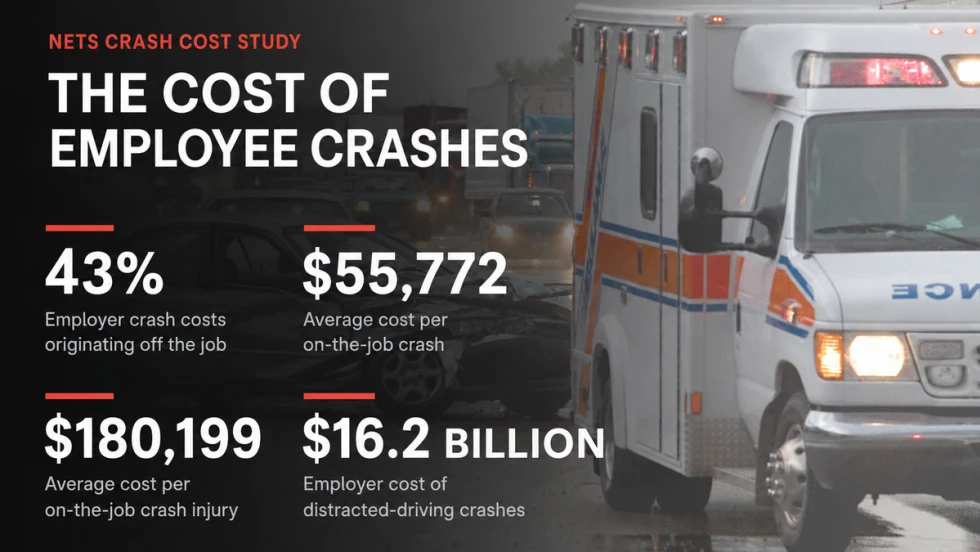
Off-the-Job Crashes Account for 43% of Employers’ $61.7 Billion Crash Burden
NETS quantifies costs dispersed across fleet, risk, HR, and other departments while providing new per-crash benchmarks for employers.
Read More →
Ram Recalls More Than 1.27 Million 1500 Pickups for Seat Belt Anchor Issue
The recall affects certain 2019-2026 Ram 1500 pickups that may have improperly attached second-row seat belt buckle anchors.
Read More →