Automotive Fleet
MenuMENU
SearchSEARCH

Rethinking Fleet Safety Changing the Traditional 'Safety' Mindset

Author and speaker Brian Fielkow talks about safety systems in the industry and improvements that could be made.

Christian Lopez
Christian LopezFormer Assistant Editor
October 25, 2023
Rethinking Fleet Safety Changing the Traditional 'Safety' Mindset

“If I see a sign on the wall that says ‘safety is our priority,’ I always say tear it down. Because safety isn't a priority,” Fielkow says. “It's a core value. And there's a big difference.”

Photo: Canva

4 min to read


While safety must always be a key pillar of fleet management, sometimes commonly held beliefs need to be reexamined to drive a safer fleet.  

For three decades, Brian Fielkow served as an executive with Recycle America Alliance (a division of Waste Management), The GTI Group, Jetco Delivery, and now Acrisure. key focus in these positions has always centered around safety.

Ad Loading...

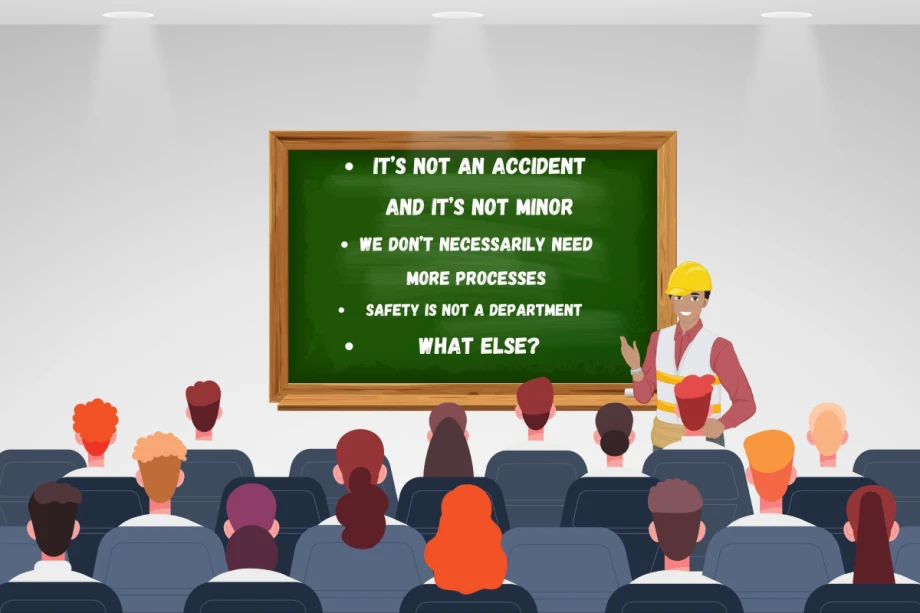
In a recent State of the Fleet Industry video episode, Fielkow discussed these traditional mindsets and a new way to attack them. Fielkow picked seven to discuss:

  • Safety is not a priority

  • It's not an accident and it’s not minor

  • Move from a blame culture to a just culture

  • We don’t necessarily need more processes

  • Safety is not a department

  • We’re drowning in data

  • Compliance doesn’t mean safe

Safety as a Core Value

Fielkow argues that the concept of safety should not be a priority, but a core value.

“Priorities shift, we could come to the office today with a list of things to do, then there’s a problem somewhere else and our list can get rearranged…they compete with each other all the time, that’s part of being in business. Values, on the other hand, are immutable. Nothing can or should compete with core values,” said Fielkow.

Accidents Aren’t Minor

This safety line of thinking then plays into looking at accidents.

Ad Loading...

Fielkow explains that the term ‘accident’ is a poor descriptor because it fails to acknowledge how preventable the crash or incident was, and the fact that labeling it an accident leads to the mindset that it is an isolated incident, leaving the company addressing the symptoms but never the source.

Leaving Blame Culture

Addressing mistakes or faults is a tricky position for leadership, as the wrongdoing must be acknowledged, but in an appropriate way. Fielkow argues that the current blame culture has too many negative connotations and might be too harsh when he says that “most safety failures are honest mistakes.”

“If you have a blame culture, you are kind of punishing everybody whenever there’s a safety failure. All you’re doing is destroying trust with your frontline employees. It’s hard to get people engaged, and safety is all about engagement, about doing the right thing when nobody’s looking,” said Brian Fielkow.

Safety culture in a company is something that is fostered. Fielkow says that instead of following the more critical, traditional method of what he calls “blame culture,” when something there’s a safety failure, and instead uses “coaching culture.”

Safety is a Way of Life

Nurturing a proper safety culture has the added benefit of bringing in the frontline employees into the process and extending safety problems to not just one department.

Ad Loading...

“If there’s a safety problem, you know, it’s sort of punted to the safety department. So then operations kind of washes their hands,” Fielkow said. “There has to be an understanding that safety is a way of life, everybody is responsible for it from the C-suit throughout.”

Keep Data Actionable

Fielkow acknowledges that in the modern day, there has been a massive influx of good data that can increase safety and operations. Similar to priorities and core values, the problem comes from how to implement or act on it.

“The key with data is this, you have to keep it actionable. If you have 100 data points, you’re not gonna really deal with any of them. What are the three, for, or five that are the most important to you? That’s the key.”

Safety Handbooks and Literacy

Fielkow also points to the fact that more than half of U.S. adults have poor literacy skills, according to the Organization for Economic Cooperation and Development (OECD). In contrast, safety handbooks are written for a much higher reading level.

“Having this big, thick handbook that nobody reads doesn’t get you there,” said Fielkow. “Actionable processes, simple checklists that we do every single time without failure, accountability when we take shortcuts or ignore processes…So let’s figure out how to make processes that work and then let’s enforce those processes in compliance without fail.”

He further points out that not acting on data can harm a fleet company, due to how easy it is for most lawyers to get their hands on the same data. Failing to act on data merely postpones or worst-case scenario, can be used against a company, while on the other hand, acting on too much data ends up stilling action. Finding the balance is key.

Compliance is Just the Beginning

It is using this system of nurturing that Fielkow argues that adding more safety regulations is not the solution.

Ad Loading...

“Compliance is important, but regulations spell the bare minimum…[Safety] is about managing your own behavior, and that’s something that the regulations can never cover. That’s where safety culture and leadership come into the equation.”

Fielkow also mentions how important safety data is, not only at the executive level but for the frontline employees and the development process. Essentially turning safety into more than just one aspect or department of the company.

The author and speaker plans on going further in-depth on these themes as the keynote speaker at the 2023 Fleet Safety Conference in Santa Clara on Nov. 8.


Subscribe to Our Newsletter

More Safety

Chris Brown sits across from safety experft at Lifesaver mobile in an interview about distracted driving and phone use tech.
Safetyby Chris BrownMay 1, 2026

Reducing Risk by Eliminating Phone Use Behind the Wheel

Distracted driving remains one of the most persistent risks in fleet operations. New approaches focus on removing mobile device use entirely while adding real-time safety support.

Read More →
Safetyby Jeanny RoaApril 15, 2026

Distracted Driving in the Age of Smart Tech – Part 2

As distraction risks evolve, fleets are turning to smarter, more connected technologies to better understand what’s happening behind the wheel. Part 2 explores how these tools are helping identify risky behaviors and improve visibility across operations.

Read More →
Safetyby Jeanny RoaApril 11, 2026

 Data Rights, Risks, and Responsibilities After a Crash

What fleets capture to improve safety can also expose them in litigation, forcing leaders to rethink how data is managed, stored, and shared.

Read More →
Ad Loading...
Driver holding a phone while steering, illustrating distracted driving and the importance of mental awareness and attention on the road for fleet safety.
Safetyby Judie NuskeyApril 10, 2026

From Distraction to Detection: Strengthening Awareness in Fleet Drivers

Distracted driving is often measured by what we can see—phones in hand, eyes off the road. But what about the distractions we can’t? A recent incident raises a bigger question about awareness, attention, and why subtle risks so often go unnoticed.

Read More →
Safetyby StaffApril 8, 2026

Lytx 2026 Road Safety Report

While serious crashes are declining, a rise in minor incidents and ongoing risk hotspots underscore the need for continued fleet safety investment.

Read More →
Driver’s hands on steering wheel in a sunlit vehicle, representing real-world driver behavior and the shift from data monitoring to hands-on training in fleet safety programs.
Safetyby Judie NuskeyApril 7, 2026

Behind-the-Wheel vs. Classroom Training: What Actually Changes Driver Behavior?

Fleets have more driver data than ever, so why isn't behavior changing? Training requires more than reports and coaching — it requires real-world practice.

Read More →
Ad Loading...
A person in a car on their phone behind the steering wheel.
Safetyby Jeanny RoaApril 1, 2026

Distracted Driving in the Age of Smart Tech – Part 1

A two-part conversation with Stefan Heck on how AI is transforming the fight against distracted driving. As fleets adopt smarter tools, the focus shifts from reacting to preventing risk. In Part 1, we look at where AI is making an impact for fleets today.

Read More →
Pedestrians crossing a busy street, highlighting the importance of driver awareness and caution to prevent pedestrian accidents.
Safetyby StaffMarch 30, 2026

Pedestrian Safety Starts With the Driver

More people on foot means more risk for drivers. These pedestrian safety tips can help prevent serious injuries and keep everyone safer on the road.

Read More →
SponsoredMarch 30, 2026

Safety by Design: Power and Protection in the Freightliner 114SD Plus

Safer crews. Fewer incidents. Better uptime. Learn how driver-assist technology is changing the way vocational fleets operate.

Read More →
Ad Loading...
Safetyby StaffMarch 26, 2026

Pedestrian Deaths Drop in First Half of 2025, Marking Largest Decline in Years

An 11% drop in pedestrian fatalities in early 2025 signals progress in U.S. road safety, but elevated death rates and ongoing risks underscore the need for continued action from fleets and policymakers.

Read More →