




Report from the Editor
The people served by AUTOMOTIVE FLEET are a constant source of amazement to me.
The people served by AUTOMOTIVE FLEET are a constant source of amazement to me. This always seems apparent after an industry convention, but, like most people, I sometimes forget what a remarkable industry this is, and how interesting the people are. Since I have just completed the circuit of annual meetings, shows, conventions and conferences, I am again reminded of how interesting it is to be associated with fleet people and to take part in their activities. One of the most interesting meetings for me was the roundtable discussion of the government and utility fleet administrators at the recent NAFA Conference. From talking to these knowledgeable men, I have to marvel at the complexities of their special area of fleet administration and at the handicaps with which they must contend. Such problems as departmental allocations; difficulty in the job of determination when it comes to eligibility for a government car; the red tape confronting a government fleet manager in budget request, car requisitions, budget allowances for car operation-insurance-maintenance; the problem of depreciation and its effect on operational costs of the fleet department; the problems of "proper channels" in a situation requiring a quick decision; the problem of a set pattern based on years in service, or on total miles, before replacement will be considered; the difficult job they face when replacement falls at a disadvantageous period in the used car market; the problem of operating under fixed policies formulated by politicians, perhaps long out of office, who were totally ignorant of fleet management and operation when policy was set; the problem of trying to change established policy when this frequently takes years, and often is impossible.Certainly these problems are unique from state to state, and municipality to municipality. One might think that a company fleet, while having some of these problems, must certainly have a greater degree of uniformity in operational procedure which would reduce fleet administration down to a formula that could serve all company fleets. In talking to many administrators of company fleets, I was again reminded that every fleet is faced with the same problems but in varying degrees. A major problem to a government fleet, may have been solved in a company fleet which is struggling with a problem that the government fleet considers minor. To the uninitiated, it would seem that eliminating problems in fleet administration is simply a matter of experience coupled with the opportunity to discuss these problems with other fleet men to learn their approach to a solution.
During the NAFA Conference the major problems were discussed in the sessions. It might appear that a consolidation of the knowledge which was freely exchanged during the Conference, coupled with fleet operational experience, should produce a formula which would standardize fleet administration. The exchange of ideas and experience, it is true, is one of the most important educational sources for a fleet man. But there can be no set operational pattern for fleet administration. Every fleet has major problem areas that are the same, or similar to the problem areas of every other fleet. One truth again stood out as I talked to these men; solutions to these problems cannot be categorized into a simple formula because the solutions are different for each fleet, even though the problems are the same.
Fleet administration is, therefore, an individual science for each fleet operation. This complex and challenging occupation demands a knowledge of cost accounting, tax accounting, salesmanship, purchasing procedures, transportation, traffic control, law, personnel administration, executive ability, marketing, mechanics, maintenance, automotive products, economics, business, administration, etc., etc., etc. In short, by nature of his occupation a fleet administrator must be a multi-talented executive.
More Operations

A buyer's guide to fleet management software in 2027
Buying fleet management software in 2027 means looking beyond features and price. As fleet operations, technology and expectations evolve, this guide explores what today’s fleet professionals should consider when choosing a system that can deliver value now and adapt to what comes next.
Read More →
What Will Shape the Next Era of Fleet Management?
EVs, AI, and autonomous vehicles are reshaping fleet management. Discover what’s ahead—and how fleet leaders can prepare for the next era.
Read More →
How Fleets Can Recruit and Train Veterans for Technician Roles
Here's how the technician shortage has affected uptime for fleets, and what to do about it.
Read More →

Avis Budget Group Deploys Neology Toll Management Technology Across Major Brands
Neology’s neoFleet platform will manage toll transactions and toll-authority operations for vehicles across Avis, Budget, Payless, Budget Truck and Zipcar.
Read More →
Fleet Personal-Use Charges Edge Higher in 2026
Nearly eight in 10 surveyed fleets allow personal use of company vehicles, while just over half of respondents report charging employees for the privilege.
Read More →
The Future of Fleet + What’s Changing Right Now | AF News Recap
Could developments overseas offer a preview of what’s coming for U.S. fleets? This week, we’re looking at the future of AI, autonomy, and electrification, plus Ford Pro’s new certified pre-owned program, smarter vehicle offboarding, and a new way for fleets to manage toll expenses.
Read More →
How to Handle Vehicle Offboarding
What do fleet managers need to do when a driver leaves?
Read More →
Fleet Manager’s Ultimate Playbook: Navigating the New Standard in OEM Connectivity
Rising operating costs, driver safety concerns, and unplanned downtime are putting unprecedented pressure on modern fleets. Discover how fleet managers use embedded OEM connectivity and real-time vehicle data to cut TCO, prevent downtime, and protect drivers without aftermarket telematics hardware.
Read More →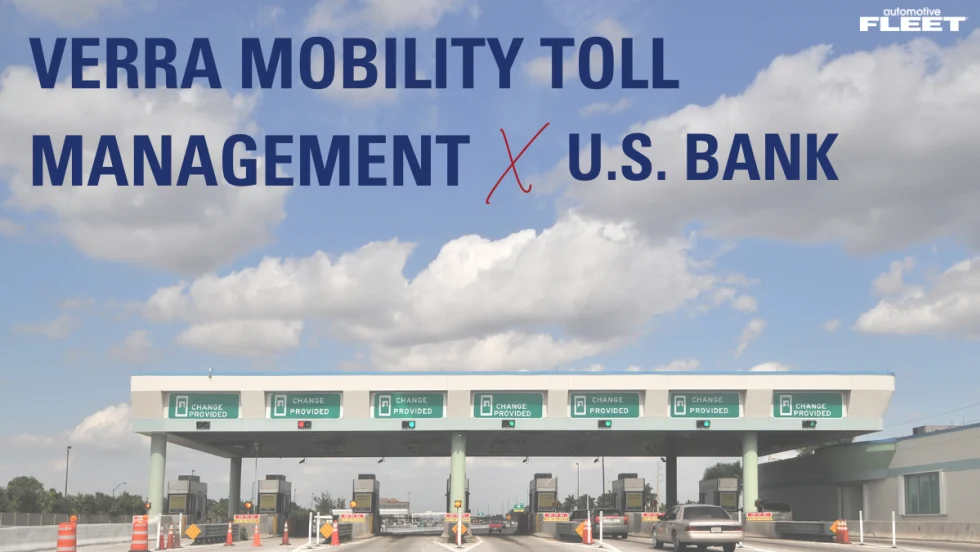
U.S. Bank Adds Verra Mobility Toll Management to Voyager Fleet Platform
The integration allows U.S. Bank Voyager fleet customers to manage toll payments and violations alongside fuel, EV charging and maintenance expenses.
Read More →
ADAS Prevents Crashes. But Repairs Cost More | AF News Recap
ADAS-equipped vehicles may crash less often, but they can cost more when they do. This week, we’re breaking down what that tradeoff means for fleets, plus Subaru’s first Forester Wilderness Hybrid, Nissan’s new e-POWER Rogue, and why Calstart has become Catalyst Mobility.
Read More →