




Renting Cars for the Ride-Hailing Revolution
HyreCar wants to rent your fleet to Uber and Lyft drivers.

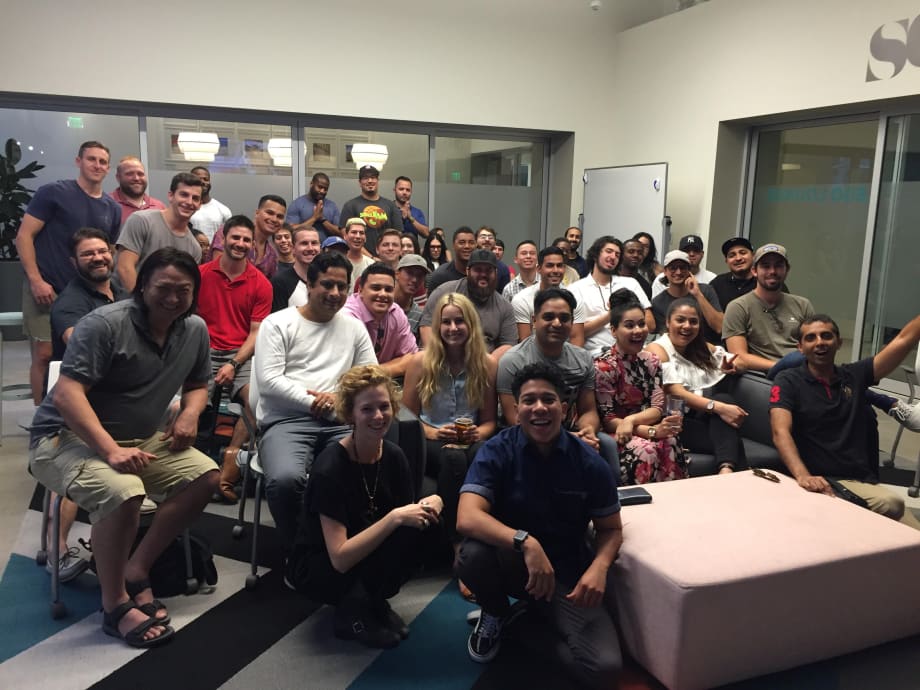
The Los Angeles HyreCar team poses in its Los Angeles headquarters. Photo courtesy of HyreCar

Co-Founder Marciano Kim (third from right) and the HyreCar management team run the service out of its headquarters in Los Angeles. Photo courtesy of HyreCar.
The explosion of any new industry throughout time has been accompanied by a host of ancillary businesses that spring up to support them: think space exploration and solar panels or the Gold Rush and Levi’s jeans.
The booming “gig economy” — independent workers on flexible, short-term assignments — is no different. A sizable percentage of potential Uber and Lyft drivers (36% in one study) don’t own a car or don’t have access to one that meets the companies’ requirements. As a result, services such as HyreCar are springing up to provide wheels on a rental basis.
HyreCar offers a peer-to-peer marketplace in which private parties can rent out personal vehicles to drivers for ride-hailing services — think “Airbnb for cars.” In addition to personal vehicles, the service is also testing rental car fleets on its platform. Los Angeles-based MCar has partnered with HyreCar for a pilot program.
“We understand the marketplace created by ride-sharing and the new business model of renting cars to those drivers,” said Gene Brown, vice president of sales and marketing for MCar. “We are looking forward to exploring this potential with HyreCar.”
For car rental companies, the value proposition in partnering with HyreCar is to reach new local markets using excess inventory without the traditional business expansion investments such as labor, real estate, or marketing.
“We provide opportunities for smaller [rental] companies that don’t have the advertising budgets and economies of scale to put more cars on the road,” said HyreCar Co-Founder Marciano Kim, who claims the service’s overall utilization rate for available cars is greater than 90%.
Launched in December of last year in San Francisco, HyreCar is now operating in 20 states.
How it Works
To work with HyreCar, car rental companies are not beholden to a contract or a minimum number of vehicles to rent on the platform. The rental contract is written by HyreCar and signed electronically before picking up the car. The driver picks up the vehicle from the car rental company’s physical location.
There is no mileage cap; Kim said Uber drivers average about 150 miles a day. HyreCar vehicles are rented for an average of 14 days.
Regarding security, all drivers are subjected to a background check. HyreCar covers the vehicle with its own liability and physical damage policy, minus a $1,000 deductible.
Once owners are up and running on the system, the entire process is handled electronically through the HyreCar app, from vehicle booking to pick-up and returns to damage reporting. However, live support is available almost 24 hours a day for drivers and vehicle owners.
At this point, the rental company uploads vehicles manually into the HyreCar system, though Kim said the pilot programs will help to improve process details.
To better understand the service, “Test it by listing your car,” Kim said. The HyreCar team will help operators with the onboarding process, account creation, listings, and strategies for pricing. Kim has hired a point person to specifically liaise with rental companies.
Regarding pricing, Kim said car rental companies will see a favorable profit margin. “We’re not targeting casual drivers,” Kim said. “Drivers view our service as a tool to earn income, so they place a higher premium on it.”
Referencing the recent shuttering of peer-to-peer rental company FlightCar and Breeze, a startup that leased cars to Uber and Lyft drivers, Kim believes HyreCar is built to avoid the landmines in the tech startup world. “We’re not inventory-centric; we’re a platform, a technology service,” he said. “We don’t have that capital infrastructure. We can scale at any pace we like.”
Kim is also aware of competitors’ programs. “While we were the pioneers, we now see other players along with ride-sharing companies themselves trying to do something similar,” he said. “This is strong evidence of the scale of opportunity within the car rental space.”
Originally posted on Auto Rental News
More Articles
2027 Toyota Camry Offers Hybrid Powertrain Across Five Grades
The 2027 Toyota Camry is a carryover with new pricing.
Read More →
Chevrolet Updates 2027 Trax and Trailblazer with More Standard Safety Features
Chevrolet is updating two of its smallest SUVs with added driver-assistance technology, redesigned interiors, and revised trim options. The changes could add more safety equipment as standard for commercial fleets, while a new Trailblazer configuration adds another all-wheel-drive option.
Read More →
What’s Next for Fleet? Safety, AI & Industry Recognition | AF News Recap
Could your company's culture be encouraging distracted driving? This week, we're exploring how workplace expectations affect driver safety, what AI, EVs, and autonomous vehicles could mean for the future of fleet management, and how fleet professionals can strengthen their award nominations.
Read More →

A buyer's guide to fleet management software in 2027
Buying fleet management software in 2027 means looking beyond features and price. As fleet operations, technology and expectations evolve, this guide explores what today’s fleet professionals should consider when choosing a system that can deliver value now and adapt to what comes next.
Read More →
Does Your Fleet's Culture Encourage Distracted Driving?
What happens when the people responsible for enforcing safety rules are the ones setting the wrong example? The answer may reveal why some of the biggest risks to fleet drivers have little to do with what's written in the employee handbook.
Read More →
What Will Shape the Next Era of Fleet Management?
EVs, AI, and autonomous vehicles are reshaping fleet management. Discover what’s ahead—and how fleet leaders can prepare for the next era.
Read More →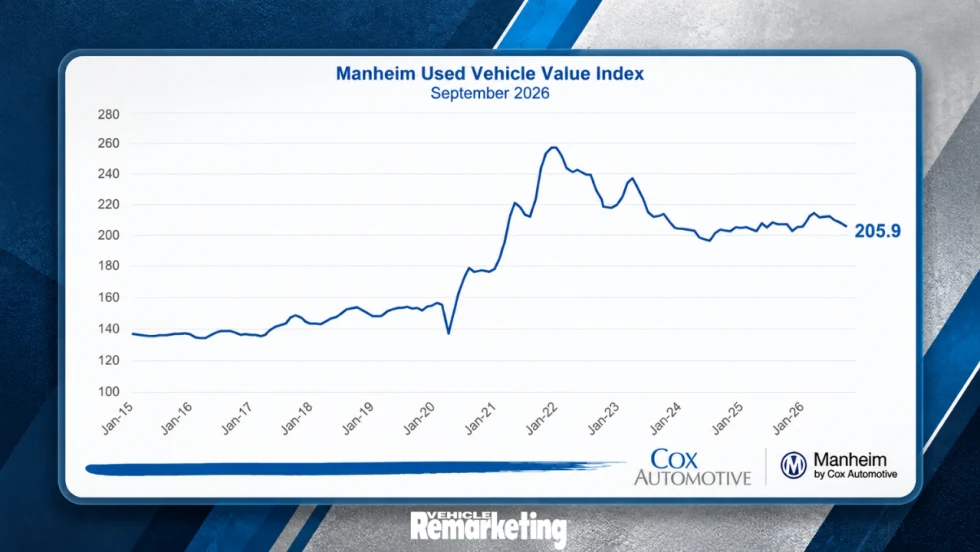
Wholesale Used-Vehicle Values Fall as Cox Automotive Cuts 2026 Forecast
Wholesale used-vehicle prices declined in September as depreciation accelerated, prompting Cox Automotive to lower its year-end forecast.
Read More →
FLD Promotes Three Executives in Leadership Changes
FLD has promoted three longtime executives, naming Gary Mott CEO, Richard Mallek president, and Ron Sanders managing partner.
Read More →
How Fleets Can Recruit and Train Veterans for Technician Roles
Here's how the technician shortage has affected uptime for fleets, and what to do about it.
Read More →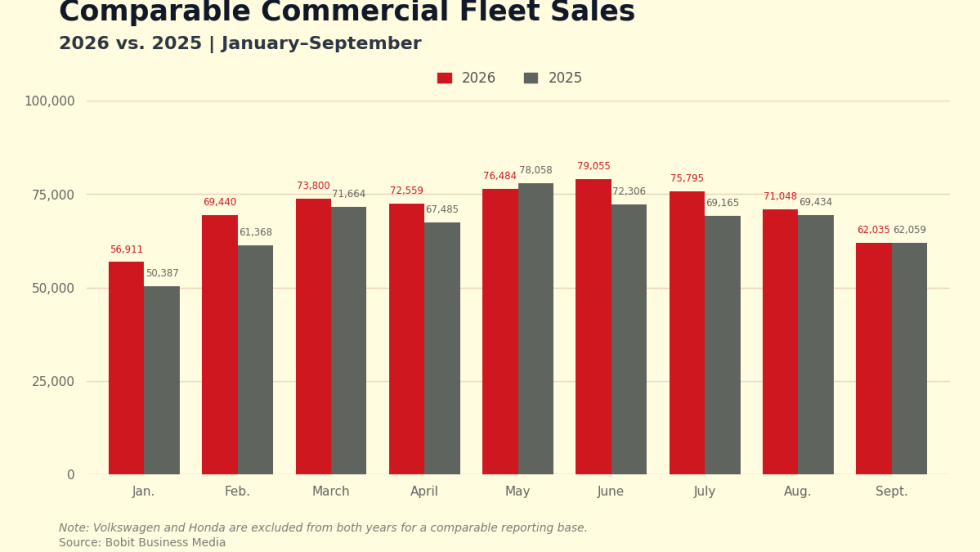
Commercial Fleet Sales Rise 5.8% Through September 2026
September commercial fleet sales were essentially unchanged from a year earlier, slowing year-to-date growth while keeping volume ahead of 2025.
Read More →