




Remarketing Comes of Age Online
Automotive remarketing was born in 1938. Since then, it has evolved with the times.


First came the fax machine in the 1980s. Not long after, remarketing moved from the analog to the digital age.

First came the fax machine in the 1980s. Not long after, remarketing moved from the analog to the digital age.
It was an inauspicious, but significant beginning to an industry. Inspired by a cattle auction he attended in Columbia, S.C., J.M. “Martin” Rawls held the first automotive auction in 1938 in the lobby of a two-story theatre building in downtown Leesville, S.C.
The rest, as they say, is history. Automotive remarketing was born and has changed with the times from a decentralized, regional business to a highly technological, professional, national profession.
Taking Off
After Rawls held this first successful auction of 12 to 15 cars, other local auctions sprang up in South Carolina. By 1940, on the eve of the U.S.’ entry into World War II, an estimated 10,000 vehicles had been sold at auction.
But, while this was a good start, it wasn’t until after the war with the scramble for short-in-supply passenger vehicles that remarketing would really take off.
Frank Grochal, retired vice president/used vehicle sales for ARI, recalled that fleet remarketing, as we know it, was a byproduct of the emerging rental market. “Several auto dealerships started rental companies after World War II by supplying new cars and trucks to commercial companies. Ford Motor Company approached my company’s owner, Steward Holman, about opening a rental agency associated with his dealership — Rice and Holman Ford in Merchantville, N.J. He did so, and in 1948 ARI, then known as Automotive Rentals, Inc., was born and we started supplying cars, trucks, and equipment to our customers,” he said.
When the vehicles ended their rental or leasing period, ARI needed a way to resell them.
Vehicles were switched out by “tow-bar” drivers who would transport the new automobiles and trucks to customers across the country from Detroit, Kansas City, Chicago, Atlanta, or places in between. The company drivers had the first option of buying the vehicles or offering them to family members, friends, or associates. If no deal was closed, the tow-bar driver would pick up the older vehicles and offer them to dealers along the route back to the home office, with a $10 bonus paid to them if a sale was made.
“Developing a way to sell used cars and trucks in areas away from the home office was paramount and the challenge,” Grochal said. “Our tow-bar drivers were the ones we initially had develop relationships with new- and used-car and truck dealers that were able to sell the used iron.”
This one-on-one approach was necessary because the auctions were still in their infancy, according to Grochal who joined ARI out of high school in 1953. “ARI got in on the ground floor under the leadership of James Deasy, Arno Neuber, Harry Barr, Harry Smith, and then me working with the auctions,” Grochal said. “Condition reports were a very important document for us and the customers to have along with proper titles and a good rapport with those we were dealing with. Trust was a big factor in the beginning and a good amount of business was done with just a handshake.”
Auctions began ramping up their volume during this period. In 1950, an estimated 100,000 vehicles were sold at auction with 5 percent of these sold by lease companies.
The Auctioning 1960s
By 1960, auction volume had increased threefold to 350,000 units per year. Bill Cieslak of PHH Arval noted that, in the 1960s, there was a trend to separate remarketing from the vehicle acquisition/dealer function. Remarketing networks designed to support the industry began to be formed during this time, as did the development of courtesy delivery functions.
When remarketing became a separate function for fleet management companies (FMCs) during this period, there was a rise in other channels outside of the dealers to sell vehicles.
“It was selling either to an independent remarketing dealer, selling through an auction, or selling it to the customer,” Cieslak said. “The period of the 1960s and 1970s was when the whole fleet vehicle remarketing became a defined, independent function within the organization. It was visible outside the FMC to the customer, as well as to the individual dealers and franchise dealers.”
What characterized the auctions during this period was decentralized data that led to niche markets. “There was a tremendous amount of aggregated data and market data that I only knew,” Cieslak said. “Back then, I could identify a niche market and enjoy the lift from them for months.”
In the 1970s, according to Bob Graham, VP of remarketing for ARI, FMCs typically dealt directly with auction owners, who handled vehicle pricing and selling for their fleet management clients. Benchmarking also began to be used to justify why a particular auction was being used.
There were other challenges during this period, including the lack of titles, odometer information, and consistency in general. Fraud was not uncommon, and it took federal legislation such as the Truth in Mileage Act (TIMA) to combat this widespread fraud.
Passed in 1986, TIMA required sellers to provide actual, truthful odometer readings and disclose any known inaccuracies. Unfortunately, odometer tampering was very prevalent in the 1960s-1970s, especially with out-of-service fleet vehicles. TIMA made odometer fraud a felony. Failure to disclose that an odometer had been changed or repaired (altered in any way) and/or falsifying mileage documentation would result in fines and/or imprisonment. If mileage was unknown, the vehicle would be labeled true miles unknown (TMU). In addition, the shift to digital odometers sought to curtail “clocking,” but succeeded only temporarily. Ultimately, harsh prison sentences were the best deterrent.
One consequence of the legislation was that it was the beginning of the professional conditions that are remarketing’s hallmark today.
“Through those periods, a lot of that legislation, helped bring a structure that the industry really needed, but didn’t have at that point. And, that helped identify the good guys from the bad guys and even the good guys from the mediocre guys. And, that’s when the value of a quality seller could be quantified,” Cieslak said.
[PAGEBREAK]
Dawn of the Computer Age
If there is one event that did the most to change remarketing, it was the advancement of technology.
First came the fax machine in the 1980s, which helped speed communication. This expedited the auction process, according to Gary Mott, VP of FLD. “We saw the opportunity to keep our clients informed, educated, and to improve transaction continuity by giving them the ability to communicate with us more effectively with a more rapid response. To expedite the process, we sent key accounts fax machines for a calculated savings of about two weeks. Thirty years ago, saving two weeks would be the equivalent of about 60 days in today’s terms,” he said.
For Graham, the creation of AutoIMS was a watershed moment in remarketing, moving from the analog to the digital age.
“When AutoIMS came into existence, it allowed all consignors, particularly FMCs, to electronically send that consignment to an auction and electronically get back all the information that we need (pick-up dates, condition reports, etc.),” he said.
Mott also noted that digital imaging of documents was a big breakthrough during the late 1990s, spearheaded by LeasePlan USA. “The technology of being able to scan those documents really helped companies improve their bottom line, not only from a human resource standpoint, but also having those documents available on demand,” he said.
Graham agreed with Mott. “With AutoIMS came the biggest single piece in my mind: digital photos. Before that, auctions would take Polaroids and staple it to a paper condition report and send it in the mail. From our side as an FMC, there really was no good mechanism to show those photos to our clients. With AutoIMS, along with the electronic condition reports also came pictures, and pictures changed everything for us and for our clients. The picture supported the condition report. Once you had digital photos, the advances in selling vehicles online were possible,” he said.
In 1990, two years after ServNet was formed, auction volume reached 7 million units. By the late 1990s, volume had more than doubled to 16 million units. As auction volume was ramping up into the millions of units sold, the auction industry discovered the power of the Internet.
And, it’s probably not a stretch to say that this may have been one of the biggest single developments in remarketing history, and not just because of the technology involved, according to Joe Miller, director of customer service for AutoIMS.
“Even though we were a joint venture of the auctions, what occurred to us very quickly was that AutoIMS was going to be a consignor-driven system. The consignors got word of it and started using it and figured out very quickly that it was much easier to do business with all of their auction partners,” he said. Along with this ease of use has been an ongoing move toward data integration and improvements in the online technology, Miller added.
The FMCs, too, embraced computer technology with ARI among the early pioneers, remarketing its vehicles online in 2001. With the prevalence of data has come new challenges, Cieslak noted that — for good or ill — the niche markets of the 1970s don’t exist as much today.
The Internet will continue to play a key role with the emergence of more mobile applications, more intelligence around pricing, and a deeper understanding of data analytics, according to Miller of AutoIMS. Mott predicted that cross-platform selling will be a hot topic for the next two or so years.
More Remarketing

Ford Pro Launches Certified Pre-Owned Program for Commercial Vehicles
Ford Pro Advantage will offer certified pre-owned Class 1-7 commercial vehicles through more than 700 Ford Pro Commercial Vehicle Centers.
Read More →
Copart to Acquire ACV in $1.9 Billion Deal
The acquisition would expand Copart beyond its traditional salvage business into dealer-to-dealer wholesale remarketing while adding ACV’s vehicle data, inspection, and valuation technology.
Read More →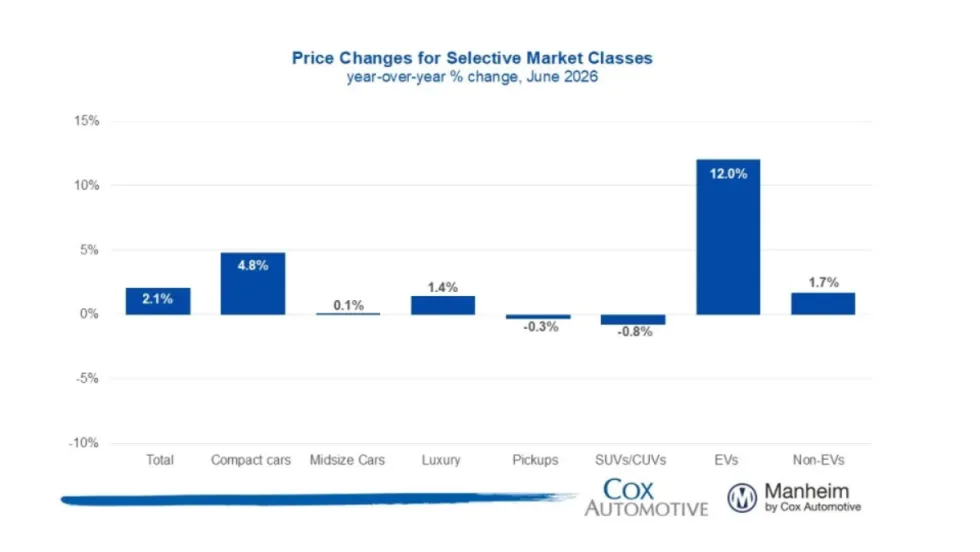
Manheim Index Shows Used-Vehicle Wholesale Prices Up 2.1% in June
The market is seeing stronger appreciation in older used vehicles this year, and the most affordable segments have been among the year’s best performers.
Read More →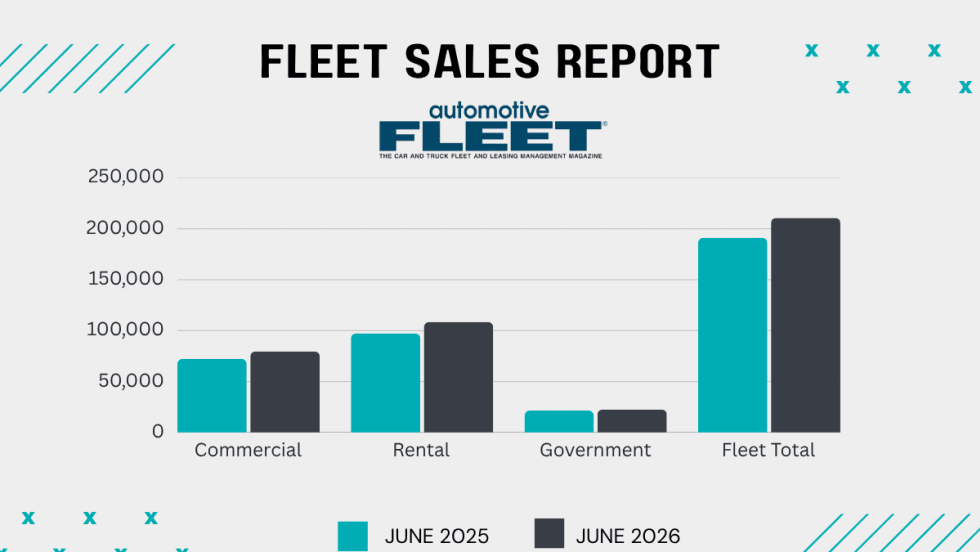
Commercial Fleet Sales Contribute To June, YTD Gains
The fleet sector has boosted its vehicle purchases at a reliable pace in the first half of this year compared with 1H 2025.
Read More →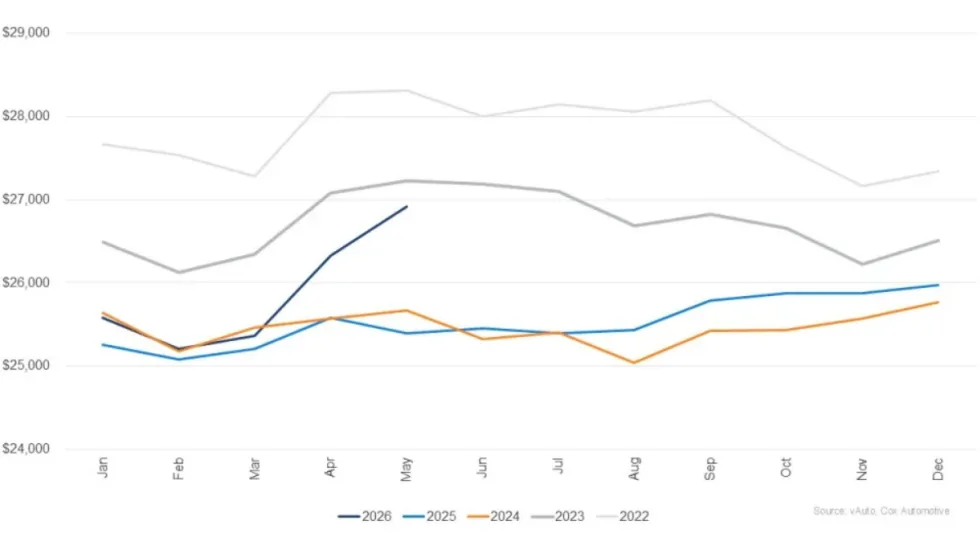
Used Vehicle Prices Climb Higher As Sales Pace Slows
The higher prices at used retail reflect strong wholesale values earlier in the spring, particularly for older, more affordable vehicles.
Read More →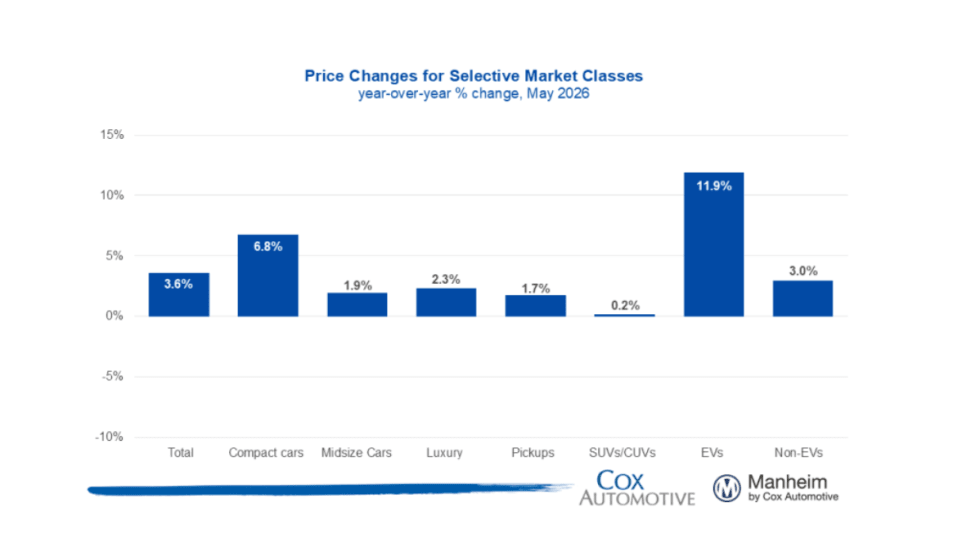
Wholesale Used Vehicle Market Sustains Moderate Rise In Values, Prices
Trends continue to normalize after a strong start to the year, as consumers contend with higher gas prices in the coming summer months.
Read More →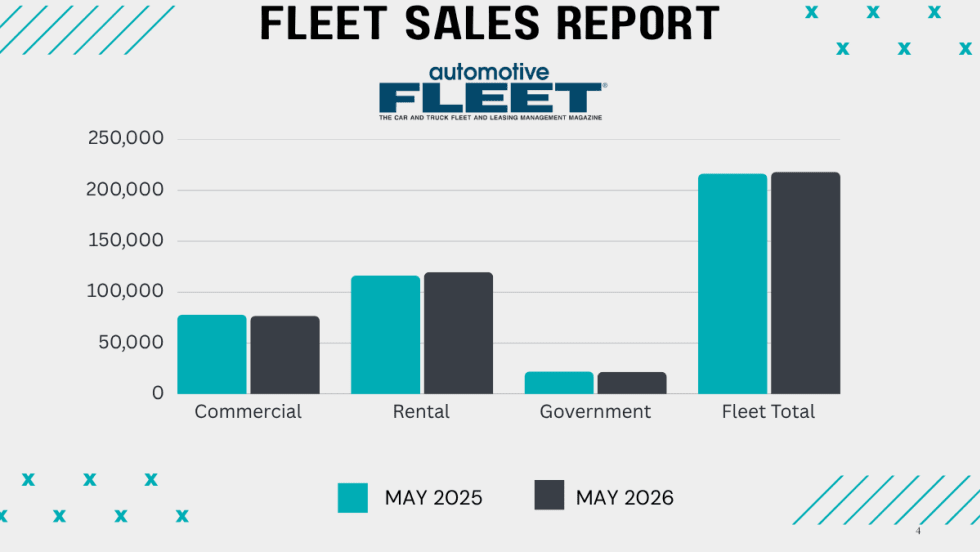
Commercial Fleet Sales Still Lead Sectors Despite May Mini Dip
The U.S. economy's continued growth and positive business investment are creating a favorable environment for fleet vehicle demand.
Read More →
How Connected Vehicle Data Is Lifting Fleet Resale Values
A vehicle health score could improve the value of fleet vehicles at remarketing. The path to a universal standard is forming, and fleets that understand the process early will be better positioned when it arrives.
Read More →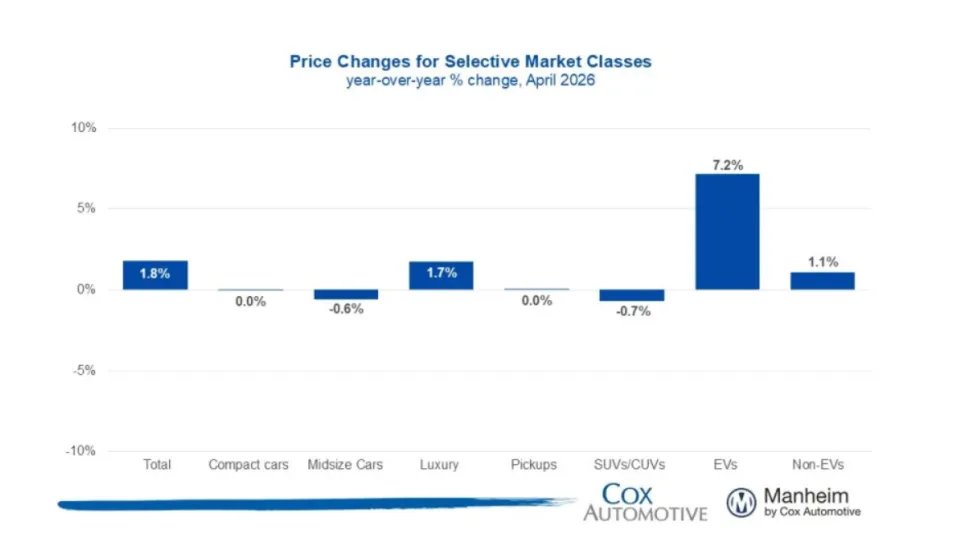
Wholesale Used Vehicle Prices Slightly Up In April
The Iranian conflict and rising gas prices inject much uncertainty into the future wholesale used vehicle markets, as higher gas prices soak up spendable income from vehicle buyers.
Read More →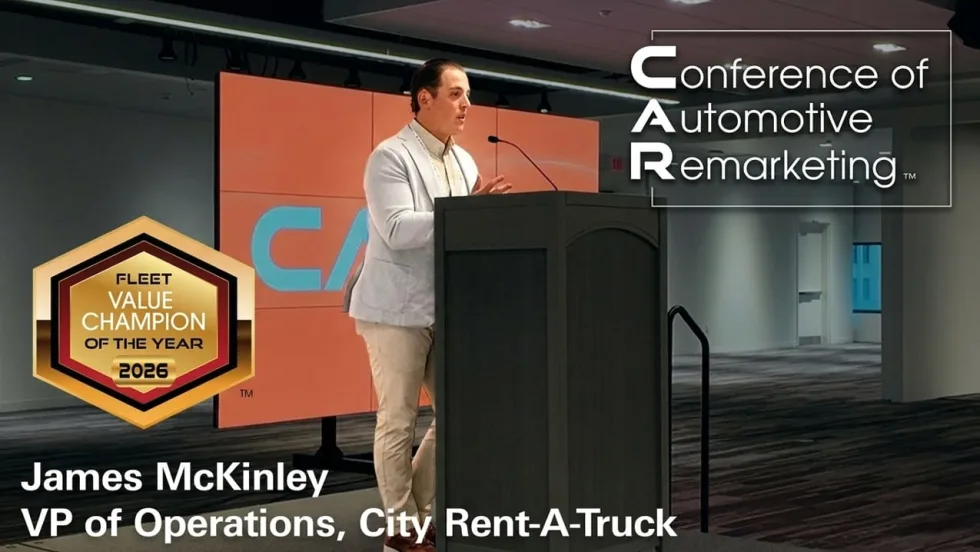
CAR2026: James McKinley Wins Value Champion of the Year
James McKinley of City Rent a Truck was named the inaugural Fleet Value Champion at the CAR Conference for his data-driven approach to fleet lifecycle management and vehicle remarketing.
Read More →