




Related: Half a Million Vehicles Go Missing in First Six Months of 2022
Reducing the Risk of Roadway Crimes of Opportunity
Carjackings and staged crashes are on the rise, according to the National Insurance Crime Bureau. An expert offers guidance on ways fleet drivers can safeguard against being a victim of one of these crimes.
by Judie Nuskey
June 20, 2023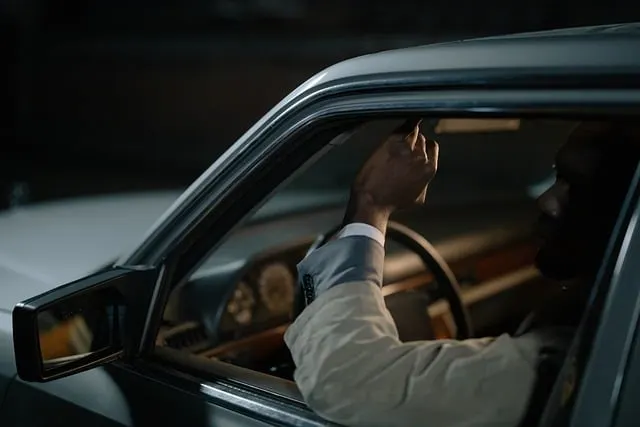
There are several steps drivers can take to reduce their risk of a carjacking or staged crash.
Photo: pixabay.com/roro93380
5 min to read
Technology is making it tougher to steal locked, unoccupied vehicles, so thieves often turn to carjacking or fake police stops to steal occupied vehicles. Staged crashes are another method that criminals use to profit financially. Now is the time to guide your fleet drivers to recognize the signs and know how to respond safely.
How Carjacking Happens
According to the National Insurance Crime Bureau, many large cities —including New York, Philadelphia, Chicago, Washington, DC, and New Orleans — have experienced triple-digit increases in carjackings in recent years. Unlike auto theft, a carjacking involves a violent confrontation with an offender or the perceived threat of violence that could cause death or serious bodily injury.
Carjackings can happen anywhere. Moreover, carjacking is called a crime of opportunity because thieves target vehicles and situations that give them the best chance to succeed. There are several common approaches:
The Bump: A driver bumps you from behind or backs into you. When you get out, the driver distracts you in conversation. Meanwhile, an accomplice (riding along with him/her) gets into your vehicle and drives away.
The Block: Two criminals driving separate vehicles block you in — one in front, the other behind. One of them approaches you for your vehicle while you are blocked in.
The Walk-Up: A criminal waits for you to return to your parked vehicle, hiding under it or nearby. Once you open the door, he/she approaches you with force. Sometimes they’ll leave cash on your windshield to distract you, making it easier to take you by surprise.
The Ruse: Another driver flashes the headlights, beeps the horn, or waves to get your attention, and indicates something is wrong with your vehicle. When you pull over, the other driver does, too, and approaches you for your vehicle.
Criminals also may pose as police to gain access to your vehicle or to cause you harm. It’s easy for thieves to obtain a fake badge and add a flashing light to their vehicle. Police imposters tend to target drivers who are traveling alone, at night, and in less populated areas.
Reducing the Risks
These best practices can make drivers less likely to be targeted by a carjacker or police imposter.
Know the danger zones. Anywhere you stop or slow down is a prime opportunity for carjacking, for example, intersections with light or stop signs, parking garages, parking lots, gas stations, ATMs, driveways, and highway exit and entrance ramps. Stay vigilant in these areas.
Lock your doors. Never leave your vehicle unlocked, even briefly and even in your driveway or another familiar place.
Close your windows. From a personal safety perspective, it’s better to keep windows closed and use the air conditioning or open the vents.
Stay focused. Be cautious when approaching or exiting your vehicle. Instead of looking at your phone, scan your surroundings. Have your keys in hand so you’re not searching for them.
Have an escape. An escape option is as important for personal safety as it is for avoiding a crash. Leave room between your vehicle and the one in front of it, so you can move out of harm’s way. Avoid situations where a vehicle is directly next to you on both sides.
Be on guard. Don’t assume that fender-benders are unintentional. Stay in the vehicle with your windows up, turn on your flashers, and drive to a safe place to pull over. Once stopped, stay in the vehicle and call the police. The same holds true if you suspect a police imposter is pulling you over. An unmarked car or lack of uniform is typically a red flag. While slowing with your flashers on, call 911 to see if the dispatcher can confirm the stop is legitimate. Only open the window enough to slide your license and registration through.
Park with caution. Well-lit garages and lots, and those with an attendant, tend to be safest. Avoid parking in a remote area or near large objects a criminal could hide behind.
Never resist. Your safety is more important than any personal possession. If approached with force, don’t resist or argue. It’s usually best to give up your keys and flee the scene. If you’re in the vehicle, try to exit on the passenger side, so you’re further from the thief and can escape faster.
How Staged Crashes Work
Sometimes a low-speed crash is the work of a person looking to make money through a false insurance claim or lawsuit. Even if your company pays for damages, a minor crash still impacts you — taking you out of the territory, tying up time dealing with repairs and claims, creating inconvenience, and potentially causing injury.
It’s helpful to recognize the most common types of staged collisions:
Swoop and Squat: Two vehicles work together, both driving in front of you. The first abruptly stops in front of or cuts off the second, causing that driver to slam on the brakes. They’re counting on you to be following too close to avoid rear-ending them.
Drive Down: If you’re trying to merge into traffic but don’t have the right of way, and another driver waves you on, proceed with caution. Criminals will indicate you should proceed, then drive right into you and later deny they ever waved you on.
Start and Stop: At an intersection with a light or stop sign, the criminal begins to proceed and then slams on the brakes, causing you to strike him from behind.
To reduce the risk, always keep at least one escape route open so you have room to leave the scene if you’re suspicious. Maintain a safe following distance, so that if the motorist in front of you stops abruptly, you’re less likely to cause a rear-end collision. At least three seconds of distance is best on dry roads and six seconds in the rain. Don’t automatically trust another driver who tells you it’s safe to proceed. It’s better to be patient and allow the other motorist to go first.
Judie Nuskey is the director of Operations at Advanced Driver Training Services and assists corporations in creating custom driver training programs to lower (or keep low) their crash rates.
Subscribe to Our Newsletter
More Safety
IIHS Crash Avoidance Tests Reveal Safety Gaps in Cargo Vans and Work Trucks
New crash-avoidance ratings from the Insurance Institute for Highway Safety reveal inconsistent performance among commercial vehicles, with several popular cargo vans and heavy-duty pickups struggling to avoid collisions with other vehicles and pedestrians.
Read More →
What’s Next for Fleet? Safety, AI & Industry Recognition | AF News Recap
Could your company's culture be encouraging distracted driving? This week, we're exploring how workplace expectations affect driver safety, what AI, EVs, and autonomous vehicles could mean for the future of fleet management, and how fleet professionals can strengthen their award nominations.
Read More →
Does Your Fleet's Culture Encourage Distracted Driving?
What happens when the people responsible for enforcing safety rules are the ones setting the wrong example? The answer may reveal why some of the biggest risks to fleet drivers have little to do with what's written in the employee handbook.
Read More →
Sponsored•October 1, 2026
Fleet Manager’s Ultimate Playbook: Navigating the New Standard in OEM Connectivity
Rising operating costs, driver safety concerns, and unplanned downtime are putting unprecedented pressure on modern fleets. Discover how fleet managers use embedded OEM connectivity and real-time vehicle data to cut TCO, prevent downtime, and protect drivers without aftermarket telematics hardware.
Read More →
From Driver Well-Being to EV Charging | AF News Recap
Mental health belongs in the fleet safety conversation. This week, we’re looking at five ways fleets can support employee well-being before a crisis, plus Holman’s expansion in Mexico, new one-day Fleet Forward passes, and why EV charging demand is outpacing infrastructure growth.
Read More →
Nexar-Nauto Merger Aims to Give Fleets Better Safety Intelligence Through Larger Driving Dataset
Stefan Heck tells Automotive Fleet that combining more than 10 billion miles of driving history with Nexar's AI models will give fleets deeper insights into driver risk and roadway conditions than either company could provide independently.
Read More →
Don't Wait for a Crisis: 5 Ways to Build Mental Health Into Your Fleet Safety Program
For Suicide Prevention Month, fleet and safety leaders have an opportunity to put mental health where it belongs: at the center of workplace safety.
Read More →
How Camera Data Can Strengthen a Fleet’s Insurance Renewal
Insights from a commercial insurance carrier and a broker show how fleets can turn video telematic data, driver coaching, and improved claims results into a stronger case at insurance renewal.
Read More →
The Safest Fleets Aren’t the Ones with the Most Technology
You’ve made the telematics investment. Here’s how to capture the other half of its value and build the safest fleet on the road.
Read More →
Sponsored•August 7, 2026
Hidden in Plain Sight: Fleet Compliance Risks
Fleet compliance isn't just about having policies — it's about consistently enforcing them. This practical guide reveals six hidden compliance risks common in public sector and shared fleet operations and outlines proven strategies to improve visibility, accountability, and audit readiness
Read More →