




Proposed 2025 CAFE Standards to be the Catalyst for the Hybridization of Fleets
The 2025 CAFE rules will have a dramatic impact on the types of future vehicles in fleet operations. Currently, no OEM can meet the 2025 CAFE standard of 54.5 mpg, which will double the average EPA-rated fuel economy for all OEMs selling vehicles in the U.S. in less than two decades. Today, only a handful of models get 39 mpg or more. To achieve this standard, the government plans to incentivize the use of advanced technologies, such as hybrid powertrains and vehicle electrification.

On July 27, President Barack Obama proposed that the corporate average fuel economy (CAFE) standards for cars and light trucks increase to 54.5 mpg by 2025, the biggest increase since the federal government started regulating fuel economy in the 1970s. Eleven OEM executives, including those from GM, Ford, and Chrysler, joined the President Obama in Washington, D.C., to make the announcement and voice support for the proposal.
The auto industry will be given time to adapt to the proposed 2025 standard. Under the supplemental notice of intent, passenger cars are required to increase fuel economy from 2017-2021 by 4.1-percent annually, while light-duty trucks are required to have 2.9-percent annual improvements.
In addition, under a joint ruling, the EPA and NHTSA plan to propose a coordinated federal greenhouse gas (GHG) emissions standard and fuel economy standard. The EPA currently intends to propose standards to achieve an average CO2 emission of 163 grams per mile in model-year 2025 for each OEM, which would be the equivalent, on a mpg-equivalent basis, to 54.5 mpg if all of the CO2 emissions reductions were achieved solely with fuel economy technology. The EPA and NHTSA are expected to issue a notice of proposed rulemaking for the coordinated national program for model-years 2017-2025 by Sept. 28, 2011 and a final rule by July 31, 2012.
High Hurdle for OEMs
Currently, no OEM in the world can meet the 2025 CAFE standards. In essence, the federal government is seeking to more than double the average EPA-rated fuel economy for all OEMs selling vehicles in the U.S. in less than two decades. Only seven models currently available for sale get 39 mpg or more.
To achieve this proposed fuel economy standard, the federal government is considering incentivizing automakers to expand the use of advanced automotive technologies, including electric vehicles (EVs), plug-in hybrid-electric vehicles (PHEV), fuel-cell vehicles (FCV), and hybrid-electric large pickups. Both the EPA and NHTSA expect automakers' use of advanced technologies to be an important element of transforming the vehicle fleet.
To encourage automakers to incorporate these advanced automotive technologies in their future product offerings, the EPA intends to propose an incentive multiplier for all EVs, PHEVs, and FCVs sold in model-years 2017-2021. This multiplier approach means that each EV, PHEV, and FCV would count as more than one vehicle in the manufacturer's compliance calculation. The EPA intends to propose that EVs and FCVs start with a multiplier value of 2.0 in MY-2017, phasing down to a value of 1.5 in MY-2021. PHEVs would start with a multiplier value of 1.6 in MY-2017 and phase down to a value of 1.3 in MY2021 In addition, the EPA intends to propose a credit for manufacturers that employ significant quantities of hybridization on full-size pickups, by including a per-vehicle credit available for mild and strong hybrid vehicles.
Forthcoming Hybridization of Fleet
Ultimately, the 2025 CAFE standards will have a dramatic impact on the types of vehicles in fleet operations. In addition to hybrids and electrification, there will be a focus on developing smaller, more light-weight vehicles, expanding the use of diesel engines, and wringing additional horsepower and fuel economy from smaller displacement gasoline engines. However, the federal government's main emphasis is to incentivize the implementation of advanced technologies in future model offerings.
In a prepared statement, General Motors stressed the development of new technologies to achieve the 2025 CAFE standard: "GM plans to pursue the technical challenge ahead and to lead in delivering new fuel-saving technologies in cars and trucks customers want to buy and can afford."
In a similar statement, Toyota stressed the increased future availability of hybrids and EVs: "Toyota has embarked on the most aggressive expansion of hybrid, electric, and hydrogen-fuel-cell cars of any automaker..."
Another area the federal government is emphasizing is vehicle electrification. All of the major OEMs are (or will soon be) offering all-electric models. For instance, BMW will launch its new i Series of vehicles, and has debuted two concepts (set for production), the i3 EV and i8 PHEV. A corollary trend is light electrification using stop/start technology, which provides an average 10-mpg increase in fuel economy as shown by GM's eAssist. Some Tier 1 suppliers envision stop/start technology becoming standard equipment in all models by 2025.
One thing is certain, (at least in my mind); the 2025 CAFE standards will be the catalyst that will bring about a proliferation of hybrid models in fleet operations. OEMs will need to sell these types of vehicles - due their multiplier effect - to meet the 2025 standards, to allow them to continue selling less fuel-efficient full-size trucks and SUVs. The most likely sales channel for these advanced technology vehicles will be the fleet market since it is easier to influence fleet buying inclinations than retail buyers.
Fleets buy vehicles in volume and their purchasing decisions can be swayed by lower acquisition prices resulting from high fleet incentives, while retail sales, on the other hand, are a onesy-twosy business requiring significant marketing expense.
As future hybrid models proliferate in terms of vehicle sizes and classes, I foresee a growing "hybridization" of fleet. This doesn't mean corporations will mandate all-hybrid fleets, rather, I foresee a larger percentage of a company's fleet-asset composition comprised of hybrids to fulfill corporate initiatives based on fuel spend reduction, attainment of sustainability metrics, portrayal of positive corporate citizenship, or to take advantage of aggressive OEM incentive programs. I likewise envision OEM fleet operations aggressively marketing these advanced technology vehicles to fleets to meet CAFE targets, which are based on a sales-weighted average fuel economy.
More Green Fleet

Merchants Fleet Reports 290M EV Miles as Fleets Navigate Changing Electrification Market
From millions in operating savings to hundreds of millions of EV miles, Merchants Fleet’s latest report reveals what’s working and what’s changing in fleet electrification.
Read More →
The EV Breakdown Nobody's Talking About: Why Most Electric Vehicle Roadside Calls Aren't Mechanical Failures
Here's why EV breakdowns are widely misunderstood.
Read More →
ChargePoint Now Available in Energy Pass
ChargePoint and additional planned charging network integrations were added to GM's Energy Pass.
Read More →
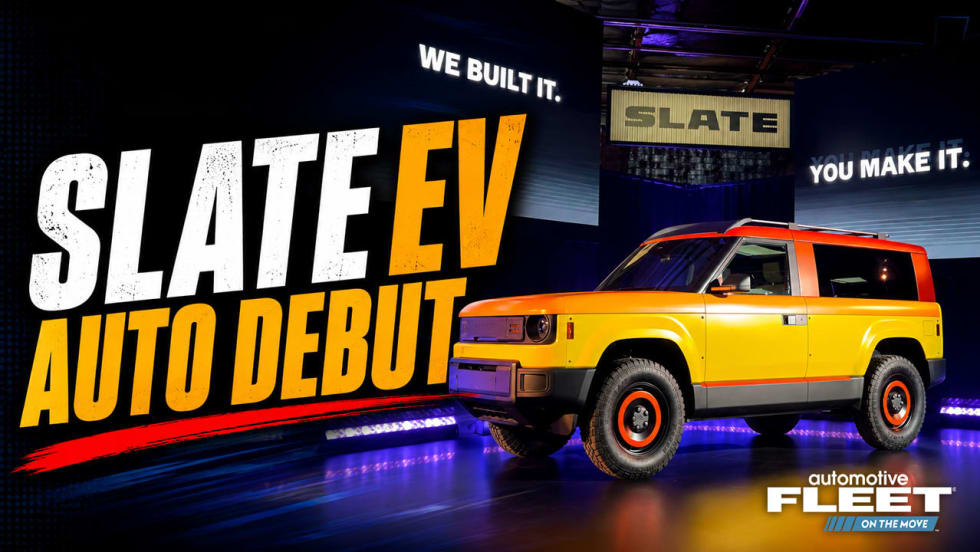
First Look: Slate Auto's Electric Fleet Pickup
Could an affordable, modular EV pickup make electrification more practical for fleets?
Read More →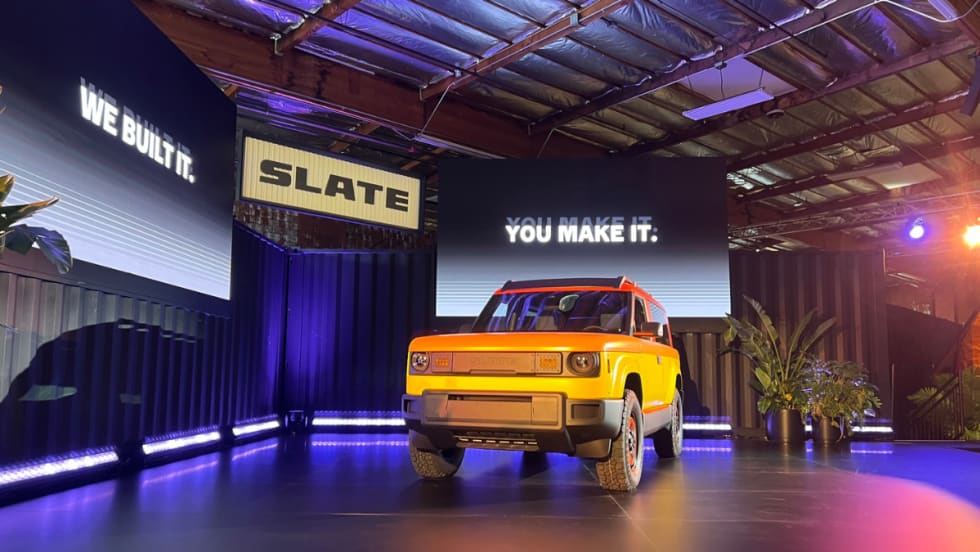
Slate Debuts Colorful, Unique EV Models
A recent media and client event, studded with electric vehicles dressed up on platforms, planted a new position for the manufacturer in the wider EV market. Fleets will find cost-saving advantages.
Read More →
Slate Electric SUV, Pickup Switchable Model Aims For Light-Duty Fleets
Everything about this EV is counterintuitive and understated, making it stand out from the crowd.
Read More →
Inspiration Mobility Acquires Key Electrada Assets
Inspiration Mobility Group has acquired select assets of Electrada, adding the fleet electrification provider's team, technology, and charging infrastructure development capabilities to its energy management business.
Read More →
Turning Connected Vehicle Data Into Decisions That Matter
Fleet leaders have more data than ever, but turning that data into clear, actionable decisions remains a challenge. This white paper shows how leading organizations are using connected vehicle data to improve safety, reduce costs, and optimize fleet performance. Learn how to turn insight into action across your fleet.
Read More →
Are You Tracking Your Fleet's True Total Cost of Ownership?
Bobit Business Media surveyed 190 fleet professionals and found that while most fleets are tracking costs, fragmented systems and data gaps are keeping true TCO visibility out of reach. With rising pressure to control spend in an increasingly volatile environment, the gap between what fleets think they know and what the data actually shows is wider than you might expect. See how your peers are managing costs today and where the industry still has room to improve.
Read More →