




Dig Deeper: Top Challenges & Tips for Maintaining Alternative-Fuel Trucks
New Work Engines of Tomorrow
From hybrids to electric vehicles, it is important to have the right fuel to drive down fuel costs.
by Dan Kratz
November 1, 2008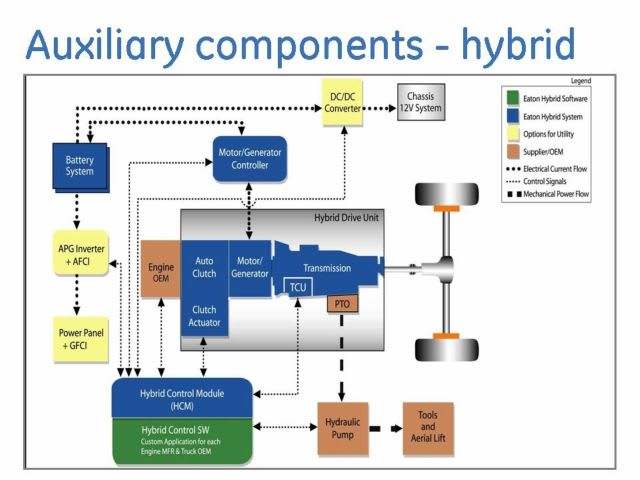
The diagram illustrates a typical hybrid propulsion component that propels a hybrid truck. These features differentiate a hybrid truck from a conventially powered truck.
Source: GE Capital Fleet Services
8 min to read
Fuel cost savings are the expected benefit of commercial hybrid trucks. Other considerations include reduced emissions, minimal payload reduction from additional hybrid components, and help in complying with anti-idling regulations.
In addition, corporate mandates increasingly require fleets to be environmentally friendly. Corporate environmental policies place demands on fleet managers to find "green" fleet alternatives to implement in-vehicle selectors. The underlying consideration, however, is that environmental programs must support a profitable business case.
Companies such as GE recognize that being environmentally responsible is a good business practice. At the heart of its Ecomagination program is GE’s belief that an environmentally driven business strategy can benefit society. At its inception, GE set real, concrete goals to make Ecomagination viable from a business standpoint. GE is proving it is possible to be both economically oriented and environmentally sound.
Giving Fleets What they Want
Truck manufacturers have been listening to fleet operators and responding by increasing the production of medium- and heavy-duty hybrids. The convergence of commercial truck fleets’ demand for hybrids/alternative-fuel vehicles with the willingness of truck manufacturers to produce hybrid vehicles seems to be in place. UPS recently announced a major increase in its investment in alternative fuels, ordering 200 diesel-electric hybrid vans and 300 CNG vans.
Foton America, a Chinese company, recently introduced inexpensive compressed natural gas (CNG) buses in the United States. International Truck and Engine are starting production of its 4x4 WorkStar on a hybrid platform. Currently, medium-duty applications up to 33,000 lbs. GVWR offers the most hybrid opportunities for fleets. These include city pickup and delivery, package delivery, beverage, municipal, refuse, and utility applications. However, Sterling Trucks has announced a production rollout of 700 Class 8 hybrid tractors for this year.
While capital costs may increase up to $50,000 for hybrid vehicles, annual fuel savings and maintenance costs may be reduced up to $6,000 annually. In addition, tax credits and grants from federal and state agencies can reduce the initial costs significantly.
Hybrids in the Limelight
Hybrid (diesel-electric) truck development has accelerated over the past seven years, beginning with a collaborative effort of component manufacturers, fleet operators, and the Freightliner Corp.
Freightliner’s hybrid offering features a parallel diesel-electric system that enables the vehicle to operate the diesel engine alone or in combination with the electric motor.
In 2001, 18 hybrid trucks were delivered, and the model of using hybrids in-city pickup and delivery operations took shape. The development of Eaton’s regenerative braking technology has promoted the commercial acceptance of hybrid trucks for nearly all types of fleets.
The use of hybrids can provide fuel savings up to 40 percent and reduce maintenance costs by increasing preventive maintenance intervals. Vocational applications benefit from the elimination of engine idling during the operation of upfitted equipment.
The use of electronic power take-offs (ePTO) combined with energy from the storage batteries produces quiet crane, man lift, and digger operation. Some hybrids are capable of exporting electricity to other equipment off-board from the truck itself.
Plug-in hybrid electric vehicles (PHEV) are similar to automobile hybrids, charging batteries overnight from conventional electrical outlets to store energy to operate the vehicle and upfitted equipment.
Hybrids Under Investigation
Adding hybrids to a fleet does present challenges. First, you will notice higher capital costs, up to as much as $40,000-$50,000. A comprehensive return on investment (ROI) is required to ensure the extra costs make sense for your business and to determine how long it will take to overcome the additional costs. How the truck will be remarketed is another factor.
The good news is found in tax credits and grants that help to reduce the initial costs. The West Coast Collaborative reports, "for fiscal-year 2008, Congress appropriated funds for the first time under the Energy Policy Act (2005) to help reduce emissions from heavy-duty diesel engines."
Another important consideration is to determine if hybrids allow maximum utilization of fleet equipment, for example:
Does the hybrid upfit reduce or even eliminate a truck’s operational effectiveness?
Will payload need to be reduced?
Will other upfitted equipment still fit correctly on the chassis?
A consideration often overlooked is the training required of drivers. Driving techniques differ little from conventional trucks, but the driver’s reluctance to accept a hybrid vehicle may be based on concern for safety. Drivers will require training on vehicle start-up, braking, acceleration, and ePTO use for upfitted equipment.
Zero-Emission Truck Availability Growing
Total-electric, zero-emission trucks are in the production pipeline and continuing to grow in popularity. Electric truck manufacturers are aligning with OEM truck dealerships for sales and service support. In addition, warranty support is available.
Platforms used by electric truck manufacturers vary. Some models include current truck manufacturer chassis, while others are new proprietary platforms.
PHEVs up to 18,000-lbs. GVWR are available and work best in city pick-up and delivery operations. An 100-mile plus operating range is attainable. However, additional towing expense can be expected due to drivers exceeding vehicle operating ranges.
The Future of Alternative Fuels
Alternative fuels promise to significantly reduce fleet dependency on petroleum fuels. According to the U.S Energy Information Administration’s (EIA) International Outlook 2005 report, the world consumes about 83 million barrels of oil every day. By 2025, projections estimate the world will need another 25-35 million barrels per day. The projected demand is driven by the transportation sector, accounting for nearly two-thirds of world oil consumption. The growing use of vehicles with fuel options as part of a "green" initiative will help prompt advances in alternative fuels, technology, and distribution channels.
Biodiesel.
Biodiesel continues to demonstrate a positive acceptance trend in large part due to the ASTM D6751 standards that certify high-quality biodiesel production. Engine manufacturers are now recognizing blends up to B-20. Liquefied natural gas (LNG) and CNG usage continues to increase in commercial fleets, particularly in environmentally progressive states such as California. Both biodiesel and natural gas are on track to become mainstream fuel choices.
Available in many areas of the country, the choice of biodiesel also represents little implementation risk. Pure biodiesel emits approximately 78-percent less CO2 than conventional diesel. Challenges for using biodiesel include fuel economy penalties and compromised performance in severe winter conditions.
Natural Gas.
Compressed and liquid natural gas fuels are now available as factory options in all classes of medium- and heavy-duty trucks. As an alternative fuel, natural gas provides fixed and stable pricing. Produced from methane found in landfills and other sources, natural gas is a renewable, abundant domestic fuel.
A majority of the cost to retrofit or purchase alternative-fuel vehicles can be reduced by leveraging state agencies such as the Texas Emission Reduction Plan. The agency has awarded $336 million in grants to assist fleets in reducing diesel engine emissions since 2001.
Natural gas benefits include cleaner tailpipe emissions than diesel, tax credits up to $28,000, and full OEM warranty on most installations. However, the most important benefit might be natural gas units’ compliance with 2010 emissions standards.
Biomethane.
In the past, biomethane has been costly to produce, due in part to a lack of quality processing. But new technology has improved the "scrubbing" operation to meet federal fuel standards. Processing methane gas from landfills is cleaner and produces a biogas identified as CNG. Particularly appropriate for municipalities that own or operate landfills, this fuel offers an adequate supply at below-market costs.
Hydrogen.
Hydrogen fuel cell propulsion has been considered a solution of the future to reduce dependence on petroleum-based fuels. Continued technology gains are needed before hydrogen can be placed into commercial service applications. However, ongoing pilot programs in the urban bus and refuse operations are providing positive results.
Hybrid.
Currently, available hybrid options for commercial truck fleets can be affordable. CV Energy Vision claims a fleet saving $10,000-$18,000 annually on operational costs and taking advantage of grants and tax credits can recover the incremental cost of purchasing a natural gas truck within one year.
One should expect to see new models introduced every year as the demand for hybrids and alternative-fuel vehicles increases. Also becoming more prevalent are corporate environmental and branding concerns requiring fleet managers to consider hybrid and alternative fuels for their fleet operations.
Selecting vehicle specifications that meet both environmental and business targets requires a comprehensive knowledge base of hybrid alternatives and where to look for resources. Manufacturers, fleet management companies, upfitters, and dealers can help companies with resources to investigate all available options. When considering hybrid vehicles, fleets should set benchmarks for their current vehicles and use analytics to measure the results once the hybrids are placed in service.
In the near future, alternative fuels such as biomethane and hydrogen fuel cells offer the promise of reducing our dependence on petroleum-based products from off-shore sources. Renewable domestic fuels will promote stabilization of fuel availability and prices. The timeline for universal acceptance of these alternatives is yet to be determined. However, both private companies and public agencies are providing the leadership and funding to develop hybrid vehicles and producing alternative fuels.
Building both short- and long-term plans are crucial. To implement hybrids in a fleet operation, fleet managers should consider all vehicle types, establish a company policy for environmental responsibility, set fleet goals for vehicle miles per gallon, and consider telematics for such cost-cutting measures as route optimization and reduced idling times.
As commercial fleets accept hybrids and alternative fuels, we will improve our environment and increase U.S. energy independence from petroleum products. When considering hybrid vehicles or alternative fuels, strategic planning is crucial to ensure vehicle selections meet both environmental and business performance goals.
About the Author: Dan Kratz is the truck operations manager at GE Capital Solutions Fleet Services.
Topics:BiodieselNatural GasUPSFreightlinerWorkStarBiomethaneWork TrucksHydrogen FuelGasoline-Electric HybridsBattery-Electric VehiclesReducing EmissionsFuelGreen FleetOperationsGlobal Fleet
Originally posted on Work Truck Online
Subscribe to Our Newsletter
More Fuel

Turning Fleet Payment Data into Executive Insights
Ramel Lindsay of U.S. Bank Voyager discusses how fleets can transform payment and transaction data into actionable intelligence to reduce costs, improve oversight, and support executive decision-making.
Read More →
Why the IRS Raised Its Mileage Rate in the Middle of 2026
Fuel-price volatility drove the rare increase to 76 cents per mile, the fifth midyear adjustment since 2000.
Read More →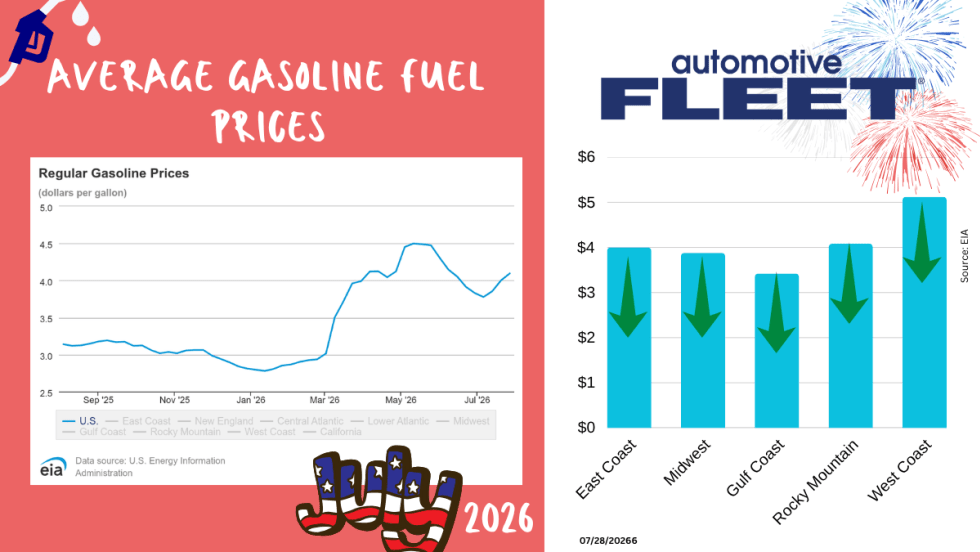
July Fuel Update: Prices Keep Rising in Light of More Conflict
Gas prices continue to rise as more and more conflicts do, too.
Read More →
Bob Adamsky on Fuel Volatility: "Don't Panic, Have a Plan."
When it comes to up and down fuel prices, Adamsky has a message for fleets: “Don’t panic.”
Read More →
How Fleets Can Gain Control of Non-Fuel Spend
Fuel often gets the spotlight, but non-fuel expenses can have a major impact on fleet costs. Ramel Lindsay of U.S. Bank Voyager discusses how fleets can gain better visibility and control over these often-overlooked expenditures.
Read More →
Fuel is Just the Start: How Middle East Tensions are Driving Up Fleet Maintenance Costs
The Middle East conflict is doing more than pushing up fuel prices. It’s also raising the cost of key maintenance products your fleet depends on, from motor oil to tires to windshield wipers. Here’s what you need to know about this budget-busting situation.
Read More →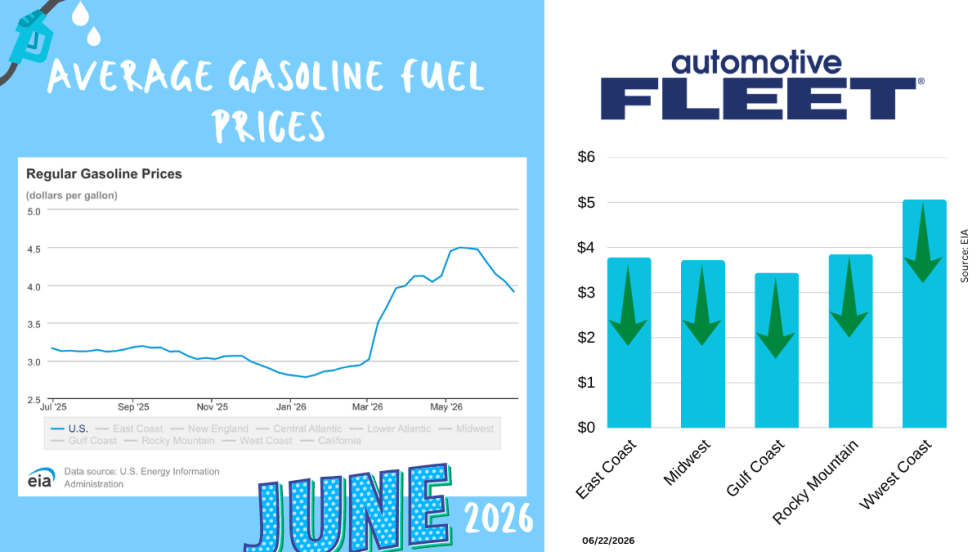
June Fuel Update: Prices Fall Below $4
Drivers are finally getting some relief at the pump. The national average gas price has dropped below $4 a gallon for the first time in months, with prices falling in 47 states as oil markets react to developments in U.S.-Iran negotiations.
Read More →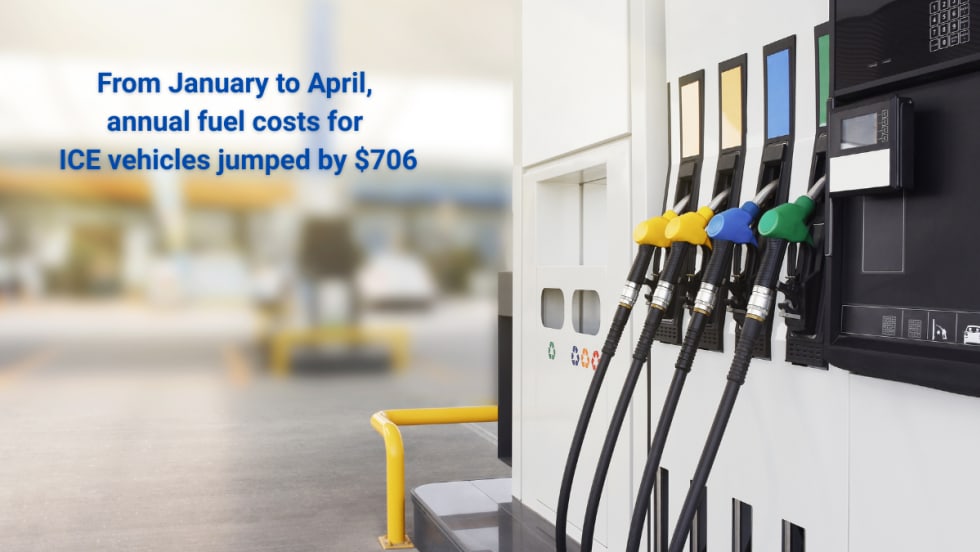
Study: How 2026's Gas Price Hikes Affect Different Vehicle Types
New data from iSeeCars reveals how rising fuel costs have affected different vehicle segments as gasoline prices climbed nearly 46% over the past four months.
Read More →
Sponsored•May 29, 2026
Are You Tracking Your Fleet's True Total Cost of Ownership?
Bobit Business Media surveyed 190 fleet professionals and found that while most fleets are tracking costs, fragmented systems and data gaps are keeping true TCO visibility out of reach. With rising pressure to control spend in an increasingly volatile environment, the gap between what fleets think they know and what the data actually shows is wider than you might expect. See how your peers are managing costs today and where the industry still has room to improve.
Read More →
May Fuel Update: All Regions Experience Declines
Gas prices are finally easing in much of the country, but experts warn global tensions could quickly reverse the trend as the national average remains well above last month’s levels.
Read More →