





Related: Advanced Safety Systems Cost Twice as Much to Repair
New Vehicle Technology and Its Effect on the Rental Car Industry
Cars with new accident avoidance systems can be compromised even in minor fender benders. Not handling their repairs properly could lead to increased liability exposure.
November 24, 2019
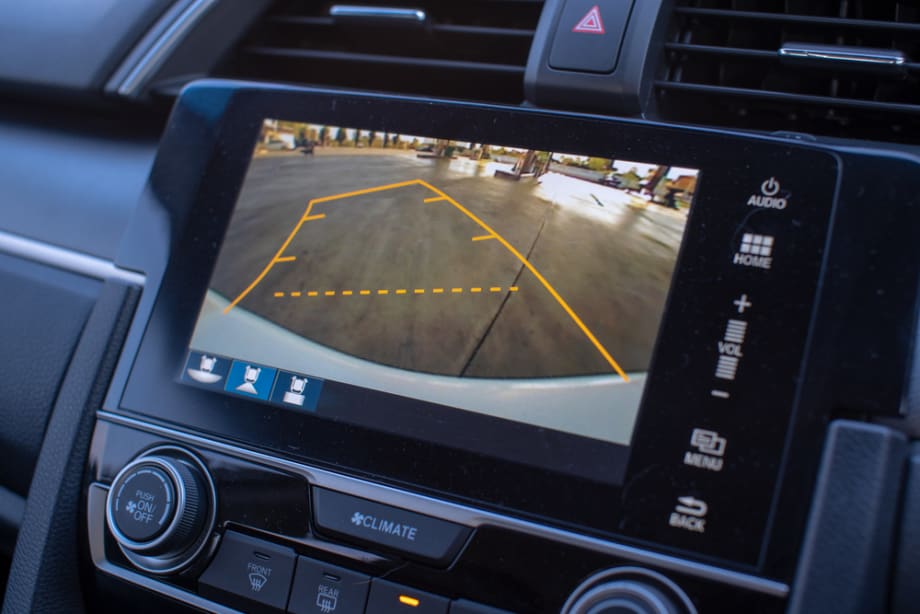
These accident avoidance systems, which include blind-spot monitors, backup cameras, driver monitoring systems, and automatic braking systems, will all function to lower accident rates and save lives.
Photo via Depositphotos.
3 min to read
The 2020 models are beginning to make their way into the fleets of rental car companies with a growing number of advanced driver assistance systems (ADAS) functions designed to provide safety to the occupants as well as lower the frequency of accidents.
These accident avoidance systems, which include blind-spot monitors, backup cameras, driver monitoring systems, and automatic braking systems, will all function to lower accident rates and save lives. This is great news for the rental car industry but there are some potential pitfalls as well.
Whenever a vehicle is involved in even a minor fender bender, safety-related components can be compromised. Collision repair shops in many cases are not trained or equipped to handle these complex repairs. In fact, according to I-CAR, the Inter-Industry Conference on Auto Collision Repair, 65% of collision industry shops have no training in these new safety components whatsoever. This is a sobering statistic considering the growing complexity of vehicles.
The vehicle manufacturers (OEMs) have specific repair procedures and/or position statements related to vehicle safety system health checks. Scanning is used to determine the condition of the electronic components and identify any Diagnostic Trouble Codes or DTCs. General Motors and others take the position that “all vehicles being assessed for collision damage repairs must be tested for DTCs during the repair estimation in order to identify the required repairs.”
In many cases a sensor may need to be reset, cameras and radar may need to be recalibrated, and control modules may need to be replaced as components may have failed or been damaged. It is important to note just because there are no dashboard indicators illuminated does not mean other components need attention.
All of this leads to increased liability should a vehicle be rented that has not been properly repaired and re-calibrated. Lawyers are increasing looking at repair information after an accident to assure proper procedures were followed.
Case in point is Seebachen vs. John Eagle Collision Center where a jury awarded $31.5 million dollars to the Seebachen family. The collision repair facility used a 3M structural adhesive instead of spot welding as the OEM procedures specified.
As these well-equipped and much safer vehicles make their way into car rental fleets the best way for rental car companies to lower exposure is to assure compliance with OEM repair procedures. This includes the repair facility using pre- and post-diagnostic scanning and calibrations using up-to-date OEM software and scan tools.
Not all scan tools are the same and homework should be done to make sure the scan tool meets OEM requirements.
About the Author
Frank LaViola is VP of sales for AirPro Diagnostics LLC located in Jacksonville, Fla. LaViola previously worked for Enterprise Rent A Car in the area of collision industry relations.
Originally posted on Auto Rental News
Subscribe to Our Newsletter
More Global Fleet
GeoFencing Adds to Your Truck Security Arsenal
Geofencing is a familiar fleet tool today, but its early adoption marked a major shift in vehicle tracking, route monitoring, and the debate over employee privacy.
Read More →
Holman Takes Full Ownership of ARIZA in Mexico
Holman is bringing its Mexican fleet management operation fully under its own brand after more than 30 years as a joint venture. The change gives multinational fleet customers a single Holman operation across the U.S., Canada, and Mexico.
Read More →
5 Tire Maintenance Tips to Help Prevent Work Truck Downtime
Regular tire checks can do more than extend tread life. These five maintenance practices can help work truck fleets catch problems early, reduce costs, and prevent downtime.
Read More →

Proven Ways to Reduce Work Truck Downtime
The age-old problem of downtime will always be a reality, but with new strategies at hand, fleets have more ways to keep trucks on the road longer.
Read More →


Cameras, Safety and Insurance: From Reactive Claims to Real-Time Prevention (Part 2 of 2)
Part Two: Commercial auto remains one of the most challenging and costly lines of coverage for fleet operators and insurers alike. Continue learning more about how to effectively address these issues from Onur Aksan, Enterprise Business Development Executive, Geotab
Read More →
Cameras, Safety and Insurance: From Reactive Claims to Real-time Prevention
Commercial auto remains one of the most challenging and costly lines of coverage for fleet operators and insurers alike. Learn more about how to effectively address these issues from Onur Aksan, Enterprise Business Development Executive, Geotab.
Read More →
Fleet Costs Are Rising: Here’s How Leaders Are Responding
Fleet leaders are under pressure to reduce costs, adapt to economic uncertainty, and make smarter decisions. See how peers across North America are responding with real data, proven strategies, and forward-looking insights. Download the 2026 Market Pulse Report to benchmark your strategy and uncover where you can gain an edge.
Read More →
Enterprise Fleet Management Surpasses 900,000 Vehicles in U.S. & Canada
Enterprise Mobility connects with mobility solutions around the globe
Read More →