




Lease Exec Sees Demand For More Fleet 'Flexibility'
Predicts lease-rental growth, higher cost of owning cars, greater competition for clients.
The car and truck leasing and rental business, founded 60 years ago when the automobile was in its infancy, has burgeoned into one of the fastest growing fields in the nation with $15.7-billion in revenues recorded during 1975 when 4.7-million leased or rented vehicles were in use. Still-incomplete figures for 1976 show both revenues and numbers of lease-rental vehicles in an upward trend.

In a comprehensive study completed last summer, The Hertz Corporation found that growth of the lease-rental industry has far outpaced growth of the auto industry that spawned it. Although the Hertz study raised some industry eyebrows when the numbers were made public, no informed observers questioned the basic startling growth of the industry - only the degree of growth as reported by Hertz.
The Hertz study forecasts further lease-rental growth, which is also a view widely held by carmakers. One top Detroit exec recently predicted that 40-percent of U.S. passenger car production will be earmarked for the non-buyer by 1980.
Although any number of industry insiders see continued expansion of lease-rental as a way of providing fleets with their wheels, questions of how at growth will take place prompt widely differing answers. The Hertz people, for instance, see increases in competition for the lease-rental client's patronage coupled with a blurring of the traditional differences between closed-end and open-end lease arrangements and ever-higher costs associated with automobile ownership.
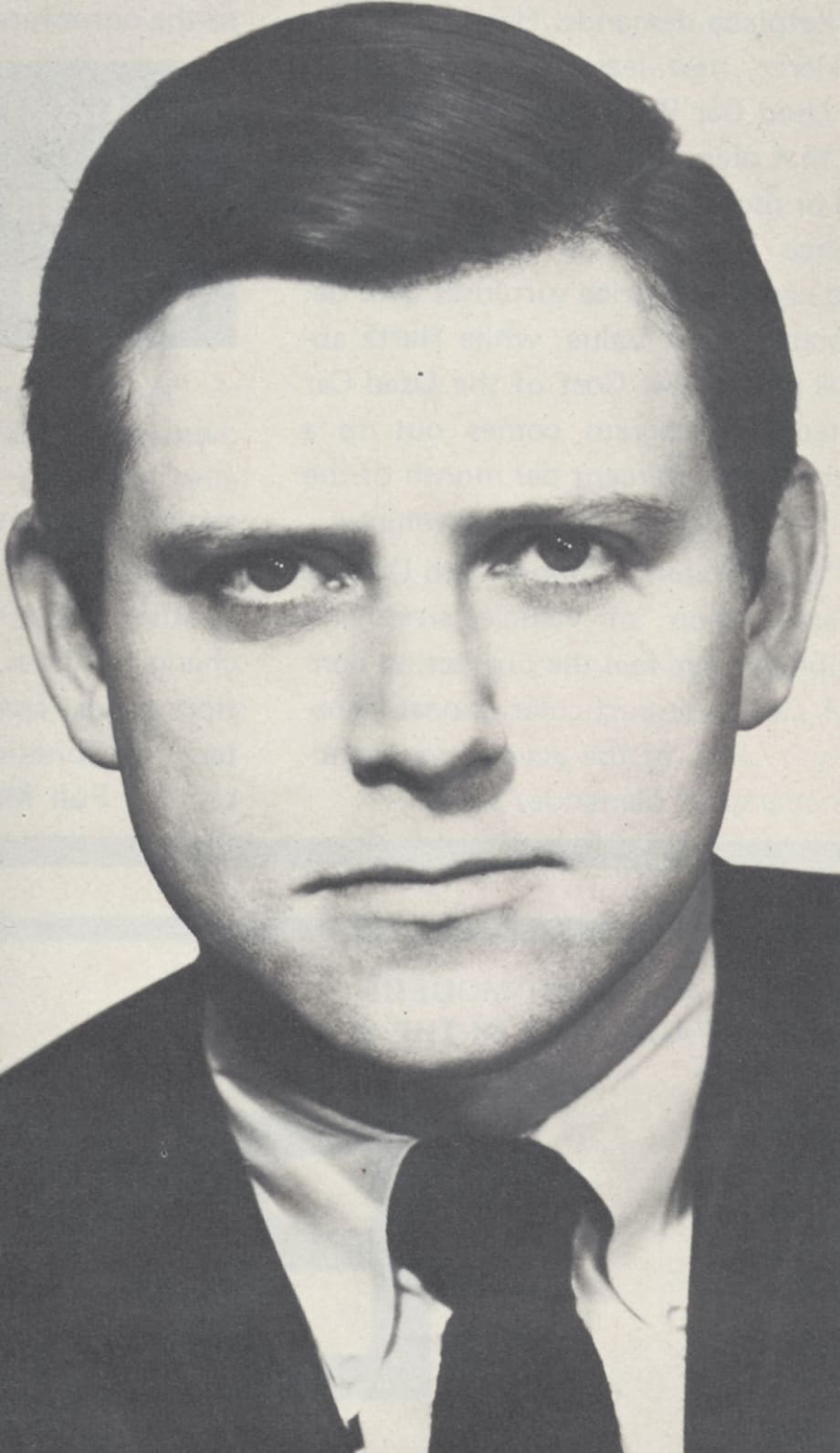
Hertz, long an industry leader in closed-end lease transactions, has been putting additional emphasis on open-end contracts in an effort to keep ahead of changing industry trends. Looking to future demands of the lease-rental marketplace, Hertz Car Leasing Division Vice President Jose E. Menendez reported his firm sees a trend where clients will be demanding agreements that combine features of both kinds of traditional leases.
"The increasing sophistication of top managements at fleet-operating companies has spurred us to develop innovative programs that better serve our customers' needs," Menendez said. Responding to the Financial Accounting Standards Board's new lease accounting procedures, Menendez said a new "flexibility" must be injected into lease agreements.
The Hertz leasing boss said a second factor that requires re-thinking of the open-end and closed-end lease practices is the 50-percent increase in auto ownership and operating expenses that has taken place over the past five years.
Menendez was named to head the Hertz Car Leasing Division two years ago. Since then, the company has developed a number of new programs that Menendez believes have the required "flexibility" to meet changing marketplace demands. Heading the list of Hertz' new lease-rental options is the Used Car Protection Program. Under that plan, fleet clients who operate 500 or more cars under an open-end or finance lease can be guaranteed any used-car selling price surpluses over depreciated book value, While Hertz absorbs any losses. Cost of the Used Car Protection Program comes out to a fraction of a percent per month of the capitalized cost of the leased vehicles.
"With present inflation and Detroit reclassification of vehicle sizes and equipment, we feel the protection contract can have particular appeal, especially in view of the accounting standards changes," Menendez said.
Another arrangement Hertz people believe offers flexibility to fleet clients is the Individual Employee Leasing Plan. This program offers fleet lease rates to individual employees of Hertz' lease clients who would not otherwise qualify for company cars. The program gives the corporate lessee an added benefit that can be passed along to workers in the form of improved employee morale, with no additional cost to the corporate client.
"Again, the rising cost of auto ownership makes this program especially appealing to both the employee and the company," Menendez reports.
The Limited Maintenance lease, still another Hertz effort to keep up with changing times, offers lessees protection against specific engine and power-train malfunctions at a fraction of the cost of Full Maintenance agreements.
Menendez says this variation appeals to managers who are interested in averaging the major repair costs of their fleets.
Although demands of lease-rental clients are changing with the times, Hertz continues to offer its traditional Full Maintenance lease in both finance and closed-end versions. Under this complete package, Hertz pays for all necessary repairs and routine service as well as snow tires and replacement tires.
Like a number of other leading lessors, Hertz has gone to the computer in its efforts to provide clients with detailed, comprehensive fleet data. Under the Hertz Managed Maintenance program, the typical lessee can opt for either a simplified or a more complete monthly analysis on both fixed and variable vehicle expenses. These monthly computer printouts can also include special "exception" reports that single out any units which deviate from fleet norms.
"Moreover," Menendez says, "we are also able to handle the job of vehicle maintenance supervision, along with repair-order evaluation and processing, taking yet another burden from corporate staffs, especially for the large fleet with cars operated over wide areas of the nation." Variations of the Managed Maintenance program can be tailored to fit a client company's particular needs, Menendez said.
To spread the word of its new leasing programs and its emphasis on open-end contracts, Hertz Car Leasing Division has opened new regional offices, expanded its sales staff and is beefing up its individual-lease efforts. In another move to stay on top of a changing industry, Hertz Car Leasing has broadened its activities in the retailing of used cars.
"We have always sold a number of our used vehicles to their original drivers - either directly or through the corporate fleet client," Menendez said. "Now, in addition, we have opened used car showrooms in three locations - Long Island City, New York, and San Rafael and Long Beach, California - to sell them to the public. We expect to open additional locations in the future."
Anticipated residual values have always played a major role in determining lease rates, but Menendez believes the retailing of used fleet vehicles will assume increasing importance in the years ahead.
"The stricter odometer law will produce readings which will more accurately reflect true usage of cars being purchased second-hand," Menendez explained. "Further, the recent vehicle price inflation will bring more sophisticated buyers into the used-car arena, and these buyers will quickly realize how many of these high-mileage vehicles saw service originally in corporate, police, taxi and government fleets."
With this realization of the true prior use of so many thousands of vehicles, Hertz people believe, lease-rental cars will tend to hold more appeal to used-car buyers because accurate maintenance records will more often be available.
Hertz and only about ten other firms make up the national leader ship of an industry that some experts contend has as many as 15,000 separate firms currently writing rental and leasing orders. The car and truck leasing and rental business includes outlets from neighborhood auto dealers who rent or lease only a handful of vehicles each, through major banks and retail chains that aggressively seek out expanded car leasing opportunities, to an estimated 600 firms that specialize in the truck lease-rental field.
The industry's recent rapid growth has been accompanied by a long list of challenges that have been met and mastered. Industry leaders like Hertz' Menendez say such current challenges as the revised accounting standards and stricter odometer legislation will also be mastered as the industry continues its upward growth trends based on the inherent advantages the concepts of leasing and renting provide fleet operators.
More Operations
Here's When You Should Make an Exception to Fleet Policy
Fleet policies are designed to create consistency, but not every driver or situation fits neatly within standard rules.
Read More →
AI-Native or AI-Acquired: What Should Fleet Managers Look for in an AI Platform?
Six questions can help fleet managers look beyond AI marketing claims to evaluate integration, data access, and real-world operational performance.
Read More →
A buyer's guide to fleet management software in 2027
Buying fleet management software in 2027 means looking beyond features and price. As fleet operations, technology and expectations evolve, this guide explores what today’s fleet professionals should consider when choosing a system that can deliver value now and adapt to what comes next.
Read More →

What Will Shape the Next Era of Fleet Management?
EVs, AI, and autonomous vehicles are reshaping fleet management. Discover what’s ahead—and how fleet leaders can prepare for the next era.
Read More →
How Fleets Can Recruit and Train Veterans for Technician Roles
Here's how the technician shortage has affected uptime for fleets, and what to do about it.
Read More →
Avis Budget Group Deploys Neology Toll Management Technology Across Major Brands
Neology’s neoFleet platform will manage toll transactions and toll-authority operations for vehicles across Avis, Budget, Payless, Budget Truck and Zipcar.
Read More →
Fleet Personal-Use Charges Edge Higher in 2026
Nearly eight in 10 surveyed fleets allow personal use of company vehicles, while just over half of respondents report charging employees for the privilege.
Read More →
The Future of Fleet + What’s Changing Right Now | AF News Recap
Could developments overseas offer a preview of what’s coming for U.S. fleets? This week, we’re looking at the future of AI, autonomy, and electrification, plus Ford Pro’s new certified pre-owned program, smarter vehicle offboarding, and a new way for fleets to manage toll expenses.
Read More →
How to Handle Vehicle Offboarding
What do fleet managers need to do when a driver leaves?
Read More →
Fleet Manager’s Ultimate Playbook: Navigating the New Standard in OEM Connectivity
Rising operating costs, driver safety concerns, and unplanned downtime are putting unprecedented pressure on modern fleets. Discover how fleet managers use embedded OEM connectivity and real-time vehicle data to cut TCO, prevent downtime, and protect drivers without aftermarket telematics hardware.
Read More →