




Learning How to Maneuver Along a Career Path
ARA Summer Roundtable: A veteran auto dealer, sales, and car rental remarketing executive detailed a personal trip through his hard-won and award-winning achievements.


Doug Campbell, president and CEO of America’s Car Mart, shared some of the hard lessons he learned in his executive career during a keynote at the ARA Summer Roundtable on Aug. 22, 2024 near Dallas.
Photo: Martin Romjue / Bobit
Rule No. 1 for any successful career, in or out of vehicle remarketing: Never get stuck in a gear. Learn how to shift gears and keep shifting up.
A keynoter speaker, Doug Campbell, president and CEO of America’s Car Mart, started his Aug. 22 presentation with a retro-shot of a four-speed manual transmission. “Sometimes you feel like you're going through gears and you're just moving along as you do swimmingly well. Other times it feels like you're stuck, and you can't get out of a certain year. Sometimes you can't even get the car into gear. And sometimes you’re just going in reverse. The changing of those gears is up to us. Your career is solely your responsibility.”
Campbell spoke during the Automotive Remarketing Alliance’s (ARA) annual Summer Roundtable near Dallas. He drew on a nearly 30-year career in the automotive space, which notably included his tenure as a remarketing and fleet services executive with Avis Budget Group, and as a former general manager and used vehicle director at AutoNation. His career has spanned the areas of dealer management, strategy, remarketing, and fleet management. Most companies he’s worked for are publicly traded.
A Guide to Higher Motion
Campbell pitched his experiences as guidelines for how other professionals can shape and pursue their careers and explore new opportunities. He said he remembers situations where he wished he had acted differently or learned certain lessons earlier.
“No one talks about what do you really need to do to get better,” he said. “You have to find out for yourself or find it in autobiographies. I think people look for those quick hits and quick wins on how to develop and advance a career, and some of this is misguided.”
Campbell said he once thought his career was the responsibility of his manager, supervisor, or president.
“It's nice when you have a great leader who takes an interest in you, who sees something in you before you see yourself as a leader,” he said. “Those are great leaders. But often, we're trading our time for some money, and it's purely transactional.”
To perform beyond the baseline, Campbell asked, “How do you sort of level yourself up where you're really showing an interest in people and you're showing an interest in yourself?”
Early Lessons in Grinding Gears
One of his first lessons came from his father who got him a job in 1996 at a local dealership group where he worked. His father was born in 1950 in Jamaica and emigrated to New York City at age 18, where he joined the military and attended college. His dad drew inspiration from a professional tennis player named Arthur Ashe.
Ashe won three Grand Slam titles in singles and two in doubles and was the first black player selected to the U.S. Davis Cup team. He was also the only black man ever to win the singles titles at Wimbledon, the US Open, and the Australian Open. Known for his comeback playing style, Ashe said in an interview his strategy is to hit the reset button, Campbell said. “Start where you are. Use what you have. Then do what you can.”
“[Ashe] was [my dad’s] idol. He focused on this guy because was like a hero. And I didn't realize what he was really teaching me at that moment. He was teaching me a championship mindset.”
Campbell recalled knocking on doors in a retirement community carrying a backpack of brochures promoting the new vehicles at an Oldsmobile dealership. His first customer was a retired schoolteacher.
“Sometimes your path will not be easy,” he said. His father told him sales would be tough and that you are not really selling until you get used to hearing the word, no. “You will hear that word about 95% of the time,” he recalled of his father’s advice. “You can keep track of your customers. You're only looking for five yeses for every 100 people you talk to. I just focused on that.” From there, Campbell learned the auto sales ropes for a few years until he moved into sales management.
“What [my father] was doing was conditioning me to be a leader, because the first lesson in leadership is leading yourself. It's learning how to take those losses and turn yourself around before you can impact other people.”
Facing Real Management Tests
The real test comes when you are thrust into a role where you must lead employees, Campbell said. “You have five people looking up at you like little birds in a nest. And when you're weak and you have tough times, you blow the gasket, you get upset, you holler and scream. and mistreat people. You fall back and do all the things you're not supposed to do because you haven't learned how to manage your own energy and emotions.”
Managers often get stuck because they lament what happened to them and who did what, he said. “Your ability as a leader to truncate the time between when it happened and you getting back on the tracks will determine how far you can really go. It also allows you to keep your composure, which is a great characteristic of a leader.”
Another test for Campbell came during the pandemic closures and slowdowns of 2020, when his work team was focused on layoffs and problems at factories and OEMs. “I would say, ‘Guys, I don’t want to hear about it. We're not here to talk about that. Stay focused on what's in front of us. Look how many people are waiting on us to fix this so they can come back.’ When things go wrong, your team looks at you to see that your hand is steady. They are all watching you. They're waiting for you to unravel, and when you don't, they have a sense of calm about them too.”
Adversity helps a leader navigate challenges.
Playing A Paycheck Mind Game
Campbell recounted how in early 2008, amid the Great Recession, his wife stopped working because they just had a child, and he received a paycheck with a zero-dollar amount. He confronted his smirking boss and slid the check across his desk asking for an explanation.
The boss told Campbell: “I think I have your attention. What we’re doing is not sustainable, and we’re likely going to have to start shutting stores. You have talked in the past about grandiose ideas that you had for the organization, and I told you to keep doing your job. Now what can we do to get us out of this mess?” At the time, the business had 500 employees at seven franchised dealerships.
“’Yes, I'm going to give you your money, but I need your help,’” Campbell recalled his boss said. “And he said, ‘Take two weeks, get out of the business, work on a plan, and come back to me with a plan.’” Campbell then devised a strategy to consolidate used car dealerships and save on costs. He got help from an investment banker friend who advised him to, “Frame your story in numbers. Words on a page aren't going to be enough.”
“We told the story financially and a narrative about what we were going to do,” Campbell said. The owners approved his plan, and the transition took 45 days.
Investing In Yourself
The boss then told Campbell he couldn’t teach him anymore but wanted to invest in his ongoing professional education, sending him to vehicle management and general sales management courses.
“I learned the importance of education and stepping back and taking time to pour into yourself and make yourself better,” he said. “For people who depend on you, you have to do that in some way.” That can take the form of mentors, listening to podcasts, or reading books. “I have four CEOs who I talk to on a regular basis to help me. I can fly out to see them and spend the day. Even at this level, 28 years in, you still need help.”
Campbell focused on learning and strategy, enabling him to look forward in business and create value.
“Companies can hire anybody to do something. You won’t protect yourself just by doing what they asked you to do. You will protect and insulate yourself from some catastrophic event by learning how to create value. That is a CEO's sole purpose. No one is interested in keeping the lights on. For me, that's the trade. The time for money. Then if you want more, you must learn how to create value.”
6 Best Career Practices
Among further lessons Campbell learned in his career at Avis Budget Group and beyond:
You must spend time learning about the areas that make you uncomfortable and/or you don’t understand. “Park there, stay there, and you will get to the next level.” You will gain the confidence and competence to fulfill a new role that enables you to instruct and lead your team.
Embracing new challenges and change will help you grow your career and enable you to build and inspire a team to do the same: Get out of comfort zones and tap their skills to learn new methods and approaches and succeed at new tasks and roles. “I can't be everywhere. So, your internal and external teams become important, as well as the partners you choose to do business with, and the people who you want to go to war with you.”
Building partnerships and relationships: “I keep my circle tight. It's very hard to get time on my calendar, because I focus my energy on the things I care about and believe in, and I try to not let anybody distract me from what I must be.”
Avoid micromanagement: You can’t hold on too tight, so you can go as fast as you can. “You have to let the horses run, and you only get involved when things are going off the tracks. Too many inputs, even from a leader, can be bad. Your job is to spend the time calibrating (your employees), telling them what your mission and your vision are, and giving them the resources to do it.”
Know how to speed up: Although it sounds counterintuitive, speed should be a component of all actions. If you have the right people who feel empowered, speed can make up for mistakes. Speed helps in getting back on track, build out teams, understand and respond to disruption, and pursue opportunities. “I only focus on the mistakes that I can't undo, and I push as hard as and as fast as I can go because there are many people who want to get it right, and they want to get it covered,” he said.
In getting things right, speed can act as an equalizer when pushing tea members into a level of discomfort about going fast.
3 Costs of Leadership
Campbell keeps three rules, or “costs,” of strong leadership on his wall gleaned from a football coach he heard interviewed years ago:
You will have to make hard decisions that negatively affect the people you care about. A common example is force reductions that in certain situations must be done for the greater good of the company or operation.
You will be disliked despite your best attempts to do the best for the most. There will be times in every career where people will challenge and criticize you. There'll be naysayers about what you do, why you do it, and how you did it. Stay focused on your convictions and what you believe in and keep charging forward.
You will be misunderstood. You won't always have a chance to defend yourself when plans go wrong. We want people to understand where we're coming from, but the further you get into leadership, the more you don't get that opportunity. It’s frustrating because we all want explanations for decisions other people make that affect us. As a leader, you don’t always have that luxury.
More Remarketing

Ford Pro Launches Certified Pre-Owned Program for Commercial Vehicles
Ford Pro Advantage will offer certified pre-owned Class 1-7 commercial vehicles through more than 700 Ford Pro Commercial Vehicle Centers.
Read More →
Copart to Acquire ACV in $1.9 Billion Deal
The acquisition would expand Copart beyond its traditional salvage business into dealer-to-dealer wholesale remarketing while adding ACV’s vehicle data, inspection, and valuation technology.
Read More →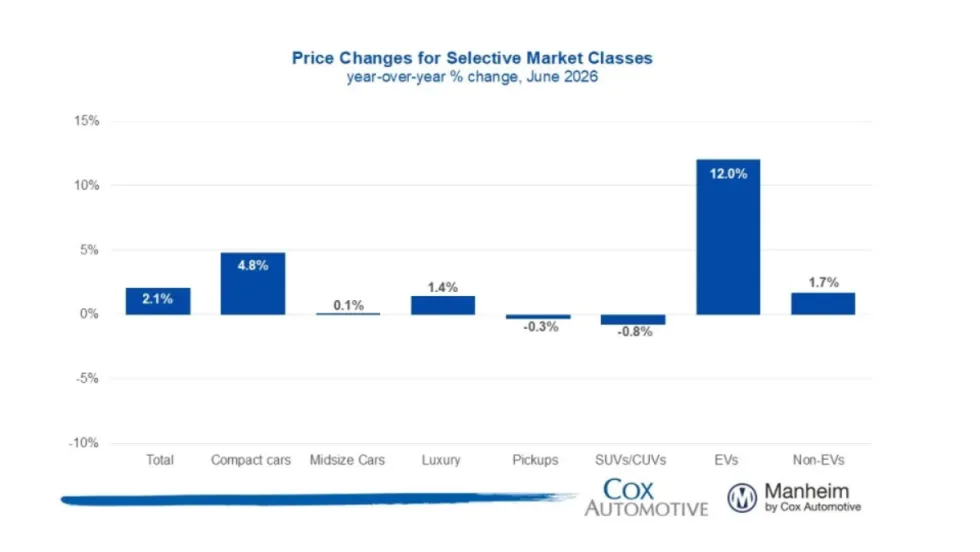
Manheim Index Shows Used-Vehicle Wholesale Prices Up 2.1% in June
The market is seeing stronger appreciation in older used vehicles this year, and the most affordable segments have been among the year’s best performers.
Read More →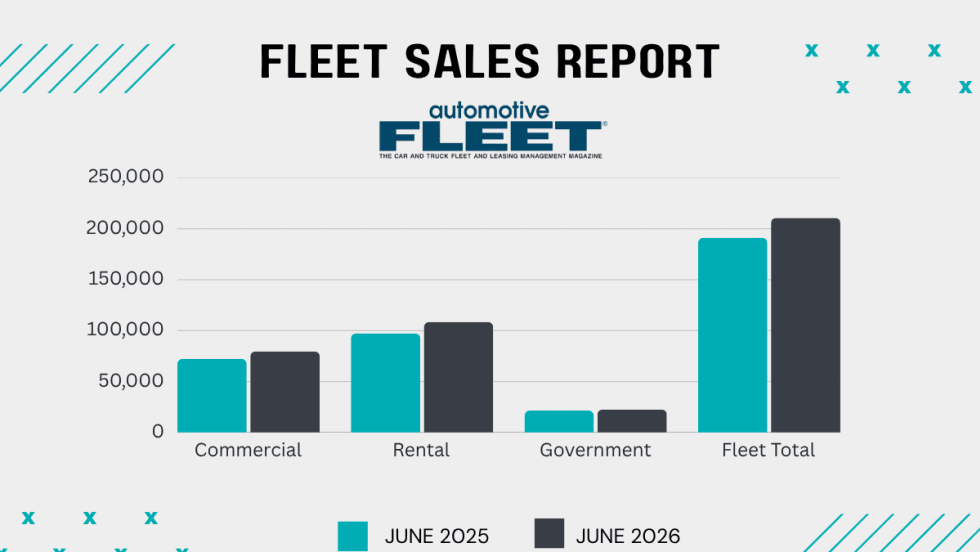
Commercial Fleet Sales Contribute To June, YTD Gains
The fleet sector has boosted its vehicle purchases at a reliable pace in the first half of this year compared with 1H 2025.
Read More →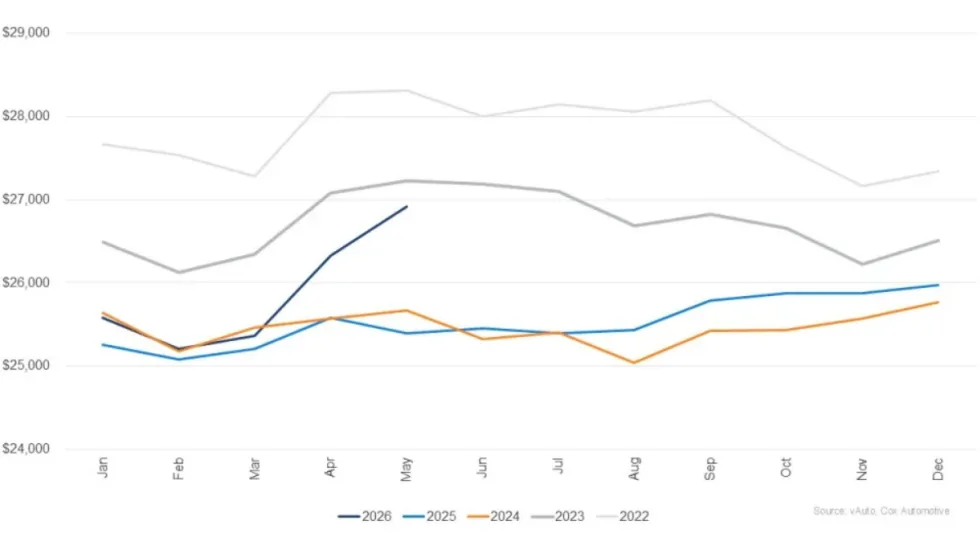
Used Vehicle Prices Climb Higher As Sales Pace Slows
The higher prices at used retail reflect strong wholesale values earlier in the spring, particularly for older, more affordable vehicles.
Read More →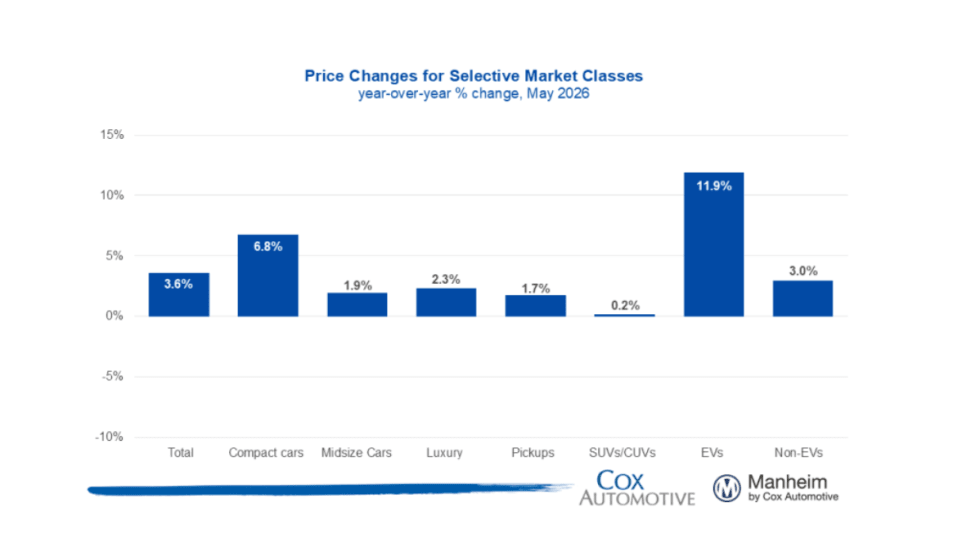
Wholesale Used Vehicle Market Sustains Moderate Rise In Values, Prices
Trends continue to normalize after a strong start to the year, as consumers contend with higher gas prices in the coming summer months.
Read More →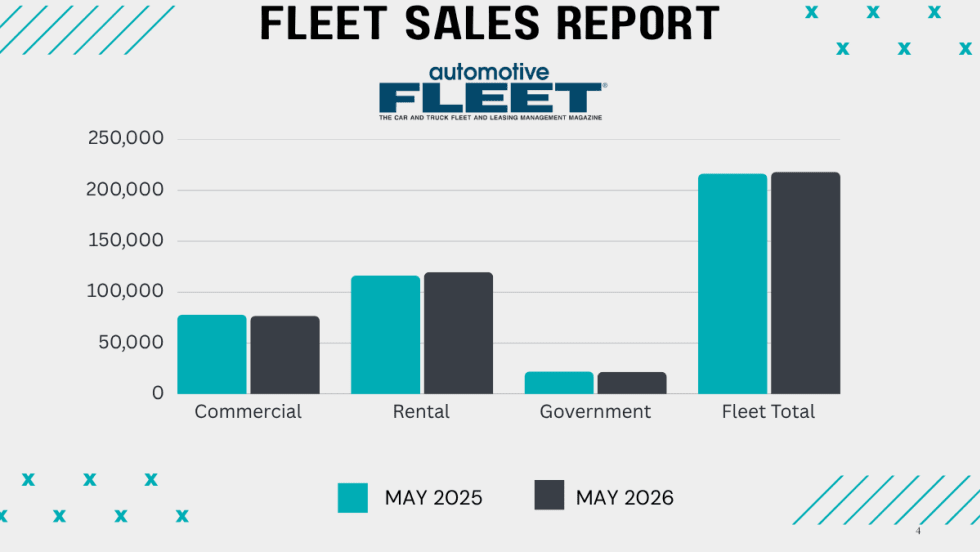
Commercial Fleet Sales Still Lead Sectors Despite May Mini Dip
The U.S. economy's continued growth and positive business investment are creating a favorable environment for fleet vehicle demand.
Read More →
How Connected Vehicle Data Is Lifting Fleet Resale Values
A vehicle health score could improve the value of fleet vehicles at remarketing. The path to a universal standard is forming, and fleets that understand the process early will be better positioned when it arrives.
Read More →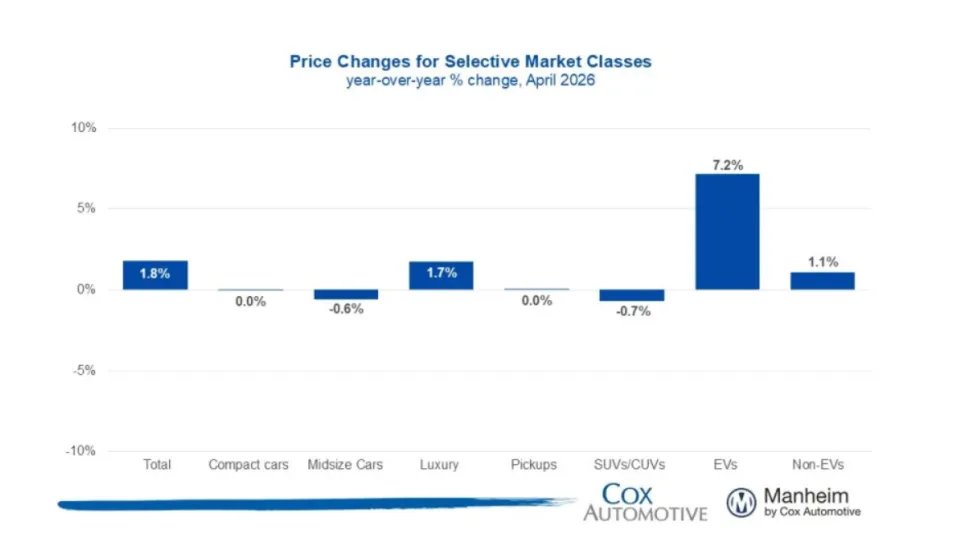
Wholesale Used Vehicle Prices Slightly Up In April
The Iranian conflict and rising gas prices inject much uncertainty into the future wholesale used vehicle markets, as higher gas prices soak up spendable income from vehicle buyers.
Read More →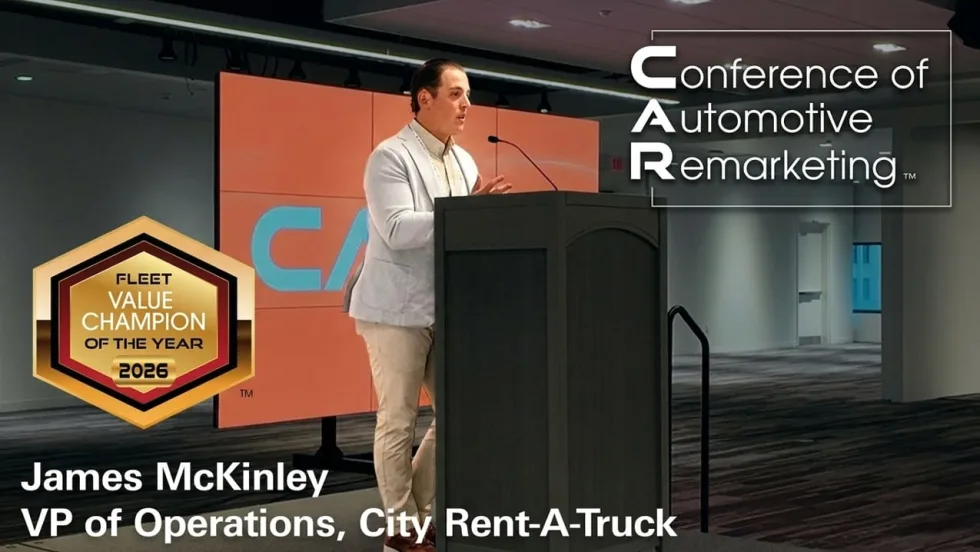
CAR2026: James McKinley Wins Value Champion of the Year
James McKinley of City Rent a Truck was named the inaugural Fleet Value Champion at the CAR Conference for his data-driven approach to fleet lifecycle management and vehicle remarketing.
Read More →