





2023 CAR Keynote:The Forces Leading to More Courage, Purpose, and Rewards
Leading Through Crises and Hard Times
A U.S. Navy veteran who commanded the terrorist-bombed USS Cole shared some core military leadership lessons that can apply to business situations and challenges.
May 26, 2025
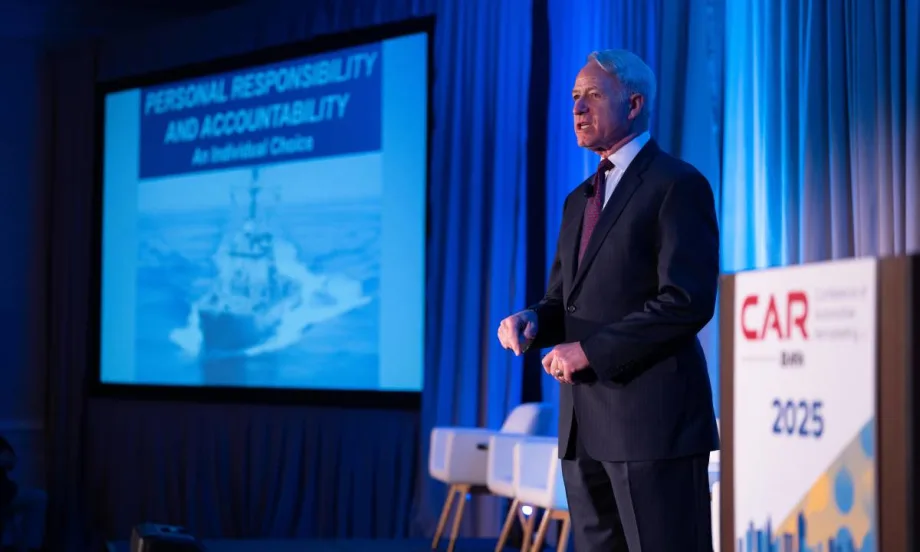
In a gripping, detailed, and harrowing keynote on March 19 during the Conference of Automotive Remarketing, Commander Kirk Lippold rooted his message in the value of integrity, responsibility, and trust, providing a plan for leadership under duress.
Photo: Ross Stewart / Stewart Digital Media
8 min to read
The deadly Oct. 12, 2000, terrorist attack on the USS Cole in Aden, Yemen, required its commander to exhibit two types of leadership: Urgent decisions in the moment that drew on the solid preparation, trust, and integrity developed over time.
Commander Kirk Lippold, USN (Ret.), former commander of the USS Cole, led and managed his guided missile destroyer’s crew through a suicide bomber attack that killed 17 sailors and injured about 40 more crew members.
In a gripping, detailed, and harrowing keynote on March 19 during the Conference of Automotive Remarketing in San Diego, Lippold kept the audience spellbound for more than an hour, connecting the timeline of the aftermath with leadership principles. He rooted his message in the value of integrity, responsibility, and trust, providing a blueprint for leadership under duress.
The USS Cole was part of the George Washington Aircraft Carrier Battle Group home ported in Norfolk, Virginia. The mission it was training for would be to leave Norfolk, cross the Atlantic Ocean and sail through the Mediterranean, and then head toward the Middle East. The destroyer would then detach from the aircraft carrier group, sail to the North Arabian Gulf, and enforce United Nations sanctions against Iraq. The $1 billion+ warship was carrying a crew of about 300 sailors and military personnel.
Investing in Leadership
“As I took command on that bright, sunny June morning, I looked out at my crew and passed the families, and I thought to myself, I need to make sure my crew understands a few key things,” Lippold said. “So, when you talk about managing challenges through clear leadership, you also think that when it comes to leadership itself, and every single one of you exercises it, first and foremost, it is an investment in yourself. There’s no such thing as a natural-born leader. The people we see as natural-born leaders are the ones who took that investment and then practiced those key leadership traits over and over to where they become so comfortable with it that it appears natural.”
Once invested, leaders share it and mentor people who work with and for them, Lippold said.
“Everybody in here at some point in your life will want to retire, and the way we want to do that is to make sure those who work for us become better leaders than we are so they can continue to build out the industry.”
Lippold instilled a deep sense of personal responsibility in his crew: each sailor was accountable for their actions 24/7, on and off duty. That commitment extended to technical mastery of their roles.
“When I took command and sat down with my crew, the first thing I wanted those young sailors to understand is only one person in your life is responsible for the decisions you make and the consequences, and that is you as an individual.”
Clarify Roles and Responsibilities
Know your job and know every single technical detail about it. “For those of you that probably have HR departments, as you go through and look at the technical aspects of what every person is supposed to do, stop the HR department from relying on that famous phrase that’s always at the bottom of every position description that says, ‘and other duties as assigned.’ Okay, we’ve all lived with it. If you’re relying on it too much, change it, redo the position description to ensure they know.”
Once people know their jobs, then leaders must set the standard. “How well do you want them to do it? That performance standard is the benchmark everyone needs to follow,” Lippold said. It is based on the three Ts: training, tools, and time.
In handling mistakes, figure out what went wrong and then move forward, Lippold said. “When you make mistakes, they don’t serve as rocks on the back. They serve as reference points for how to do things better."
Simulated fire and damage control drills were among the experiences sailors trained on. The crew rehearsed helicopter operations, small boat maneuvering, and weapons firing — including surface-to-air missile launches.
“What I can do is create the stressful conditions that people operate under, so they develop the muscle memory, and the skill sets to have critical thinking ability during times of stress,” Lippold said.

"When you make mistakes, they don’t serve as rocks on the back. They serve as reference points for how to do things better," Lippold told the audience of vehicle consignors, auction operators, and remarketers.
Photo: Ross Stewart / Stewart Digital Media
Training and Tools Put to The Test
All that preparation was tested when two suicide bombers rammed a boat laden with explosives into the side of the U.S.S. Cole. The destroyer was refueling while docked at the Port of Aden. Commander Lippold was working in his onboard office.
“As I'm sitting there grinding through that paperwork that morning at 11:18 am, there was a thunderous explosion. You could feel all 505 feet and 8,400 tons of guided missile destroyers suddenly get blown and lifted up an estimated six to eight feet, violently thrust toward the pier. We see the hull settle back in the water, rocking from side to side. The power failed. The lights went out. Ceiling tiles popped out. I came up on the balls of my feet, grabbing the underside of my desk in the brace position as everything popped up and slammed back down. When the ship stopped moving to a point that I could let go, I went through the dark over to the door of my cabin.”
The explosion blew about a 40 x 40-ft. waterline hole into the vessel's port side facing the harbor. In the ensuing chaos, the power went out, the ship took on water, sailors were missing, and debris littered the deck,
“I took one step out of my cabin and stopped in that instant,” Lippold recalled. “I knew we had been attacked. When you're dealing with a crisis, when you're dealing with any challenge as a leader, the first thing you have to remember is that you don't know what you don't know. There are still many unknowns out there. The only reason I knew we had been attacked was when I turned around and I had water on the starboard side of that pier. If it had been a fuel explosion on the ship of the pier, I would have been blown left out into the harbor, but I had been thrust up into the right toward the pier, and the only thing on the left side of USS Cole was open harbor water. So instinctively, I know something had come alongside.”
In the aftermath, Lippold immediately ordered curious crew members looking at the explosion site to return to the ship to avoid exposure to any more possible attacks.
The next priority was to find the dead and wounded crew members, administer first aid, and evacuate the injured to area hospitals. The cooperation among the crew instinctively became more lateral as Lippold remained composed and first observed and assessed the actions of the crew who were handling the aftermath in their trained roles.
“I kept my mouth shut,” he said. “They knew what to do. I trusted them.”
Within 99 minutes, 33 wounded crew members had been transported to hospitals, and 32 survived.
Informed Decisions and Actions
“You’re starting to make decisions. When you are in the middle of a challenge or a crisis, you make the best decisions you can based on the information you have at that moment. You’re acting in the now and thinking ahead at the same time, because you’re the one with the experience. You’re the leaders that are out there. And how do you do that? You ask yourself, what’s the next question? What do I need to think about next? What do I need to plan for next?”
In a crisis, integrity cultivated over many previous experiences emerges. Lippold highlighted this with the story of his navigator, who volunteered to accompany the wounded to Djibouti.
“When you give someone an assignment, do they take off and immediately start doing it because they know you have their back? Or do they stand there and start asking you a litany of questions? My navigator didn't stand there and ask me, ‘Sir, how do I get ashore? Where are the hospitals located? Do I need a set of temporary duty orders? What about a change of clothes? Should I take a passport? What about a toothbrush? She walked off that ship with the clothes on her back, goes into a poor country that could have been the source of a terrorist attack, gets on an aircraft from another country, flies to a third country, and then reports back to the shift two days later. You can't ask for anyone better than that.”
The actions of that navigator point toward the foundation of integrity needed in an organization. The true meaning of integrity is making the right ethical and moral decisions regardless of the consequences, Lippold told the audience of vehicle remarketers.
“Especially in your business, when you come up on that difficult decision and you're already talking about what the consequences are, don't take one but take two steps back and ask yourself, ‘Am I already over the line when I'm talking about consequences and the decision [opportunity] has already passed?’”
Resilience the Only Option
On October 29, 2000, a heavy lift Naval ship towed the USS Cole out of Aden harbor. Lippold ordered the loudspeakers to play “The Star-Spangled Banner” as the destroyer’s tattered but intact American flag flew high. Near sunset, a chaplain gave an invocation as the crew sang “Amazing Grace.” After a benediction, the crew lowered the flag, passed it around, and announced the names of the lost shipmates, with each receiving a final salute.
After a period of repairs, the USS Cole returned to service. In the past year, it served in the Eastern Mediterranean intercepting Iranian ballistic missiles and in the Red Sea shooting down Houthi missiles and drones.
Lippold stressed the need for resiliency, no matter the challenges or setbacks everyone faces.
“It's the ability to bounce back after things have gone south, pick ourselves up by our bootstraps, and still be able to recover and go forward. It’s carrying out the mission while still taking care of your people.”
Subscribe to Our Newsletter
More Remarketing

When Should a Fleet Repair Vehicle Damage Before Remarketing?
Not every dent, scratch, or mechanical issue is worth fixing before selling a fleet vehicle. Learn how to weigh repair costs, resale value, market demand, and downtime to determine when reconditioning pays off and when selling as-is makes more sense.
Read More →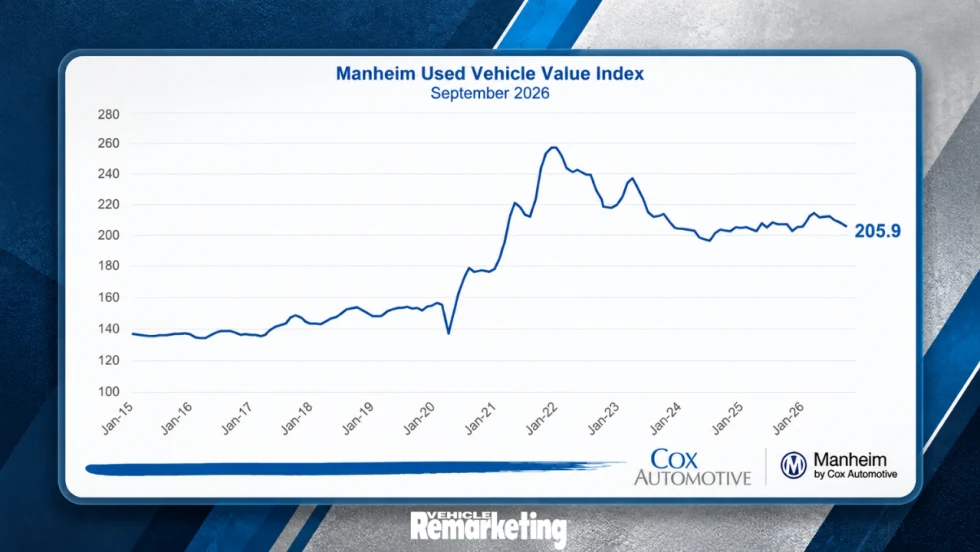
Wholesale Used-Vehicle Values Fall as Cox Automotive Cuts 2026 Forecast
Wholesale used-vehicle prices declined in September as depreciation accelerated, prompting Cox Automotive to lower its year-end forecast.
Read More →
FLD Promotes Three Executives in Leadership Changes
FLD has promoted three longtime executives, naming Gary Mott CEO, Richard Mallek president, and Ron Sanders managing partner.
Read More →
Ford Pro Launches Certified Pre-Owned Program for Commercial Vehicles
Ford Pro Advantage will offer certified pre-owned Class 1-7 commercial vehicles through more than 700 Ford Pro Commercial Vehicle Centers.
Read More →
Copart to Acquire ACV in $1.9 Billion Deal
The acquisition would expand Copart beyond its traditional salvage business into dealer-to-dealer wholesale remarketing while adding ACV’s vehicle data, inspection, and valuation technology.
Read More →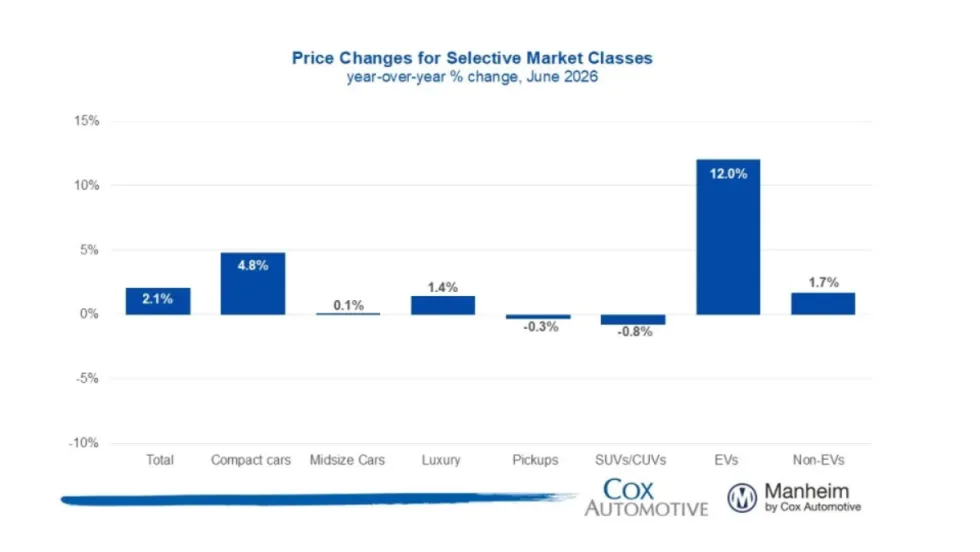
Manheim Index Shows Used-Vehicle Wholesale Prices Up 2.1% in June
The market is seeing stronger appreciation in older used vehicles this year, and the most affordable segments have been among the year’s best performers.
Read More →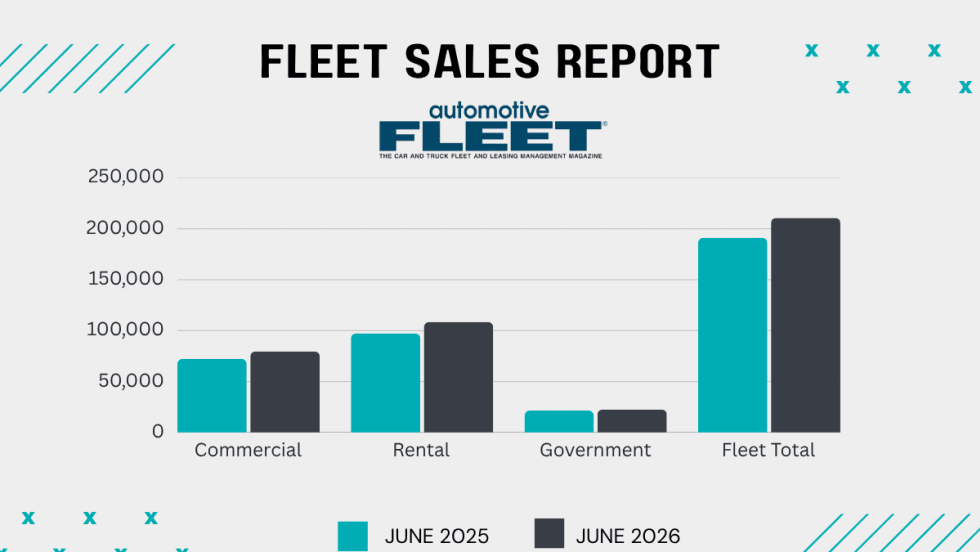
Commercial Fleet Sales Contribute To June, YTD Gains
The fleet sector has boosted its vehicle purchases at a reliable pace in the first half of this year compared with 1H 2025.
Read More →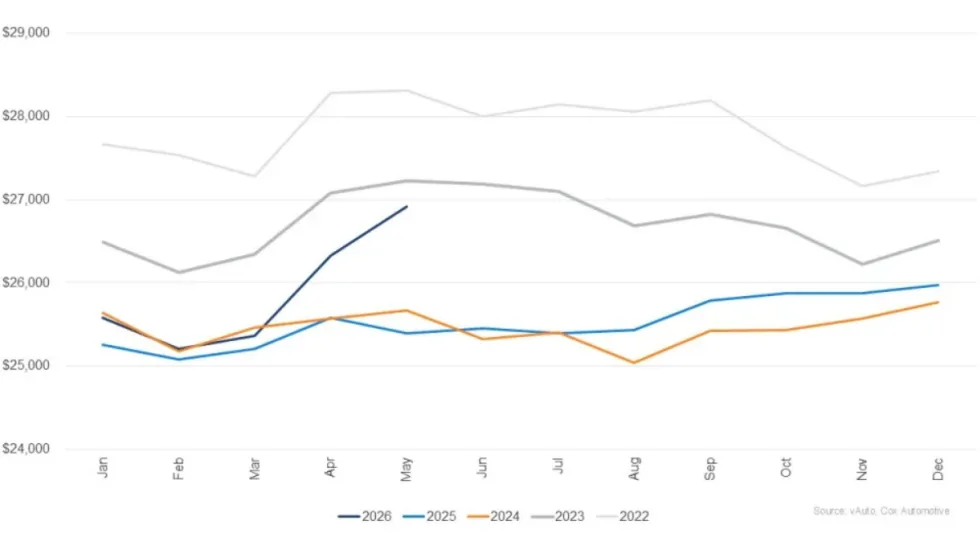
Used Vehicle Prices Climb Higher As Sales Pace Slows
The higher prices at used retail reflect strong wholesale values earlier in the spring, particularly for older, more affordable vehicles.
Read More →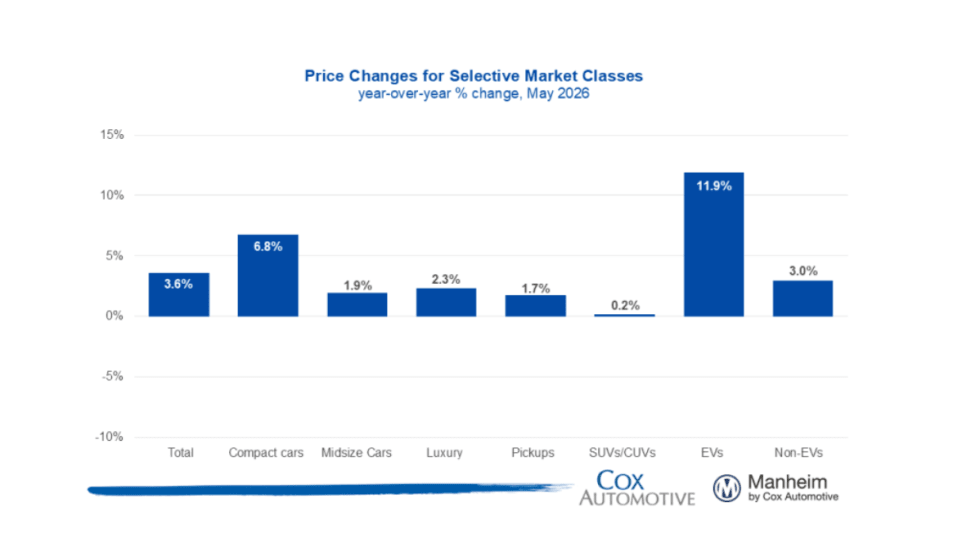
Wholesale Used Vehicle Market Sustains Moderate Rise In Values, Prices
Trends continue to normalize after a strong start to the year, as consumers contend with higher gas prices in the coming summer months.
Read More →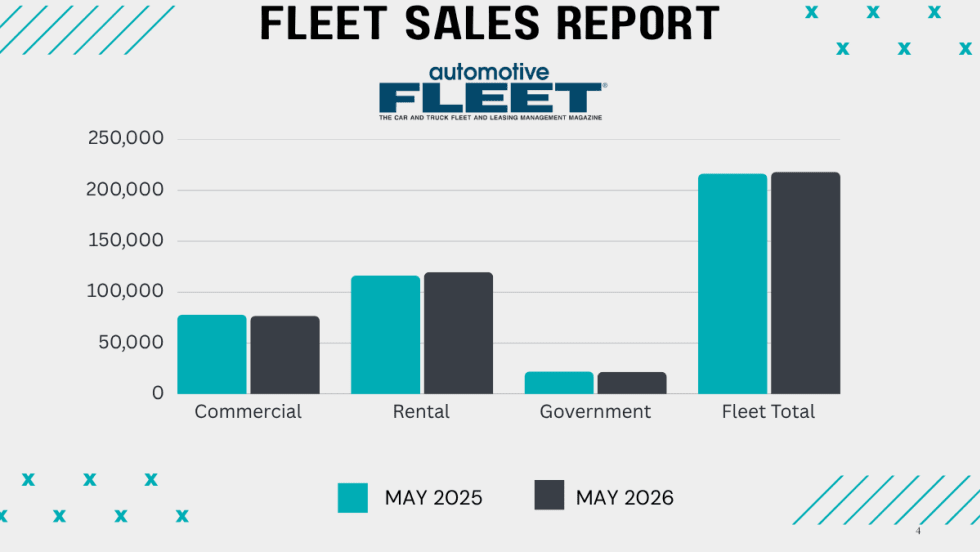
Commercial Fleet Sales Still Lead Sectors Despite May Mini Dip
The U.S. economy's continued growth and positive business investment are creating a favorable environment for fleet vehicle demand.
Read More →