




It's a Lightweight Material World
There is no one-size-fits-all lightweight materials solution for work trucks. Experts weigh in about the pros and cons of aluminum, fiberglass composites, advanced high-strength steel, plastic composites, and carbon fiber.


Carbon fiber is extremely strong, durable, lightweight, and has no corrosion issues. Of the lightweight materials currently on the market it is the most expensive. Current research is targeted at lowering cost.
Photo: @ISTOCKPHOTO.COM/DAVEALAN
Lightweight materials in truck bodies enable fleets to increase payload, reduce fuel costs, and improve their environmental impact.
"You can keep the same vehicle and get better fuel economy. You can go to a smaller vehicle but carry the same payload. Or, you can maintain the same vehicle weight and have more truck payload. The use of lightweight materials benefits you in multiple ways," said Bob Johnson, director of fleet relations, NTEA.
"The metric the U.S. Department of Energy uses is that every 10-percent reduction in total vehicle weight improves fuel economy by 6.5-percent," said Eric Paul, VP sales and marketing, BrandFX Body Company, Fort Worth, Texas. "And, for every gallon of gasoline saved, you can eliminate 19.4 lbs. of carbon from the atmosphere. Reduction in weight also means a reduction in maintenance costs because the lighter body requires less energy, enabling the truck to operate at a higher rate of efficiency, causing less wear on tires and brakes."
Yet, despite the benefits of vehicle weight reduction in general, not all lightweight materials are the same or right for every fleet. One material may be stronger than another; one may be lighter, and one may be more expensive. And, as more body manufacturers begin to offer lightweight alternatives to conventional steel, how do fleet managers determine which materials work best for their application?
Below is a guide to lightweight materials, with an in-depth analysis of the advantages and limitations of each prominent material technology used today.
ALUMINUM
Advantages
"Relative to some other lightweight metals, aluminum is a mature material that can be applied directly to save approximately 40% in weight compared to traditional steel," said Keri Fulton, spokesperson for the Office of Public Affairs, U.S. Department of Energy's (DOE) Vehicle Technologies Program. "Aluminum is abundant and manufactured in high volumes for the construction and aerospace industries, among others."
Paul of BrandFX agreed: "The manufacturing process times [for aluminum] are relatively quick because the metal is easy to bend, easy to stamp out, so you can send it down the production line much faster. Aluminum is readily available, and can be easily recycled."
Limitations
"Aluminum, as a skin material for a truck body, works well. Using it as a structural piece is not so good," Paul cautioned. "The predominant grade aluminum for body manufacturing will lose 80% of its strength when welded unless it has been re-tempered. So, it's not a very good material for work trucks having a 10-plus year service cycle, unless it is re-tempered or strengthened with more aluminum, which then defeats the weight savings and cost effectiveness. Many aluminum body manufacturers have a disclaimer in their catalogs stating, 'Not Recommended for Off-Road Use,' and 'Do not walk on top of side packs.' "
According to Fulton of the DOE: "Aluminum components are often more expensive to produce than steel components. Aluminum sheets can be difficult to form into complex shapes at room temperature. Robust aluminum welding techniques are available, but are not always compatible with existing infrastructure and expertise in a steel welding shop."
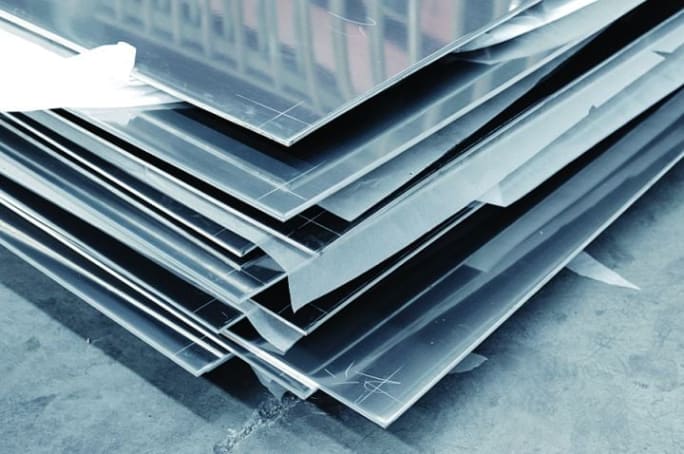
Aluminum is a "mature" material that can be applied directly to reduce weight by up to 40 percent. Its chief advantage is as a skin material, and is limited for use as a structural support.
Photo: @ISTOCKPHOTO.COM/TEEKID
FIBERGLASS COMPOSITES
Advantages
"Fiberglass offers a nice appearance and slight to significant weight savings, at only a minor cost differential in today's world," said Johnson of the NTEA.
"There's intrinsic value to fiberglass because it looks better longer, which is important since commercial trucks serve as a rolling billboard," said Paul of BrandFX. "And, the lifecycle is 20-plus years, so you can continue to recycle the bodies over a longer period of time. This cuts down the number of bodies required to be manufactured each year, which minimizes a fleet's impact on the environment while reducing the body's total cost of ownership. So [fiberglass] is green to build and green to use," Paul explained.
Limitations
"When you talk about fiberglass, no two sheets are the same. Its strength depends on the core material, which varies by body manufacturer," Paul said. "Think of fiberglass as skin. It's the core material that counts to provide sufficient physical properties. BrandFX uses a structural foam core because it doesn't weigh a lot and is impervious to water. So, a lot depends on the core material and how the body is constructed."
Johnson of the NTEA noted, "Fiberglass does not lend itself to one-of-a-kind custom bodies. Since fiberglass bodies require a mold, they tend to be much more common in higher-volume applications."
Paul of BrandFX would also recommend that, when attaching accessory items, such as ladder racks, air compressors, welds, etc., bolts be augmented with backing plates and/or fender washers in order to spread the direct load out over the laminate. "Pinpoint load of the composite material would be an incorrect method of attaching an accessory, which may result in damage," he said.
ADVANCED HIGH-STRENGTH STEEL
Advantages
"While high-strength steel (HSS) is currently the standard for truck cabs, new generations of advanced high-strength steel (AHSS) can provide weight savings of up to 25 percent and maintain strength for passenger safety at minimal incremental cost," said Fulton of the DOE. "First generation AHSS is currently finding applications throughout the passenger and heavy-duty vehicle industries. Third generation AHSS is in development but may be able to further reduce weight while providing high strength, high stiffness, and low cost."
The NTEA's Johnson added, "You can get some pretty significant weight reduction, because high-strength steel can be thinner and thus lighter than conventional steel, yet retain structural rigidity. Repairability is also good, and, while the cost is more than conventional steel, it's cheaper than aluminum."
Limitations
"You still have some of the corrosion issues with high-strength steel that you do with conventional steel," Johnson warned. "You have to make sure it's treated properly for corrosion."
PLASTIC COMPOSITES
Advantages
"As long as you have a mold built, you can make virtually any style, shape, and size panel you want to make. The biggest advantage from a work truck perspective is significant weight reduction," said Paul of BrandFX.
An example of a truck that uses a significant amount of plastic in the body is the Isuzu Reach delivery vehicle, which combines an Eco-Max diesel Isuzu chassis with an integrated composite body by Utilimaster Corp, a subsidiary of Spartan Motors.
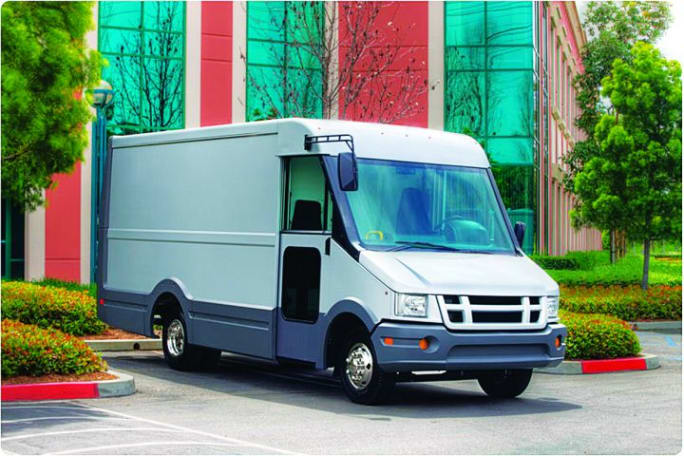
Federal Express (FedEx) recently purchased several Isuzu Reach vans similar to the one above that are constructed out of plastic components. This resulted in a 700-lb. reduction and 35-percent fuel savings. The Reach uses high-impact plastic for the lower cladding and one-piece plastic molded roof.
Photo: Isuzu
Reach vans - which United Parcel Service (UPS) is currently testing - tout a 700-lb. weight reduction and tested 35-percent fuel savings. The body uses high-impact plastic for the lower cladding and one-piece plastic molded roof.
"Since commercial vehicles are utilized for revenue generating activities, downtime is very costly to fleet managers," said John Marshall, senior vice president sales and marketing, Utilimaster Corp. "To resolve this problem, our engineers designed molded-in-color [plastic] lower body panels and sidewalls with embedded paint colors. These panels are inherently corrosion and damage resistant to provide longer vehicle life. In collision situations, the panels are easily replaced with simple hand tools. A repair can be completed in an hour without the cost and downtime of sending the vehicle to a body shop."
Limitations
"The downside to keep in mind is plastic's susceptibility to heat, degradation, brittleness, and UV fading over time," said Paul of BrandFX. "The costs are higher than conventional materials and process times are longer, although often shorter than build times for fiberglass composites."
However, Marshall of Utilimaster noted that, "while there were plastic limitations in the past, automotive OEMs successfully build sport utility and commercial vehicles with injection molded vehicle cladding. Utilimaster applied the same advanced materials and in-mold paint process in the build of our commercial vehicles."
CARBON FIBER
Advantages
"Carbon fiber is extremely strong, extremely durable, has no corrosion concerns, and achieves tremendous weight savings. I have seen a prototype small service body where one person could pick the body up," said Johnson of the NTEA.
Paul of BrandFX agreed. "Carbon fiber is the lightest known synthetic composite available today. It's 40- to 50-percent lighter than our fiber-composite service body. We manufactured a body out of carbon fiber for one of our clients, and the door that's 72 inches long weighs less than the hardware to install it," he said.
Limitations
"The cost is extremely high at the moment but it's coming down slightly. I wouldn't call it a mainstream technology at the moment, but I expect to see it more and more," said Johnson.
Lightweight Considerations
When choosing a lightweight material to use in a fleet work truck, Johnson of the NTEA said that there are three factors to consider:
Drivecycle. "You have to analyze your drive cycle to determine whether or not lightweighting will have any benefit to you in the first place," Johnson advised. "If I drive a truck three to four miles to the worksite and it sits there all day, then I probably won't gain anything by reducing weight. Or, I won't gain enough savings to reduce the cost differential. If I have an application with a lot of mileage, such as pickup and delivery, then lightweight materials might be worth the investment."
Lifecycle. "If I just keep the truck for two to three years, it doesn't make a lot of sense to put more money into reducing corrosion [a common benefit with most lightweight materials]. If the truck's lifecycle is 10-15 years, then longevity and corrosion resistance become very important - and worth the higher initial cost," Johnson said.
Cost-benefit analysis. "Once you've identified the benefits you're looking to achieve - weight reduction, corrosion resistance, etc. - quantify it based on the cost differential between each of the lightweight technologies to see which material will give you the better payback," Johnson said.
Peering into the Future
Does lightweight technology have a future in the industry - and, if so, will one material win out over another or will each find an industry niche?
Johnson of the NTEA doesn't necessarily see one winning out over the other.
"Whichever technology gives you the greatest cost-benefit scenario will dominate," Johnson predicted. "But, I don't know what that will be right now. There's no question that weight reduction will be critical in the future, especially as fuel costs increase. Yet, there's no one technology that is perfect for all applications. Theoretically, carbon fiber could probably be the technology of the future, but the fabrication costs and volume issues must be resolved for it to become more mainstream. There may be technologies that actually reduce fabrication costs, and that would be a total game changer. But, I can't guess what they would be at this point."
According to Paul of BrandFX, the choice will come down to increased environmental awareness and environmental legislation.
"Unlike other 'green' technologies, which are subsidized by the government, lightweight materials have been used since the CAFE standards were first introduced in 1975 to improve fuel economy," Paul said. "Additionally, rightsizing vehicle payloads as a result of lightweight materials can produce substantial reductions in capital acquisitions. The future of lightweight materials is, in our view, dependent upon fleets educating themselves on newer technologies, and how those technologies can improve their vehicle efficiency and cost-benefit as opposed to just jumping on the subsidized bandwagon for public relations notoriety."
The DOE's Fulton said the future depends on two factors - high performance and lowered cost.
"No single material is expected to become a clear-cut leader. Instead, manufacturers are expected to develop optimized designs that use materials with the best cost/benefit proposition for each component of the truck," Fulton said. "The Department of Energy is working on variations of exotic materials that provide significant performance improvements at reasonable costs. For example, carbon fiber composites have the potential to save weight by more than 50 percent compared to steel; however, they are still expensive. Lowering the cost of carbon fiber could allow work trucks to be made of materials once reserved for stealth fighters and racecars. Long-term research is underway to develop an automotive grade carbon fiber at lower costs than today's traditional aerospace grade fiber."
Originally posted on Work Truck Online
More Vehicle Research
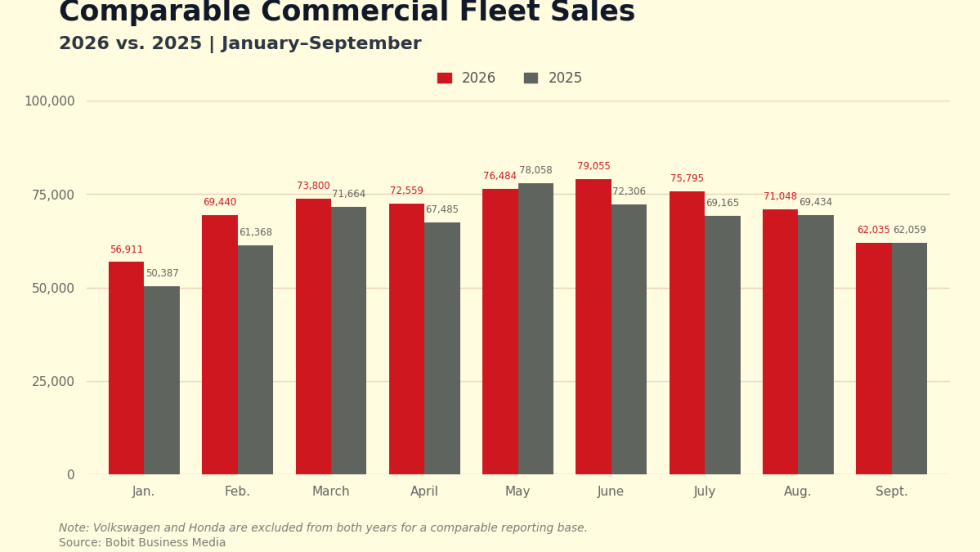
Commercial Fleet Sales Rise 5.8% Through September 2026
September commercial fleet sales were essentially unchanged from a year earlier, slowing year-to-date growth while keeping volume ahead of 2025.
Read More →
Hall of Fame Inductee: John Dmochowsky
The longtime Mondelēz International fleet executive joins the Automotive Fleet Hall of Fame.
Read More →
Hall of Fame Inductee: Lee Miller
After more than four decades at Boehringer Ingelheim, Lee Miller leaves a legacy built on fleet expertise.
Read More →
Hall of Fame Inductee: Mark F. Petersen
From managing fleets of thousands of vehicles to advancing safety and mentoring fellow professionals, Mark F. Petersen made his mark across both the corporate and supplier sides of fleet.
Read More →
When Charger Downtime Becomes a Fleet Availability Problem
As EV deployments move beyond pilot programs, charger reliability can directly affect vehicle readiness, driver productivity and route scheduling.
Read More →
2027 Nissan Rogue Hybrid Adds e-POWER, Standard AWD
The new Rogue Hybrid uses Nissan’s e-POWER system with dual electric motors, offers an estimated 40 mpg and starts at $35,490.
Read More →
2027 Subaru Forester Adds First Wilderness Hybrid
The 2027 Forester lineup starts at $29,995 and adds a Wilderness Hybrid with 194 combined horsepower and 9.3 inches of ground clearance.
Read More →
EV Realty Names Henrik Holland President as Charging Platform Expands
The former Prologis Mobility and Shell executive will help expand EV Realty’s truck charging business and move its power-first infrastructure model into autonomous vehicle depots and other fleet sectors.
Read More →
Mercedes-Benz Introduces Electric GLC With Up to 350 Miles of Range
The GLC 400 4MATIC Electric features an 800-volt architecture, 330-kW DC fast charging and a 94-kWh battery, along with Mercedes-Benz's new MB.OS operating system.
Read More →
Fleet Has a Talent Pipeline Problem, not a Talent Problem
Where will the next generation of fleet leaders come from, and what does the industry need to do differently to find them?
Read More →