




Industry Pioneer Recalls Accident Management Origins
Accident management is one of the key services fleets use to help control costs. It wasn’t always the case; one of the pioneers of this service, Bob Martines, explains its origins, where it is today, and where it’s headed.
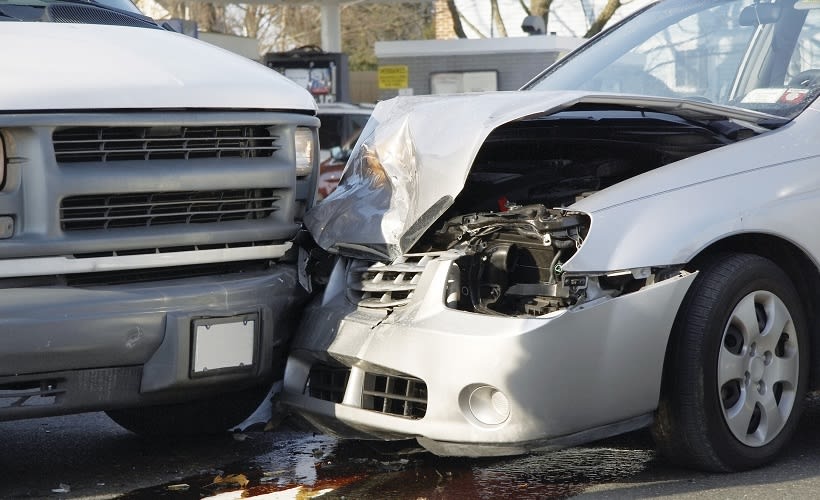
As with nearly every other service, vehicle, and program in the fleet industry, accident management has evolved to something that might be unrecognizable even in the late 1970’s
Photo courtesy of Nycshooter via istockphoto.com
Despite the explosion of advancements in vehicle and fleet management technology, there remain two programs that fleets of nearly any size use to help them manage cost: maintenance management and accident management.
Both offer administrative relief, particularly today when staff and other resources are becoming scarcer than ever; nationwide coverage, certified expertise, and remove drivers from their respective processes. But it wasn’t always this way. When company vehicle drivers were involved in an accident, they were central to an awkward and lengthy process to get repairs.
Industry Pioneer
One of the key industry pioneers toward the development of accident management is Bob Martines, founder of Corporate Claims Management (CCM). His list of accomplishments in the industry include:
An active NAFA member, Martines has served on several chapter boards (NY/Intercounty, Philadelphia, and New Jersey)
An instructor for NAFA’s estimating/accident repair module
2011 induction to the Automotive Fleet Hall of Fame
Won NAFA’s ‘Affiliate of the Year’ Award in 2003
Selected by NAFA’s executive director and president to serve as the affiliate trustee on the organization’s national board in 2016
Before Accident Management
Prior to CCM, the first accident management company was Salex Fleet Services, which was founded in 1974.
“Prior to Salex Fleet commencing operations, there was no uniform program offered by any lessors or independent companies for fleet managers to take advantage of,” Martines said of vehicle repair processes before accident management services were developed.
Drivers were often required to obtain two or three estimates for repairs, and most fleets had no auto body expertise to bring to bear.
“They (fleet managers) had to take telephone calls from shops throughout the country, negotiate the repair and hope the shop billed them,” he said.
If they wouldn’t, Martines said, either the driver had to pay or the fleet manager would have to have a check cut and sent so that the repaired vehicle would be released. “Once paid, the fleet manager had no recourse regarding the quality of repairs which, in the early days, was questionable at best,” he added.
Then there was subrogation. “Subrogation was almost non-existent in the fleet world,” Martines recalled. “Accidents were deemed a ‘cost of doing business,’ and unless there were injuries to the company driver or third -party, most companies absorbed the loss.”
The Birth of a Fleet Service
“Like anything in this world, when there is a problem, someone creates a solution,” Martines said. “Accident management grew out of need.” The cobbled together processes (or lack of one) of the past accident management process cried out for a solution.
Martines said Salex Fleet was the first independent company to provide the kind of accident repair services fleets enjoy today.
“To give due credit, Sal Crimi and Alex Gianoupolos formed Salex, first as a transmission service provider, in the New York City metropolitan area,” explained Martines. And when fleet managers saw the relief they got from the new company, they sought more.
“Alex, being an astute business owner, recognized the need to expand the scope of Salex,” Martines recalled. “Having some background in the auto repair industry with my dad, and having 100% support from Alex, I quickly took the lead on building a detailed accident management program with specific shops across the country.” Another key individual, CCM VP Brian Colvin, was also incredibly supportive in Martines’ quest.
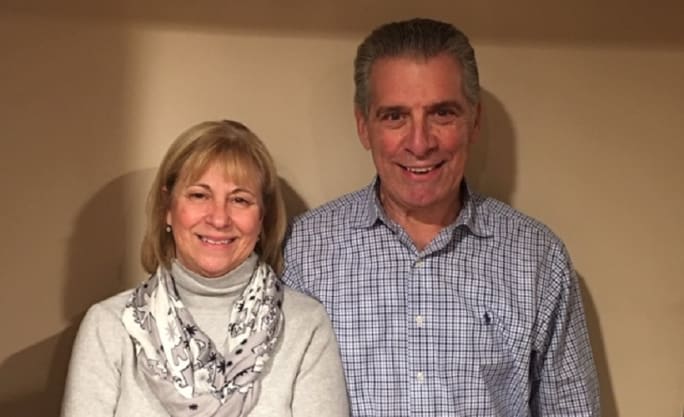
Bob Martines, founder of CCM, with wife, Emily, who works as an accounting assistant for CCM. Martines’ accomplishments in the industry include being inducted into the Fleet Hall of Fame in 2011.
Photo courtesy of Bob Martines.
That national body shop network, as with maintenance management, was one of the foundations of the program. And it wasn’t just a simple “pick a shop, make sure they’ll bill you, and bring them on board” process.“I had a detailed internal check list to make sure the right shop was initiated as a ‘network’ shop,” he explained.
And developing a good, close, working relationship with network shops is critical. “Many of the shops we worked with in the late 1970s are still in operation,” said Martines. “What I find incredibly rewarding is visiting a shop in various parts of the country and getting a warm greeting as if a long-lost family member has returned for a visit.” Because, he concludes, strong relationships with network shops enter into how a shop owner/manager treats one of CCM’s clients.
Evolution and Subrogation
As with nearly every other service, vehicle, and program in the fleet industry, accident management has evolved to something that might be unrecognizable even in the late 1970’s. “The accident repair industry has changed so dramatically of the years,” he marveled. “Back in the late 1970s and early 1980s when vehicles were more affordable, and the life cycle was 36 months/36,000 miles, it was rare that a client would spend up to 50% of wholesale (value) to repair a vehicle.”
And repairs were much simpler then, too. Parts were relatively easy to repair or remove/replace, Martines explained. “As more assemblies, plastics, light-weight steel and aluminum have been introduced along with safety technology, the skillset at the shop to repair vehicles has become more demanding, costs have skyrocketed, and vehicle total losses have increased dramatically.” Adding the dizzying pace of these innovations, it’s difficult for the industry to keep up. “While there is a surplus of information available online, hands-on experience is still vital in making decisions,” Martines concluded.
In the past, the recovery of the cost of damages, or subrogation, wasn’t part of the initial forms of accident management.
“Subrogation was not even a thought until the early 1980s,” Martines said. “No one understood it or realized how to assess liability. It wasn’t until around 1982 or 1983 when Earl Miller, who previously worked for an insurance company, joined Salex.”
Miller said that insurance companies were not recovering the cost of damages for fleet customers. Martines and his team at Salex developed a “crude” demand process, and checks began to come in. “We knew we were on to a new idea that would help our clients,” he said, and fleet subrogation recovery became a reality.
Advantages and Other Services
The advantages of an accident management program, according to Martines, include expertise in negotiating repair costs, reducing ‘supplements’ (additional costs added after repair cost is agreed upon), and administrative ease and informed ‘repair/replace’ decisions, to name a few.
But as with the other venerable fleet program, maintenance management, it provides a start to finish, smooth process for fleet managers to manage physical damage costs. And services don’t stop there. “There is a misconception of accident management in general,” he said. “Full accident management includes taking a complete, accurate, detailed loss notice (accident report) for a client to review for management and liability purposes.”
Followed by directing the vehicle to a qualified, network repair shop, getting a detailed estimate and photographs, negotiating a fair and reasonable repair price, then following up to ensure the shop does the work promptly. “In the event of a total loss, the vehicle is to be picked up and sold for salvage,” he said. “If subrogation is an option, in either situation, subrogation recoveries are also included.” Add to these ancillary services such as safety monitoring, replacement rental vehicles, driver training, and MVRs, and you have a complete program.
In order to be successful, Martines leans on his own experience. “I know from my perspective, I have continually challenged myself and then my team to not accept the mentality of ‘that is the way it works.’ I constantly stay in touch with my clients to see what they need, how we can help them, and relieve them of some burdens.”
Going Forward
Martines said the challenges of accident management will evolve with the industry. “Anyone who will not invest in training and new learning will be left by the wayside,” he predicted. “Smart shop owners will invest in the equipment to perpetuate their existence and compete with dealers,” to keep up with the continuing OEM advances in materials and technology.
Telematics will continue to help fleet managers track drivers, their behavior, and overall costs, he said. But it isn’t quite as simple as signing up for a telematics program. “On the negative side, the plethora of information received is useless unless someone at the company end can do something with it,” he explained.
However, “telematics have made an impact for many companies as drivers know they’re being monitored, not in a challenging way, but to help them be safer drivers.”
Martines will be passing the reins of CCM over to his daughter, Tara Martines-Brennan, the company’s president. “Tara is the heir apparent who now plays a major role in CCM, and has done so for over 26 years,” he said. “Of anyone at CCM that there is ‘blind trust’ both ways it is Tara having my back and me having hers.
More Safety

Fleet Manager’s Ultimate Playbook: Navigating the New Standard in OEM Connectivity
Rising operating costs, driver safety concerns, and unplanned downtime are putting unprecedented pressure on modern fleets. Discover how fleet managers use embedded OEM connectivity and real-time vehicle data to cut TCO, prevent downtime, and protect drivers without aftermarket telematics hardware.
Read More →
From Driver Well-Being to EV Charging | AF News Recap
Mental health belongs in the fleet safety conversation. This week, we’re looking at five ways fleets can support employee well-being before a crisis, plus Holman’s expansion in Mexico, new one-day Fleet Forward passes, and why EV charging demand is outpacing infrastructure growth.
Read More →
Nexar-Nauto Merger Aims to Give Fleets Better Safety Intelligence Through Larger Driving Dataset
Stefan Heck tells Automotive Fleet that combining more than 10 billion miles of driving history with Nexar's AI models will give fleets deeper insights into driver risk and roadway conditions than either company could provide independently.
Read More →
Don't Wait for a Crisis: 5 Ways to Build Mental Health Into Your Fleet Safety Program
For Suicide Prevention Month, fleet and safety leaders have an opportunity to put mental health where it belongs: at the center of workplace safety.
Read More →
How Camera Data Can Strengthen a Fleet’s Insurance Renewal
Insights from a commercial insurance carrier and a broker show how fleets can turn video telematic data, driver coaching, and improved claims results into a stronger case at insurance renewal.
Read More →
The Safest Fleets Aren’t the Ones with the Most Technology
You’ve made the telematics investment. Here’s how to capture the other half of its value and build the safest fleet on the road.
Read More →
Hidden in Plain Sight: Fleet Compliance Risks
Fleet compliance isn't just about having policies — it's about consistently enforcing them. This practical guide reveals six hidden compliance risks common in public sector and shared fleet operations and outlines proven strategies to improve visibility, accountability, and audit readiness
Read More →
NETS Sets 2026 Fleet Safety Benchmark Conference for Indianapolis
The Sept. 15–17 program will feature fleet benchmarking data, case studies, emerging technologies, and implementation strategies while running alongside the NSC Safety Congress & Expo.
Read More →
Off-the-Job Crashes Account for 43% of Employers’ $61.7 Billion Crash Burden
NETS quantifies costs dispersed across fleet, risk, HR, and other departments while providing new per-crash benchmarks for employers.
Read More →
Ram Recalls More Than 1.27 Million 1500 Pickups for Seat Belt Anchor Issue
The recall affects certain 2019-2026 Ram 1500 pickups that may have improperly attached second-row seat belt buckle anchors.
Read More →