




How to Protect & Position Fleet Vehicles During Disasters
The decisions you make before a storm hits can save millions in fleet losses.
May 20, 2025

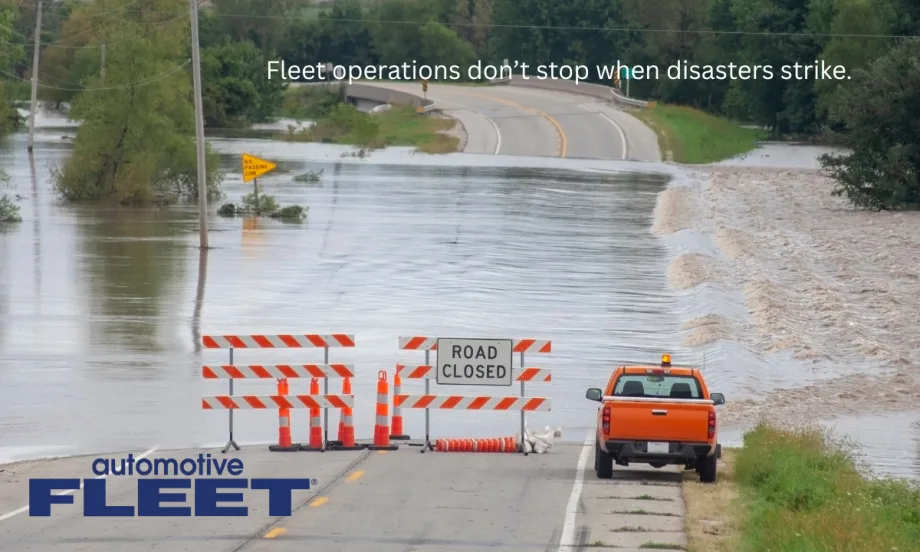
Three fleet experts offer perspectives on how organizations can prepare their vehicles for disaster, avoid costly damage, and keep employees safe and productive.
Photo: Automotive Fleet
6 min to read
Working in Florida, Patti Earley is all too familiar with natural disasters. During Hurricane Milton in 2024, a fellow employee had just left the organization’s emergency operations center when a tornado crossed the road in front of him — and he watched it jump right over his house.
“His wife and baby were home in a closet with the dog,” she said. “Thankfully, everyone was okay, but the front window was blown out and the yard was a mess.”

Patti Earley
Photo: Patti Earley
The next morning, he called Earley to say he was coming in. “I told him, ‘If I were you, I’d stay home and fix your house. We’ll see you tomorrow.’”
The story underscores that fleet operations don’t stop when disaster looms, and neither do their operators.
Three fleet experts — Earley, CAFM, fleet fuel operations manager at Florida Power & Light (FPL), Matthew Salm, COO at Auto Driveaway, and Sue Germaine, director of risk and compliance for Wheels — offer perspectives on how organizations can prepare their vehicles for disaster, avoid costly damage, and keep employees safe and productive.
Vehicle Movements: Thinking Ahead
“The ‘before’ phase of a disaster is all about preparation,” said Salm. That includes everything from trimming hazardous trees near vehicle storage areas to identifying staging locations well in advance of a storm.
Germaine concurs: “At Wheels, our disaster response process begins before an incoming disaster hits,” she said. “Our teams closely monitor disasters, proactively identifying at-risk vehicles at dealers, upfitters, and in the field.”

Sue Germaine
Photo: Wheels
“We coordinate with clients to work with them to adjust fuel card restrictions, support rental requests, and prepare drivers for potential fuel shortages or route disruptions.”
For hurricanes, which typically offer days of advance notice, Auto Driveaway’s network often gets the call to extract vehicles from vulnerable areas, sometimes just a few blocks inland, sometimes hundreds of miles away. “Each situation is different,” said Salm. “It’s about knowing your goal. Do you need to save the vehicles or stage them for post-storm use?”
That’s why relationships with transporters matter. A trusted logistics partner can help determine whether your vehicles need to move four miles or 400. “If we know there’s a safe parking deck nearby, we’ll advise you,” Salm said.
Salm also advises fleets to assess their infrastructure: Do you have gates that can be opened remotely in a power outage? Do you have overflow lots that are actually accessible when trees come down?
Ultimately, said Salm, it’s crucial to understand that these movements must happen well before a storm’s arrival as is logistically possible. Waiting until a storm path is confirmed is often too late to safely move large volumes of vehicles.

Matthew Salm
Photo: Matthew Salm
Auto Driveaway stresses that operational constraints and employee safety mean they can only act when moves are planned early and deliberately.
A Utility Fleet’s Perspective: Avoiding the Storm Surge
At FPL, flooding is the biggest risk, not wind. “Storm surge is what takes vehicles out. Once it starts, you’re not moving anything,” she said.
FPL monitors hurricane paths with help from an in-house meteorologist and uses staging areas like the Daytona Speedway to position both its own fleet and incoming mutual aid resources.
Commercial fleets won’t have their own meteorologist. But they can emulate one with regional alerts and apps that can help with proactive tracking to avoid reactive scrambling.
Most of FPL’s vehicles are assigned to the same operators, who are responsible for driving them to safer ground. “We rarely use outside transporters,” Earley said. “Our team is already mobilizing before the storm hits.”
Earley also emphasized the need for a formal checklist, one that covers everything from fuel levels to emergency kits in each vehicle. “Your drivers are your first responders,” she said. “Give them what they need to be safe and self-sufficient.”
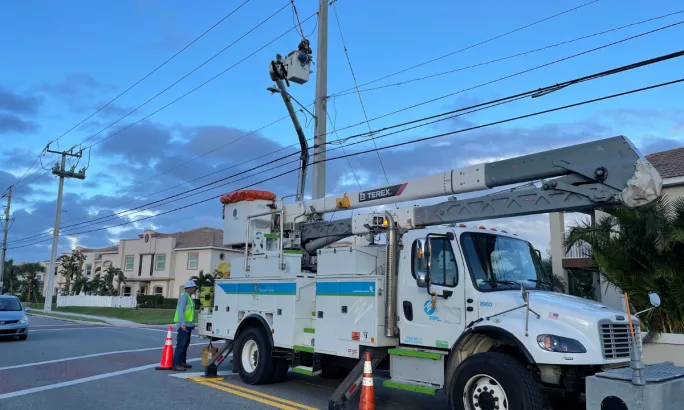
A Florida Power & Light (FPL) begins service restoration in Vero Beach, Fla. after Hurricane Nicole.
Photo: Florida Power & Light (FPL)
Don’t Wait for the Forecast to Make a Call
One of Salm’s biggest pieces of advice is to get in touch early — not when the storm is already on track. Too many fleets wait until the storm path is confirmed, by which time windows of safe movements may have already closed. While Auto Driveaway prioritizes long-standing customer relationships, capacity can still become constrained.
If moving vehicles isn’t feasible, communication is critical. “Sometimes the best we can do is provide condition assessments and photos post-storm,” Salm said. “Just knowing what you’re dealing with helps reduce the uncertainty.”
He also recommends documenting vehicle condition before the storm: “Take walkaround videos or timestamped photos. Insurance claims are much easier when you have a visual record.”
The Cost of Ignoring the Risk
Despite advanced warning, the decisions made before a storm can mean the difference between preserving a fleet or losing it entirely. Earley shared one sobering example from her time assisting utility fleets after Superstorm Sandy.
“I talked to a fleet manager in New York City who had 300 vehicles parked in a structure ahead of the storm,” she recalled. “They were told not to use that location — and they lost all of them when it flooded.”
The lesson: Know the vulnerabilities of your storage locations and vet them carefully. “Even in areas that aren’t typically prone to flooding, you can be very surprised,” Earley said.
Smart disaster planning starts with knowing your sites and their inherent risks. Don’t just rely on past weather events; reevaluate your facilities using current floodplain maps and worst-case projections.
Triaging Vehicles, Prepare for Repairs
During the event, it’s all about staying connected with the supplier network, tracking fuel availability, roadside service activity, and port or plant closures, Germaine said. “In heavily impacted areas, our emergency roadside network shifts to prioritize safety and local emergency coordination.”
Post-storm, the challenge becomes triaging damaged vehicles and restoring service. “For us, it’s like medical triage,” said Salm. “The greens go back into service, the yellows may need repairs, and the reds might be auction-bound.”
“Once the immediate threat passes, we conduct outreach to assess the condition of client vehicles and any supply chain interruptions,” Germaine said, adding that Wheels triages too, based on operational urgency around coordinating repairs, rentals, or alternative transportation when needed.
Totaled vehicles will need replacement rentals. Fleets with rental agreements already in place will get to the front of the line. “Don’t try to start that conversation after the storm,” Earley warned.
Earley advised that fleets also prepare for repair facility outages through vendor diversification. Salm agrees: “Even if a facility isn’t damaged, they’re going to be overwhelmed with demand,” he says. “Building a relationship with a secondary vendor or knowing where you can tow overflow vehicles is critical.”
Recovery isn’t just about repairing assets, it’s about protecting operational continuity. Earley suggests maintaining a buffer of ready-to-deploy vehicles by holding over some outgoing vehicles during storm season.
“We delay auctioning some of our equipment just in case we need it post-storm,” she explained.
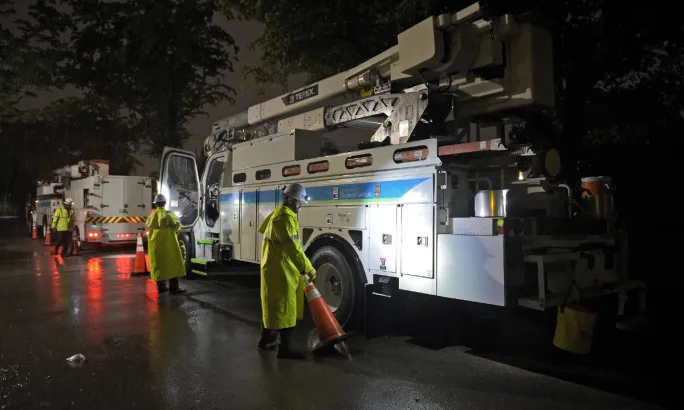
A Florida Power & Light (FPL) sets up for storm restoration in West Miami, Fla.
Photo: Florida Power & Light (FPL)
Relationships Are Your Best Asset
Both Salm and Earley emphasized that trusted relationships with logistics providers, vendors, and internal teams are the foundation of successful disaster response. “Assets can be replaced. People cannot,” said Salm. “But if you prepare with the right partners, you’ll protect both.”
Fleets should conduct a post-event review to refine their plans. What went well? What needs work? Who should be at the table earlier next time?
“Every storm teaches us something new,” said Earley. “Smart fleets use those lessons to be stronger next time.”
Subscribe to Our Newsletter
More Safety

Sponsored•October 1, 2026
Fleet Manager’s Ultimate Playbook: Navigating the New Standard in OEM Connectivity
Rising operating costs, driver safety concerns, and unplanned downtime are putting unprecedented pressure on modern fleets. Discover how fleet managers use embedded OEM connectivity and real-time vehicle data to cut TCO, prevent downtime, and protect drivers without aftermarket telematics hardware.
Read More →
From Driver Well-Being to EV Charging | AF News Recap
Mental health belongs in the fleet safety conversation. This week, we’re looking at five ways fleets can support employee well-being before a crisis, plus Holman’s expansion in Mexico, new one-day Fleet Forward passes, and why EV charging demand is outpacing infrastructure growth.
Read More →
Nexar-Nauto Merger Aims to Give Fleets Better Safety Intelligence Through Larger Driving Dataset
Stefan Heck tells Automotive Fleet that combining more than 10 billion miles of driving history with Nexar's AI models will give fleets deeper insights into driver risk and roadway conditions than either company could provide independently.
Read More →
Don't Wait for a Crisis: 5 Ways to Build Mental Health Into Your Fleet Safety Program
For Suicide Prevention Month, fleet and safety leaders have an opportunity to put mental health where it belongs: at the center of workplace safety.
Read More →
How Camera Data Can Strengthen a Fleet’s Insurance Renewal
Insights from a commercial insurance carrier and a broker show how fleets can turn video telematic data, driver coaching, and improved claims results into a stronger case at insurance renewal.
Read More →
The Safest Fleets Aren’t the Ones with the Most Technology
You’ve made the telematics investment. Here’s how to capture the other half of its value and build the safest fleet on the road.
Read More →
Sponsored•August 7, 2026
Hidden in Plain Sight: Fleet Compliance Risks
Fleet compliance isn't just about having policies — it's about consistently enforcing them. This practical guide reveals six hidden compliance risks common in public sector and shared fleet operations and outlines proven strategies to improve visibility, accountability, and audit readiness
Read More →
NETS Sets 2026 Fleet Safety Benchmark Conference for Indianapolis
The Sept. 15–17 program will feature fleet benchmarking data, case studies, emerging technologies, and implementation strategies while running alongside the NSC Safety Congress & Expo.
Read More →
Off-the-Job Crashes Account for 43% of Employers’ $61.7 Billion Crash Burden
NETS quantifies costs dispersed across fleet, risk, HR, and other departments while providing new per-crash benchmarks for employers.
Read More →
Ram Recalls More Than 1.27 Million 1500 Pickups for Seat Belt Anchor Issue
The recall affects certain 2019-2026 Ram 1500 pickups that may have improperly attached second-row seat belt buckle anchors.
Read More →