




Read More: Motorists Hit 2.1 Million Animals in One-Year Period
How to Avoid Animal Collisions
Fatalities caused by collisions with animals spike in the fall months. An expert shares advice on how drivers can avoid these types of crashes or mitigate risk in the event one occurs.
by Judie Nuskey
September 26, 2023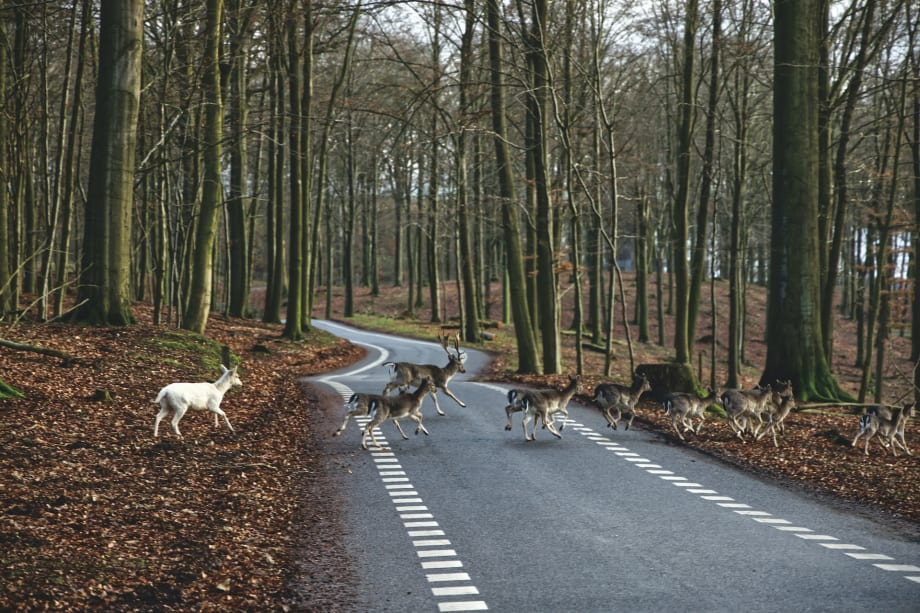
Some 1.5 million drivers hit a deer on a U.S. roadway each year.
Photo: pexels.com/gryffyn m
4 min to read
In the U.S., there are approximately two million collisions between vehicles and animals every year, according to the Federal Highway Administration. In autumn, crashes with animals spike, leading to serious injuries and fatalities. So now is the time to remind your drivers how to avoid danger as deer and other animals wander into the roadways.
Why and Where Animals Abound
In 2021, the highest number of deaths in collisions with animals occurred during October through December, according to the Highway Loss Data Institute (HLDI). The reason for the uptick in incidence is simple: Fall is deer mating and migrating season, so deer are more mobile and likely to be near or on the road.
Collisions with animals are especially common in rural areas — with West Virginia having the most animal collision claims per vehicle — but deer sightings are prevalent even in highly populated areas.
And while deer tend to be the focus for animal-vehicle collisions — with about 1.5 million per year according to the Insurance Institute for Highway Safety (IIHS) — many other creatures can cause crashes, including moose, elk, cattle, horses, foxes, dogs, and squirrels.
Over the past 10 years, Texas had the highest numbers of deaths from collisions with animals. This is due to the size of the driving population, the size of the animal population, and the percentage of rural roads in the state.
Avoiding Collisions
While animals may be more likely to cross your path in the fall, there are steps you can take to avoid a crash. First, it’s prudent to know when these crashes are most likely to occur. IIHS data show that crashes involving animals are more common in the dark, at dusk and at dawn, so stay especially vigilant and on the lookout for animals at these times. They’re also more likely to happen on rural roads and those with higher speed limits.
Second, pay attention to road signs that indicate areas of high animal traffic. Many municipalities use yellow signs to alert drivers to known deer crossing paths or other areas where animals are commonly found on or near the road.
Third, adapt your driving during the fall to compensate for the increase in animal activity. Assume you’ll see animals on your travels and take these steps to avoid them:
Scan continuously. If you spot one deer, expect more, since they tend to travel in groups. Don’t just focus your eyes straight ahead; to anticipate and avoid a run- in with an animal, you need to scan out to both sides, well beyond the shoulder of the road.
Slow down. A reduced speed gives you more time and space to react if an animal darts into the road. It’s especially prudent to drive slower at night, dusk and dawn, when deer and other animals are more active.
Cover the brake. If you see an animal along the roadside, cover the brake with your foot as a precaution. If it ventures onto the road, you’ll be able to respond faster.
Plan your escape. It’s always wise to have an escape route — someplace you can move to in the event of trouble on the road. An escape route is especially helpful if an animal runs out in front of you. Be aware of your surroundings and have an escape route in mind so you can attempt to steer safely around an animal to avoid a collision. If you steer or swerve without that knowledge, you might avoid the animal but hit another vehicle, a guardrail or other object, causing just as much damage and injuries.
Minimizing Risk if a Strike Occurs
If you’re unable to avoid colliding with an animal, there are ways to reduce the odds that you’ll suffer injuries, or your vehicle will sustain major damage.
Wear your seat belt. A study by IIHS found that 60% of people killed in collisions with animals weren’t wearing seat belts. Often, a vehicle runs off the road after striking an animal and the driver sustains serious or even fatal injuries. Wearing your seat belt will greatly reduce your risk of serious injuries or worse in the event of any type of crash.
Brake properly. Another effective way to minimize the impact of a collision with an animal is to use proper braking if a crash seems imminent, particularly with a larger animal like a deer. It’s recommended that you apply pressure to the brake only up until the point you’re about to make impact, and then stop braking. This technique raises the front end of your vehicle — so if you strike the animal, it’s likely to pass under your front end rather than hitting the windshield, which is a far more dangerous situation.
Subscribe to Our Newsletter
More Safety

Sponsored•October 1, 2026
Fleet Manager’s Ultimate Playbook: Navigating the New Standard in OEM Connectivity
Rising operating costs, driver safety concerns, and unplanned downtime are putting unprecedented pressure on modern fleets. Discover how fleet managers use embedded OEM connectivity and real-time vehicle data to cut TCO, prevent downtime, and protect drivers without aftermarket telematics hardware.
Read More →
From Driver Well-Being to EV Charging | AF News Recap
Mental health belongs in the fleet safety conversation. This week, we’re looking at five ways fleets can support employee well-being before a crisis, plus Holman’s expansion in Mexico, new one-day Fleet Forward passes, and why EV charging demand is outpacing infrastructure growth.
Read More →
Nexar-Nauto Merger Aims to Give Fleets Better Safety Intelligence Through Larger Driving Dataset
Stefan Heck tells Automotive Fleet that combining more than 10 billion miles of driving history with Nexar's AI models will give fleets deeper insights into driver risk and roadway conditions than either company could provide independently.
Read More →
Don't Wait for a Crisis: 5 Ways to Build Mental Health Into Your Fleet Safety Program
For Suicide Prevention Month, fleet and safety leaders have an opportunity to put mental health where it belongs: at the center of workplace safety.
Read More →
How Camera Data Can Strengthen a Fleet’s Insurance Renewal
Insights from a commercial insurance carrier and a broker show how fleets can turn video telematic data, driver coaching, and improved claims results into a stronger case at insurance renewal.
Read More →
The Safest Fleets Aren’t the Ones with the Most Technology
You’ve made the telematics investment. Here’s how to capture the other half of its value and build the safest fleet on the road.
Read More →
Sponsored•August 7, 2026
Hidden in Plain Sight: Fleet Compliance Risks
Fleet compliance isn't just about having policies — it's about consistently enforcing them. This practical guide reveals six hidden compliance risks common in public sector and shared fleet operations and outlines proven strategies to improve visibility, accountability, and audit readiness
Read More →
NETS Sets 2026 Fleet Safety Benchmark Conference for Indianapolis
The Sept. 15–17 program will feature fleet benchmarking data, case studies, emerging technologies, and implementation strategies while running alongside the NSC Safety Congress & Expo.
Read More →
Off-the-Job Crashes Account for 43% of Employers’ $61.7 Billion Crash Burden
NETS quantifies costs dispersed across fleet, risk, HR, and other departments while providing new per-crash benchmarks for employers.
Read More →
Ram Recalls More Than 1.27 Million 1500 Pickups for Seat Belt Anchor Issue
The recall affects certain 2019-2026 Ram 1500 pickups that may have improperly attached second-row seat belt buckle anchors.
Read More →