




How Distraction Affects a Driver's Safety
Why distracted driving is on the rise, why there is a month surrounding awareness of the growing problem, and a look at technology aimed toward curbing the dangerous behavior.

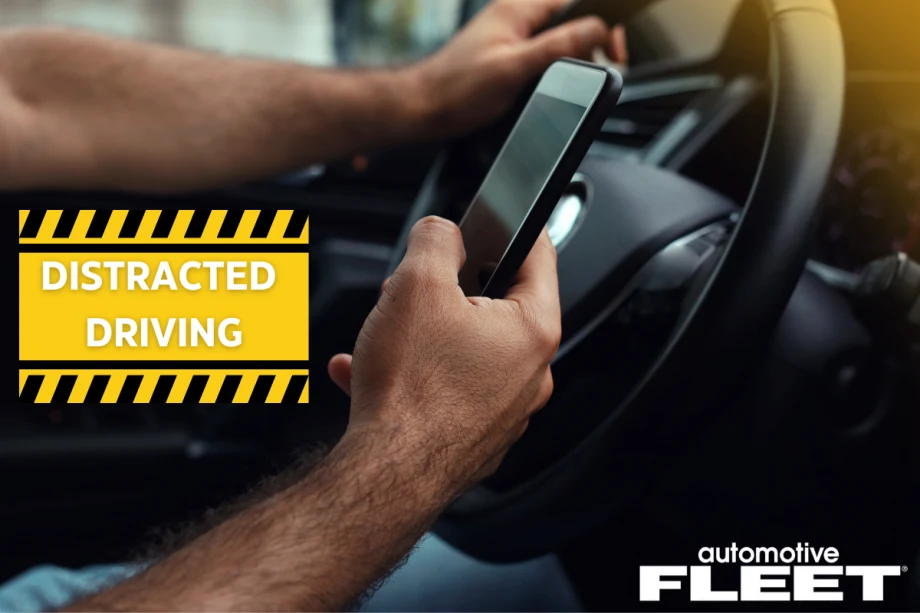
Drivers are challenged to balance job responsibilities and should operate their vehicle safely. If your mind isn’t focused on driving while you’re behind the wheel, you’re mentally distracted from the task.
Photo: Automotive Fleet
Distraction has been an issue for drivers as long as we’ve operated motor vehicles. But today, it’s more prevalent and on the rise for various reasons.
The facts don’t lie: distraction affects your driving and safety behind the wheel. Understanding what happens when you’re distracted while driving and how it impacts your driving capabilities can help you view the dangers differently.
April is Distracted Driving Month, and while attention is dedicated to the month, distraction occurs daily as many drivers spend much of their workday on the road.
Drivers are challenged to balance job responsibilities and should operate their vehicle safely. If your mind isn’t focused on driving while you’re behind the wheel, you’re mentally distracted from the task.
The demands of their job may stress drivers, and they may also be facing challenges at home and with family.
Whatever the source of the stress, it’s likely to occupy their mind as they run through different scenarios, think about the problem, or worry about what may happen.
If it occupies their mind while driving, it’s taking attention away from the critical task of driving safely.
Why Are Drivers So Distracted?
The fast pace of life today encourages people to multi-task, even while driving. When you’re feeling hurried, you may view your drive time as downtime or a good time to catch up on other tasks on your lengthy “to-do” list.
The pace of business is accelerating, creating more pressure for business drivers to multi-task and leaving little room in their schedules to handle necessary tasks while not driving.
Many vehicles are equipped with infotainment systems, advanced technologies, and navigation systems. Like a cell phone, anything that takes your attention from driving — physically, mentally, or visually — increases a driver’s risk.
How Has Distracted Driving Evolved into A Dedicated Month?
Shelley Forney, safety speaker and advocate, lost her daughter Erica tragically to a distracted driver. It was through Forney’s reverence and U.S. Rep. Betsy Markey’s commitment that they submitted to Congress a resolution in 2010 to designate April as National Distracted Driving Awareness Month.
A distracted driver can be held responsible for a crash that they caused, as it is a form of negligence that causes serious harm to you or another driver.
During an investigation, a crash may be found to have been caused by distracted driving if a driver admits to law enforcement to being distracted, if witnesses provide statements, if the driver’s distraction is caught on video with dash cameras that record facing both the road and inside their vehicles, or with audio recordings.
The types of crashes may suggest distraction was a contributing factor. Rear-end crashes are the most common because drivers do not notice that the drivers in front of them have slowed down or stopped, as their eyes are not focused on the road.
Failing to stop at stop signs, drifting into adjacent lanes, and pulling out in front of other drivers can be prevented if today’s drivers do their due diligence to avoid distraction.
Distracted Driving Technology for Fleets
One of the main reasons distraction and a lack of focus cause crashes is that any form of inattention delays when you perceive and respond to a situation on the road.
The more time you need to progress through perceiving and responding, the less time and space you will have to avoid a collision.
Let’s say you’re driving on a multi-lane highway with heavy traffic. The vehicle in front of you is only a few car lengths ahead. You hear an alert that a text message has come into your cell phone sitting on the seat next to you.
You pick up the phone and glance at the screen to see who the text is from. While you’re looking away from the road, the driver in front of you slams on his brakes to avoid debris. But you don’t see that happen because your eyes are on the phone, not the road.
Phone blocking technology is a proactive approach to changing driving behavior. Hardware is installed either in the vehicle or through an app that detects drives and blocks cell phone usage.
Behavior can be changed because the option to text or talk is blocked, managers analyze reports and data, and scores are tracked and shared with drivers, as they know they are monitored to be safe and alert without distractions while driving a company vehicle.
These blockers and apps are detected when the electronic device is picked up while driving.
Fleet safety cameras offer features such as integrated GPS tracking, on-demand video retrieval, monitoring of speeding and harsh braking, and can detect distracted/drowsy driving.
Cameras can protect a fleet with event capture capabilities, provide location-based access searches as to a vehicle’s location, decrease risk with real-time-in-cab audio alerts, notify drivers to take corrective action, warn of potential accidents, and reduce drowsy driving and distracted driving by up to 96%.
Distracted driving is a serious and common problem on our roadways, contributing to thousands of entirely preventable fatalities each year.
Many things compete for our attention today, even behind the wheel. When we allow them to distract us from driving, the results can be devastating.
Looking away from the road for “just a second” could cost you as much as half the time you need to avoid a collision.
This article was authored and edited according to Automotive Fleet's editorial standards and style. Opinions expressed may not reflect that of Automotive Fleet.
More Safety
IIHS Crash Avoidance Tests Reveal Safety Gaps in Cargo Vans and Work Trucks
New crash-avoidance ratings from the Insurance Institute for Highway Safety reveal inconsistent performance among commercial vehicles, with several popular cargo vans and heavy-duty pickups struggling to avoid collisions with other vehicles and pedestrians.
Read More →
What’s Next for Fleet? Safety, AI & Industry Recognition | AF News Recap
Could your company's culture be encouraging distracted driving? This week, we're exploring how workplace expectations affect driver safety, what AI, EVs, and autonomous vehicles could mean for the future of fleet management, and how fleet professionals can strengthen their award nominations.
Read More →
Does Your Fleet's Culture Encourage Distracted Driving?
What happens when the people responsible for enforcing safety rules are the ones setting the wrong example? The answer may reveal why some of the biggest risks to fleet drivers have little to do with what's written in the employee handbook.
Read More →
Fleet Manager’s Ultimate Playbook: Navigating the New Standard in OEM Connectivity
Rising operating costs, driver safety concerns, and unplanned downtime are putting unprecedented pressure on modern fleets. Discover how fleet managers use embedded OEM connectivity and real-time vehicle data to cut TCO, prevent downtime, and protect drivers without aftermarket telematics hardware.
Read More →
From Driver Well-Being to EV Charging | AF News Recap
Mental health belongs in the fleet safety conversation. This week, we’re looking at five ways fleets can support employee well-being before a crisis, plus Holman’s expansion in Mexico, new one-day Fleet Forward passes, and why EV charging demand is outpacing infrastructure growth.
Read More →
Nexar-Nauto Merger Aims to Give Fleets Better Safety Intelligence Through Larger Driving Dataset
Stefan Heck tells Automotive Fleet that combining more than 10 billion miles of driving history with Nexar's AI models will give fleets deeper insights into driver risk and roadway conditions than either company could provide independently.
Read More →
Don't Wait for a Crisis: 5 Ways to Build Mental Health Into Your Fleet Safety Program
For Suicide Prevention Month, fleet and safety leaders have an opportunity to put mental health where it belongs: at the center of workplace safety.
Read More →
How Camera Data Can Strengthen a Fleet’s Insurance Renewal
Insights from a commercial insurance carrier and a broker show how fleets can turn video telematic data, driver coaching, and improved claims results into a stronger case at insurance renewal.
Read More →
The Safest Fleets Aren’t the Ones with the Most Technology
You’ve made the telematics investment. Here’s how to capture the other half of its value and build the safest fleet on the road.
Read More →
Hidden in Plain Sight: Fleet Compliance Risks
Fleet compliance isn't just about having policies — it's about consistently enforcing them. This practical guide reveals six hidden compliance risks common in public sector and shared fleet operations and outlines proven strategies to improve visibility, accountability, and audit readiness
Read More →