




Related: Last-Mile Deliveries Surge in a Socially Distanced World
How COVID-19 has Impacted FMC Operations
Maintaining proper sanitization practices is an essential action that fleet managers must be considerate of as they attempt to thrive in an industry hampered by the coronavirus.

Andy Lundin・Former Senior Editor

Graphic courtesy of geralt via Pixabay.com
3 min to read
And while COVID-19 has made managing fleet harder, FMCs have not halted operations, and are doing their part to aid clients in need, particularly to those who are still considered essential businesses.
“One thing we have consistently seen—there are essential businesses, products, and services that must keep moving to keep people safe and healthy. We understand that this includes our clients’ businesses,” said Tom Coffey, senior VP of sales and consulting, Merchants Fleet. “In addition to trying to be as communicative as possible with our clients, we’re letting them know proactively of all the capabilities that we have to offer at this time that could be applicable to their needs, including temporary lease vehicles, disposing of surplus or unneeded vehicles, and even potentially monetizing vehicles that are owned through sale and leaseback transactions. We do have a significant pool of vehicles that are available for either short-term or long-term leases, especially for those clients that are in an essential use business where they serve the general public.”
Each FMC said it had implemented a temporary telecommuting work policy for its staff, though they are continuing to maintain communications with clients via email and phone, and have included a resource page on their individual websites.
“With information about how COVID-19 is impacting our industry changing by the hour, transparent communication is more important than ever and we continue to update this resource as new information becomes available,” said Bob White, president of ARI. “Above all else, and I cannot stress this enough, we are all in this together. Our team of fleet professionals remain available to help our customers navigate the road ahead and we hope that you and your loved ones remain safe and healthy during this challenging time.”
Amy Hudson, VP, Client Experience, Mike Albert Fleet Solutions echoed the importance of maintaining quality communication during this trying time.
“Our technology infrastructure and internal tools have allowed Mike Albert to make this transition extremely smooth,” said Hudson of Mike Albert. “Our clients should have no issue reaching their support contacts and communication within internal teams appears unaffected.”
Steven Jastrow, VP Strategic Consulting and Analytics, Element Fleet Management, mentioned other ways that Element is bolstering its services amid the COVID-19 pandemic.
"In addition, our consultants have developed a cost impact tool to forecast fleet savings impacts from decreased driving and lower fuel prices – this can help offset larger non-fleet business costs resulting from core business disruption caused by coronavirus," said Jastrow.
Carolyn Edwards, SVP of Client Success, LeasePlan USA, expanded upon ideas of the current situation further, and how the FMC is aiding during this difficult time.
“Given the widespread changes and disruptions caused by COVID-19, we expect that there may be delays outside of our control, particularly in the License and Title and Vehicle Acquisition departments,” said Edwards of LeasePlan. “But we want to be as transparent as possible and keep communicating any updates to our clients.”
Subscribe to Our Newsletter
More Safety
The Safest Fleets Aren’t the Ones with the Most Technology
You’ve made the telematics investment. Here’s how to capture the other half of its value and build the safest fleet on the road.
Read More →
Sponsored•August 7, 2026
Hidden in Plain Sight: Fleet Compliance Risks
Fleet compliance isn't just about having policies — it's about consistently enforcing them. This practical guide reveals six hidden compliance risks common in public sector and shared fleet operations and outlines proven strategies to improve visibility, accountability, and audit readiness
Read More →
NETS Sets 2026 Fleet Safety Benchmark Conference for Indianapolis
The Sept. 15–17 program will feature fleet benchmarking data, case studies, emerging technologies, and implementation strategies while running alongside the NSC Safety Congress & Expo.
Read More →
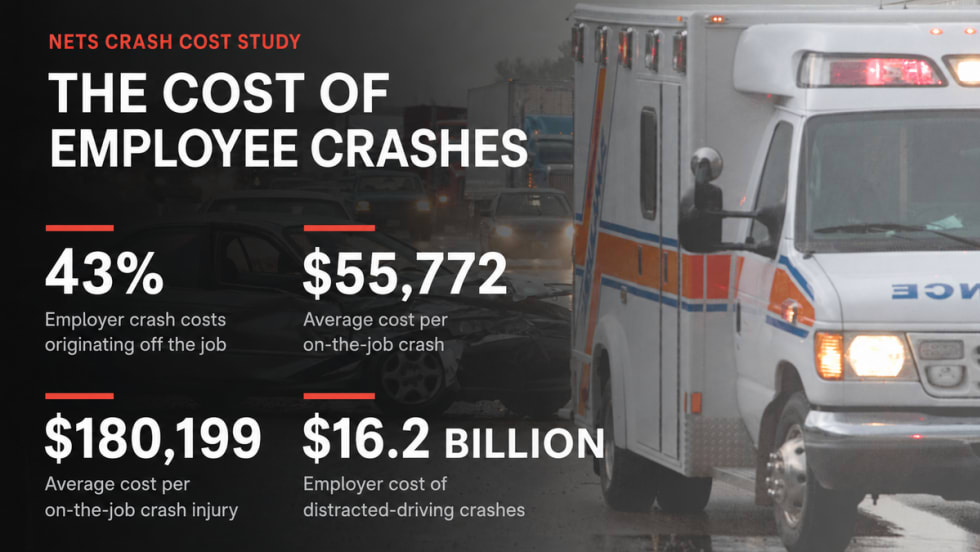
Off-the-Job Crashes Account for 43% of Employers’ $61.7 Billion Crash Burden
NETS quantifies costs dispersed across fleet, risk, HR, and other departments while providing new per-crash benchmarks for employers.
Read More →
Ram Recalls More Than 1.27 Million 1500 Pickups for Seat Belt Anchor Issue
The recall affects certain 2019-2026 Ram 1500 pickups that may have improperly attached second-row seat belt buckle anchors.
Read More →
Sponsored•July 17, 2026
How Better Visibility Cut Speeding Violations by 48%
Fleet leaders don't need more data, they need clearer visibility into what the data is saying. This case study explores how one utility replaced speeding-event counts with a single metric — miles driven in violation — to strengthen safety and significantly reduce speeding violations.
Read More →
Operation Safe Driver Week: Why the Industry's Oldest Safety Campaign Still Matters to Fleets
A look at how a 2007 enforcement initiative became one of the most consequential weeks on the fleet safety calendar, and what it means for your drivers in 2026.
Read More →
Nexar-Nauto Merger Aims to Give Fleets Better Safety Intelligence Through Larger Driving Dataset
Stefan Heck tells Automotive Fleet that combining more than 10 billion miles of driving history with Nexar's AI models will give fleets deeper insights into driver risk and roadway conditions than either company could provide independently.
Read More →
Sponsored•July 2, 2026
From Silos to Solutions: Relationship Management for Safer Fleets
From telematics adoption and driver accountability to policy consistency and risk mitigation, this episode breaks down what it really takes to build a safer fleet culture without slowing business down.
Read More →
IIHS Launches First Commercial Vehicle Safety Evaluations
The Insurance Institute for Highway Safety has begun evaluating heavy-duty pickups and cargo vans for driver protection. Which models earned top marks?
Read More →