




Keep Reading! How to Write Better AI Prompts for Fleet Analysis | Automotive Flee
How AI Can Support Smarter Fleet Maintenance Decisions
AI can help fleets anticipate maintenance needs and make better decisions, but realizing its value starts with clean data, strong processes and measurable results.
by Jon White
September 11, 2026
AI can help fleet maintenance teams turn vehicle data into actionable insights, supporting technicians and fleet managers as they diagnose problems and make maintenance decisions.
Credit:
Automotive Fleet
8 min to read
- AI can assist fleets in anticipating maintenance needs and making informed decisions.
- Achieving the benefits of AI requires clean data and robust processes.
- It is important for fleets to focus on measurable results to realize AI's value.
*Summarized by AI
Editor’s Note: This contributed article reflects the author’s opinions and does not necessarily reflect the perspectives of Automotive Fleet.
Fleet managers do not wake up in the morning thinking about artificial intelligence.
They are thinking about whether the vehicles across their fleet meet the “ready line” and are mission ready. Whether preventive maintenance is current. Whether yesterday’s breakdown will happen again. Whether technicians have the information they need to diagnose a difficult problem. Whether a vehicle can finish its route or needs to come into the shop if a driver sees an issue emerging en route or a DTC appears through a telematics device.
And, ultimately, whether the fleet can provide the service its organization expects at an acceptable cost.
That is the proper starting point for a discussion about artificial intelligence in fleet maintenance.
AI is receiving enormous attention throughout the fleet industry. Some of it is justified. Some of it is hype. The important question for a fleet manager is not, “Do I need AI?”
The question is: Can this technology help me make better maintenance decisions, reduce unplanned downtime, control costs and improve vehicle availability?
We’ve Been Doing Some of This for Decades
When I began forecasting component failures on nuclear submarines and later maintenance costs for Ryder many years ago, we weren’t calling it artificial intelligence.
We were looking for patterns and trends in historical data that could help us anticipate what was likely to happen next. We used simple curve-fitting routines or moving averages, autoregression and, sometimes, ARIMA modeling.
In the past, the data we used was relatively specific to the vehicle or component at hand. It was rather limited.
Today, the data is unbounded and growing exponentially from the vehicle, as well as operational and maintenance systems. The computing technology and algorithms available today are dramatically more powerful, but the fundamental objective has not changed: Use more and better information, along with improved analytical tools, to support better, more accurate and timely maintenance decisions.
After more than four decades working with fleet maintenance systems, predictive analytics, telematics and maintenance operations, I keep coming back to five lessons:
- Clean maintenance data always wins.
- Software cannot fix poor maintenance processes.
- Technicians remain the fleet’s greatest maintenance asset.
- Integration and implementation matter at least as much as algorithms.
- You must measure and prove results—not software features.
Those principles are particularly important as fleets evaluate AI.
What AI Is and What It Isn’t
For fleet maintenance purposes, I use a relatively simple definition:
Artificial intelligence is the ability of computer systems to learn from near-real-time and historical data, recognize patterns, and provide recommendations or predictions that support and improve maintenance decisions.
AI can examine quantities of information that no fleet manager or technician could reasonably process individually: maintenance histories, repair records, fault codes, sensor readings, inspection results, operating profiles and conditions, and other data.
Think about an experienced technician who has diagnosed thousands of vehicles during a career. That technician develops an intuition about problems because he or she recognizes patterns.
AI potentially has the ability to recognize patterns across millions of events.
But AI doesn’t replace that technician.
It provides another source of intelligence to help the technician—and the fleet manager—make a better decision.
AI is not a crystal ball. It will not be correct 100% of the time. It does not replace inspections, good preventive maintenance practices or experienced management judgment.
Its role should be decision support.
The Fleet Technology Ecosystem Is the Bigger Issue
The discussion becomes more interesting when we askwhere AI belongs.
Today’s fleet maintenance operation may already interact with at least three or four major technology environments — and this does not count specialized chassis or component OEM systems:

Credit:
Jon White
- The fleet maintenance management system, which contains work orders, repair histories, PM schedules, labor, parts and cost information.
- Diagnostic systems and repair-information tools, whether supplied by OEMs or independent providers.
- The connected vehicle environment—telematics, GPS, onboard diagnostics, sensors and, increasingly, the vehicle manufacturers themselves.
- Now add a fourth layer: independent providers offering predictive analytics, data science and artificial intelligence.
The challenge is not simply deciding which AI product to purchase. The challenge is determining how intelligence moves among these systems and ultimately reaches the person who has to make a decision.
If a predictive system detects a developing component problem, where should that information go? The fleet management system? The technician’s diagnostic tool? A telematics dashboard? The fleet manager? Operations?
And after the repair is completed, does the AI system receive feedback telling it what actually happened?
That feedback loop is critical. AI must learn from correlated repair results, not simply generate alerts.
This is also where standardized maintenance data becomes increasingly important. If a predicted component failure cannot be reliably correlated with the fleet’s eventual work order and repair history, how do we determine whether the prediction was correct?
AI Is Already Appearing at Several Levels
One useful way of thinking about AI in fleet maintenance is as an evolution.
Level 1: At the first level, AI makes existing information easier to retrieve.
Instead of constructing reports or navigating multiple screens, if implemented correctly, a fleet manager can ask questions in ordinary language:
- Which vehicles haven’t had an inspection in the last 20 days?
- Show me cooling-system repairs on my F-250s during the last 90 days. I think I have a problem.
- Which vehicles have repeat repairs? Why?
- Which work orders have remained open too long?
This may not be predictive maintenance, but it can save considerable time and make information accessible to managers who are not database specialists.
AI provides a resource for fleet management to test or investigate intuitions.
Level 2: The next level is maintenance intelligence.
Suppose a vehicle reports a diagnostic trouble code. Rather than merely displaying the code, an intelligent maintenance system could help answer the questions the fleet actually needs answered:
- What does the fault mean?
- Is the vehicle safe to operate?
- How urgent is the repair?
- What is the most probable cause?
- What is the most probable correction?
- What labor and parts are likely to be required?
- How much downtime should I expect?
- What information would help the technician diagnose the problem?
That changes the conversation from displaying data to supporting a maintenance decision.
Level 3: The next stage is genuinely predictive — and it is where the industry is heading. This means combining vehicle condition, operating data and historical maintenance experience to identify a developing component issue or failure before it creates an unplanned downtime event.
This third level is where much of the promise of AI lies, but it is also where fleets should demand proven, measurable evidence.
Don’t Buy AI. Solve a Maintenance Problem.
Before evaluating an AI solution, identify the problems you are trying to solve.
- Is it excessive unplanned downtime?
- Repeat repairs?
- Road calls and towing?
- Technician productivity?
- PM compliance?
- Troubleshooting time?
- Parts availability?
- Parts reliability?
- Vehicle replacement forecasting?
Once the problem is defined, determine what data is required and whether that data is sufficiently complete and accurate.
Then pilot the technology on a manageable group of assets.
Establish baseline measurements before beginning a pilot.
Establish a controlled testbed. Validate measurements before and during the pilot. The comparable analytics help establish tangible savings. Then you can build a return on investment. If the objective is to reduce unplanned downtime, measure downtime. If the objective is to reduce diagnostic time, measure technician time. If the objective is better vehicle availability, measure availability.
The process can be straightforward:
Assess. Connect. Pilot. Measure. Scale.
Scale the technology because the results justify it, not because the presentation was impressive.
Six Questions Fleets Should Ask AI Providers
When evaluating an AI or predictive-maintenance solution, fleet managers should ask some basic questions.
- Is the AI embedded within a system the fleet already uses, or is it a standalone application?
- If it is standalone, how will it interface with the fleet’s existing maintenance, diagnostic and telematics systems?
- How was the model trained?
- What data does it require?
- How are its predictions validated?
- How is the data normalized and ultimately correlated with the fleet’s maintenance work orders and repair history?
The answers tell you considerably more than a list of AI features.
The Ultimate Test Is Operational
There is another question that I believe deserves more attention:
How does the AI solution affect operations, not just maintenance?
A maintenance prediction has limited value if it merely creates another alert.
The real value comes when the fleet can use that intelligence to make an operational decision.
- Can the vehicle safely finish today’s assignment?
- Should it be substituted before leaving?
- Can the repair be scheduled tonight instead of creating an emergency tomorrow?
- Should the required part be ordered before the vehicle reaches the shop?
- Can maintenance and operations jointly select the least disruptive time to take the asset out of service?
That is where predictive maintenance begins to translate into operational value.
AI Is Not the Destination
Connected vehicles are generating more information than humans can reasonably interpret. Vehicle technology is becoming more complex. Experienced technicians remain difficult to find. And fleet organizations are continually being asked to accomplish more with limited resources.
Those realities make artificial intelligence increasingly relevant to fleet maintenance.
But the successful fleet of the future will not necessarily be the organization that buys the most AI.
It will be the organization that most effectively integrates data, people, processes and technology to make better decisions.
AI is one increasingly important part of that equation.
The destination is not artificial intelligence.
The destination is a safer, more reliable and more cost-effective fleet with fewer maintenance surprises.

Credit:
Jon White
About the Author: Jon F. White, II is a fleet maintenance and technology consultant/teacher with more than four decades of experience in fleet management systems, maintenance analytics, vehicle lifecycle modeling, and emerging technologies which support minimal fleet maintenance costs maximum asset life-cycle uptime. Jon can be reached at jwhite@jonwhiteinc.com or www.jonwhiteinc.com.
Subscribe to Our Newsletter
More Articles

Chad Edmondson Named 2026 Fleet Safety Award Winner
The VSC Fire & Security fleet director oversees more than 1,100 assets nationwide. His approach to improving driver safety emphasizes collaboration, employee engagement, and building trust with the people behind the wheel.
Read More →
Joseph Lukacs Wins 2026 Global Fleet Manager of the Year
The Sherwin-Williams fleet leader adds another industry honor to his career after being named the 2025 Edward J. Bobit Professional Fleet Manager of the Year.
Read More →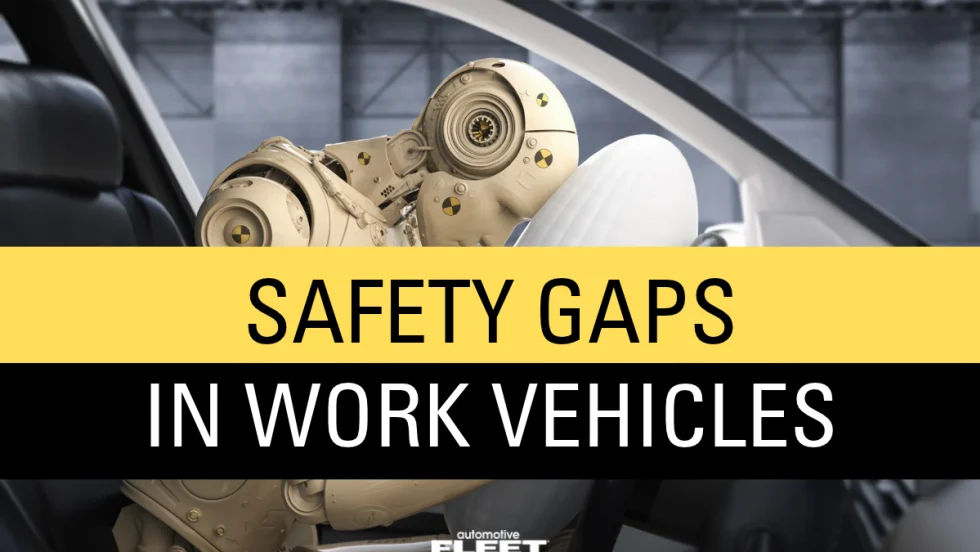
IIHS Crash Avoidance Tests Reveal Safety Gaps in Cargo Vans and Work Trucks
New crash-avoidance ratings from the Insurance Institute for Highway Safety reveal inconsistent performance among commercial vehicles, with several popular cargo vans and heavy-duty pickups struggling to avoid collisions with other vehicles and pedestrians.
Read More →


When Should a Fleet Repair Vehicle Damage Before Remarketing?
Not every dent, scratch, or mechanical issue is worth fixing before selling a fleet vehicle. Learn how to weigh repair costs, resale value, market demand, and downtime to determine when reconditioning pays off and when selling as-is makes more sense.
Read More →
Here's When You Should Make an Exception to Fleet Policy
Fleet policies are designed to create consistency, but not every driver or situation fits neatly within standard rules.
Read More →
AI-Native or AI-Acquired: What Should Fleet Managers Look for in an AI Platform?
Six questions can help fleet managers look beyond AI marketing claims to evaluate integration, data access, and real-world operational performance.
Read More →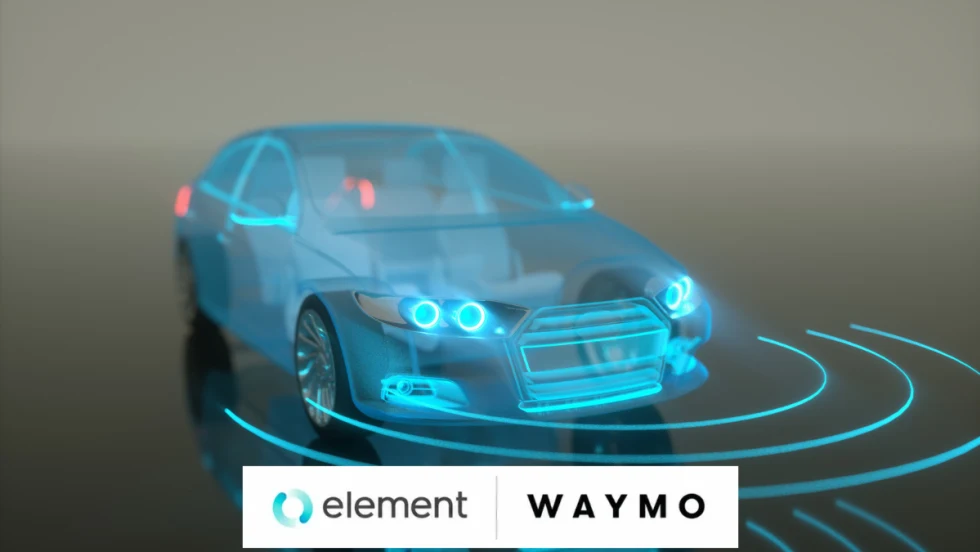
Element Expands Waymo Partnership to Support Toronto Robotaxi Fleet
As Waymo prepares to enter the Canadian market, Element Fleet Management will oversee the fleet operations supporting its planned Toronto launch. The partnership highlights the maintenance, charging, and infrastructure requirements behind operating autonomous vehicles at scale.
Read More →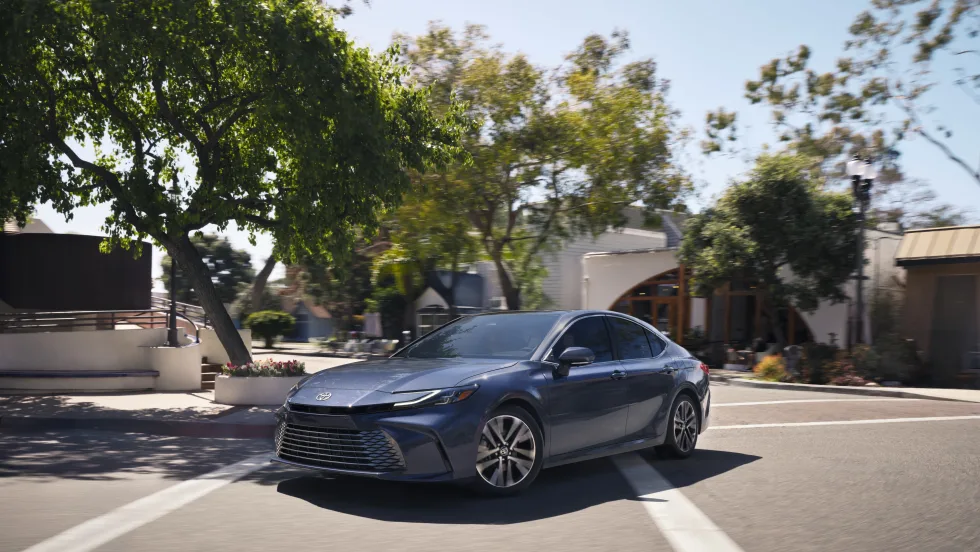
2027 Toyota Camry Offers Hybrid Powertrain Across Five Grades
The 2027 Toyota Camry is a carryover with new pricing.
Read More →
Chevrolet Updates 2027 Trax and Trailblazer with More Standard Safety Features
Chevrolet is updating two of its smallest SUVs with added driver-assistance technology, redesigned interiors, and revised trim options. The changes could add more safety equipment as standard for commercial fleets, while a new Trailblazer configuration adds another all-wheel-drive option.
Read More →
What’s Next for Fleet? Safety, AI & Industry Recognition | AF News Recap
Could your company's culture be encouraging distracted driving? This week, we're exploring how workplace expectations affect driver safety, what AI, EVs, and autonomous vehicles could mean for the future of fleet management, and how fleet professionals can strengthen their award nominations.
Read More →