




Honeywell Turbocharges the Fleet Industry
Turbocharging and engine downsizing can increase fuel efficiency by up to 40 percent in diesel engines and up to 20 percent in gasoline powertrains, according to Honeywell.

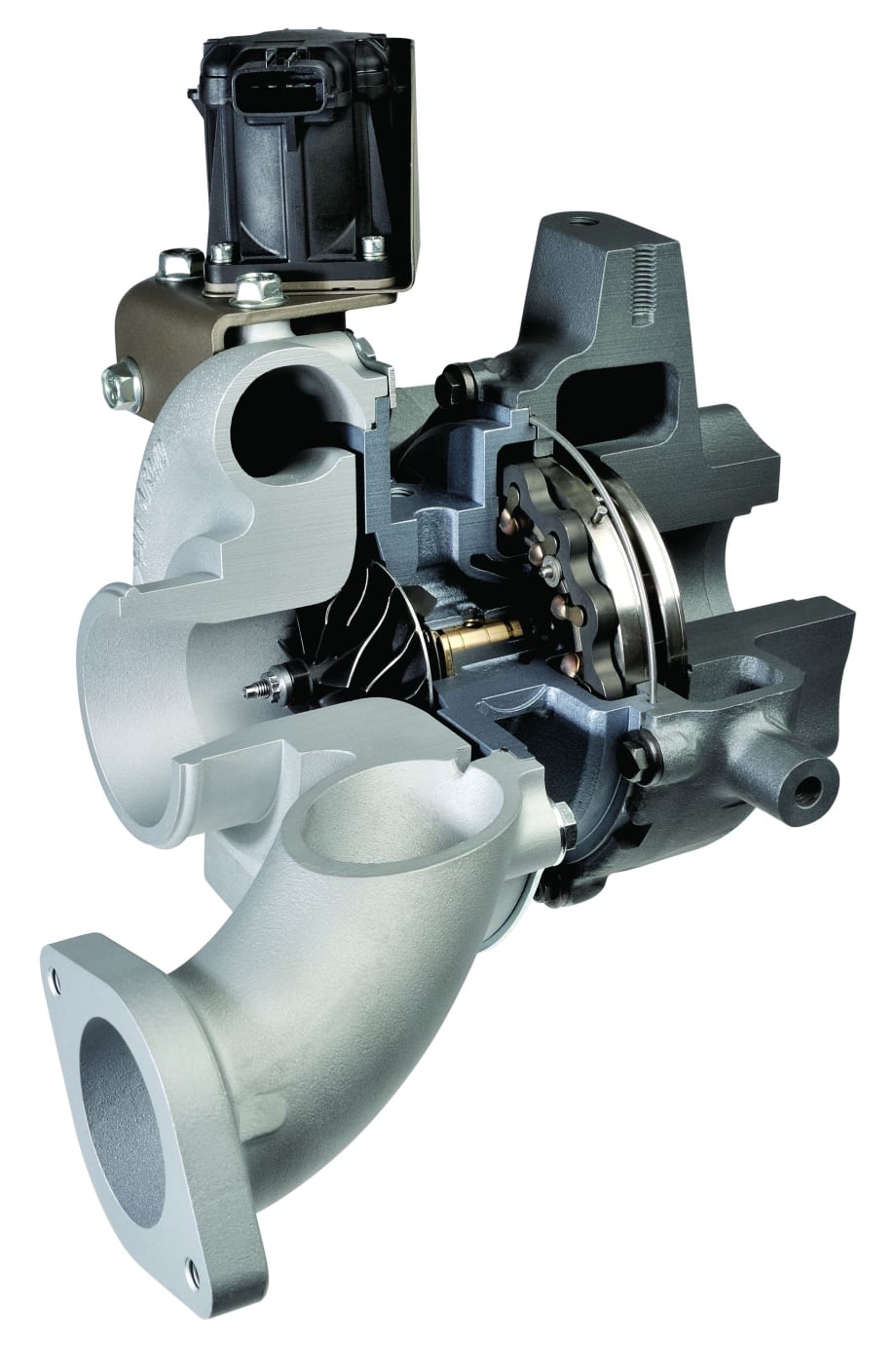
A 2011 Honeywell VNT DutyDrive Turbo UD Trucks 4.7L Diesel.
A 2011 Honeywell VNT DutyDrive Turbo UD Trucks 4.7L Diesel.
Turbo manufacturer Honeywell Transportation Systems has a worldwide reach that extends to all geographic regions. And, according to the company, this extends to the turbochargers it produces as well. Its portfolio of products enhances gasoline, diesel, compressed natural gas (CNG), and hybrid powertrains. The company’s turbo products cover light-duty passenger vehicles, on-highway engines (e.g., semi-trucks), and off-highway engines (e.g., agricultural equipment and mining trucks).
“We provide gasoline and diesel turbocharged engines for vehicle models of nearly every major global brand,” said Mike Stoller, director of communications for Honeywell Transportation Systems. “In the United States — which is still an emerging region for this technology — Honeywell turbos can be found on everything from the Chevrolet Cruze and Sonic to the Ford Flex, Taurus SHO, Explorer Sport, the Jeep Grand Cherokee, Fiat 500, and Dodge Dart, as well as several models from Volkswagen, BMW, and Daimler, among others.”
Honeywell is a Fortune 100 diversified technology and manufacturing business, as well as a “green” company. More than 50 percent of its portfolio offers energy efficiency benefits. In fact, according to company executives, by immediately and comprehensively adopting existing Honeywell products, the U.S. could reduce energy consumption by 20 to 25 percent.
Honeywell’s turbo innovation back in 1991 with its variable nozzle turbine (VNT) technology for the Fiat Croma sedan was a significant advancement for the industry, according to the company. The turbocharger adjusted exhaust gas flow in direct response to specific engine requirements, delivering superior performance and better fuel economy, according to the company.
Since then, the pace of Honeywell innovations have quickened and are now boosting several of the world’s most fuel-efficient vehicles, according to the company. With higher CAFE mandates, the industry has turned to turbochargers to answer the needs of greater fuel efficiency.
“Turbocharging and engine downsizing can increase fuel efficiency by up to 40 percent in diesel engines and up to 20 percent in gasoline powertrains,” Stoller said. “The smaller engines maintain, if not improve, drivability and also reduce emissions from the larger, naturally aspirated engines they replace.”
Number of Turbochargers Predicted to Triple by 2017
Today, the use of turbochargers in all classes of vehicles — from entry level through luxury performance models — is growing in all regions around the world because they allow automakers to use smaller, more efficient engines, but still maintain good performance levels, according to Honeywell.
And, according to Stoller, in the U.S., the number of turbochargers is expected to almost triple in the next five years to more than 4 million by 2017, compared to 1.3 million in 2011. Turbocharged engines are also projected to be in about one-quarter of all new U.S. vehicles in 2017.
“Fuel efficiency has always been important for commercial vehicle operators and fleet owners, as fuel costs can account for 30 to 40 percent of the total operating cost of a commercial vehicle,” he explained. “Turbochargers provide a proven route to help smaller engines deliver big engine performance, while meeting evolving emissions standards and improving fuel efficiency.”
Emissions regulations for the commercial vehicle sector have mainly focused on nitrogen oxide (NOx), carbon monoxide (CO), hydrocarbons, and particulate matter. However, recently, regulators in Europe and the U.S. have been concentrating their efforts in reducing emissions of carbon dioxide (CO2).
“According to industry analysts, the average reduction of CO2 emissions from new commercial vehicles is expected to be up to 20 percent by 2020,” Stoller stated.
Honeywell Leads in Turbo Commercial Vehicle Offerings
Honeywell’s turbo product line supports the medium- and heavy-duty sector with its VNT DutyDrive, which is turbo technology that helps drive exhaust gas recirculation (EGR), enhance fuel efficiency, and support engine braking capability. This system also works well with selective catalyst reduction (SCR), a key emissions control technology.
For engine applications where power ratings and durability are paramount, Honeywell’s TwoStage system allows a smaller engine to deliver superior power density, thus achieving better fuel efficiency compared to the option of using a bigger engine with single-stage turbo systems, according to the company.
Honeywell also supports CNG powertrains, which are gaining in popularity as a result of increasing gas supplies, lower cost, and lower CO2 emissions. Industry analysts predict a significant shift toward CNG powertrains, possibly as high as 10-percent penetration by the end of the decade, according to Stoller.
“With the anticipation of infrastructure developments supporting natural gas, vehicle manufacturers are looking to extend CNG engines beyond today’s applications, such as city buses and refuse trucks, to include long-haul vehicles,” he added. “Honeywell currently provides turbochargers for CNG engines in China, North America, and Europe.”
The company also provides turbocharging for India’s Tata Nano, the world’s most inexpensive vehicle. This translates into a range of Honeywell applications benefitting engine displacements of less than 1 liter through those in excess of 100 liters.
“Honeywell Turbo has always been at the forefront of the industry. We pride ourselves on being a leader in turbocharging technology,” Stoller stressed. “With engineering centers and a number of testing labs all over the globe, Honeywell has a globally connected network of highly skilled engineers who are constantly developing and launching new turbo innovations.”
[PAGEBREAK]
Turbo History
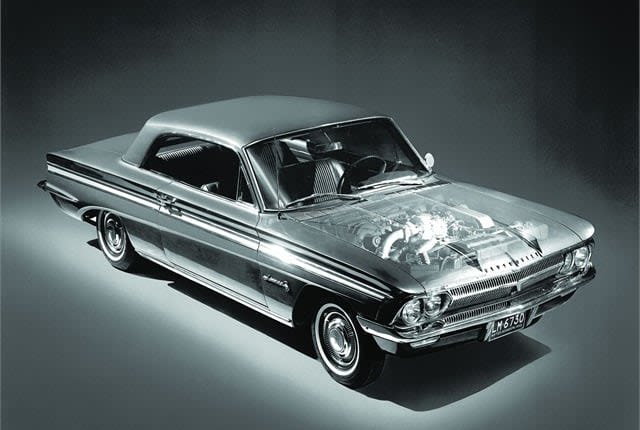
A 1962 Oldsmobile Jetfire Rocket.
Honeywell’s turbo, which dates to the 1950s, originated within its Aerospace unit. Around that time, the company worked to develop the Garrett T15 turbo for a Caterpillar tractor in 1954. The program marked the beginning of the turbocharged era for the automotive industry. Early vehicle applications included earth-moving equipment and diesel trucks, but, by 1962, the company was boosting the world’s first turbocharger production car — the Oldsmobile Jetfire Rocket.
How a Turbo Works
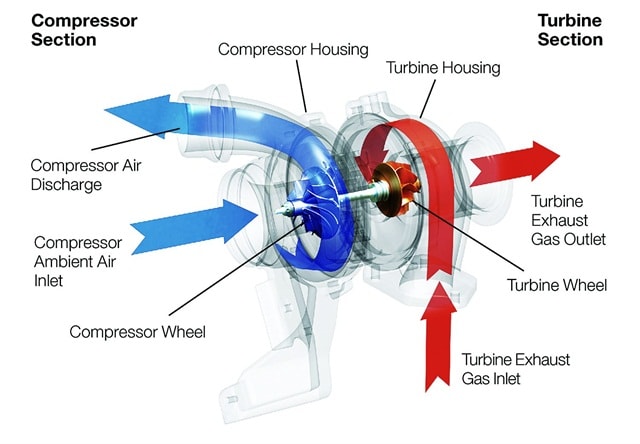
A turbocharger uses an engine’s exhaust gas to drive a turbine wheel at speeds up to 280,000 rpm. The turbine wheel is connected by a shaft to a compressor wheel, and the two wheels turn together to suck in and compress large amounts of ambient air.
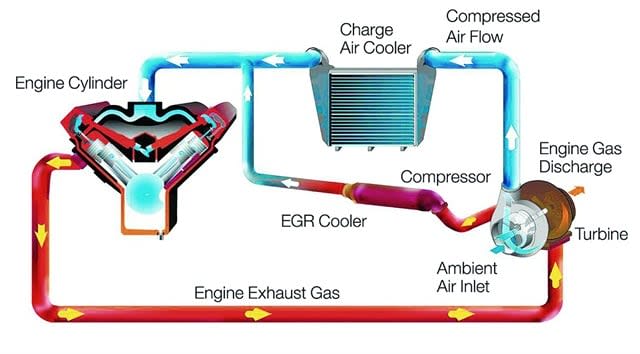
The air that passes through a turbocharged engine is very dense and hot, so it is moved through a charge-air cooler, where it cools and gains even higher density before entering the engine. Increasingly, turbos are coupled with high-pressure fuel-injection systems, a combination that makes for even more thorough, efficient, and cleaner combustion.
For more information about turbo technologies, visit turbo.honeywell.com/turbo-basics.
More Fuel

Fuel Prices Surge in September | September Fuel Update
September brought major fuel price swings, including diesel crossing $6 a gallon. Here’s how gas and diesel prices changed throughout the month, and where they stood heading into October.
Read More →
Turning Fleet Payment Data into Executive Insights
Ramel Lindsay of U.S. Bank Voyager discusses how fleets can transform payment and transaction data into actionable intelligence to reduce costs, improve oversight, and support executive decision-making.
Read More →
Why the IRS Raised Its Mileage Rate in the Middle of 2026
Fuel-price volatility drove the rare increase to 76 cents per mile, the fifth midyear adjustment since 2000.
Read More →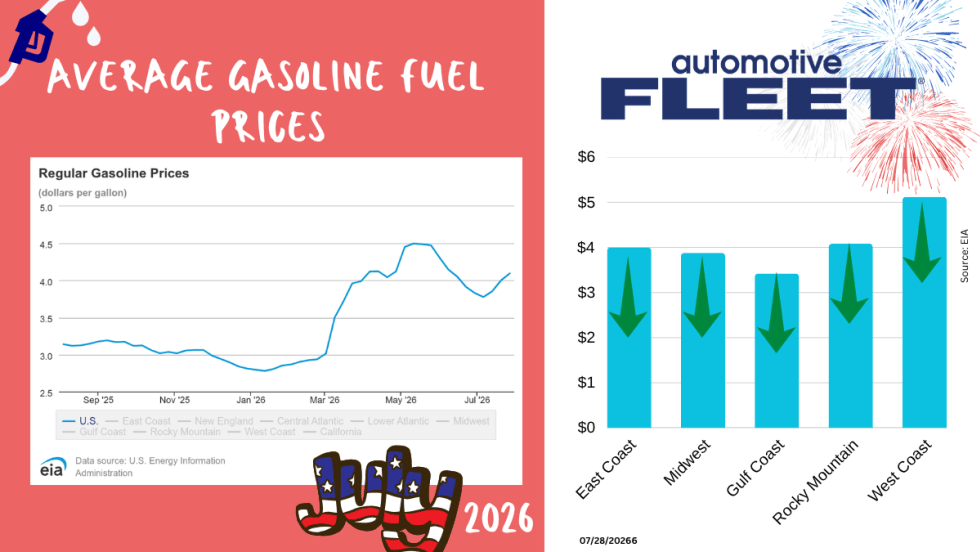
July Fuel Update: Prices Keep Rising in Light of More Conflict
Gas prices continue to rise as more and more conflicts do, too.
Read More →
Bob Adamsky on Fuel Volatility: "Don't Panic, Have a Plan."
When it comes to up and down fuel prices, Adamsky has a message for fleets: “Don’t panic.”
Read More →
How Fleets Can Gain Control of Non-Fuel Spend
Fuel often gets the spotlight, but non-fuel expenses can have a major impact on fleet costs. Ramel Lindsay of U.S. Bank Voyager discusses how fleets can gain better visibility and control over these often-overlooked expenditures.
Read More →
Fuel is Just the Start: How Middle East Tensions are Driving Up Fleet Maintenance Costs
The Middle East conflict is doing more than pushing up fuel prices. It’s also raising the cost of key maintenance products your fleet depends on, from motor oil to tires to windshield wipers. Here’s what you need to know about this budget-busting situation.
Read More →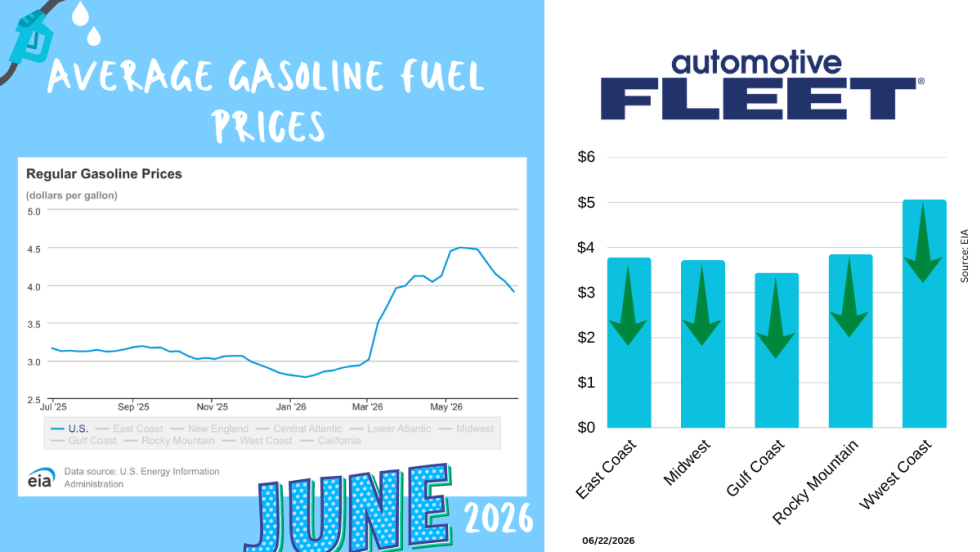
June Fuel Update: Prices Fall Below $4
Drivers are finally getting some relief at the pump. The national average gas price has dropped below $4 a gallon for the first time in months, with prices falling in 47 states as oil markets react to developments in U.S.-Iran negotiations.
Read More →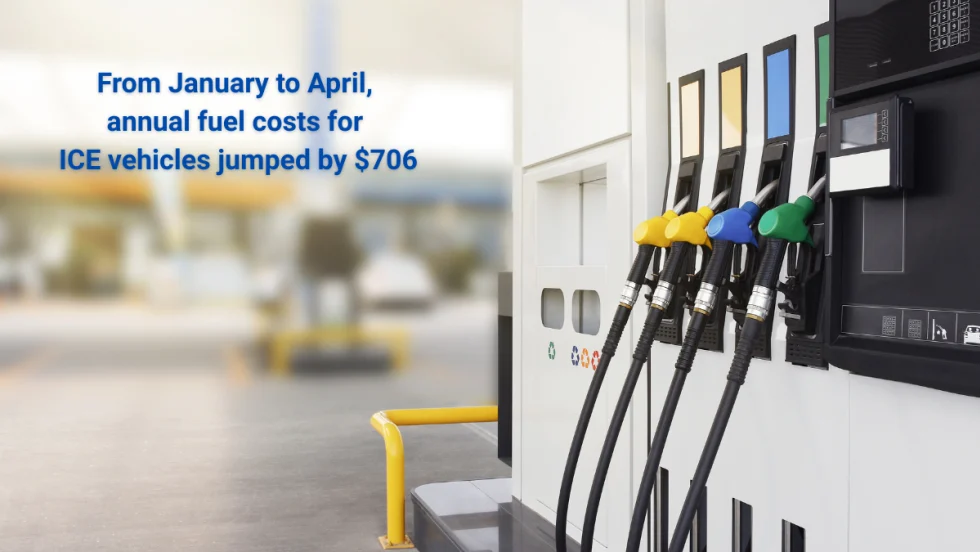
Study: How 2026's Gas Price Hikes Affect Different Vehicle Types
New data from iSeeCars reveals how rising fuel costs have affected different vehicle segments as gasoline prices climbed nearly 46% over the past four months.
Read More →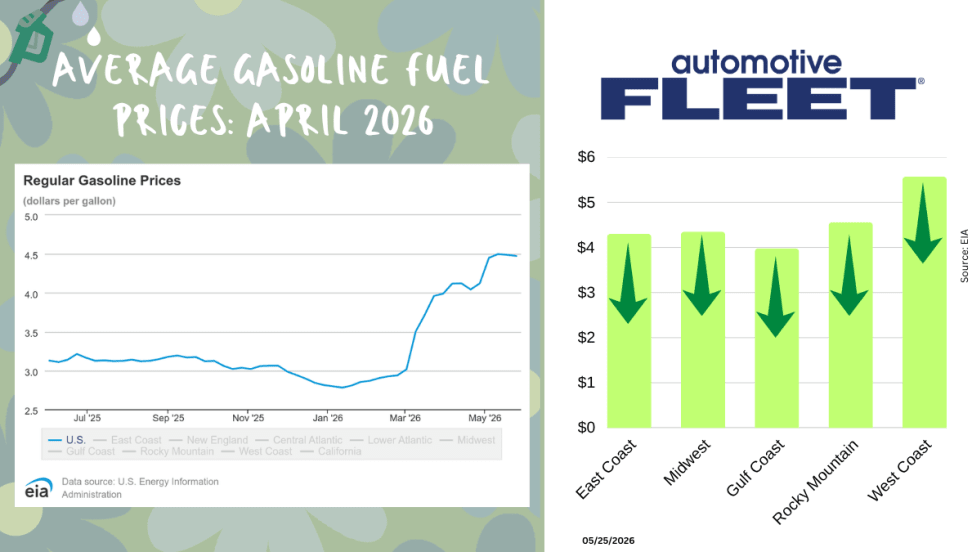
May Fuel Update: All Regions Experience Declines
Gas prices are finally easing in much of the country, but experts warn global tensions could quickly reverse the trend as the national average remains well above last month’s levels.
Read More →