





Read More: Implementing Preventive Maintenance for ADAS
Fleets Beware of ADAS Post-Repair Problems
Crash avoidance technologies offer proven safety benefits. But a new survey from the Insurance Institute for Highway Safety finds that 50% of drivers had issues with the features after a repair job.
February 17, 2023
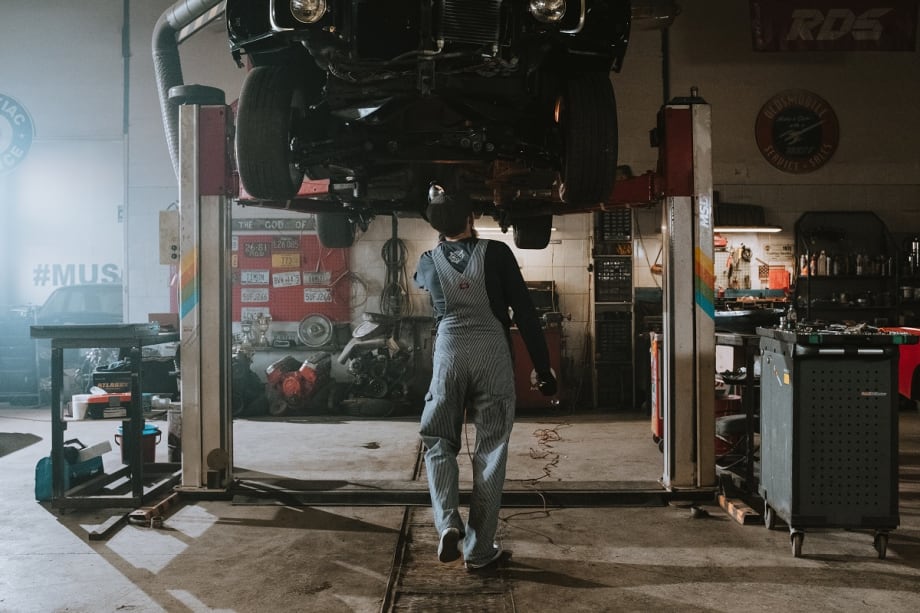
With the proliferation of ADAS technologies, repairs can be more complex and costly for fleets.
Photo: pexels.com/Cottonbro Studio
5 min to read
While advanced driver assistance systems (ADAS) have proven safety benefits, some vehicle owners report problems with the technology following repairs, according to a new survey from the Insurance Institute for Highway Safety (IIHS).
IIHS reached out to nearly 500 drivers about their most recent experiences with repairs to their front crash prevention, blind spot detection, or driver-assistance cameras. Some of these owners had had more than one of these features repaired, either separately or as part of the same job. Approximately 40% of the involved vehicles were from model year 2019 or newer.
Noteworthy, nearly 50% of respondents said they had issues with the features after the job was completed.
Many new vehicles are equipped with crash avoidance features, and that includes vehicles used by commercial fleets. From a safety standpoint, IIHS research has shown that front crash prevention (forward collision warning and automatic emergency braking), blind spot detection, and rearview cameras all substantially reduce the types of crashes they are designed to address. Moreover, automatic emergency braking (AEB) cuts police-reported rear-end crashes by 50%.
That’s the good news. However, vehicle repairs can make it necessary to calibrate the cameras and sensors that the features rely on to ensure they work properly — a process that can be complicated and expensive. For example, a simple windshield replacement can cost as little as $250. But a separate study by the Highway Loss Data Institute (HLDI) found that vehicles equipped with front crash prevention were much more likely to have glass claims of $1,000 or more. Much of the higher cost is likely related to calibration.
The IIHS survey found that post-repair problems with the technology were substantially more common when the features were repaired because of crash damage or in connection with a windshield replacement. About two-thirds of owners whose crash avoidance feature repairs involved windshield replacement and nearly three-quarters of those whose repairs were required due to crash damage said they had issues with the technology after repair. In contrast, less than 50% of owners who had repairs done for other reasons faced problems afterward.
Windshield repairs often make it necessary to calibrate crash avoidance sensors and cameras, though it’s a common step in many repairs. Automakers stipulate systems be calibrated anytime a sensor is removed and replaced or reinstalled. Likewise, calibration is typically an early step in addressing a malfunctioning feature. About two-thirds of respondents who had had repairs done said that calibration was included. Those respondents also reported a higher incidence of post-repair issues.
Fleets Must Address the ADAS Repair Challenge
So what can fleets do to ensure their drivers benefits from the safety of ADAS technology, while mitigating problems that could arise when the vehicle and/or system needs repair?
For starters, fleets should ensure their technicians are trained on the latest ADAS technology. Technicians must be able to use diagnostic software to check for power, ground, and data link connections. Lack of knowledge on these items can lead to increased costs and a broken system. Training technicians on original equipment manufacturer (OEM) and aftermarket ADAS systems, as well as providing them with refresher training, is critical in keeping up with this ever-changing technology. Also, learning how the system interacts and communicates with the vehicle is a key component in diagnosing issues.
Experts say fleets should add ADAS to their preventive maintenance schedules now. Servicing the ADAS is just as important as an oil change or tire rotation. Proactive monitoring will mitigate potential issues, even if the ADAS just needs a software upgrade.
In May 2022, the National Institute for Automotive Service Excellence (ASE) introduced an Advanced Driver Assistance Systems (ADAS) Specialist Certification test (L4). The test is designed to demonstrate technicians are qualified to diagnose, service, and calibrate ADAS on automobiles, SUVs, and light-duty trucks.
There is a growing demand for ADAS service, especially after collisions when ADAS technology may malfunction. A damaged lane keeping assistance or automatic emergency braking system, for example, can actually be hazardous if not repaired. Fleet technicians are now candidates for this much-needed vehicle repair training certification.
“We would definitely encourage our techs to get certified on these systems,” said Al Curtis, director of fleet management for Cobb County, Georgia. “Most new vehicles have ADAS components on board to some capacity, and we need to understand how to restore them to original working capacity if they’re damaged in a crash.”
The IIHS notes that some calibrations are complicated and require large spaces, specialized training, and expensive equipment. Calibration software is subject to frequent updates, making it difficult for shops to keep their tools up to date. This is further complicated by a lack of standardization of calibration processes.
Safer, But More Costly
“As ADAS becomes more common in new vehicle models, alignment costs are rising because of the increased complexity and required steps to complete what was once a basic service. Repairs such as windshield replacements and bumper cover replacements, that do not involve any steering or suspension components, now commonly require a scan tool for recalibration and computer aided equipment for ADAS alignment,” said Erin Mills, national service department manager for Enterprise Fleet Management.
As noted, many previously simple repairs now require a calibration of the ADAS system, consisting of cameras, sensors, and controllers, which requires specialized and expensive tooling and equipment. While the adoption of ADAS does involve increased maintenance expenses, experts say these costs are offset by a reduction in preventable accidents or saving someone’s life.
“There is no question these systems increase safety and maintaining these systems is necessary after certain repairs to keep the systems functioning properly. However, the extra time and expense to perform the calibration frequently catches both drivers and fleet managers by surprise,” said Brian Simek, director of maintenance, repair, & workforce management for Wheels, Inc. “The calibration process could add 30 minutes to more than an hour of labor time to a repair increasing the total cost, which can be significant. Even more frustrating, is when drivers are required to bring their vehicle to a second repair facility or dealership to complete the calibration process, increasing downtime.”
Subscribe to Our Newsletter
More Safety

Does Your Fleet's Culture Encourage Distracted Driving?
What happens when the people responsible for enforcing safety rules are the ones setting the wrong example? The answer may reveal why some of the biggest risks to fleet drivers have little to do with what's written in the employee handbook.
Read More →
Sponsored•October 1, 2026
Fleet Manager’s Ultimate Playbook: Navigating the New Standard in OEM Connectivity
Rising operating costs, driver safety concerns, and unplanned downtime are putting unprecedented pressure on modern fleets. Discover how fleet managers use embedded OEM connectivity and real-time vehicle data to cut TCO, prevent downtime, and protect drivers without aftermarket telematics hardware.
Read More →
From Driver Well-Being to EV Charging | AF News Recap
Mental health belongs in the fleet safety conversation. This week, we’re looking at five ways fleets can support employee well-being before a crisis, plus Holman’s expansion in Mexico, new one-day Fleet Forward passes, and why EV charging demand is outpacing infrastructure growth.
Read More →
Nexar-Nauto Merger Aims to Give Fleets Better Safety Intelligence Through Larger Driving Dataset
Stefan Heck tells Automotive Fleet that combining more than 10 billion miles of driving history with Nexar's AI models will give fleets deeper insights into driver risk and roadway conditions than either company could provide independently.
Read More →
Don't Wait for a Crisis: 5 Ways to Build Mental Health Into Your Fleet Safety Program
For Suicide Prevention Month, fleet and safety leaders have an opportunity to put mental health where it belongs: at the center of workplace safety.
Read More →
How Camera Data Can Strengthen a Fleet’s Insurance Renewal
Insights from a commercial insurance carrier and a broker show how fleets can turn video telematic data, driver coaching, and improved claims results into a stronger case at insurance renewal.
Read More →
The Safest Fleets Aren’t the Ones with the Most Technology
You’ve made the telematics investment. Here’s how to capture the other half of its value and build the safest fleet on the road.
Read More →
Sponsored•August 7, 2026
Hidden in Plain Sight: Fleet Compliance Risks
Fleet compliance isn't just about having policies — it's about consistently enforcing them. This practical guide reveals six hidden compliance risks common in public sector and shared fleet operations and outlines proven strategies to improve visibility, accountability, and audit readiness
Read More →
NETS Sets 2026 Fleet Safety Benchmark Conference for Indianapolis
The Sept. 15–17 program will feature fleet benchmarking data, case studies, emerging technologies, and implementation strategies while running alongside the NSC Safety Congress & Expo.
Read More →
Off-the-Job Crashes Account for 43% of Employers’ $61.7 Billion Crash Burden
NETS quantifies costs dispersed across fleet, risk, HR, and other departments while providing new per-crash benchmarks for employers.
Read More →