





Related: Fleet Readers Sound Off on Policies and Procedures to Mitigate COVID-19
Fleet Readers Sound Off on Whether Vocational Fleets are Futureproof
Automotive Fleet received feedback from fleet professionals regarding a recent blog published on how technological innovations could impact vocational fleets down the road.
August 26, 2020
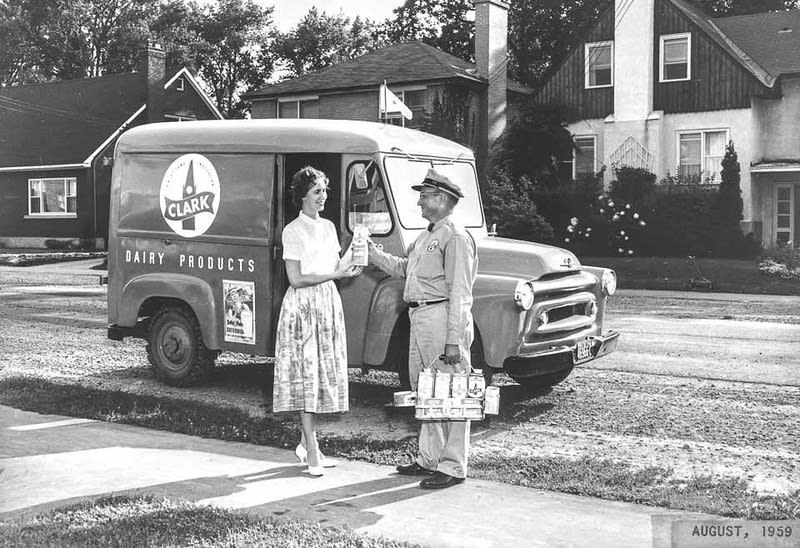
Photo: Ross Dunn via flickr
7 min to read
What seems certain today for vocational fleets may not be certain tomorrow. A classic example is the milk truck delivery fleets of yesteryear. One of the largest vocational fleet segments between the late 1940s and early 1960s was milk home-delivery fleets.
On a daily basis, tens of thousands of trucks around the country delivered fresh bottled whole milk to an ice box on the doorsteps of millions of homes around the country. It took 15 years for the milk home-delivery fleet segment to cycle from its peak to its near demise.
Why did this happen and can it happen again?
There exist many technological innovations available now which could cause a paradigm shift for the future of the fleet management industry.
Whether it's a continued growth of connectivity via the Internet of Things (IoT) network, 3D printing, or any number of burgeoning technologies, many have the capability of forever altering the fleet industry.
Automotive Fleet received feedback from fleet professionals regarding a recent blog published on how technological innovations could impact vocational fleets down the road. Here is what the readers told us.
Change is Coming
The blog “Are Vocational Fleets Futureproof?” was a great read. Change is a comin' and with advances in technology, it will change faster than ever. Some fight change and some can’t change. Although we like to throw around the word change, it’s not that easy to predict the future. I don’t believe that companies that encourage constant improvement are immune to a shifting paradigm. Some of that success is having the right solution at the right time.

Dennis McCraw
But if companies have a vision to expand outside their comfort zone, then yes, I believe they can survive a paradigm shift. Those that encourage constant improvement, and change, will certainly be better suited to deal with the fast approaching future.
FYI, one of our customers is a milkman who delivers organic milk to customers’ homes every day. Smaller enterprises have always been better at adapting to change because they are more responsive and have less bureaucracy.
Dennis McCraw, President, Glen Ridge Fleet, Inc., Sioux Falls, S.D.
Re-Purposing Service Fleets
The one thing I disagree with in the blog “Are Vocational Fleets Futureproof?” is that service fleets will soften due to automation. I think it will be more of a “re-purposing.”

Chris Hamilton
As the milk delivery person was nearing extinction, they couldn’t comprehend that there would be technicians in fleets troubleshooting home Wi-Fi connections or laying fiber-optic cable. As automation and machine learning reduces the need for human interaction in those industries, I’m sure something else new will emerge as well – maybe a tech to repair that 3D printer?
Chris Hamilton, Senior Account Executive, Omnitracs, Towson, Md., clhamilton9701@gmail.com
(Automotive Fleet Reply) Great point, Chris. Repurposing will be the most likely response. I like your observation about the future need for 3D printer repairs and supply replenishment. - Editor
The More Things Change…
In Australia, we had electric trucks doing home delivery of milk. Smallgoods, ice cream, frozen foods, and potato chips were delivered to strip and corner shops by “cash vans.”
Over a period of about 30 years, the supermarket concept wiped out the strip and corner shops and that wiped out the cash vans, butchers vans, and milk vans. The scale was massive; one particular ice cream company reduced its fleet of 90 vehicles to five semi-trailers.

Alan Hood
The last of the cash vans were bread vans, and the supermarkets got them too, but with an interesting offshoot – hot bread shops where the consumer did their own distribution. We are currently evolving into online consumers where the Australia Post has survived by delivering packages to homes. Inevitably other suppliers will take on this monopoly and we’ll see small vans/trucks again.
Alan Hood, Owner, Fernside Information Technology, Melbourne, Australia
(Automotive Fleet Reply) Alan Hood was a long-time truck fleet sales manager for Isuzu Australia Limited, where he worked for 20 years from 1986 to 2006. – Editor
Doing Your Homework
I always enjoy reading the articles written by Mike Antich because “he does his homework,” as was the case with the recent Market Trends blog entitled “Are Vocational Fleets Futureproof?”

Tony Orta
The combination of exponentially evolving technology, and the acceleration of that evolution via the Internet, will cause many industries to react to change after it’s too late.
If driving continuous improvement in your organization, or line of work, is not one of your core values, you will see the need for change hit you like a tidal wave while you are tanning at the beach. Great “stuff” as always, Mike!
Tony Orta, Fleet Operations Manager, SoCalGas, Pico Rivera, Calif.
The Next Challenge for Fleet
The blog “Are Vocational Fleets Futureproof?” was a great read. We will and are seeing a disruption due to digitalization.

Charlie Shephard
Some industries have already adopted solutions that allow remote diagnostics either with customer interaction or via IoT. I believe digitalization and remote diagnostics will be the next challenge for fleets looking to recruit, employ, and train mechanics.
Charlie Shephard, Service and Maintenance Consultant, Houston, Texas
Instant Gratification
Insightful! However, after reading the blog “Are Vocational Fleets Futureproof?” I am betting last-mile delivery of consumer products is here to stay and a vehicle manufacturer that reduces the overall cost of ownership has a bright future. The rising popularity of in-store pick up makes me think that people won’t pay for the instant gratification of 3D printing.
Sent via e-mail by Mark Bovingdon
What Kids Gotta Do

Valerie Griffin
I enjoyed reading the blog “Are Vocational Fleets Futureproof?” and, of course, it conjured up many a memory.
Namely, my sister and I would change the request tabs that the milkman left (for orders) from whole milk and eggs, to chocolate milk. Kids gotta do what kids gotta do!
Valerie Griffin, San Pedro, Calif.
Hybrid & EV Milk Trucks

Joseph McKinney
The blog “Are Vocational Fleets Futureproof?” was a stimulating article. Thank you for writing it. Please tell us more about the EV or gas-electric propulsion system mentioned in the article.
Joseph McKinney, President, Oregon Roads, Inc., Eugene, Ore.
(Automotive Fleet Reply) There are two vehicles that stand out: The Walker Electric Truck was a popular EV for milk deliveries and Thorne Motor Corp. built a milk delivery vehicle powered by a gasoline-electric drive system.
According to Hemmings Motor News, the Thorne Motor Corp., which was founded in 1929, built delivery vans using the gasoline-electric propulsion system that he ultimately patented in March 1933. The gasoline-electric drive system was a Continental four-cylinder engine in the conventional location with a generator attached to the back of the engine instead of a flywheel and transmission. The generator, which put out a maximum of 1,000 amps at 80 volts, then powered an electric motor located just ahead of a conventional rear axle. Using this gasoline-electric drive system, a delivery man still needed to rev the gasoline engine to produce electricity for the motor – the generator directly powered the motor, not a bank of batteries between the two – but he only needed to set the parking brake and allow the delivery truck to idle as he made his stop. Once ready to go again, he only had to release the parking brake and step on the accelerator. No clutching was necessary, and because the electric motor makes all of its torque right off the line, the gasoline engine did not have to rev as much as the engine in a conventional drivetrain, thus it used less fuel than a conventional drivetrain.”
The Hemmings Motor News article went on to write: “By 1932, Thorne fell into debt to Hertner Electric of Cleveland, the company that supplied the generators, and to settle the debt, Hertner bought Thorne and moved the company to Cleveland, where Thorne built trucks through 1937. As Thorne went out of business, its chief electrical engineer, Bernard Flory, went back to Chicago and approached Walker Electric Truck about using the Thorne's basic engine-generator design instead of the oft-problematic batteries that powered the Walker motoraxle. So, Flory found himself a new job and Walker began building the Dynamotive line of delivery trucks just as Flory suggested in 1938, continuing through 1942, when the company switched over to war production. Walker remained in business after World War II, but did not continue delivery truck production.”
-Editor
Only Change is Permanent

Bob Rothe
The blog entitled “Are Vocational Fleets Futureproof” was well written.
Nothing is permanent but change.
Bob Rothe, Business Development Director, Ewald Fleet Solutions, Waukesha, Wis.
Resurrection of Milk Trucks
When I read the blog “Are Vocational Fleets Futureproof?” I was hoping it was going to be about the resurrection of the milk truck chassis/body. I sold a few in my time, namely International flat back cowls (school bus chassis) with mostly Murphy bodies (later acquired by Supreme Corp.) for home milk delivery.
We have a couple of farms nearby that never gave up on deliveries and when the houses went to $1 million in the area, and now with COVID-19 around, they are crazy to find a supplier for home deliveries. They are rebuilding rebuilts and making more money than anyone thought possible, but need an extra mechanic!
Ray Simmons, Truck Sales, Fredrickson Bros Inc, Hino trucks
Subscribe to Our Newsletter
More Operations

Personal-Use Charges Rise as Vehicle Values Fall | AF News Recap
Personal-use charges are climbing, wholesale used-vehicle values are declining, and commercial fleet sales growth is slowing. This week, we're breaking down the latest fleet data, plus how Element Fleet Management is helping Waymo prepare for its first Canadian robotaxi market.
Read More →
Here's When You Should Make an Exception to Fleet Policy
Fleet policies are designed to create consistency, but not every driver or situation fits neatly within standard rules.
Read More →
AI-Native or AI-Acquired: What Should Fleet Managers Look for in an AI Platform?
Six questions can help fleet managers look beyond AI marketing claims to evaluate integration, data access, and real-world operational performance.
Read More →
Sponsored•October 14, 2026
A buyer's guide to fleet management software in 2027
Buying fleet management software in 2027 means looking beyond features and price. As fleet operations, technology and expectations evolve, this guide explores what today’s fleet professionals should consider when choosing a system that can deliver value now and adapt to what comes next.
Read More →
What Will Shape the Next Era of Fleet Management?
EVs, AI, and autonomous vehicles are reshaping fleet management. Discover what’s ahead—and how fleet leaders can prepare for the next era.
Read More →
How Fleets Can Recruit and Train Veterans for Technician Roles
Here's how the technician shortage has affected uptime for fleets, and what to do about it.
Read More →
Avis Budget Group Deploys Neology Toll Management Technology Across Major Brands
Neology’s neoFleet platform will manage toll transactions and toll-authority operations for vehicles across Avis, Budget, Payless, Budget Truck and Zipcar.
Read More →
Fleet Personal-Use Charges Edge Higher in 2026
Nearly eight in 10 surveyed fleets allow personal use of company vehicles, while just over half of respondents report charging employees for the privilege.
Read More →
The Future of Fleet + What’s Changing Right Now | AF News Recap
Could developments overseas offer a preview of what’s coming for U.S. fleets? This week, we’re looking at the future of AI, autonomy, and electrification, plus Ford Pro’s new certified pre-owned program, smarter vehicle offboarding, and a new way for fleets to manage toll expenses.
Read More →
How to Handle Vehicle Offboarding
What do fleet managers need to do when a driver leaves?
Read More →