




Missed the Seminar? Register to Stream the Recording "Fleet Manager Roundtable - Light Duty"
Fleet Managers Share Strategies to Combat Driver Distraction
A safe driver scoring system, telematics, continuous MVR monitoring, and behind-the-wheel training have all proven successful.
by Chad Simon
September 28, 2021
Three fleet leaders shared key insights on driver safety measures at the recent Fleet Safety Experience.
5 min to read
Distracted driving and strategies used to curb it were on the table during a light-duty fleet manager roundtable on Sept. 21 at the virtual 2021 Fleet Safety Experience. Panelists included Jim Liverseed, fleet manager, Tennant Co.; Katie Franssen, fleet safety, Roche Diagnostics; and Sharon Etherington, senior fleet manager, Roche Diagnostics.
Greatest Challenges
With an average attention span of about eight seconds — which has dropped from 15 seconds since 2000 — drivers need the necessary tools so they can stay focused on the road. A common thought process among drivers is the “it will never happen to me” syndrome, Franssen said.
“Studies show that 67% of drivers feel they are at risk because another driver was distracted by technology, but only 25% said their own technology puts others at risk,” Etherington said. “Drivers must understand it can and will happen if you continue to be distracted.”
The pandemic has brought additional challenges for businesses, including loss of revenue, so salespeople are pressured to hit revenue targets. Since the economy has opened back up, some fleets may overlook safety by not taking advantage of the tools they have at their disposal in favor of delivering for their customers and driving revenue.
“With fleets, we’re talking about several thousand pounds moving at 70 mph, so there’s certainly a risk factor that can’t be ignored even when you’re doing your best to recover from the pandemic and get results,” Liverseed said. Tennant Co. runs 1,000 units across North America, consisting of Class 1 and 2 vans, pickup trucks and light-duty SUVs.
Fleet Safety Policy
Roche, which runs about 1,600 cars across the U.S., allows its drivers hands-free communication, but strongly recommends against it. Instead, Roche prefers to help business leaders find a different technology solution.
“Rather than having a service rep send a text about the next call, we encourage them to send emails,” Franssen said “We’re trying to convince them to rethink their strategies so that drivers don’t have to pick up the phone while they’re behind the wheel. We’ve updated our policies to include a point system to ensure that our fleet has the safest drivers possible.”
Etherington explains that a point system is only as good as the leadership who believe in it and understand why it’s there in the first place.
“We not only want to create a relationship between fleet operations and our top leadership. “We want to get every level involved from top down so that our message is consistent and they are onboard with our process, policy and safety training. Our goal is for our drivers to get home safely every night.”
Etherington recalled a strong candidate for Roche’s sales force, but her driving history did not meet the company’s driving standard. Due to company policy, she was eliminated from consideration. Liverseed said Tennant could extend an employment offer but with a probationary period in which that driver is carefully monitored during the first month.
In Liverseed’s fleet safety policy specific to distracted driving, each incident is kept on record for the duration of the driver’s employment with the company. This enables Liverseed to recognize patterns and determine which drivers are unsafe.
“We completely understand the metrics around how much a motor vehicle crash costs the company on average, and also how much (an injury accident) costs on average,” Liverseed said.
Use of Telematics
Liverseed uses telematics with his service fleet strictly for corrective behaviors, and he chooses standard thresholds for receiving notifications.
“You can dial them up or back, but I don’t want to receive an email or text message every time one of my drivers goes 1 mph over the speed limit,” he said. “I limit my alerts to only those that I would take action on. As soon as you get alerts that you’re not going to take action on, they all become ignorable, and you may miss one that’s egregious.”
Tennant’s service fleet uses telematics, while the sales fleet does not. According to Liverseed, the service fleet is realizing a lower rate of incidents per million miles. Only about 1/3 of his service fleet’s accidents are deemed to be at fault.
Liverseed thinks it’s a good idea to manage the sales fleet but understands the hurdles with personal-use car privileges.
Beyond telematics, Tennant also conducts a scoring system for safe driving that is tied directly to the service technician’s financial incentive. According to Liverseed, when someone misses the cut for a given month or quarter, they are likely to ask how they can improve. In addition, Tennant uses continuous MVR monitoring.
Continuous MVR monitoring has yielded results, Liverseed said, uncovering a driver with a suspended license that may have been on the road for months longer with yearly monitoring.
Roche also utilizes continuous MVR monitoring in tandem with telematics, the latter of which is only used on those the company believes are high and severe risk drivers. Etherington focuses on notifications that uncover seatbelt usage, harsh cornering, harsh braking, harsh acceleration, and speeding.
Behind-the-Wheel Training
Three years ago, Roche implemented behind-the-wheel training for all of its drivers on a closed course with an instructor. According to Etherington, one employee sent her an email asking why he had to take the course since he’d been a driver for the company for 30 years.
“Two weeks later, I reached out and asked him how it went,” Etherington said. “Quietly, he said he appreciated that we made him take the class. You don’t know what you don’t know. Things change with vehicles, how you drive and the technology. He thanked me and told me he absolutely learned something.”
Change is difficult, Etherington said, so convey the message that the policies and tools are in place to do one thing and one thing only — and that’s to get drivers home safe at night.
Subscribe to Our Newsletter
More Safety

Sponsored•October 1, 2026
Fleet Manager’s Ultimate Playbook: Navigating the New Standard in OEM Connectivity
Rising operating costs, driver safety concerns, and unplanned downtime are putting unprecedented pressure on modern fleets. Discover how fleet managers use embedded OEM connectivity and real-time vehicle data to cut TCO, prevent downtime, and protect drivers without aftermarket telematics hardware.
Read More →
From Driver Well-Being to EV Charging | AF News Recap
Mental health belongs in the fleet safety conversation. This week, we’re looking at five ways fleets can support employee well-being before a crisis, plus Holman’s expansion in Mexico, new one-day Fleet Forward passes, and why EV charging demand is outpacing infrastructure growth.
Read More →
Nexar-Nauto Merger Aims to Give Fleets Better Safety Intelligence Through Larger Driving Dataset
Stefan Heck tells Automotive Fleet that combining more than 10 billion miles of driving history with Nexar's AI models will give fleets deeper insights into driver risk and roadway conditions than either company could provide independently.
Read More →
Don't Wait for a Crisis: 5 Ways to Build Mental Health Into Your Fleet Safety Program
For Suicide Prevention Month, fleet and safety leaders have an opportunity to put mental health where it belongs: at the center of workplace safety.
Read More →
How Camera Data Can Strengthen a Fleet’s Insurance Renewal
Insights from a commercial insurance carrier and a broker show how fleets can turn video telematic data, driver coaching, and improved claims results into a stronger case at insurance renewal.
Read More →
The Safest Fleets Aren’t the Ones with the Most Technology
You’ve made the telematics investment. Here’s how to capture the other half of its value and build the safest fleet on the road.
Read More →
Sponsored•August 7, 2026
Hidden in Plain Sight: Fleet Compliance Risks
Fleet compliance isn't just about having policies — it's about consistently enforcing them. This practical guide reveals six hidden compliance risks common in public sector and shared fleet operations and outlines proven strategies to improve visibility, accountability, and audit readiness
Read More →
NETS Sets 2026 Fleet Safety Benchmark Conference for Indianapolis
The Sept. 15–17 program will feature fleet benchmarking data, case studies, emerging technologies, and implementation strategies while running alongside the NSC Safety Congress & Expo.
Read More →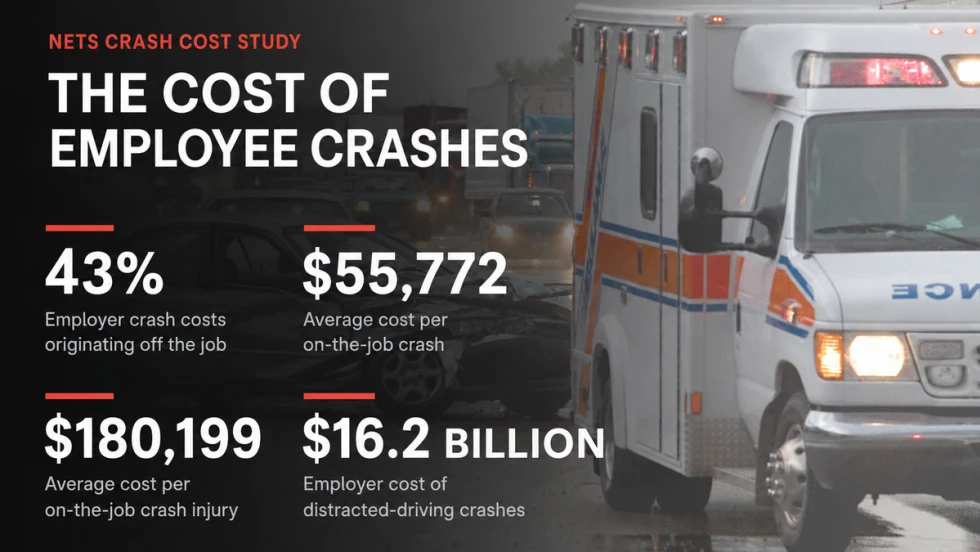
Off-the-Job Crashes Account for 43% of Employers’ $61.7 Billion Crash Burden
NETS quantifies costs dispersed across fleet, risk, HR, and other departments while providing new per-crash benchmarks for employers.
Read More →
Ram Recalls More Than 1.27 Million 1500 Pickups for Seat Belt Anchor Issue
The recall affects certain 2019-2026 Ram 1500 pickups that may have improperly attached second-row seat belt buckle anchors.
Read More →