





Looking for the latest in disaster preparation and response for commercial and work truck fleets? Be sure to bookmark DisasterResponseGuide.com for all of the latest tips, insights, and more!
Fleet Companies Work to Protect Clients' Assets During Hurricanes
Predicting upcoming weather, mapping inaccessible routes, and accessing emergency communications channels are ways that fleet companies help their clients successfully manage hurricanes.
August 31, 2021
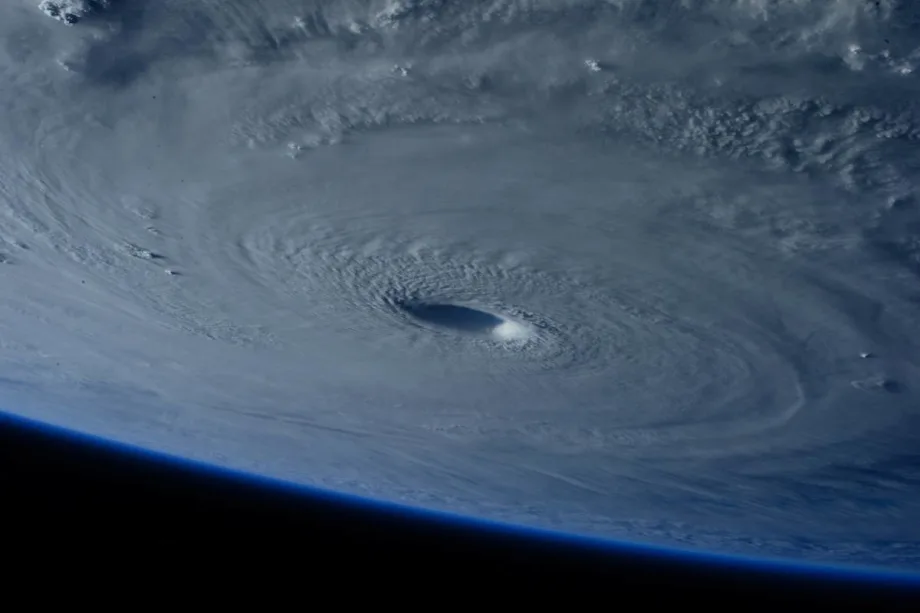
Wex cautions fleet owners to stay aware of weather updates during hurricane season.
Photo: NASA
6 min to read
Hurricane season is here, and several fleet companies are preparing for the potential impacts during this time of the year.
The Atlantic hurricane season generally lasts from June 1 through November 30. In recent years, hurricanes have left businesses with increasing damage costs. According to the as of August 2023, the U.S. 15 confirmed weather and climate disasters with losses exceeding $1 billion, according to the National Oceanic and Atmospheric Administration (NOAA). The combined total of these 2023 disasters is $32.7 billion — second only to 2021 for total damage costs through the first half of any year since 1980.
Companies like Wex Inc., Teletrac Navman, Wilson Electronics, and Manheim share their advice on working through hurricanes and dealing with the aftermath.
Preparing Your Fleet for a Hurricane
Wex operates a fleet dispatch blog to share information and insight on how to manage the impact of natural disasters best.
“Every year, the cycle of inclement weather impacts fleet navigation, fuel access, and the entire supply chain,” said Bernie Kavanagh, senior VP and general manager of large fleet at Wex Inc.
Wex is a financial technology service provider of payment processing solutions to businesses across a spectrum of sectors, including the U.S. commercial and government vehicle fleet industry. They offer various fleet and fuel card payment options as part of their portfolio of fleet solutions.
“Having operated in partnership with fleets for over 37 years, Wex is well-versed in solutions to help them get through the year safely and effectively, including during hurricane season,” Kavanagh added. “Wex’s payment systems help fleets stay ahead of the unpredictability of business, especially where a natural disaster is concerned.”
The company also has a mobile app called Wex Connect. The app helps drivers find fuel and service stations that are open and available in the local area.
Teletrac Navman offers GPS-based fleet optimization products and services, including real-time vehicle tracking and analytics. As a provider of telematics software, Teletrac Navman aims to equip customers with the tools to ensure safety during hurricane season.
“When it comes to the chaos of a hurricane, there’s no room for error when accounting for where your vehicles are,” said Marco Encinas, director of product management at Teletrac Navman. “That’s where the detailed GPS and onboard diagnostic information provided by telematics can be especially helpful.”
Wilson Electronics helps other companies’ solutions perform during the hurricane season through their fleet cell signal boosters.
“Wilson Electronics’ weBoost for Business line also assists during hurricanes and other national disasters by allowing commercial in-building devices to support cell signal communication for remote or enclosed locations such as trailers, popup hospitals, and shelters,” said Brooke Musat, Wilson Electronics’ director of Partner and Product Marketing.
Wilson Electronics produces cell signal boosters to resolve challenges with dropped calls, undelivered email, text messages, and slow data from cellular devices. Cell signal boosters provide stronger cell connectivity for better communication during natural disasters.
“Cell signal boosters also amplify invehicle devices for all carriers,” said Musat. “For instance, if one first responder has a Verizon phone while another has an AT&T tablet, both cell signals are amplified at the same time. Whether in a building or vehicle our boosters support all active cell devices regardless of carrier.”
“Cellular signal boosters also amplify all in-vehicle devices from multiple carriers simultaneously,” said Titas-Wolcott. “For instance, if one first responder has a Verizon phone while another has an AT&T tablet, both cellular signals will be amplified at the same time. The boosters also support multiple crews in each vehicle and will amplify all of their devices simultaneously.”
Manheim is a provider of vehicle remarketing services. It connects buyers and sellers to the wholesale used vehicle marketplace. The Manheim operations and Human Resources team shares relief resources and information with leaders and team members in preparation for any disaster relief needs.
“As a division of Cox Enterprises, Manheim team members have access to the Cox Employee Relief Fund (CERF) should the need arise,” said Tim Janego, Manheim regional VP. “CERF is a 501(c)(3) nonprofit organization and provides financial assistance to team members with unexpected needs resulting from a disaster.”
Other preparations at Manheim locations include a “buddy auction” system and preparing the facilities.
“The buddy system pairs individual auctions with others in different regions to keep operations and sales in place for clients,” Janego said. “For example, during hurricane season, a location in Florida could have their sale be hosted by a Northeast location with a remote auctioneer.”
Protecting Your Fleet
Wex cautioned fleet owners to stay aware of weather updates during hurricane season. There are some tips Wex shares to prepare for this type of weather.
“Ahead of inclement weather and hurricane landfall, Wex regularly shares tips for how fleet owners can protect their assets through practices such as moving vehicles to high ground, parking them close to one another, and strategically placing empty vehicles in the center to protect against hurricane winds,” Kavanagh said.
Manheim protects team members and their operations in a variety of ways.
“This includes moving vehicles from low-lying areas, communicating with clients about the status of our operations and their vehicles, and moving physical sales to digital channels for safety reasons,” Janego said.
Manheim also uses “Send Word Now,” a web-based platform that allows the company to send emergency updates to its teams during a crisis, ensuring their safety and well-being, as well as understanding if they require assistance.
Solving Hurricane Challenges
Wex noted that the biggest challenge during hurricane season are predicting upcoming weather patterns.
“Hurricanes and resulting damage from strong winds, flooding, power outages, and more can be unpredictable. Wex aims to help partners prepare with safety as a priority and provides reactive updates and insights in real time,” Kavanagh said.
One of the biggest challenges for Teletrac Navman is to make sure their devices are reporting.
“When the weather gets rough, hopefully you won’t be near your fleet - and neither will your drivers,” Encinas said. “You’ll be where it’s safe, and you need to be able to find your vehicles once the storm has passed. Of course, just being prepared and weathering the storm is only the beginning. Once drivers are able to quickly return to their vehicles, they’re free to begin providing assistance to the surrounding area, which is truly where telematics systems can shine.”
After the Hurricane
After a hurricane, Wex helps fleets mobilize and recover as quickly as possible.
“The most important aspects Wex stresses to fleets after a hurricane or storm include being aware of present and continued danger, assessing the damage that has been done, taking steps toward recovery, and planning ahead for the next storm,” said Kavanagh. “After a heavy storm, Wex stresses the importance for drivers to be on the lookout for fallout conditions such as flooding, heavy winds, downed power lines, exposed gas mains, and more.”
Real-time information is key for Teletrac Navman to handle the aftermath of a hurricane.
“With the aid of interfleet connectivity and geofencing, vehicles can go out on patrol and map out flooded roads, downed trees, and otherwise inaccessible routes,” Encinas said. “Fleets can then quickly and easily share and combine this information, almost instantly creating an updated map of the area accounting for damage — a critical asset for relief strategy. Furthermore, digital tagging can mark which areas on the map have received support and which are still in need, allowing help to quickly reach the communities that need it most.”
Note: This article is updated from its original publish date of Aug. 31, 2021.
Originally posted on Work Truck Online
Subscribe to Our Newsletter
More Safety

Sponsored•October 1, 2026
Fleet Manager’s Ultimate Playbook: Navigating the New Standard in OEM Connectivity
Rising operating costs, driver safety concerns, and unplanned downtime are putting unprecedented pressure on modern fleets. Discover how fleet managers use embedded OEM connectivity and real-time vehicle data to cut TCO, prevent downtime, and protect drivers without aftermarket telematics hardware.
Read More →
From Driver Well-Being to EV Charging | AF News Recap
Mental health belongs in the fleet safety conversation. This week, we’re looking at five ways fleets can support employee well-being before a crisis, plus Holman’s expansion in Mexico, new one-day Fleet Forward passes, and why EV charging demand is outpacing infrastructure growth.
Read More →
Nexar-Nauto Merger Aims to Give Fleets Better Safety Intelligence Through Larger Driving Dataset
Stefan Heck tells Automotive Fleet that combining more than 10 billion miles of driving history with Nexar's AI models will give fleets deeper insights into driver risk and roadway conditions than either company could provide independently.
Read More →
Don't Wait for a Crisis: 5 Ways to Build Mental Health Into Your Fleet Safety Program
For Suicide Prevention Month, fleet and safety leaders have an opportunity to put mental health where it belongs: at the center of workplace safety.
Read More →
How Camera Data Can Strengthen a Fleet’s Insurance Renewal
Insights from a commercial insurance carrier and a broker show how fleets can turn video telematic data, driver coaching, and improved claims results into a stronger case at insurance renewal.
Read More →
The Safest Fleets Aren’t the Ones with the Most Technology
You’ve made the telematics investment. Here’s how to capture the other half of its value and build the safest fleet on the road.
Read More →
Sponsored•August 7, 2026
Hidden in Plain Sight: Fleet Compliance Risks
Fleet compliance isn't just about having policies — it's about consistently enforcing them. This practical guide reveals six hidden compliance risks common in public sector and shared fleet operations and outlines proven strategies to improve visibility, accountability, and audit readiness
Read More →
NETS Sets 2026 Fleet Safety Benchmark Conference for Indianapolis
The Sept. 15–17 program will feature fleet benchmarking data, case studies, emerging technologies, and implementation strategies while running alongside the NSC Safety Congress & Expo.
Read More →
Off-the-Job Crashes Account for 43% of Employers’ $61.7 Billion Crash Burden
NETS quantifies costs dispersed across fleet, risk, HR, and other departments while providing new per-crash benchmarks for employers.
Read More →
Ram Recalls More Than 1.27 Million 1500 Pickups for Seat Belt Anchor Issue
The recall affects certain 2019-2026 Ram 1500 pickups that may have improperly attached second-row seat belt buckle anchors.
Read More →