




Fleet Administrator Doubles As Fire Chief
Bryant Garner serves as fleet and travel administrator for a specialty healthcare company. In his off hours, he serves as fire chief of the Mayodan, N.C., Fire Department.

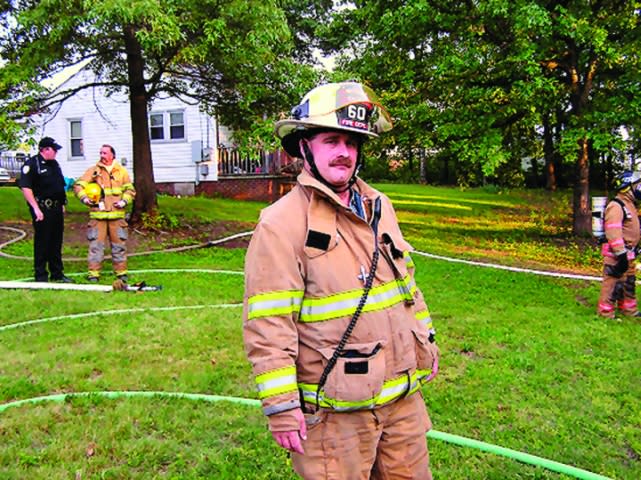
In his 20 years fighting fires and helping others in Mayodan, N.C., Bryant Garner (right) has held the positions of fire fighter, lieutenant, captain, and, since 2004, chief. By day, he is fleet and travel administrator for Merz North America, Inc.
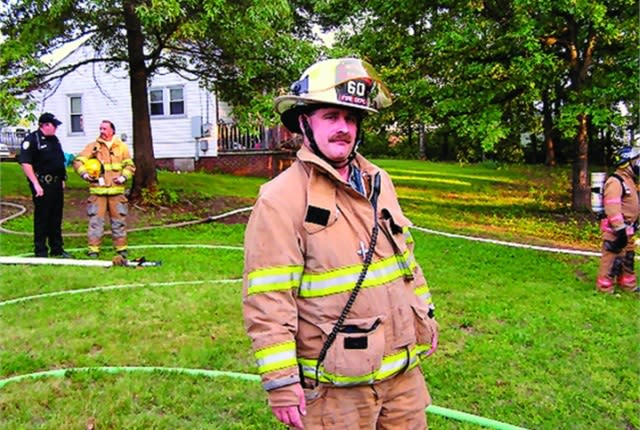
In his 20 years fighting fires and helping others in Mayodan, N.C., Bryant Garner (right) has held the positions of fire fighter, lieutenant, captain, and, since 2004, chief. By day, he is fleet and travel administrator for Merz North America, Inc.
By day, Bryant Garner serves as fleet and travel administrator for Merz North America, Inc., a specialty healthcare company that develops and commercializes innovative treatment solutions in aesthetics, dermatology, and neurology in the U.S. and Canada. For the last four years, he has managed the Merz travel program and is responsible for the management and procurement of the company’s 300 fleet vehicles.
But, in his off hours, Garner plays a much different role — serving as fire chief of the Mayodan, N.C., Fire Department.
Originally from Trinity, N.C., Garner moved to Mayodan when he married his wife, Anne, a Mayodan native. He joined the volunteer fire department soon after settling into the community. “I wanted to become involved in the community and felt the fire department would allow me to do that as well as allow me to help others,” he said.
That was in 1994. Now, nearly 20 years later, he has held the positions of firefighter, lieutenant, captain, and, since 2004, chief.
As fire chief, Garner is responsible for the overall operation of the department — including scheduling continuing education courses for firefighters, writing grants for equipment funding, and working closely with the town council to manage the department’s budget.
By nature, fire fighting is a dramatic business, and Garner has seen his share of loss and recovery. Among all emergencies he’s experienced, the worst he’s ever faced was the F3 tornado that struck Mayodan in 1998.
“The devastation of our town was something I had never seen; the department spent three days on calls trying to clear debris and provide supplies to those who were in need,” he said. “The tragedy did have one positive effect for me — I got to see a small community who banded together and helped slowly put our town back together.”
Garner’s experience with the 1998 tornado is reflective of his experience as a whole being fire chief. The most challenging part, he said, is seeing the loss of life the department occasionally encounters. But, at the same time, he also reaps the rewards of seeing how the fire department positively affects his community.
“The most rewarding part of serving the Mayodan Fire Department is two-fold,” he said, “First, I am able to provide a service to citizens who are exposed to danger and can offer them some level of safety and comfort. Second, words cannot express the feeling of pride I feel when a victim of tragedy comes to me and expresses their appreciation for our help.”
While, at first, one might think the roles of fire chief and fleet administrator are very different, Garner finds a common link: safety.
“As both fleet administrator and fire chief, I am responsible for the safety of others,” he said. “As a fireman, my job involves emergency situations where my decisions are crucial to the safety of others. As fleet administrator, I am responsible for providing vehicles to our sales force that, I feel, are safe and that will provide protection for the driver.”
Twenty years ago, Garner wouldn’t have imagined he’d log two decades of service and rise through the ranks to become fire chief. But, now, it’s hard to imagine a life without it.
“When I joined the fire department, I wanted only to become a part of my community and provide my help to others, but it has turned out to be a way of life for me,” he said. “I would encourage anyone who has a desire to help others to visit their local fire department and learn more about the programs they offer.”
More Safety

From Driver Well-Being to EV Charging | AF News Recap
Mental health belongs in the fleet safety conversation. This week, we’re looking at five ways fleets can support employee well-being before a crisis, plus Holman’s expansion in Mexico, new one-day Fleet Forward passes, and why EV charging demand is outpacing infrastructure growth.
Read More →
Nexar-Nauto Merger Aims to Give Fleets Better Safety Intelligence Through Larger Driving Dataset
Stefan Heck tells Automotive Fleet that combining more than 10 billion miles of driving history with Nexar's AI models will give fleets deeper insights into driver risk and roadway conditions than either company could provide independently.
Read More →
Don't Wait for a Crisis: 5 Ways to Build Mental Health Into Your Fleet Safety Program
For Suicide Prevention Month, fleet and safety leaders have an opportunity to put mental health where it belongs: at the center of workplace safety.
Read More →
How Camera Data Can Strengthen a Fleet’s Insurance Renewal
Insights from a commercial insurance carrier and a broker show how fleets can turn video telematic data, driver coaching, and improved claims results into a stronger case at insurance renewal.
Read More →
The Safest Fleets Aren’t the Ones with the Most Technology
You’ve made the telematics investment. Here’s how to capture the other half of its value and build the safest fleet on the road.
Read More →
Hidden in Plain Sight: Fleet Compliance Risks
Fleet compliance isn't just about having policies — it's about consistently enforcing them. This practical guide reveals six hidden compliance risks common in public sector and shared fleet operations and outlines proven strategies to improve visibility, accountability, and audit readiness
Read More →
NETS Sets 2026 Fleet Safety Benchmark Conference for Indianapolis
The Sept. 15–17 program will feature fleet benchmarking data, case studies, emerging technologies, and implementation strategies while running alongside the NSC Safety Congress & Expo.
Read More →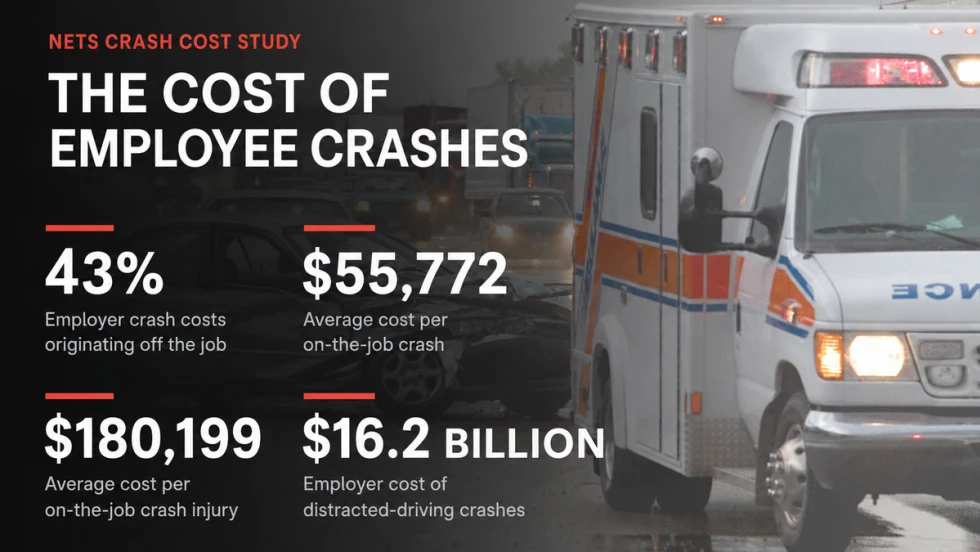
Off-the-Job Crashes Account for 43% of Employers’ $61.7 Billion Crash Burden
NETS quantifies costs dispersed across fleet, risk, HR, and other departments while providing new per-crash benchmarks for employers.
Read More →
Ram Recalls More Than 1.27 Million 1500 Pickups for Seat Belt Anchor Issue
The recall affects certain 2019-2026 Ram 1500 pickups that may have improperly attached second-row seat belt buckle anchors.
Read More →
Operation Safe Driver Week: Why the Industry's Oldest Safety Campaign Still Matters to Fleets
A look at how a 2007 enforcement initiative became one of the most consequential weeks on the fleet safety calendar, and what it means for your drivers in 2026.
Read More →