Improvements in engine design and on-board oil life monitoring, along with improved oil quality and the use of synthetic oils, have extended oil drain intervals and served to decrease PM service frequency.
Fleet preventive maintenance (PM) expenses in calendar-year 2015 were flat compared to CY-2014, primarily due to extended oil drain intervals. Improvements in engine design and on-board vehicle technology, along with improved oil quality, are allowing fleets to extend oil drain intervals.
Ad Loading...
“The manufacturers continue to adopt more stringent oil requirements, increasing the cost of each maintenance service. But, the intervals between these services have continued to widen, in turn, mitigating some of the additional costs. Furthermore, customers continue to search for the lowest cost provider and EMKAY anticipates this trend to continue in both the short and long term,” said Dale Jewell, director, North American maintenance operations for EMKAY.
Ad Loading...
At a Glance
Fleet preventive maintenance (PM) expenses in calendar-year 2015 were flat compared to CY-2014, primarily due to extended oil drain intervals.
Extended oil change intervals helped offset higher cost per incident as the miles between oil changes.
One factor keeping oil costs flat have been reductions in the cost of synthetic oil.
One trend putting both downward and upward pressure on oil drain expenses is OEMs offering free oil changes and tire rotations.
Another factor influencing 2015 maintenance expenses is OEM changes to scheduled maintenance programs, such as fluid changes, spark plugs, timing belts, and transmission services. This is expected to continue as OEMs develop onboard monitoring technologies and longer-life components.
However, some fleets are seeing this as an opportunity to even further extend oil drain intervals which increases the risk of operating outside of warranty parameters.
“Fleets continue to increase drain intervals as a method to reduce costs for preventive maintenance (PM) services. We have seen a decrease in frequency of PM services due to this factor. It is important, however, for fleet personnel to ensure that other vehicle components are maintained and inspected as appropriate, even as they increase intervals,” said Romy Bria, director, fleet management at ARI.
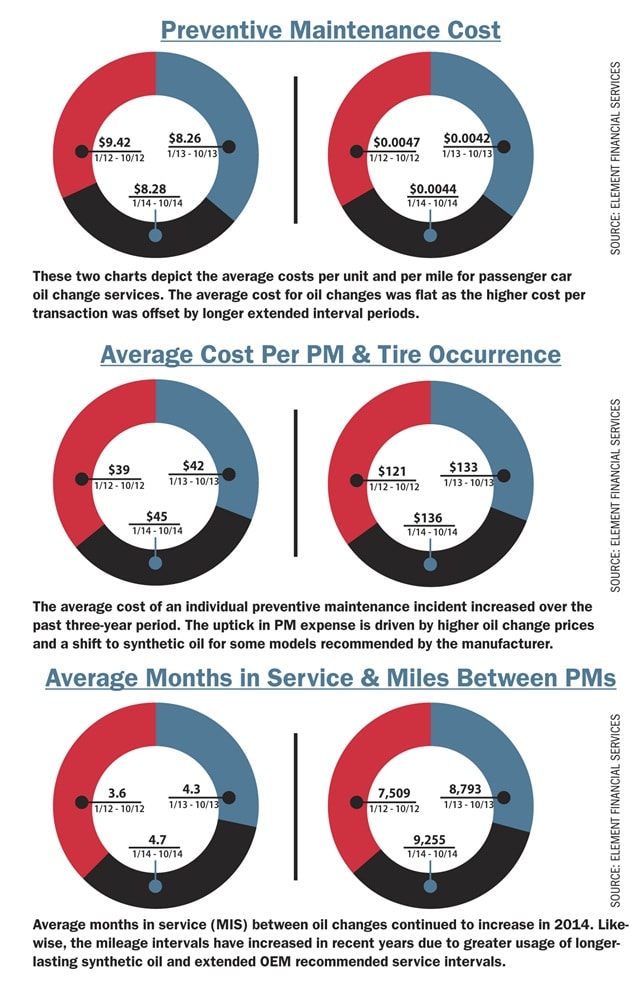
Extended oil change intervals have helped to offset higher cost per incident as the miles between oil changes have increased. The cost per oil change increased, on average, by 7 percent. Also, original equipment oil life monitoring systems are contributing to the extended oil change intervals.
“With regards to oil, while we’ve seen the per transaction cost rise, the interval between oil changes is longer due to the increased requirements from manufacturers to use synthetic oil. This trend kept the overall expense flat,” said Zingha Lucien, strategic consulting manager at Element Financial Corp.
Ad Loading...
Decrease in Synthetic Oil Prices
While oil drain intervals have increased, the proliferation of smaller displacement engines in fleet applications is putting pressure on fleet managers to use synthetic oil to maximize engine life.
“Fewer repair providers are stocking conventional oil. Many shops have moved to blends and/or synthetic oils only. Some fleets operating in ‘normal vehicle conditions’ have still not adopted the longer-life or the oil life monitoring system warnings due to a lack of confidence with OEM’s recommended longer life oil change intervals,” said Steve Jastrow, strategic consulting manager for Element Financial Corp.
One factor keeping oil costs flat has been reductions in the cost of synthetic oil.
“Overall, preventive maintenance costs remained relatively flat in the past year. This is mainly attributable to the stability in the cost of oil. An additional factor is the decreasing cost of synthetic oils and their increased usage in fleet applications,” said Bria of ARI.
Merchants Fleet Management, likewise, cited decreasing synthetic oil prices as a factor in helping to control PM costs.
Ad Loading...
“Lube, oil, and filter costs have remained relatively stable over 2015, with mild month-over-month increases in cost per service as OEMs continue to migrate toward synthetics.
OEM offerings of free preventive maintenance services or PM service invoice credits have been factors in lowering or offsetting oil change costs early in the lifecycle for some fleets,” said Brad Jacobs, director of strategic consulting for Merchants Fleet Management.
However, the situation with fleet PM in 2015 was comparable to what occurred in 2014.
“No significant changes have been observed from 2014 to 2015. Most manufacturers extended oil change intervals and switched to synthetic oils a few years ago. The cost of oil has been fairly stable and appears as though it will remain at similar pricing in the near future,” said Jeff Whiteside, senior director manufacturer relations and repair services for Wheels Inc.
However, there are factors that are exerting upward cost pressures on fleet PM.
Ad Loading...
“The cost of crude and the introduction of new oil standards continue to drive costs up. Oil suppliers are currently exploring the use of natural gas and biological sources as lubricant bases, and the initial cost of those offerings is high. This is somewhat tempered by the extended oil change intervals and complimentary maintenance programs by some manufacturers. Also, the ongoing changes to manufacturer requirements on the usage of synthetic oils have become problematic to some,” said Jewell of EMKAY.
One trend putting both downward pressure on oil drain expenses is OEMs offering free oil changes and tire rotations.
Forecast of PM Costs in 2016
Most subject-matter experts anticipate that PM costs will remain flat in 2016.
“Lube, oil, and filter costs for 2016 should decrease either directly or indirectly if more manufacturers cover oil changes early in the lifecycle, and overall PM service costs should remain relatively stable as maintenance service intervals are extended in conjunction with continued OEM migration to synthetics,” said Jacobs of Merchants Fleet Management.
ARI also believes that PM costs will remain flat in 2016.
Ad Loading...
“We expect preventive maintenance (PM) pricing to either remain flat or decrease somewhat. Continued stability related to the cost of oil, along with increasing drain intervals and the continued acceptance of synthetics should have a favorable impact on PM costs. Additionally, more OEMs are offering free services, which will lower perceived costs in this area,” said Bria of ARI.
Another factor that indicates ongoing PM stability is the cost of oil itself.
“Due to a largely unchanged forecast on crude oil in 2016, oil change prices should remain stable in the coming year,” said Jastrow of Element Financial Corp.
However, one concern is the potential impact of higher labor rates and whether increased overhead costs will be passed on to fleet customers.
“As labor rates continue to rise, so will oil change costs. Fortunately, the increase in intervals between service remain higher than in past years and as new vehicle technological advancements continue with the utilization of synthetic blends, some of these costs may be offset over the lifecycle,” said Jewell of EMKAY.
September brought major fuel price swings, including diesel crossing $6 a gallon. Here’s how gas and diesel prices changed throughout the month, and where they stood heading into October.
Ramel Lindsay of U.S. Bank Voyager discusses how fleets can transform payment and transaction data into actionable intelligence to reduce costs, improve oversight, and support executive decision-making.
Fuel often gets the spotlight, but non-fuel expenses can have a major impact on fleet costs. Ramel Lindsay of U.S. Bank Voyager discusses how fleets can gain better visibility and control over these often-overlooked expenditures.
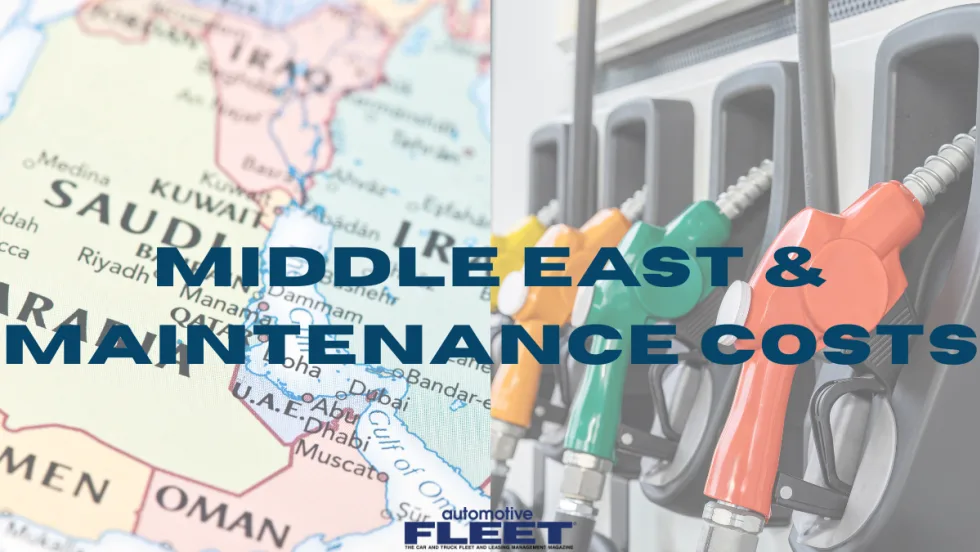
The Middle East conflict is doing more than pushing up fuel prices. It’s also raising the cost of key maintenance products your fleet depends on, from motor oil to tires to windshield wipers. Here’s what you need to know about this budget-busting situation.
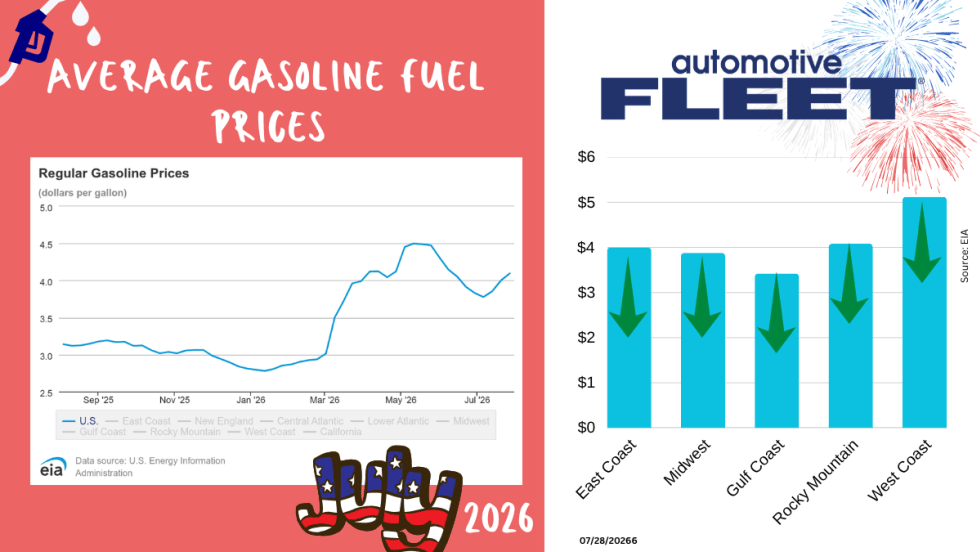
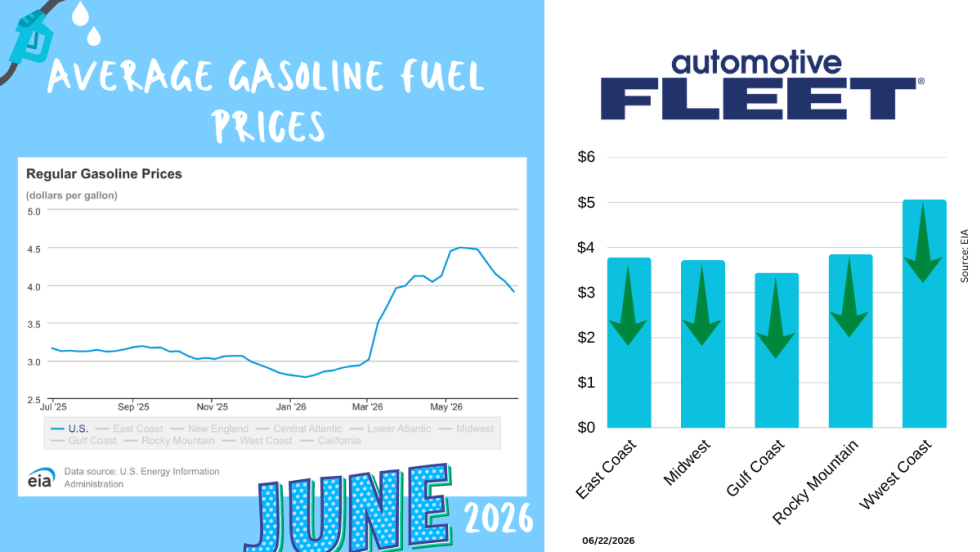
Drivers are finally getting some relief at the pump. The national average gas price has dropped below $4 a gallon for the first time in months, with prices falling in 47 states as oil markets react to developments in U.S.-Iran negotiations.
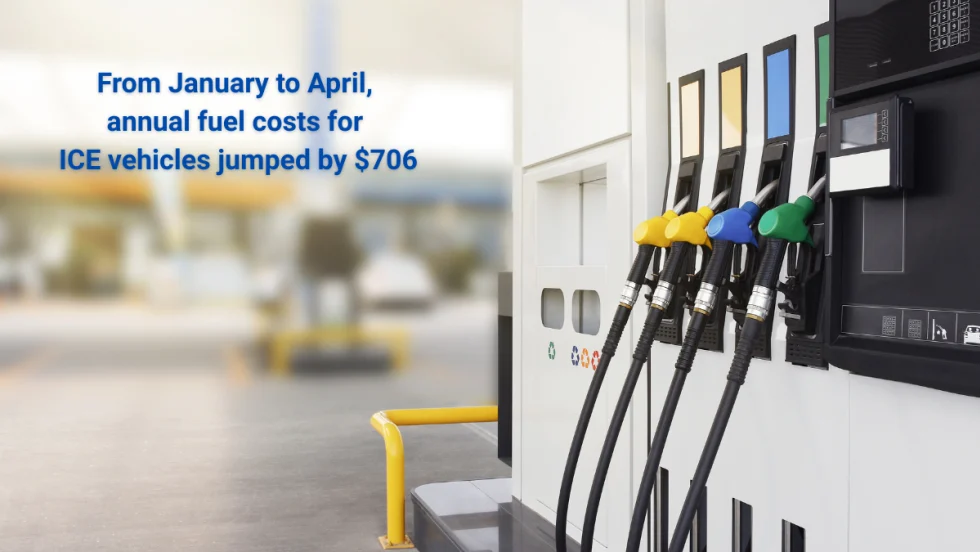
New data from iSeeCars reveals how rising fuel costs have affected different vehicle segments as gasoline prices climbed nearly 46% over the past four months.
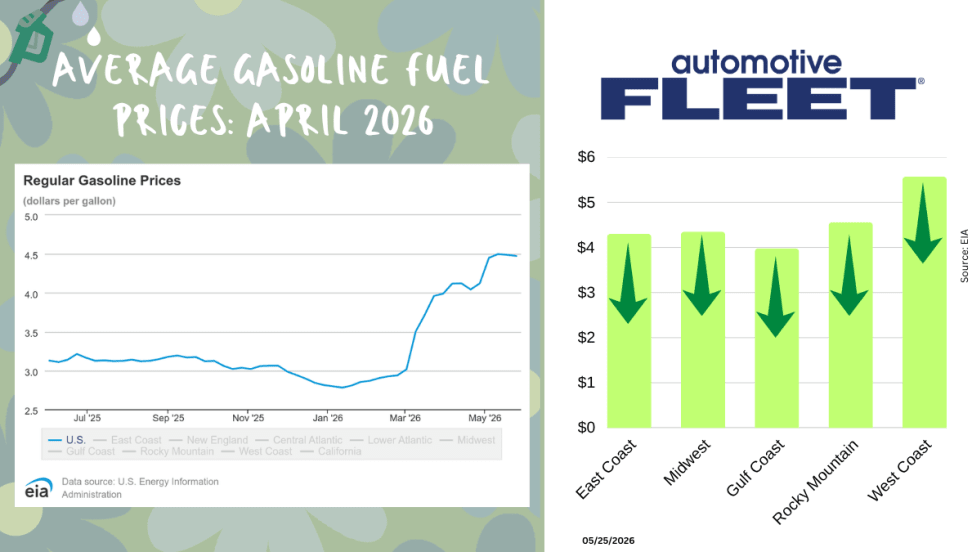
Gas prices are finally easing in much of the country, but experts warn global tensions could quickly reverse the trend as the national average remains well above last month’s levels.