




Related: Proper Upfitting Specifications will Decrease Workers' Comp Claims
Ergonomic Do’s and Don’ts of Cargo Handling
Improper lifting, pushing, pulling, holding, carrying, or throwing is the leading cause of workplace injury. There are steps fleets can take to improve workplace ergonomics.

Andy Lundin・Former Senior Editor
2 min to read
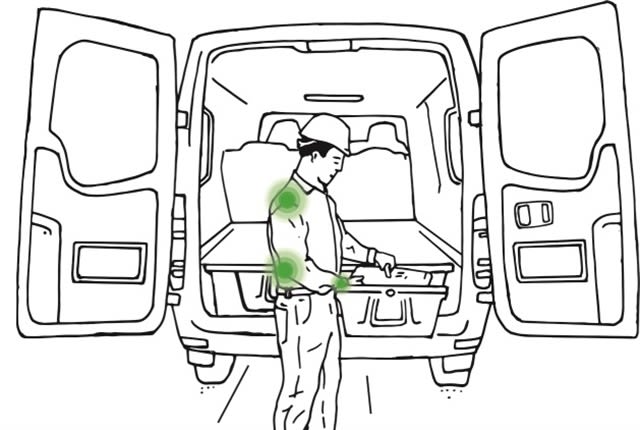
Graphic showing the proper positioning to handle cargo and equipment courtesy of DECKED.
Editor's note: Click here to view a full photo slideshow that illustrates the dangers of poor ergonomic practices and some suggested ways to correct them.
There is more to the safety of a fleet driver than just being aware of one’s surroundings while on the road or navigating the job site. The steps needed to safely load and unload vehicle cargo and equipment are as important as driving the vehicle to or from the job site.
Improper ergonomic behavior can result in musculoskeletal injuries, which account for more than one third of all lost-workday cases, according to the U.S. Department of Labor Occupational Safety and Health Administration.
In the construction industry alone, musculoskeletal injuries resulting from improperly loading or unloading vehicles are among the most common type of injuries. They account for about half of all compensation claims, according to the Laborers’ Health and Safety Fund of North America. These injuries directly affect the bottom line, accounting for over $15 billion annually in direct costs to employers, according to Liberty Mutual.
There are a number of poor ergonomic conditions associated with manual material handling tasks that can result in such injuries. This includes awkward or stressful body postures (e.g., bending, twisting, overhead work); frequently reaching, lifting, and carrying; moving heavy loads; leaning against hard surfaces or sharp edges; maintaining fixed positions for extended periods of time; or working on a surface that sits too high and results in excessive reaching, bending, and lifting.
Jobs that involve working from the bed of a pickup truck or cargo van expose a worker to awkward movements when needing to access items in the bed, toolboxes, or other storage containers.
Injuries relating to the lower back and upper extremities result from over-exertion in poor ergonomic conditions. These injuries can occur suddenly or develop over time, and can result in chronic musculoskeletal disorders.
Creating a workplace environment with good ergonomics reduces these injuries, saves money, and increases worker productivity.
Equipping vehicles with more ergonomically correct solutions can mitigate exposure to these awkward positions, reducing injuries and costs, and increasing productivity.
Click here to view the do’s and don’ts prepared by Mary Smith, B.S.E., M.S.E. IOE, an independent human factors expert from Detroit, for DECKED (www.decked.com) illustrate the dangers of poor ergonomic practices and some suggested ways to correct them.
Subscribe to Our Newsletter
More Operations

Sponsored•October 14, 2026
A buyer's guide to fleet management software in 2027
Buying fleet management software in 2027 means looking beyond features and price. As fleet operations, technology and expectations evolve, this guide explores what today’s fleet professionals should consider when choosing a system that can deliver value now and adapt to what comes next.
Read More →
What Will Shape the Next Era of Fleet Management?
EVs, AI, and autonomous vehicles are reshaping fleet management. Discover what’s ahead—and how fleet leaders can prepare for the next era.
Read More →
How Fleets Can Recruit and Train Veterans for Technician Roles
Here's how the technician shortage has affected uptime for fleets, and what to do about it.
Read More →

Avis Budget Group Deploys Neology Toll Management Technology Across Major Brands
Neology’s neoFleet platform will manage toll transactions and toll-authority operations for vehicles across Avis, Budget, Payless, Budget Truck and Zipcar.
Read More →
Fleet Personal-Use Charges Edge Higher in 2026
Nearly eight in 10 surveyed fleets allow personal use of company vehicles, while just over half of respondents report charging employees for the privilege.
Read More →
The Future of Fleet + What’s Changing Right Now | AF News Recap
Could developments overseas offer a preview of what’s coming for U.S. fleets? This week, we’re looking at the future of AI, autonomy, and electrification, plus Ford Pro’s new certified pre-owned program, smarter vehicle offboarding, and a new way for fleets to manage toll expenses.
Read More →
How to Handle Vehicle Offboarding
What do fleet managers need to do when a driver leaves?
Read More →
Sponsored•October 1, 2026
Fleet Manager’s Ultimate Playbook: Navigating the New Standard in OEM Connectivity
Rising operating costs, driver safety concerns, and unplanned downtime are putting unprecedented pressure on modern fleets. Discover how fleet managers use embedded OEM connectivity and real-time vehicle data to cut TCO, prevent downtime, and protect drivers without aftermarket telematics hardware.
Read More →
U.S. Bank Adds Verra Mobility Toll Management to Voyager Fleet Platform
The integration allows U.S. Bank Voyager fleet customers to manage toll payments and violations alongside fuel, EV charging and maintenance expenses.
Read More →
ADAS Prevents Crashes. But Repairs Cost More | AF News Recap
ADAS-equipped vehicles may crash less often, but they can cost more when they do. This week, we’re breaking down what that tradeoff means for fleets, plus Subaru’s first Forester Wilderness Hybrid, Nissan’s new e-POWER Rogue, and why Calstart has become Catalyst Mobility.
Read More →