





Related: Predicting the Evolution of Mobility Options in the Pandemic Recovery
Eight Viewpoints on Mobility Post Coronavirus
We asked eight experts from the travel, transportation, and mobility spectrums: Will the pandemic accelerate certain mobility options, or will latent hesitancies exist from a health/safety standpoint that will dampen the market for a long time?
April 14, 2020
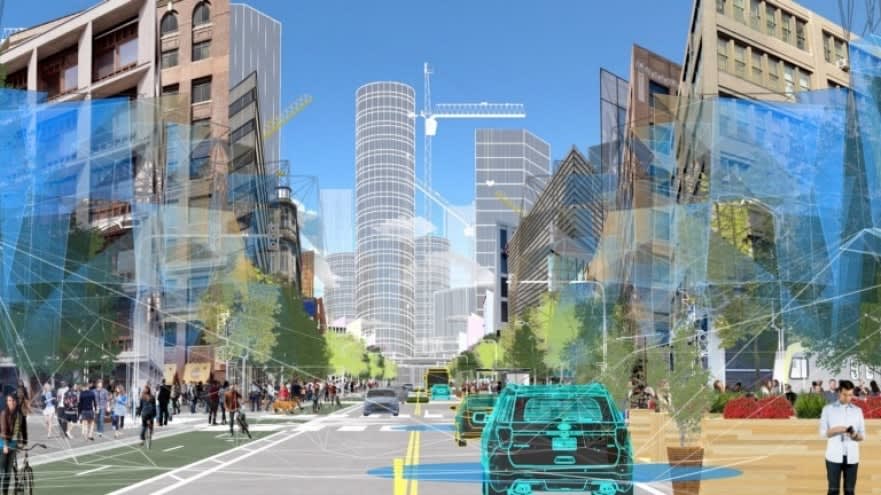
Photo via Ford City:One Challenge Program.
8 min to read
Fleet Forward asked eight subject matter experts from various corners of the travel, transportation, and mobility spectrums to assess the short- and long-term impacts of the coronavirus pandemic on mobility.
We asked them: What will be the state of shared mobility/carsharing in the near future and further out? Will the pandemic accelerate certain mobility options, or will latent hesitancies exist from a health/safety standpoint that will dampen the market for a long time? Will the pandemic force shared mobility operators to rethink their services or business models?
First Mobility Recession
Susan A. Shaheen, Ph.D., Co-Director, Transportation Sustainability Research Center,University of California, Berkeley:
This is the first recession for many of the shared mobility service providers. Numerous concerns exist about the financial viability of some of these services, particularly those that are currently losing money. The impacts of this downturn could be exacerbated by a reduction in overall travel behavior and social distancing.
Some communities have banned shared mobility services associated with concerns of COVID-19 even though these services can provide a critical form of mobility for essential trips for carless households. In other cases, we’ve seen the rise of their use, for example, micromobility services in New York City prior to shelter-in-place orders.
The number and type of shared mobility services in the future could depend on the length and depth of the economic downturn and the pandemic. If COVID-19 persists or reappears in the Fall or Spring 2021, the longer-term impacts on shared mobility and public transportation could be more notable. If, however, the pandemic resolves itself in a shorter period of time (perhaps due to effective social distancing, a vaccine, etc.), then travel behavior and the use of shared and higher occupancy modes could recover.
In spite of these uncertainties, it is likely that the transportation sector could see longer-term growth in telework and goods delivery, as employers and retailers learn new ways of providing goods and services to consumers. One notable question is how COVID-19 could impact societal perceptions toward urbanization and recent trends toward urban renewal. If COVID-19 causes a longer-term shift toward lower-density living, this could have a larger impact on location decisions, vehicle occupancy, and vehicle miles traveled.
A New Online World
Karl Brauer, executive publisher, Cox Automotive, Auto Trader, and Kelley Blue Book:
I believe there will be some backpedaling in shared mobility interest in the near term, but I don’t see this as a permanent situation regarding shared services. The genie is out of that bottle, and the flexibility in terms of cost and use cases is too compelling for a substantial portion of the population. Younger, urban-dwelling consumers want the ability to have different transportation options in different circumstances, and they’ll want that even after COVID-19, though cleaning standards, hygiene standards, and personal protection demands might be forever elevated going forward.
For the broader automotive industry, it’s tough to know how deep the impact will go. The financial hit is going to hurt 2020 numbers across the board, and it could incur some permanent damage that will be too much for some companies. Smaller automakers and global companies already on slippery financial footing might be forced into bankruptcy or a merger. I also think EVs sales will be curtailed in the near term simply because the combination of oil prices and financial stress both hurt EV demand.
Finally, probably the biggest impact in terms of long-term change, comes in the form of online car sales. They were rapidly elevated during this pandemic, illustrating technology and financing options that have been available for years. Many consumers didn’t like going to a dealership, and now they know they don’t have to. This is okay, because dealers also stepped up and showed they can provide online services to make online car buying possible.
Consolidation Inevitable
Lukas Neckermann, mobility expert and author of three books, including “The Mobility Revolution”:
Longer-term behavioral changes in mobility could set in if the health and economic crisis lasts longer than three or four months. But whether the crisis accelerates or slows down shared mobility, such as carsharing and ride hailing, depends on the economy and the location. Where it draws from public transport users — such as in cities — it could gain in popularity. An economic downturn may also spur the growth of carsharing, where available. But where people own and rely on a personal vehicle, things like ride pooling may be temporarily impacted.
What we do know, is that the crisis shines a light on the necessity of fleet maintenance and regular cleaning. It will also clearly accelerate certain trends: industry consolidation in automotive and micromobility, collaboration across the value-chain, and the acceptance of autonomous technology in certain use cases.
Finally, just perhaps the crisis will have led some people to have rediscover walking and their bicycles.
Trust Equals Survival
Alex Fraser, AVP of Pivet, Cox Automotive Mobility:
Just as we have all adapted to the changes that 9/11 brought to airline travel — such as shoe removal and no containers larger than 3.4 ounces — this will drive similar change. What exactly those are, it’s difficult to ascertain at this early point, but we do know tomorrow doesn’t adopt 100% of yesterday.
The future of general shared fleets could indeed change, but in certain markets the drop off during COVID-19 hasn’t been as severe as one would expect. It truly is too early to tell. However, the use of vehicles for other sectors of gig economy work may very well grow. As Instacart, UberEats and other services become a normalized part of people’s lives, we may see a longer life for the shared vehicles that serve that industry.
Trust is likely to be a critical hesitancy, brands that have built trust will be able to welcome their clients back easily. Loyalty and trust aren’t the same things, and we’ll quickly be able to identify which brands had built loyalty that won’t sustain this rocky patch, and which brands have built trust that will sustain a relationship with their client.
The greater overall question is now that people aren’t moving around nearly as much, either shared or individual, is there a long-term change in view on how much we need to move around at all? Do we see a real shift away from commuting or causal shopping to a more essential view of getting around? If the world chooses to gather less, how does that impact mobility?
Additionally with the rollback in CAFÉ standards and extremely low interest rates over a long loan period, it could kick the proverbial can down the road with consumers, allowing them one more traditional ownership cycle or two before they feel the need to jump to something dramatically different.
AI Identifies Transportation Risk
Adam Cohen, research associate, Transportation Sustainability Research Center (TSRC) University of California, Berkeley:
COVID-19 has caused businesses and travelers to rethink the types of activities that can be done remotely and through goods delivery. The pandemic has also caused people to rethink traveling in close proximity with others they don't know. Post-COVID, it is possible that pooled and higher-occupancy modes may have a slower recovery to pre-COVID ridership.
Additionally, COVID-19 is likely to reinforce longer-term trends toward on-demand delivery and telecommuting. COVID-19 has been an unfortunate reminder of the notable health risks that could impact our transportation system and society. In the future, data sharing, AI, and machine learning could present opportunities for identifying communicable diseases and provide transportation operators with early information to identify risks, implement additional cleaning protocols, and reduce or stop service, as appropriate.
Low-Contact, Eco-Friendly Solutions
Mark Thomas, VP of Alliances and Marketing, Ridecell:
Transportation remains a necessity of life, during and after COVID-19. People must be able to move for work, medical care and jobs. At Ridecell, we believe shared mobility will take on new importance after COVID-19.
People will want less crowded, “no-touch,” and more healthy transportation options. Cities will want to provide alternatives to public transportation and less crowded ways of moving. We may see municipalities encourage more eco-friendly vehicles to keep pollution at record lows. Protecting health will move to the forefront, with contactless rental options, regular fleet cleaning maintenance, disinfectants included in the cars and rides and innovations in making shared mobility contactless. Both transit providers and mobility service providers will need to invest in added health measures and ensure the public is reassured.
We think models like Madrid where shared mobility is integrated with public transportation will expand. People can rent a one-way electric car and then take a scooter home if they prefer. The City of is partnering with GIG to provide electric fleets throughout the city and subsidizing rentals for lower-income populations. New York is already discussing including more bike lanes after the pandemic ends to encourage more eco-friendly transport without close human contact.
Certified Virus Free Cars
Christopher Elliott, author, travel advocate, journalist:
Even before the pandemic, there were serious concerns among customers about the hygiene of rental cars and rideshare vehicles. For example, how do you know if a car you've rented has been thoroughly cleaned? What about the rideshare vehicle you're in? I think people will be looking for a way to ensure that their vehicle is virus free. If the industry can address that question, then the comeback will be a lot easier.
Less Touch, More Flexibility
John Possumato, president & CEO, DriveItAway:
By now it is clear that the coronavirus pandemic has instigated, irreversibly, a global and national recession the depths and recovery of which is still unknown, which makes things all the more uncertain. What is certain is that “business as usual” throughout the automotive industry will not be “usual” for a long while at best, and things may never return to the old normal.
Rental car companies, new mobility companies, fleet management companies, and car dealers will quickly have to evolve alternative methods of offering transportation, as consumers have both health and financial concerns that will not dissipate anytime soon. This will force a permanent shift to implement remote and “touchless” transactions for the foreseeable future.
This will be a technology, app-driven solution with touchless rent-to-own programs that come with an option, but not the obligation, for the renter to buy the vehicle, at a prearranged price, with a big portion of the rental fee accruing into equity towards the purchase.
Subscribe to Our Newsletter
More Fleet Forward

Erin Gilchrist Receives Mike Antich Spirit of Fleet Award
Last week at AFLA in Vegas, Erin Gilchrist received the inaugural, brand-new Spirit of Fleet Award.
Read More →
Dominika Leja Named the 2026 Fleet Manager of the Year
The AstraZeneca associate director of fleet was recognized for her leadership in fleet electrification, cost savings, and operational transformation.
Read More →
Jamie McKay Named the 2026 Fleet Visionary Award Winner
The Aptive Pest Control fleet manager was recognized for her approach to operations, data, lifecycle management, and driver needs.
Read More →
Fleet Forward Conference Introduces One-Day Passes for 2026
New one-day registration gives fleet professionals the flexibility to attend Tuesday, Wednesday, or Thursday, with passes available for $199 through Sept. 18.
Read More →
Vibe Coding: When Fleet Managers Become Software Builders
Five fleet professionals — none with programming skills — discuss how they’re using AI to build fleet solutions in-house and in a fraction of the time.
Read More →
Fleet Forward Conference Tackles Fleet Industry’s Growing Leadership Gap
This session will examine succession planning, knowledge transfer, and the skills the next generation of fleet leaders will need as veteran professionals leave the industry.
Read More →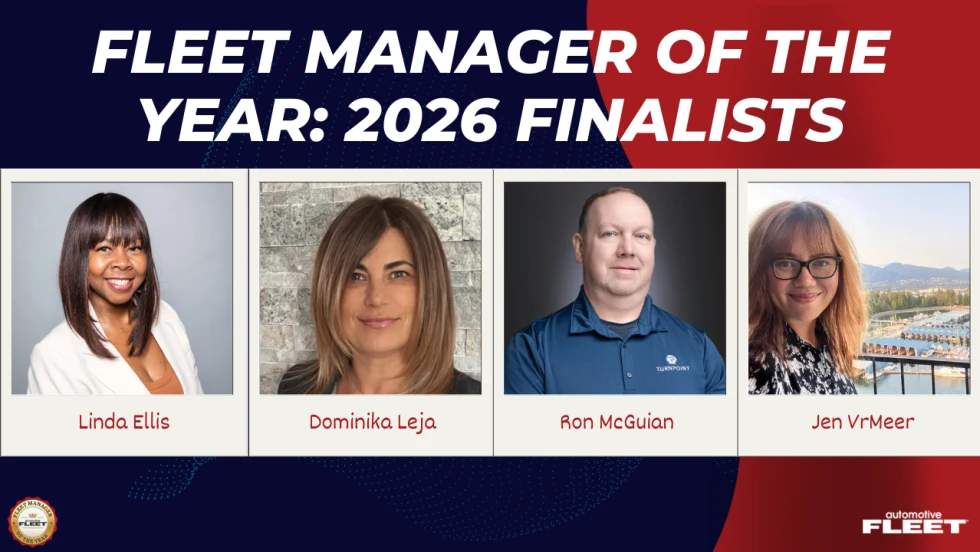
2026 Fleet Manager of the Year Finalists Announced
Who are the 2026 Fleet Manager of the Year finalists?
Read More →
John Rossant to Deliver Opening Keynote at 2026 Fleet Forward Conference
The CoMotion founder will draw on developments across Europe, China, the Middle East, and other international markets to identify trends that could influence how U.S. fleets plan for the coming decade.
Read More →
How to Build Custom Fleet Tools With AI and Vibe Coding [Webinar]
A new Automotive Fleet webinar explores how fleet managers are using AI and vibe coding to automate routine work and create simple operational tools without traditional programming skills.
Read More →