




Ed Bobit's Publisher's Page
What are the most important factors when making a purchasing decision?

Light comes to us unexpectedly and obliquely. Perhaps it amuses the gods to try us. They want to see whether we are asleep.-H.M. Tomlinson
It is difficult to get a man to understand something when his salary depends upon his not understanding it.-Upton Sinclair
I have suffered from being misunderstood, but I would have suffered a hell of a lot more if I had been understood.-Clarence Darrow
Determining Factors in Vehicle Selection
1. Initial Cost
2. Serviceability/Maintenance
3. Economy of Operation
4. Depreciation/Resale Value
5. Fringe Benefit/Driver Satisfaction
6. Administrative Ease
7. Company Prestige
There must be something that prevents me from understanding the yearly results of the National Association of Fleet Administrators' Vehicle Selection and Acquisition Study. Each year. NAFA's large fleet respondents assign a value (one through seven) to the key elements that go into making a purchasing decision and, each year, it is amusing to me to learn the results because of the changes.
It seems to me that about five years ago my faith had been restored when the "Depreciation/Resale" factor was voted most important, and it has been running second since then, until this year. If one can believe what is good research, and I do, it's startling to find that depreciation has slipped into an almost ignominious fourth place among fleet buyers.
Most people would admit that "Initial Cost" is surely of concern to any buyer, but for each identically-equipped model from an individual manufacturer the invoice is the same; and similar models by other makers are usually within a few dollars of each other. And anyone worth his (or her) salt is going to conclude the purchase within $25 comparatively from dealer to dealer. So, what's the large mystery or challenge to "Initial Cost" when indexed against the other factors? One can hasten to point out that "Serviceability" and "Economy of Operation" are both vital, but with the majority of fleets still buying domestic models with electronic ignition, proven engines, good EPA mileage stats, and the longest warranties in history, it is hard to subscribe to the implication that "domestic quality-has finally caught up with imports" and still rank these two factors above resale value.
Residual is the true name of the game. Just talk to an experienced wholesaler, preferably privately, and find out the hundreds of dollars difference being obtained by one fleet over another for similar vehicles. Since there is no direct accounting in resale (except, perhaps, for referencing the guide books) as there is in the new purchase invoice in the buying process, no one can actually be audited in this area of enigma called used-car merchandising. But, believe me, the professionals will tell you, repeatedly, that's the real key to saving the company the big dollars. I still cannot understand how this paramount factor tumbled to fourth.
Can you?
More Operations

Fleet Has a Talent Pipeline Problem. What Comes Next? | AF News Recap
Where will fleet’s next generation of leaders come from? This week, we’re looking at the industry’s talent pipeline, what certification can add to a fleet career, how to build an award-worthy track record, and the return of Automotive Fleet’s Personal Use Survey.
Read More →
Smith System Launches Driver Risk Management Program
Fleets have more driver data than ever, but identifying risky behavior doesn't necessarily correct it. Smith System's new Driver Risk Management program combines monitoring, training, and follow-up coaching to help fleets connect risk signals with driver intervention.
Read More →
Automotive Fleet Opens 2026 Personal Use Survey for Commercial Fleet Managers
Less than two weeks left! Commercial and corporate fleet managers are invited to share how their organizations handle company vehicle personal-use policies, charges, and driver eligibility.
Read More →
From AI Prompts to AI-Generated Safety Songs | AF News Recap
Can better prompts make AI more useful for fleet managers? This week, we’re breaking down smarter fleet analysis, an AI-assisted experiment that turned safety training into music, and what happened to fuel prices in August.
Read More →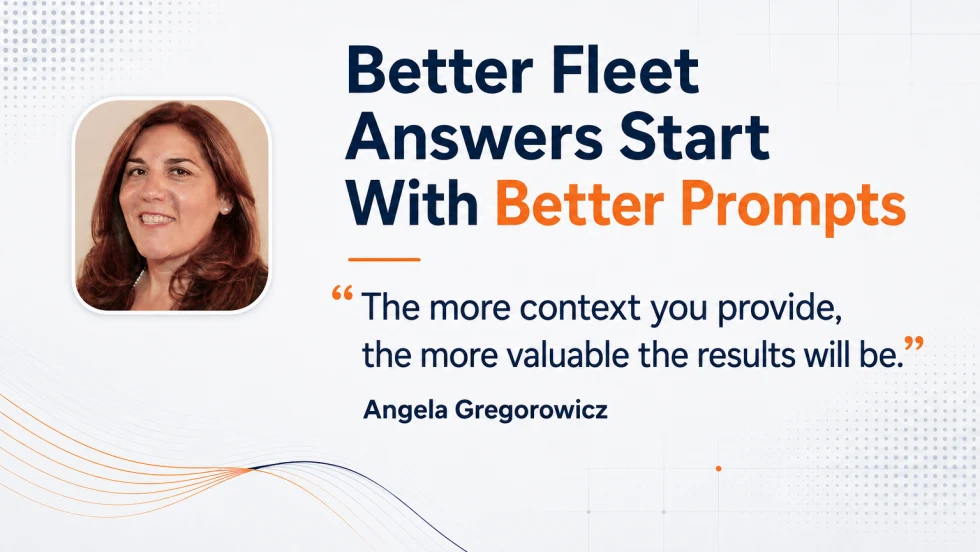
How to Write Better AI Prompts for Fleet Analysis
Include these six elements in your fleet prompts to generate more relevant analysis and accurate answers.
Read More →
Fleet Meets: Eric Kilgore
This edition of the Fleet Meets series features one of the industry's best leaders driving multi-market and national operations.
Read More →
Why Reactive Fleet Management Is Becoming Too Expensive to Sustain
Research highlights a growing need for proactive management strategies to address rising costs in fleet operations effectively.
Read More →
What Your Fleet KPIs Aren’t Telling You
Tracking fleet metrics is only useful when the data leads to better decisions. This guide helps fleet leaders assess cost, utilization, and downtime more accurately, identify performance gaps, and prioritize the actions that can improve operational results.
Read More →
Hidden in Plain Sight: Fleet Compliance Risks
Fleet compliance isn't just about having policies — it's about consistently enforcing them. This practical guide reveals six hidden compliance risks common in public sector and shared fleet operations and outlines proven strategies to improve visibility, accountability, and audit readiness
Read More →
Turning Fleet Payment Data into Executive Insights
Does data alone drive results in operations?
Read More →