




Does Electrification Still Work Without Mandates?
Are EVs still a smart choice for fleets without mandates? As incentives fade, fleet managers must weigh costs, savings, and strategy.
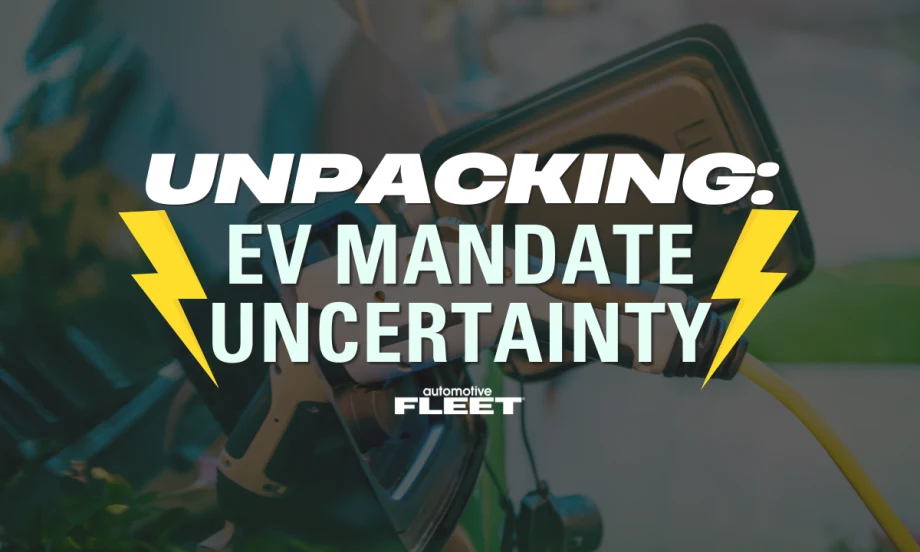
Although there were never any EV mandates, their cancellation by executive order, along with funding for other programs, have industry professionals considering the potential impacts on their customers and businesses.
Photo: Automotive Fleet
2025 has been off to a rocking start! We all anticipated changes given the new administration and their posturing towards climate change and electric vehicles (EVs), but it seems like things may be even more confusing given the flurry of activity in the last few weeks.
Although there were never any EV mandates, their cancellation by executive order, along with funding for other programs, have industry professionals considering the potential impacts on their customers and businesses. One thing is for certain: fleet managers are in for a wild ride, so we all need to buckle up!
The journey to lower-emission vehicles is more than just a green pipe dream — it's become the new reality of our industry. But like any road trip, there are bumps along the way, and at least one question remains — do electric vehicles still make sense for fleets without regulatory support?
The Shifting Sands of EV Economics
The economics of EVs have dramatically improved in recent years. Battery costs are projected to plunge below $100 per kilowatt-hour (kWh), a long-awaited milestone that brings EVs closer to general price parity with internal combustion engine (ICE) vehicles. This shift is particularly noticeable in certain vehicle segments:
Passenger cars: EV models are approaching or achieving cost parity with ICE counterparts, with lots of launches by Western OEMs still lagging slightly, although many Asian manufacturers have already reached this. This makes the total cost of ownership (TCO) story even more attractive for these vehicles.
Last-mile delivery vans: Electric cargo vans for urban deliveries are becoming increasingly competitive, benefiting from predictable routes and lower operating costs. This benefit can be seen with other medium-duty fleets with similarly predictable duty cycles.
Heavy-duty trucks: This segment still faces significant cost hurdles, with EV options often substantially more expensive than diesel alternatives. However, progress remains strong, and large-scale commitments like the $250m from Climate United will go a long way to make this a reality.
Thinking Through TCO With a Wild Card
We’ve all heard the stories — when done right, electrification can be a real money-saver. We're talking up to 40% TCO savings. So even though the sticker price may make fleet managers wince, this long-term potential should leave you doing the happy dance.
Electricity is generally cheaper than diesel or gasoline, especially for many fleets with access to off-peak charging rates.
EVs have fewer moving parts, potentially reducing maintenance costs while increasing uptime. That is, assuming you can get the parts without costly downtime
As the used EV market matures, insurance rates and residual values are expected to stabilize, though uncertainty remains.
However, these benefits vary significantly based on duty cycles, charging infrastructure availability, and local electricity rates. With federal government incentives potentially going the way of the dinosaurs (like the ones that became fossil fuels), fleet managers are left wondering what they can count on. The jury's still out, but here's the scoop:
Federal tax credits between $7,500 and $40,000 might soon be a fond memory.
State-level initiatives don’t seem to be going anywhere and could pick up the slack.
OEMs might have to get creative with pricing to fulfill the potential of the capital investments they’ve been making to mass produce EVs. But how low will they go?
Life After Mandates and Subsidies
Assuming Uncle Sam stops greasing the wheels, several factors point to continued momentum for this transition, including that 2024 saw over 1.3m new EV sales:
Continued improvements in battery energy density and manufacturing efficiency should further reduce costs and extend range.
Lots of charging networks are already under construction, pointing towards diminished range anxiety concerns and potentially accelerating adoption.
Many companies set ambitious emissions reduction targets independent of government mandates and haven’t walked them back… yet.
Major manufacturers have invested heavily in EV production, potentially leading to more competitive pricing and diverse model options
The decision to electrify should never have been solely dependent on mandates. A first principles approach has always been necessary — this could help:
Crunch your numbers: Do a TCO analysis that would make your accountant proud and explore other alternative powertrains, especially if you have emissions targets.
Start small, dream big: Begin with a pilot program.
Get creative with funding: Explore leasing options or "EV-as-a-service" — it's not just for software anymore, but it’s not all roses either!
Stay policy savvy: Keep your ear to the ground for policy changes — it's like weather forecasting for your fleet.
While government policy may have jumpstarted the EV revolution, the long-term viability of electric fleets will likely depend more on fundamental economic and technological factors. As battery costs continue to plummet and charging spots continue to pop up, EVs are poised to become increasingly competitive across more vehicle segments.
Fleet managers should approach electrification not as a response to mandates but as a strategic opportunity to reduce costs, meet sustainability goals, and stay ahead of a rapidly evolving transportation landscape. The key lies in careful analysis, strategic piloting, and a willingness to adapt as the technology and market continue to mature.
More Green Fleet

EV Charging Use Is Outpacing Infrastructure Growth
ChargePoint’s 2026 Charging Forward Report points to rising charger use, higher-powered charging, commercial vehicle electrification, and energy-management technology. Here’s what fleets should know.
Read More →
Merchants Fleet Reports 290M EV Miles as Fleets Navigate Changing Electrification Market
From millions in operating savings to hundreds of millions of EV miles, Merchants Fleet’s latest report reveals what’s working and what’s changing in fleet electrification.
Read More →
The EV Breakdown Nobody's Talking About: Why Most Electric Vehicle Roadside Calls Aren't Mechanical Failures
Here's why EV breakdowns are widely misunderstood.
Read More →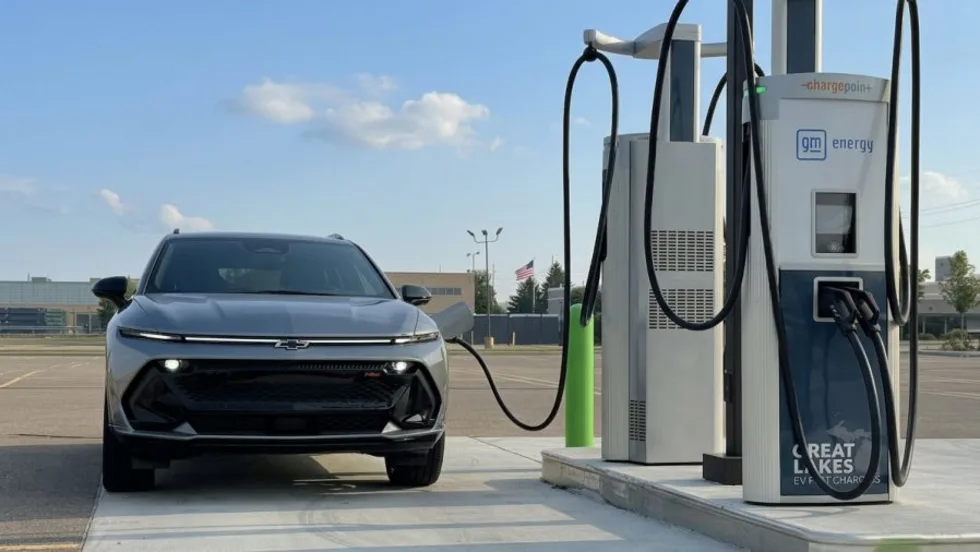
ChargePoint Now Available in Energy Pass
ChargePoint and additional planned charging network integrations were added to GM's Energy Pass.
Read More →

First Look: Slate Auto's Electric Fleet Pickup
Could an affordable, modular EV pickup make electrification more practical for fleets?
Read More →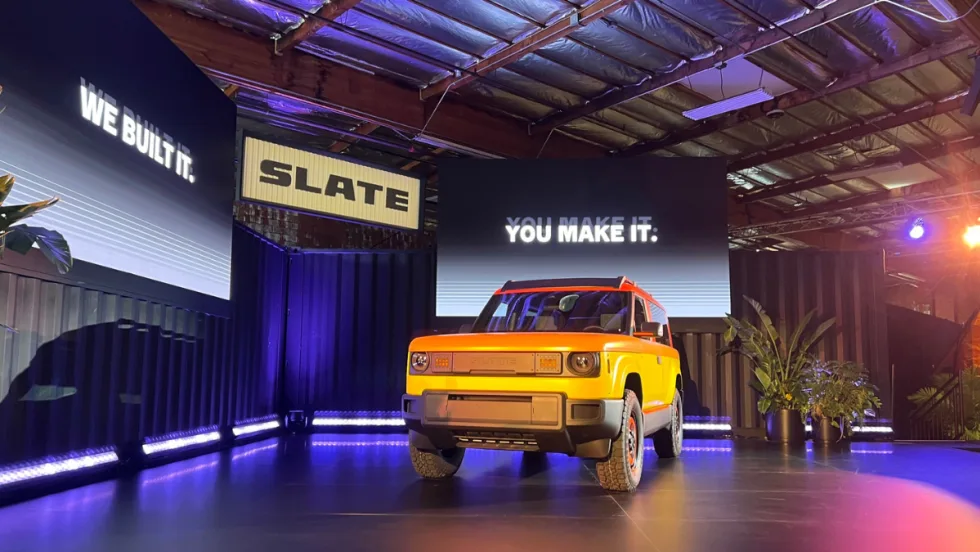
Slate Debuts Colorful, Unique EV Models
A recent media and client event, studded with electric vehicles dressed up on platforms, planted a new position for the manufacturer in the wider EV market. Fleets will find cost-saving advantages.
Read More →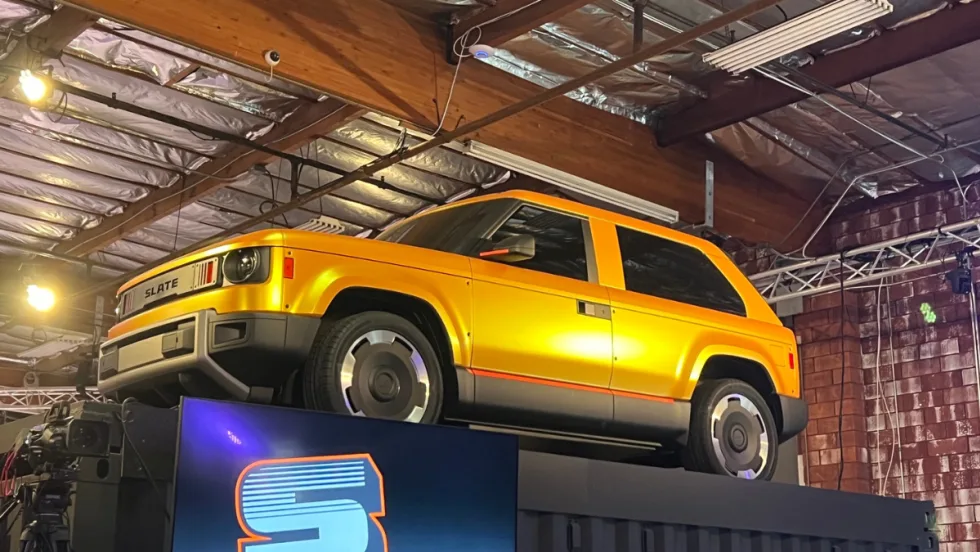
Slate Electric SUV, Pickup Switchable Model Aims For Light-Duty Fleets
Everything about this EV is counterintuitive and understated, making it stand out from the crowd.
Read More →
Inspiration Mobility Acquires Key Electrada Assets
Inspiration Mobility Group has acquired select assets of Electrada, adding the fleet electrification provider's team, technology, and charging infrastructure development capabilities to its energy management business.
Read More →
Turning Connected Vehicle Data Into Decisions That Matter
Fleet leaders have more data than ever, but turning that data into clear, actionable decisions remains a challenge. This white paper shows how leading organizations are using connected vehicle data to improve safety, reduce costs, and optimize fleet performance. Learn how to turn insight into action across your fleet.
Read More →