




Crashes Add Up: Factors that Cost Fleets Money
A look at things you may not have considered that can make fleet crashes cost more than you may expect, including increased hiring costs, an expertise gap, higher insurance premiums, and more.

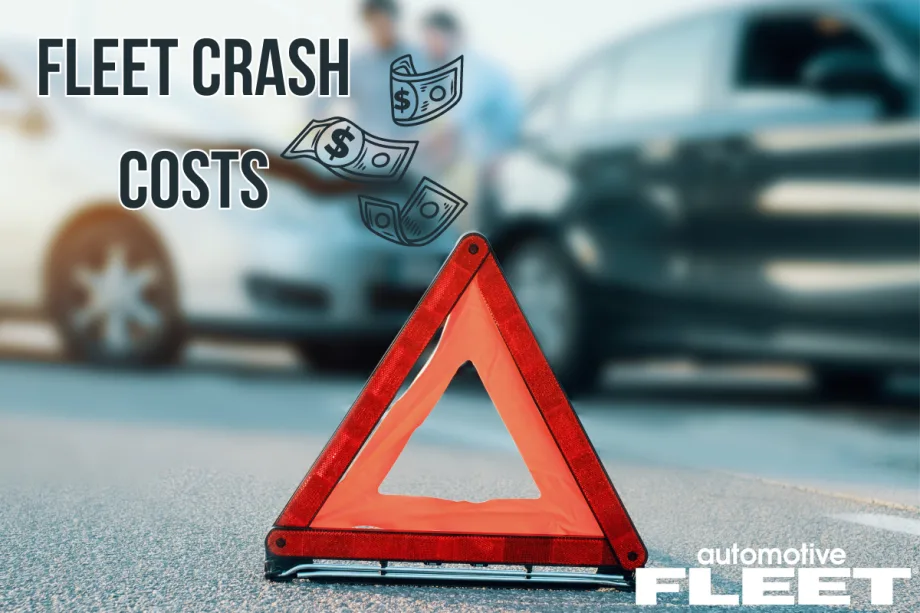
When a crash halts an employee's work, things like overtime for other employees and an expertise gap can have a major impact on your bottom line.
Photo: Canva/Automotive Fleet
It’s no secret that crashes can be costly for a fleet. The average non-fatal work-related crash costs around $75,000, according to the Network of Employers for Traffic Safety. But the impacts to your fleet can be far greater.
A panel of experts — SuYvonne Bell of Gilead Sciences, Eliot Bensel of CEI, Delamon Rego of DECKED, and Corey Woinarowicz of NoCell Technologies — highlighted some of the costs fleet managers should expect to see after a fleet crash, in a session at the 2023 Fleet Forward and Fleet Safety Conferences.
At a glance, these cost elements go beyond the basic cost of repairs but should be included in a fleet crash analysis include:
Lost worker productivity
Lost revenue
Insurance premium increases
Workers compensation
Legal fees
Losing Older Employees = Decreased Productivity
An employee’s age can have an impact in fleet crash costs. The workforce has aged significantly in the last several decades, leading to an older pool of employees.
Older employees are generally the most experienced in their workplace. Losing an experienced employee — either temporarily due to injury recovery, or permanently — can be costly.
When a new employee is brought on to a team, there is always a lot of training involved. This can slow down productivity. The same applies when training a current employee to take on more responsibility.
Rego worked with one city department that used a temp agency to replace injured workers. This system cost the department thousands of dollars, sometimes more than the cost of paying their regular full-time employees.
Paying employees to work overtime to temporarily fill a role that’s open due to another employee’s crash recovery is also costly.
There are also several other factors that can make replacing an employee — both temporarily and permanently — cost you money.
“Are you paying folks overtime? Are you paying folks an extra 50% to replace the folks who are injured? Do you have increased hiring costs? Do you have decreased retention, increased turnover, and an expertise gap that leads to missing some of the higher paid opportunities?” Rego noted.
Increased Insurance Costs
Overall insurance costs can increase due to a crash.
In the insurance world, there is a quantifying factor that affects insurance costs. This is called the experience modification rating, or e-mod. This factor is a multiplier applied to the premium of a qualifying insurance policy. It’s meant to provide an incentive for loss prevention.
Factors like your company’s safety record and claims history can affect your e-mod, which in turn affects your insurance costs.
“Companies with low e-mods can actually pay 85 cents for every dollar of coverage they receive. Whereas companies with high e-mods actually pay $1.25 per dollar of coverage received. So that is a huge, huge gap,” Rego said.
Insurance costs can also be impacted by other factors. In one example, Bensel had a client whose insurance carrier would not reinsure them for auto liability unless their team moved forward with a more aggressive motor vehicle record check program.
A conference attendee experienced a similar situation. In their case, they not only had to create a new policy, but they also had to change insurance carriers.
Measuring Bent Metal Costs
Many fleets measure the severity of a crash by calculating the “bent metal” cost, or the cost of the vehicle damage.
Bensel noted that these costs have increased about 300% in the last few years. This impacts vehicle repair costs for vehicles that are not totaled.
Fleet managers can avoid damage repair costs by teaching their drivers to employ a simple step in their daily routine: a pre-trip inspection.
A vehicle walkaround gives employees an opportunity to see if someone hit them while parked or dinged their vehicle while opening a car next to it, so the repair bill can be covered by the offender.
Factoring in Worker’s Comp Claims
On-the-job injuries can occur outside the vehicle too. While these injuries aren’t crash-related, they can still lead to similar consequences — lost worker productivity, lost revenue, and pricy workers compensation.
One way to lower your chances of injury to your fleet operators is to consider vehicle ergonomics when procuring vehicles. With an aging workforce, vehicle ergonomics is not just about driver comfort. It’s also about protecting drivers from injury.
In pickup trucks, for example, the beds are getting higher, forcing fleet operators to lean in further to retrieve tools or gear. This can lead to injury.
Adding tool organization systems in the bed can help avoid this.
According to data from the National Safety Council, workers’ compensation for motor vehicle-related injuries ranks as the most expensive cause.
Whether injured from a crash or another workplace injury, the cost will be high to the fleet operations.
“With some basic changes, you can actually save all of those employees from getting injured, having to take time off work, and having to deal with bodies that don't feel good. Especially with the acute parts of that injury where folks can't walk with a back that's blown out,” Rego said.
Hefty Legal Fees and Settlements Add Up
When injury or fatality cases against any company go to court, the legal fees associated with the trial can add up. Not only that – many companies prefer to settle if a claim is over a certain amount of money. Those settlements are typically in the hundreds of thousands of dollars.
Transportation-related incidents rank as the top cause of workplace fatalities, accounting for 37% of workplace deaths, according to the Bureau of Labor Statistics.
A Hidden Cost to Consider: Your Company Image
Maintaining a strong reputation of running a safe operation is crucial for companies. A devastating crash involving one of your company vehicles can tarnish your reputation, driving away business.
This is especially true for Fortune 1000 companies. “Having a company image to maintain is a big part of that, and it can tie into the company culture,” Bensel said.
Addressing Preventable Crashes with Training
Proper training can help fleet drivers mitigate crash risks, Bensel emphasized.
Situational awareness, like moving your vehicle forward slightly when stopped but still leaving space between you and the next driver, can help minimize the impact, he explained.
Paying attention to where you park is another step where situational awareness is crucial.
For example, parking under a tree knowing there is a dead branch hanging off of it can lead to damage that, while considered non-preventable, still costs money to repair.
“With proper training, awareness, and accountability, we can have an impact on both preventable and non-preventable crashes,” Bensel said.
When you add up the factors of a crash, the total will almost certainly cost more than safety training and technology does.
Technology like telematics can help fleet managers identify high risk drivers to address poor driving behaviors that increase the risk of a crash and cost the company money.
Additionally, curbing these behaviors can save on preventive maintenance costs due to things like lower wear and tear on the tires or brakes.
Holding supervisors and management accountable can also help avoid crashes.
Bensel’s team implemented a safety program with a large company. After seeing no results after the first several months, the team met with human resources and decided that managers and division leaders would be held partially accountable for reducing risks within their divisions, tying it to a performance evaluation and pay-for-performance objective. Within six months, crash rates went down dramatically.
“The idea there is that if you think you're doing the right thing and it’s not producing results, watch your numbers, watch your metrics, do something different. Skin in the game is a huge motivator; gamification is a huge motivator,” Bensel explained.
The Benefits of Having Employees Pay Tickets
Tickets, whether crash-related or for general traffic infractions, can be pricy for fleets. Bell requires employees who get tickets to reimburse the company. When she first started at Gilead, this was not something her department did, and the cost of the tickets the company was paying added up.
Making this change can not only save you money; the fleet driver may be more likely to drive safely to avoid getting a ticket since they know they’ll have to pay it back.
How Strong is Your Safety Policy?
Company safety policies can and should be updated; they can lead to cost savings in ways you might not expect.
“The foundation of any good safe driving program is a good safety policy that's not only reinforced and kept up to date as new technologies come in, but also [requires] a signature of that driver acknowledging that they read it. It protects them and lets them know you have a culture of safety. It also protects you in case you get in a situation where you have to defend yourself against a lawsuit…that you actually had a policy and they signed off on it,” Bensel advised.
One policy worth including if your vehicles have any kind of advanced driver assistance systems, telematics devices, or other technology, is that the technology cannot be disabled. This can both protect the driver and protect your company from litigation.
Proactive Steps that Can Help You Avoid Crashes
While the up-front price tag on some safety technology can be hefty, taking a proactive approach can help you save money in the long run.
Aftermarket ADAS (if the vehicle does not have it already) or cell-blocking technology that disables phones for drivers while their vehicle is in motion can help you prevent crashes and injuries.
“You can either throw money out the window, or you can throw money toward saving the money when you put that technology in,” Woinarowicz said.
More Operations
Here's When You Should Make an Exception to Fleet Policy
Fleet policies are designed to create consistency, but not every driver or situation fits neatly within standard rules.
Read More →
AI-Native or AI-Acquired: What Should Fleet Managers Look for in an AI Platform?
Six questions can help fleet managers look beyond AI marketing claims to evaluate integration, data access, and real-world operational performance.
Read More →
A buyer's guide to fleet management software in 2027
Buying fleet management software in 2027 means looking beyond features and price. As fleet operations, technology and expectations evolve, this guide explores what today’s fleet professionals should consider when choosing a system that can deliver value now and adapt to what comes next.
Read More →
What Will Shape the Next Era of Fleet Management?
EVs, AI, and autonomous vehicles are reshaping fleet management. Discover what’s ahead—and how fleet leaders can prepare for the next era.
Read More →
How Fleets Can Recruit and Train Veterans for Technician Roles
Here's how the technician shortage has affected uptime for fleets, and what to do about it.
Read More →
Avis Budget Group Deploys Neology Toll Management Technology Across Major Brands
Neology’s neoFleet platform will manage toll transactions and toll-authority operations for vehicles across Avis, Budget, Payless, Budget Truck and Zipcar.
Read More →
Fleet Personal-Use Charges Edge Higher in 2026
Nearly eight in 10 surveyed fleets allow personal use of company vehicles, while just over half of respondents report charging employees for the privilege.
Read More →
The Future of Fleet + What’s Changing Right Now | AF News Recap
Could developments overseas offer a preview of what’s coming for U.S. fleets? This week, we’re looking at the future of AI, autonomy, and electrification, plus Ford Pro’s new certified pre-owned program, smarter vehicle offboarding, and a new way for fleets to manage toll expenses.
Read More →
How to Handle Vehicle Offboarding
What do fleet managers need to do when a driver leaves?
Read More →
Fleet Manager’s Ultimate Playbook: Navigating the New Standard in OEM Connectivity
Rising operating costs, driver safety concerns, and unplanned downtime are putting unprecedented pressure on modern fleets. Discover how fleet managers use embedded OEM connectivity and real-time vehicle data to cut TCO, prevent downtime, and protect drivers without aftermarket telematics hardware.
Read More →