




Controlling Fuel Spend in a Decentralized Fleet
Effective fuel management is an integral part of a fleet operation. A NAFA Fleet Management Association guide explores the tools available for commercial fleets to manage the second-highest fleet expense.
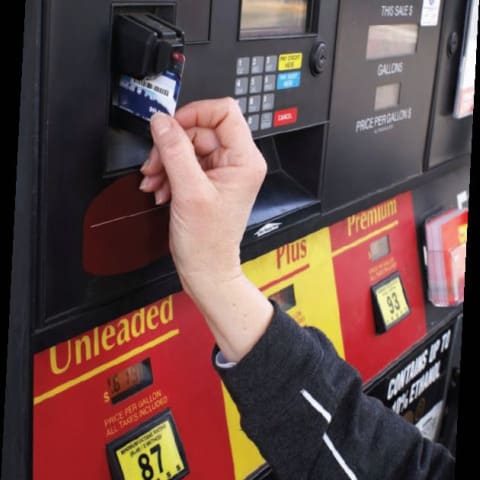
(The following material is based, with permission, on The Fuel Management Guide, produced by NAFA Fleet Management Association.)
By their very nature, decentralized vehicle operations require the ability to refuel in a variety of geographical locations at potentially any time of the day or night. Fleet managers responsible for decentralized fleets have a variety of tools at their disposal to fuel their fleets. The following text covers the primary tools for most fleets:
Fuel cards & credit cards.
Controlling driver habits.
Price risk management/hedging.
Fuel & Credit Cards Differ
A fuel card is not a credit card and has its own uses and benefits. Both fuel and credit cards eliminate the need for cash. Beyond that, however, their similarities primarily cease at appearance.
There are several types of fuel cards:
Universal.
Universal/Co-branded.
Corporate travel and expense (T&E) card.
Fuel company-branded.
Universal & Co-Branded Cards
Universal cards offer fleets optimized fuel data management and give broad station access. A universal fuel card usually is used only for fuel; however, in recent years, controls have been added to allow use at repair shops for a limited number of repairs or limited dollar amount. Card providers have also established agreements with national repair chains for acceptance of the universal card, sometimes at a discounted rate. A universal card carries only the name or brand of the fuel management company.
Co-branded cards bundle fuel management and billing through a fleet management company with the lease. Leasing company fuel cards are typically co-branded with a universal card. Both cards may have various levels of controls regulating the type of sale and the maximum amount of any one specific purchase or daily total spend amounts. High-level purchasing data profiles can provide the ability to analyze data in many ways. These cards may carry a monthly fee, which may be negotiable.
With a universal fleet fuel card, organizing and managing a fleet fueling policy is easy. Most programs are designed to minimize fuel costs and reduce time spent managing a fleet's fuel. Since most fleet fuel cards are accepted at most locations, a fleet will always have a fueling station nearby.
Even if running out of fuel is not a primary concern, time is wasted if the fuel card is only accepted at a few locations. Day after day, drivers would have to travel out of their way simply because their routes did not coincide with a fueling station that accepted a fleet's card.
Most universal fleet fuel cards provide comprehensive driver, vehicle, and exception reports to help track fleet's activity within broad parameters set by the fleet manager. A broad number of features are offered by fleet fuel card providers. Depending on a fleet's need, common features to consider include:
Purchase Control. Cards should have the flexibility to be assigned to either the driver or vehicle, with purchases controlled through an assigned PIN. A fleet manager should be able to limit purchases by product, number of transactions per day, time of day, and/or dollars per transaction, day, week, or month.
Exceptions Monitoring. Key purchasing information collected should include date, time, location, odometer reading, driver name, product type, unit, cost per unit, and total sale for each transaction at the point of sale. However, fleet managers should have the ability to define their own exceptions. Exceptions should be tracked by vehicle or driver and include miles per gallon variances, pattern discrepancies, product variances, and excess fuel purchases.
Flexible Reporting Options. Re-ports should be available in various media formats at various detail levels, with the most detailed broken out by vehicle and/or driver.
Tax Exemptions. The fuel card company should be able to report and calculate various tax exemptions allowed by law at federal and state levels and bill the fleet net of the exempted taxes.
Convenience. Drivers should only need one card, and it should be accepted at most stations. Most fuel cards can be used as pay-at-the-pump so further time is not wasted in lines at the cash register. If a fleet deploys vehicles that go into Canada or Mexico, make sure the card is accepted in those countries.
Online Customer Access. In today's electronic world, fleet managers should have a great deal of online access to their fuel card accounts. This access should include viewing unbilled transactions, month-to-date exceptions, vehicle and driver information, payments, and adjustments. Fleet managers also should be able to perform a number of functions online, such as: adding drivers/vehicles, reporting lost/stolen cards, issuing new/replacement cards, updating driver/vehicle information, and modifying personal identification numbers.
Billing & Payment Options. Many fuel card companies offer flexibility in payment options, including electronic transmissions, checks, or a combination thereof.
[PAGEBREAK]
Corporate Travel & Entertainment Cards
Corporate T&E cards, typically Visa, MasterCard, or American Express, can use existing agreements a company has in place. The availability of fleet tracking data will be less than that offered with a universal fleet fuel card.
The T&E card may provide a range of zero to moderate levels of purchasing profile data management and limited ability to block or decline authorization of certain purchases. With the addition of fuel purchases, a fleet manager may be able to leverage the volume of a T&E program for lower overall T&E costs, and it can also mean one less card for drivers to carry and for the company to track. If a fleet manager wants to provide fuel only, as in a pool-car fleet, a T&E card is not the way to go.
Fuel Company-Branded Cards
A fuel company-branded card can be a regional or national chain. However, fleet managers must ensure its feasibility within geographic natures of their fleets. These instruments may provide varying degrees of purchasing data profile. One advantage of a fuel company card is it may be easier to obtain and track discounts. Disadvantages include limited availability of fueling stations for some drivers and a varying degree of detailed information and reporting.
Controlling Driver Habits
Regardless of the type of fuel card used, evaluating fuel reports supplied by a fuel card company can help identify trends that can influence driver habits. Patterns of specific brands of fuel consistently higher than others can definitely be identified. Major brand fuels tend to be higher than independent stations. This information can guide company employees to stations with the best prices.
Most fleet managers understand it is difficult to control driver habits. However, the use of restrictions that can be provided with electronic cards can assist in controlling expenses.
For instance, a driver may be restricted from purchasing premium fuels. Also, fuel cards should have daily gallon limits and require the use of a PIN to help prevent fraud. As fuel prices continue to rise, the temptation to commit theft or use the card inappropriately will grow.
[PAGEBREAK]
Negotiating Volume Discounts
When using any type of fuel card, there may be opportunities for a fleet manager to leverage discounts or rebates depending on the monthly or annual spend rate. With universal and universal/co-branded cards, both a volume discount with the card company and a cents-per-gallon discount at certain branded stations can be negotiated.
Discount negotiations work best with corporate-owned individual stations, not with individual franchises. Negotiating a volume discount with a T&E card provider is unlikely; however, there should be other benefits to an employer due to increased volume on the card. A fuel company-branded card may offer a fuel discount, again depending on volume.
One other area to consider is the ease with which fuel card data interfaces with a fleet management system. Refueling transaction data has value beyond cost allocation. If a fuel card captures odometer readings, combining this information with fuel usage provides critical data to help fleet managers monitor preventive maintenance programs.
This data can be used in a number of ways to enhance fleet management capabilities: vehicle cost tracking and planning, driver behavior modification, route planning, lifecycle cost analysis, replacement planning, and more.
Because so many different types of fleet credit cards are available to fleet managers, it can be very difficult to choose the fleet card right for a specific company. Shopping around and making comparisons between different types of credit cards is highly recommended.
[PAGEBREAK]
Mitigating Fuel Price Volatility
Fuel prices are volatile, but can be evened out using a price risk management (PRM) strategy. Most large universal fuel card companies offer a program called price risk management or price protection. These programs are offered through a third-party partner that specializes in fuel management. This partner, after determining the client's sensitivity to risk, will recommend a program with "custom" terms, (e.g., percent of fuel buy to "hedge," say, 50-100 percent) and period of time the contract will run.
Once the customer agrees to a "cap" price and a term, generally 6-18 months, fuel transactions using the card are reconciled monthly. If pump prices exceed the agreed cap, the fleet will receive a refund check for all pump transactions more than the negotiated price. If the pump price is lower than the agreed-upon amount, the fleet must pay the fuel card company the agreed cap price on all transactions.
Without getting into detail about hedging and how it works, the simplistic definition is: establishing a position in the market in an effort to reduce or eliminate the risk associated with an existing physical position in the same market.
Most fleet managers who enter into a price risk management strategy do so to help control their fuel budgets by protecting themselves from dramatic spikes in prices. Fuel prices can take fairly dramatic jumps upward in a relatively short period of time. Having a PRM strategy in place can protect an organization from these and other global events, and ensure fuel budgets are not "blown out."
As mentioned previously, a fleet does experience downside exposure with a PRM strategy. If the bottom falls out of prices, the fleet will continue to pay the agreed-upon fixed price for fuel. However, fleets will know what their fuel budget will be on a month-to-month basis.
When considering one of these programs, fleet managers should make sure everyone involved understands fleet is not trying to "beat" the market or make the department or company money. Anyone who follows historical fuel pricing trends knows fuel prices swing seasonally; as a result, a fleet manager would be hard pressed to always "beat" the market.
Cashless Alternatives Offer Benefits
Providing drivers payment options that eliminate the need for cash offers several benefits. For starters, there is a security factor in not requiring drivers to always carry cash. Also, fuel card systems allow fleet managers to control the fuel products used in their fleet vehicles, provide data collection critical for good management, and may offer a discount to help reduce total fuel expenditures.
Another way to provide fuel is to have drivers use a traveler's check-type system at the time of purchase. One method is called the "Com Check," a paper "draft" typically utilized in the same fashion as a traveler's check except monetary values may be transmitted to many locations 24/7. The draft can then be used in an unrestricted manner.
This cashless method has been a staple in the trucking/truck stop environment for many years, but recently has been significantly overshadowed by a "credit card" that can be electronically "reloaded" with funds. Aside from cash, the draft method of payment provides the least level of control and data tracking.
More Fuel

Turning Fleet Payment Data into Executive Insights
Ramel Lindsay of U.S. Bank Voyager discusses how fleets can transform payment and transaction data into actionable intelligence to reduce costs, improve oversight, and support executive decision-making.
Read More →
Why the IRS Raised Its Mileage Rate in the Middle of 2026
Fuel-price volatility drove the rare increase to 76 cents per mile, the fifth midyear adjustment since 2000.
Read More →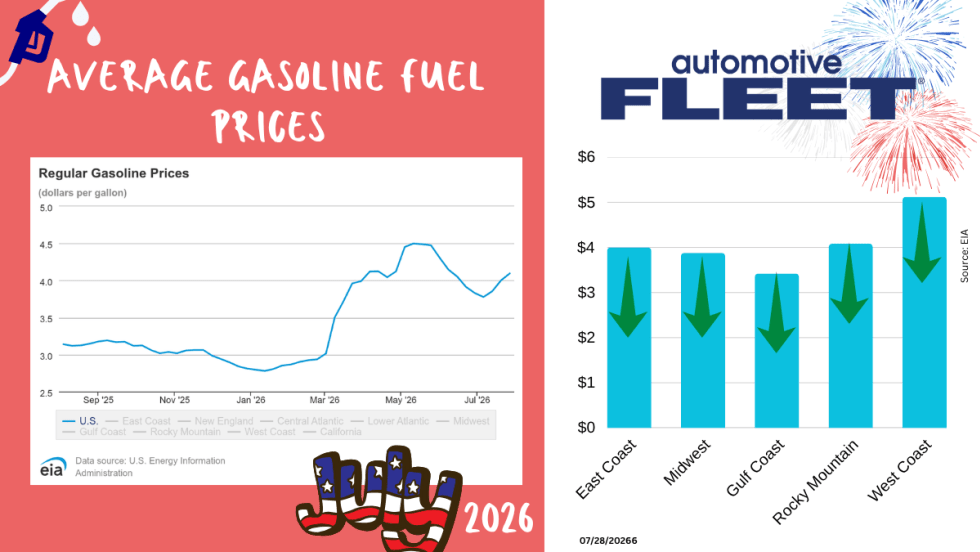
July Fuel Update: Prices Keep Rising in Light of More Conflict
Gas prices continue to rise as more and more conflicts do, too.
Read More →
Bob Adamsky on Fuel Volatility: "Don't Panic, Have a Plan."
When it comes to up and down fuel prices, Adamsky has a message for fleets: “Don’t panic.”
Read More →
How Fleets Can Gain Control of Non-Fuel Spend
Fuel often gets the spotlight, but non-fuel expenses can have a major impact on fleet costs. Ramel Lindsay of U.S. Bank Voyager discusses how fleets can gain better visibility and control over these often-overlooked expenditures.
Read More →
Fuel is Just the Start: How Middle East Tensions are Driving Up Fleet Maintenance Costs
The Middle East conflict is doing more than pushing up fuel prices. It’s also raising the cost of key maintenance products your fleet depends on, from motor oil to tires to windshield wipers. Here’s what you need to know about this budget-busting situation.
Read More →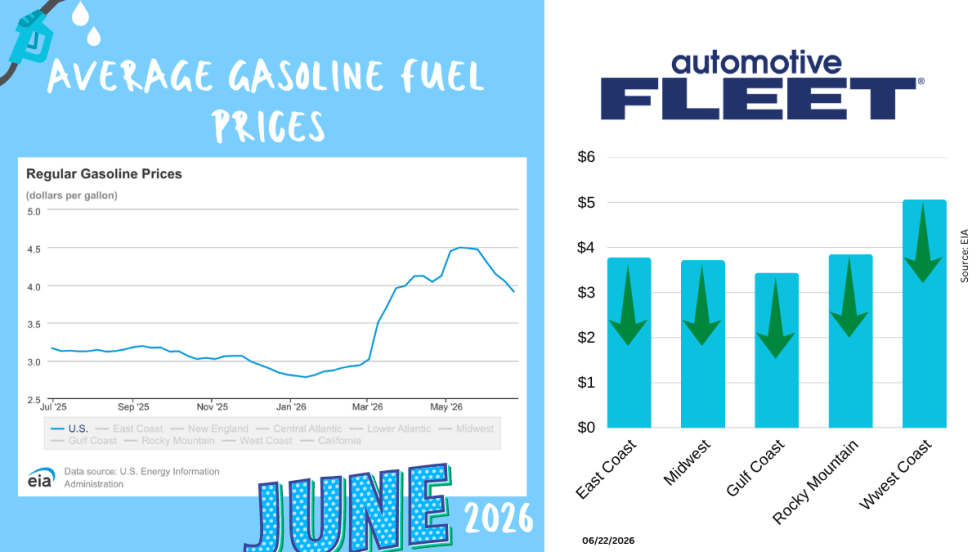
June Fuel Update: Prices Fall Below $4
Drivers are finally getting some relief at the pump. The national average gas price has dropped below $4 a gallon for the first time in months, with prices falling in 47 states as oil markets react to developments in U.S.-Iran negotiations.
Read More →
Study: How 2026's Gas Price Hikes Affect Different Vehicle Types
New data from iSeeCars reveals how rising fuel costs have affected different vehicle segments as gasoline prices climbed nearly 46% over the past four months.
Read More →
Are You Tracking Your Fleet's True Total Cost of Ownership?
Bobit Business Media surveyed 190 fleet professionals and found that while most fleets are tracking costs, fragmented systems and data gaps are keeping true TCO visibility out of reach. With rising pressure to control spend in an increasingly volatile environment, the gap between what fleets think they know and what the data actually shows is wider than you might expect. See how your peers are managing costs today and where the industry still has room to improve.
Read More →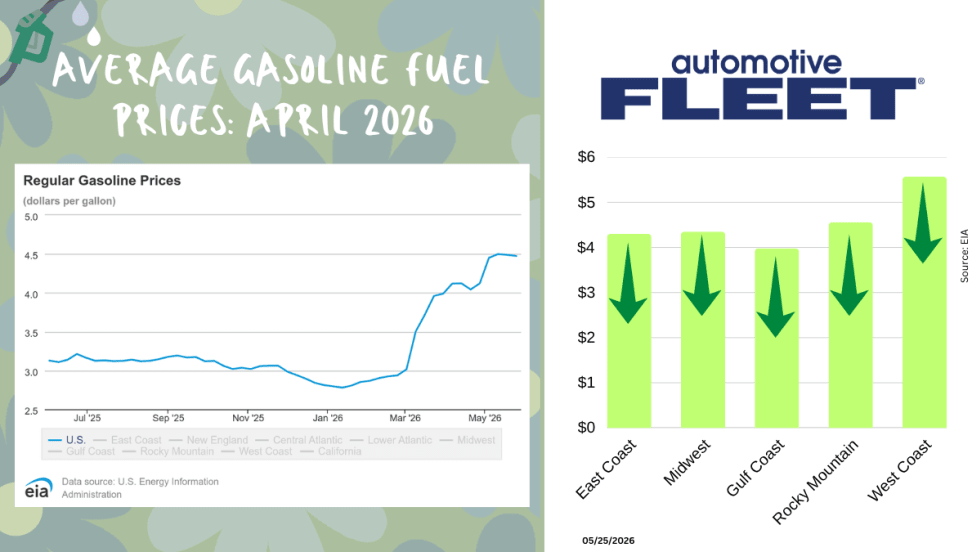
May Fuel Update: All Regions Experience Declines
Gas prices are finally easing in much of the country, but experts warn global tensions could quickly reverse the trend as the national average remains well above last month’s levels.
Read More →