




Commitment to Knowledge: Fleet Managers and Lifelong Learning
In today’s volatile economic and regulatory environment, knowledge is, indeed, power. The path to lifelong fleet learning is packed with conferences, publications, and professional courses.
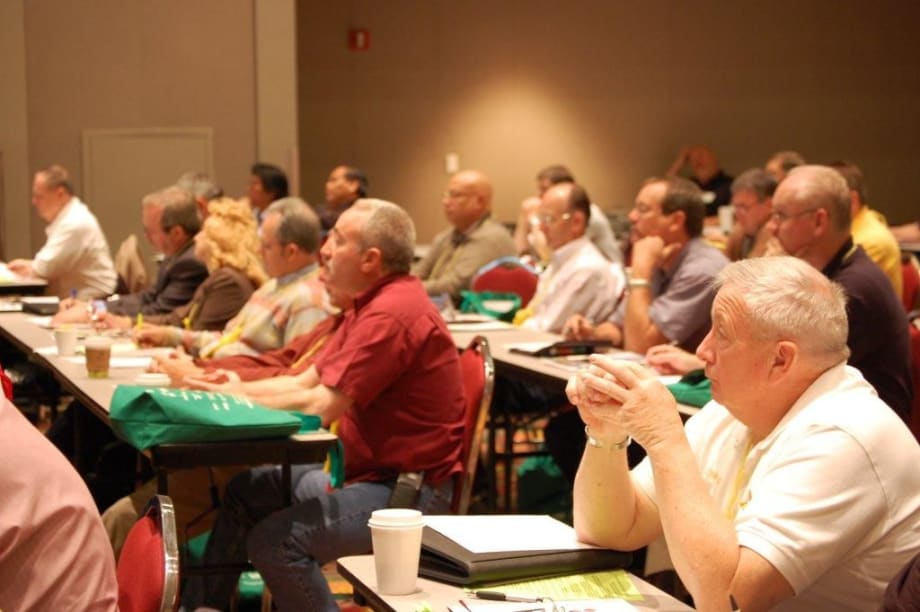
Fleet managers should attend industry events to keep up with industry trends.
Fleet managers should attend industry events to keep up with industry trends.
The NAFA Fleet Management Association recently launched a campaign to promote and acknowledge the multiple roles of fleet managers and the importance of the work they do. In many organizations, a single individual is responsible for creating selector lists, buying vehicles, dealing with fleet vendors, reviewing data from an information management system, determining lifecycles based on total cost of ownership, maintenance and fueling, managing risk, and, eventually, remarketing the vehicles.
These tasks are further complicated by today’s challenging economic environment and high expectations of internal customers and senior leadership alike. All of this means that fleet managers must arm themselves with all available tools to deliver safe and efficient services to their organizations.
The factors driving today’s fleet operations include:
Unstable fuel prices. The price of fuel is one of the main concerns expressed by fleet managers over the past three years. After depreciation, fuel is the largest fleet expense and a small increase in prices can result in a significant impact on large fleet operating costs.
Market trends. Toyota finished the first half of 2012 in first place in terms of global car sales. Almost one-third of Ford’s global sales in 2012 were to fleets. An informed fleet manager must be able to interpret these facts and understand their potential impact on fleet pricing and residual values.
Regulatory environment. Environmental standards, driver licensing requirements, and commercial vehicle restrictions may vary by country and even by state or province. Fleet managers must be aware of existing and pending legislation and take action to mitigate any liability exposure for their organization.
In addition to the ability to understand and deal with a host of complex issues, the fleet manager has to meet the expectations of his or her customers and leadership. Fleet customers vary — and may include business units, departments or divisions in an organization, or the drivers themselves. Fleet managers are there to ensure these internal customers have the vehicles they need to perform their primary mission and are influential decision makers in the areas of vehicle selection and specifications, lifecycle, personal-use benefits, reporting, and maintenance schedules and services.
The relationship between a fleet manager and senior leadership requires consideration. In many organizations, leadership is not fully aware, or appreciative, of the role that a professional fleet manager occupies. The first task for the fleet manager, then, becomes to educate senior leadership and build a relationship based on trust and understanding. Another key ingredient to this relationship is a reporting structure and matrix. Fleet managers have to decipher what company leadership wants or needs to know, and then deliver it in a format and at a frequency that meets that requirement.
Staying Current
Professional fleet managers are more than up to these complex challenges, but only if they stay current on a wide range of topics and seek constant improvement. Sources of industry education include a wide range of trade journals such as FLEETSolutions, Automotive Fleet, and Fleet Digest; trade shows such as NAFA`s annual Institute and Expo, the Alternative Clean Transportation Expo, Green Fleet Conference, Fleet Safety Conference, and the Automotive Fleet Leasing Association (AFLA) annual conference; and other educational programs.
The education component should not be underestimated. Developing or improving general management, analytical, and financial skills through college or university programs is one method. There are also industry-specific opportunities to gain valuable technical and professional skills through certification programs, such as NAFA’s Certified Automotive Fleet Manager (CAFM) and Certified Automotive Fleet Supervisor (CAFS) programs. For additional information on these programs, visit www.fleetcertification.org.
A static approach to learning will simply not meet the demands of the myriad challenges facing the modern day fleet manager. An individual, tailored approach needs to be adopted, which should include:
Dedicated time weekly (or daily) to read current trade publications.
A commitment to attend a minimum of one industry event each year, and specific plans to maximize the value of attendance at that event.
Established career goals that include education, either through post-secondary sources or professional designation programs.
This strategy will ensure fleet managers have, and keep, the skills to multitask, interpret industry trends, and satisfy their customers and their leadership — now and down the road.
About the Author

Katherine Vigneau, CAFM.
Lt. Col. (ret.) Katherine Vigneau, CAFM, spent almost 27 years in the Canadian Army, working in transportation and logistics. She retired in 2010 to start KMVS Fleet+ Consulting, specializing in fleet management education and training. Vigneau is a former NAFA trustee and currently serves as NAFA’s professional development strategist.
More Operations

Avis Budget Group Deploys Neology Toll Management Technology Across Major Brands
Neology’s neoFleet platform will manage toll transactions and toll-authority operations for vehicles across Avis, Budget, Payless, Budget Truck and Zipcar.
Read More →
Fleet Personal-Use Charges Edge Higher in 2026
Nearly eight in 10 surveyed fleets allow personal use of company vehicles, while just over half of respondents report charging employees for the privilege.
Read More →
The Future of Fleet + What’s Changing Right Now | AF News Recap
Could developments overseas offer a preview of what’s coming for U.S. fleets? This week, we’re looking at the future of AI, autonomy, and electrification, plus Ford Pro’s new certified pre-owned program, smarter vehicle offboarding, and a new way for fleets to manage toll expenses.
Read More →
How to Handle Vehicle Offboarding
What do fleet managers need to do when a driver leaves?
Read More →
Fleet Manager’s Ultimate Playbook: Navigating the New Standard in OEM Connectivity
Rising operating costs, driver safety concerns, and unplanned downtime are putting unprecedented pressure on modern fleets. Discover how fleet managers use embedded OEM connectivity and real-time vehicle data to cut TCO, prevent downtime, and protect drivers without aftermarket telematics hardware.
Read More →
U.S. Bank Adds Verra Mobility Toll Management to Voyager Fleet Platform
The integration allows U.S. Bank Voyager fleet customers to manage toll payments and violations alongside fuel, EV charging and maintenance expenses.
Read More →
ADAS Prevents Crashes. But Repairs Cost More | AF News Recap
ADAS-equipped vehicles may crash less often, but they can cost more when they do. This week, we’re breaking down what that tradeoff means for fleets, plus Subaru’s first Forester Wilderness Hybrid, Nissan’s new e-POWER Rogue, and why Calstart has become Catalyst Mobility.
Read More →
Moventum Fleet Management Names Mark Iorillo Head of Sales
Iorillo brings nearly 20 years of fleet management and sales experience to the role, including previous positions at Element Fleet Management, CEI, Donlen and Ryder.
Read More →
Fleet Has a Talent Pipeline Problem. What Comes Next? | AF News Recap
Where will fleet’s next generation of leaders come from? This week, we’re looking at the industry’s talent pipeline, what certification can add to a fleet career, how to build an award-worthy track record, and the return of Automotive Fleet’s Personal Use Survey.
Read More →
Smith System Launches Driver Risk Management Program
Fleets have more driver data than ever, but identifying risky behavior doesn't necessarily correct it. Smith System's new Driver Risk Management program combines monitoring, training, and follow-up coaching to help fleets connect risk signals with driver intervention.
Read More →