Data Box
Capital: Buenos Aires
Population: 43,646 ,358
GDP: US$177.72 billion
Total Vehicles (incl. private fleet): 23,120, 241
 MENU
MENU SEARCH
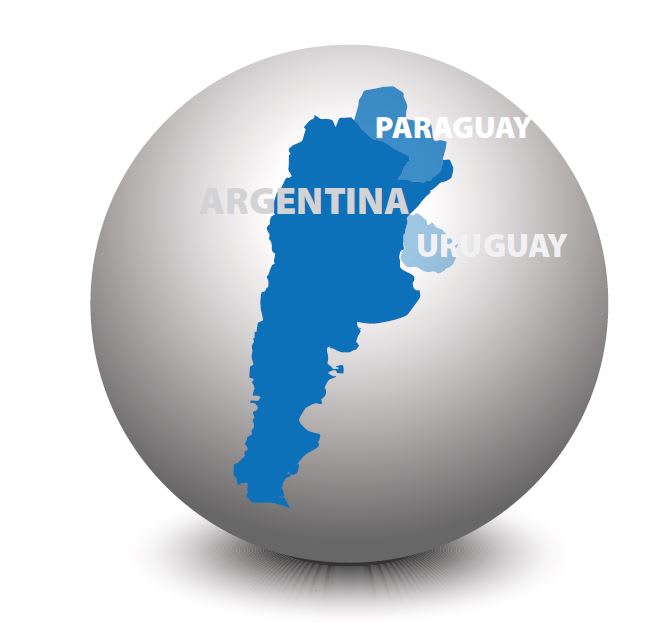
In addition, there has been a 20% decline in fleet sales in neighboring Uruguay. The peso has depreciated and the government has decreased fleet purchases.
Graphic courtesy of istockphoto.com
Graphic courtesy of istockphoto.com
Argentina is the second largest economy in Latin America. The economy is currently being battered by a high annual inflation rate of 37%. The unemployment rate is approximately 8.2% and GDP growth is an anemic 0.7%.
“The president of Argentina, Mauricio Macri, calculates that this is a price worth paying. His predecessor left Argentina’s economy in dire straits,” said Marcelo Tezoto, South America fleet sales development manager for GM. “In 2015, it ran a 5.8% fiscal deficit, inflation is currently around 30%. Borrowing on international credit markets will help him to tackle both the deficit and inflation.”
In addition, the government said it will reduce the country’s budget deficit in the coming years by gradually reducing government subsidies on electricity.
The automotive industry in Argentina grew at 4% from January through April 2016. “There is a lot of pent-up demand in Argentina,” said Tezoto.
In 2015, GM invested US$740 million in its Rosario assembly plant. GM also launched the new Cruze in the Argentina market.
Argentina’s economy is experiencing a period of macroeconomic adjustment as a result of the structural reforms undertaken by the administration of President Macri. According to data released recently by the statistical office, in April 2016, industrial production contracted a sharp 6.7% on an annual basis, thus highlighting the effect of the government’s austerity measures.
Moreover, massive layoffs and record-high inflation rates are a cause of concern for Argentinians and consumer confidence hit the lowest level in nearly two years in May 2016.
After the drop in sales in January 2016, vehicle sales saw a double-digit increase, reaching a peak in May. It was the fourth month in a row with positive performance. This is based on data from the Argentinian Associations of Car Manufacturers and Dealers in May 2016, with the number of vehicle sales increasing to 58,007, up 24.9%.
Year-to-date, total automotive sales have been 274,358 units, up 10.6% over 2015.
The total automotive market in Argentina, both retail and fleet, is the second-largest in South America.
While Argentina has the second-highest number of fleet vehicles in South America, and despite having made some progress, the country still has a very immature fleet management market.
Currently, there is also much economic uncertainty in Argentina, but not as much as Brazil. The market in Argentina is showing signs of picking up.
Incentives, or discounts, in the fleet channel are very aggressive, ranging from 13% to 25% in sales to fleet companies and government-tendered discounts reaching 30%.
The primary fleet market in Argentina is large multinational companies. Corporations usually purchase their fleet vehicles rather than lease them.
“In Argentina, dealers work together with GM in selling to multinational companies, along with small- and medium-sized companies,” said Tezoto.
The petroleum, mining, utilities, passenger transport, car rental agencies, and pharmaceutical industries are the strongest vocational segments for commercial fleet sales in Argentina.
Despite the sharp drop in the global price of fuel, Argentina continues to have one of the most expensive fuel prices in the South American region. In the regional ranking, Argentina is the second-most expensive country in South America. The average price per liter for gasoline in Argentina was 17.34 Argentine pesos, which equals US$1.16.
The impact of taxes in Argentina is very high as companies purchase vehicles using corporate lines of credit or by leasing them.
“The constant tax increases negatively influence fleet costs of companies,” said Tezoto.
A key factor stimulating interest rates is high inflation, which has been a weakness of the Argentine economy for decades.
Parts availability remains a problem in Argentina, but it is getting better. In addition, the price of spare parts is also a problem.
In 2016, the estimated total market for Argentina will be 620,000 units, with the fleet market comprising 8% of that volume. The estimated fleet market for all brands is around 49,600 units.
Editor's note: This article first appeared online in the Q3 Global Fleet Market Conditions supplement published in October of 2016.

Geofencing is a familiar fleet tool today, but its early adoption marked a major shift in vehicle tracking, route monitoring, and the debate over employee privacy.
Read More →
Holman is bringing its Mexican fleet management operation fully under its own brand after more than 30 years as a joint venture. The change gives multinational fleet customers a single Holman operation across the U.S., Canada, and Mexico.
Read More →
Regular tire checks can do more than extend tread life. These five maintenance practices can help work truck fleets catch problems early, reduce costs, and prevent downtime.
Read More →
The age-old problem of downtime will always be a reality, but with new strategies at hand, fleets have more ways to keep trucks on the road longer.
Read More →


Part Two: Commercial auto remains one of the most challenging and costly lines of coverage for fleet operators and insurers alike. Continue learning more about how to effectively address these issues from Onur Aksan, Enterprise Business Development Executive, Geotab
Read More →
Commercial auto remains one of the most challenging and costly lines of coverage for fleet operators and insurers alike. Learn more about how to effectively address these issues from Onur Aksan, Enterprise Business Development Executive, Geotab.
Read More →
Fleet leaders are under pressure to reduce costs, adapt to economic uncertainty, and make smarter decisions. See how peers across North America are responding with real data, proven strategies, and forward-looking insights. Download the 2026 Market Pulse Report to benchmark your strategy and uncover where you can gain an edge.
Read More →
Enterprise Mobility connects with mobility solutions around the globe
Read More →