




2018 Fleet Executive of the Year Award Nominees
The annual award recognizes exceptional leadership by those in the industry who hold the title of vice president or higher and have other responsibilities beyond fleet. Three fleet executives have been nominated to receive the award this year.


The Fleet Executive of the Year Award, which is sponsored exclusively by The CEI Group, recognizes exceptional leadership in the industry by people who hold the title of vice president or higher.
Photo via Getty Images.
The Fleet Executive of the Year award, presented by Fleet Financials magazine, was created to recognize exceptional leadership by managers who hold the title of vice president or higher and/or have other responsibilities beyond fleet. Three fleet executives have been nominated to receive the award later this year.
The CEI Group is the exclusive sponsor for the Fleet Executive of the Year award. A panel of industry judges will evaluate criteria submissions including cost-saving initiatives, policy setting, creation of innovative programs, and cultivation of fleet manager training and management.
The Fleet Executive of the Year award, along with the Professional Fleet Manager of the Year award, will be announced at the 2018 AFLA conference, which will be held October 1-3 at the JW Marriott Grande Lakes resort in Orlando, Fla.
The nominees are as follows:
Yogi Shivdasani

Photo courtesy of Shivdasani.
Vice President, Transportation and Procurement, LKQ Corp.
Total Managed Assets: 6,200 U.S., 600 Canada
Staff supervised: 140 across all (10 in Transportation,5 in Fleet)
Replacement Policy: 4 years/100,000 miles for sedans, 4 years 150,000 miles for light-duty trucks, 5 years/250,000 miles for medium-duty trucks, 6 years 300,000 to 750,00 miles for heavy-duty trucks depending on type of asset.
Yogi Shivdasani is a dedicated fleet executive who has significantly improved network account relations and generated savings while simultaneously adding value to the LKQ fleet through his focus on business transparency and clear communication with drivers and vendors.
Shivdasani and LKQ began switched their fleet management company to Donlen in mid-2016 to improve the efficiency and productivity of their fleet. LKQ recognized an immediate decrease of $620,000 in maintenance costs between August and December, and $2.2 million so far since the transition, by using definitive review and approval processes and finding alternative parts from within his company to decrease unnecessary maintenance spending. Furthermore, the new processes resulted in over $7 million in lower maintenance, vehicle acquisition costs and remarketing benefits in 2017.
This has allowed LKQ to better focus on services and customers with reduction of downtime. Over the past two years, more than 60% of the fleet has been replaced, and all ordering has been entrusted to Shivdasani’s group for more than 400 branch locations and four lines of business. All operating regions within LKQ have shown a reduction in total cost of ownership for trucks are down, even with the newer fleet, which has led to reduced depreciation and lease costs.
Related to vehicle acquisition, Shivdasani standardized specifications for lower acquisition costs and vehicle options to three manufacturers and a few types of vehicles offered with specifications that would work throughout the entire organization; a strategy which also allows for fleet vehicles to be relocated more easily dependent on need.
LKQ’s purchase process of ordering vehicles in larger quarterly quantities based on exact needs of the business has been a major contributor to their success. This has allowed vendors to adapt to LKQ’s fleet needs, and drastically decreased the time from order placement to delivery. As of Q1 of 2018, on-time deliveries have increased from 20% to more than 80% a result of his approach.
Through his successful attempts to open clear lines of communication between both drivers and vendors, Shivdasani has been able to maximize the transparency and visibility of both LKQ’s fleet and business operations.
Mark Leuenberger
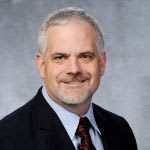
Photo courtesy of Leuenberger.
Assistant VP, Supply Chain, Cox Enterprises
Total Managed Assets: 13,000+
Staff supervised: 150
Years in Fleet: 11
Replacement Policy: 5- to 10-year life cycle
For nearly two decades, Mark Leuenberger has been with Cox Enterprises, one of the nation’s largest private companies. The company’s major divisions include Cox Communications, Cox Automotive and Cox Media Group. From cable technician vehicles to news camera vans, each division has unique fleet needs.
In his current role, he oversees a companywide fleet of more than 13,000 vehicle and assets, which is managed by Jim Bigelow, senior director of Enterprise Fleet Operations for Cox Enterprises.
In addition to overseeing all fleet-related vendor contracts and services, Leuenberger also is responsible for Cox Enterprises’ Supply Chain Services and Procurement functions.
Under his leadership, Cox’s large, diverse, divisional fleet operations were consolidated into one shared service organization. This allowed the company to achieve consistency, efficiency and cost savings.
He plays a key role in the company’s national Cox Conserves sustainability program. Along with water and waste goals, the company seeks to become carbon neutral by 2044. The fleet plays a significant role in helping meet this goal. His leadership has already made an impact by transitioning the company’s fleet to more efficient gasoline vehicles, flex-fuel vehicles and hybrid vehicles.
He has examined the assets across the company’s portfolio to identify opportunities for collaboration and cost savings. In 2011, he and his team embarked on a new initiative with Manheim, a part of the Cox Automotive division, and its repair facilities to managed a good deal of the enterprise’s vehicle maintenance. This provided approximately $3 million to $4 million a year in savings.
During his tenure, he and his team also leveraged knowledge from Cox Automotive to gain key insights into what type of vehicles to lease, when to buy, and when to sell.
Soon after being named assistant vice president of Supply Chain Services and Fleet Management, Leuenberger also played a role in distributing telematics solutions to more than 33% of the company’s fleet. By doing this, he and his team were able to drastically reduce idle times, as well as mileage. This also translated into better customer service for Cox Communications, the company’s broadband and cable division.
Lynda Dinwiddie

Photo courtesy of Lynda Dinwiddie.
Associate Vice President, LabCorp
Total Vehicles: 5,800
Staff supervised: 4
Years in Fleet: 29
Replacement Policy:100,000 miles for gas engines, 150,000 miles for hybrids and diesels.
Over the last year, Lynda Dinwiddie not only successfully managed LabCorp’s fleet of 5,800 SUVs, minivans and full-size vans at a best-in-class 33 cents per mile, she overcame some unique challenges.
Finalizing the VW emissions recall took a lot of planning and patience, but by having a backup plan and fostering partnerships with vehicle manufacturers and her FMC, she was able to make the situation work to her fleet’s advantage.
LabCorp is a high mileage, fast turn fleet. Its fleet averages around 3,300 miles a month and runs them to 110,000 miles for gas and hybrids and diesels to 150,000 miles. Fuel has always been the largest expense and has always been between 40 and 45% of total spend.
Dinwiddie was tasked by senior management to look at different ways to reduce this spend. Several years ago, they had moved to diesel station wagons but as those vehicles became unavailable and they needed to come up with a solution that could hold several large coolers in the back that had a flat floor (to reduce back injuries) and a hot plug so the coolers could stay cool even when the vehicle wasn’t running.
Dinwiddie worked with several manufacturers to see who could add these features. At the same time her FMC partnered with her to perform an extensive total cost of ownership analysis to aid in the new courier vehicle. A midsize SUVs was selected to replace these diesel station wagons.
While the fleet wasn’t able to meet the same mpg, LabCorp continues to run the courier fleet at 23.37 mpg.
Drivers have provided very positive feedback on new model selection as well as the ancillary programs her FMC provides.
All of this was done while Dinwiddie continued her day-to-day fleet responsibilities, and keeping senior management informed every step of the way.
Results and other fleet accomplishments of her efforts include: The continuation of a Toll management program; utilizing safer larger courier vehicles; the addition of safety technology, which has resulted in a reduction in the severity of accidents; out of network usage continues at 1%; 100% reporting in yearly driver tax reporting; the introduction of vehicle wraps in several markets in the U.S; and the eventual goal of piloting small electric vehicles in certain markets.
Also, despite not being directly involved with the daily fleet European operations, she helped with the oversight of LabCorp’s fleet of 600 European fleet vehicles by consolidating their operations from multiple FMCs to just one, as well as narrowing down asset control to two OEMs. This gave the fleet oversight of the European fleet expenses under a single FMC, and a better way to control its assets.
More Operations

Fleet Has a Talent Pipeline Problem. What Comes Next? | AF News Recap
Where will fleet’s next generation of leaders come from? This week, we’re looking at the industry’s talent pipeline, what certification can add to a fleet career, how to build an award-worthy track record, and the return of Automotive Fleet’s Personal Use Survey.
Read More →
Smith System Launches Driver Risk Management Program
Fleets have more driver data than ever, but identifying risky behavior doesn't necessarily correct it. Smith System's new Driver Risk Management program combines monitoring, training, and follow-up coaching to help fleets connect risk signals with driver intervention.
Read More →
Automotive Fleet Opens 2026 Personal Use Survey for Commercial Fleet Managers
Less than two weeks left! Commercial and corporate fleet managers are invited to share how their organizations handle company vehicle personal-use policies, charges, and driver eligibility.
Read More →
From AI Prompts to AI-Generated Safety Songs | AF News Recap
Can better prompts make AI more useful for fleet managers? This week, we’re breaking down smarter fleet analysis, an AI-assisted experiment that turned safety training into music, and what happened to fuel prices in August.
Read More →
How to Write Better AI Prompts for Fleet Analysis
Include these six elements in your fleet prompts to generate more relevant analysis and accurate answers.
Read More →
Fleet Meets: Eric Kilgore
This edition of the Fleet Meets series features one of the industry's best leaders driving multi-market and national operations.
Read More →
Why Reactive Fleet Management Is Becoming Too Expensive to Sustain
Research highlights a growing need for proactive management strategies to address rising costs in fleet operations effectively.
Read More →
What Your Fleet KPIs Aren’t Telling You
Tracking fleet metrics is only useful when the data leads to better decisions. This guide helps fleet leaders assess cost, utilization, and downtime more accurately, identify performance gaps, and prioritize the actions that can improve operational results.
Read More →
Hidden in Plain Sight: Fleet Compliance Risks
Fleet compliance isn't just about having policies — it's about consistently enforcing them. This practical guide reveals six hidden compliance risks common in public sector and shared fleet operations and outlines proven strategies to improve visibility, accountability, and audit readiness
Read More →
Turning Fleet Payment Data into Executive Insights
Does data alone drive results in operations?
Read More →