




1985 Shuttlebus Showcase Visible Symbols of Corporate Identity
Not too long ago, many rental-car fleets were located within walking distance of the nation’s airline terminals. Then space tightened up, and the rental operations moved farther away from the airport hub. To transport their customers from terminal to car, rental companies turned to the shuttle bus.
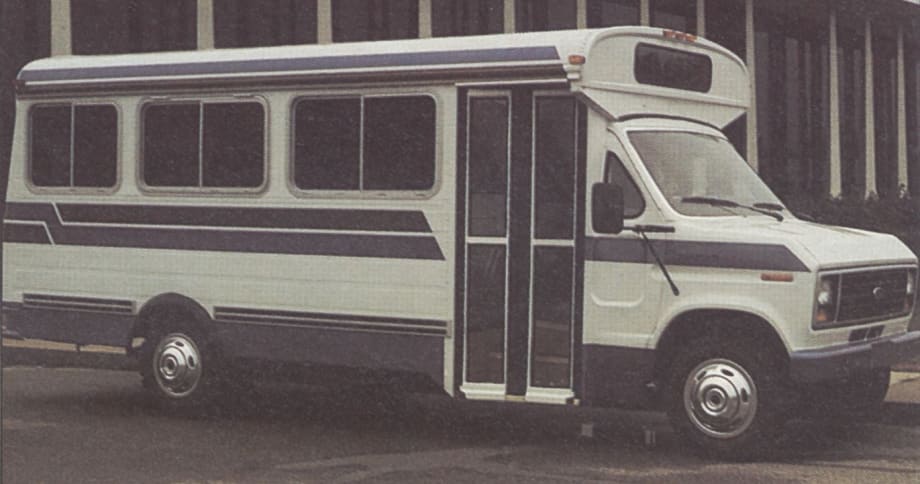
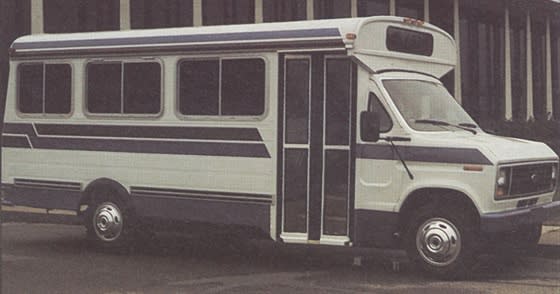
Not too long ago, many rental-car fleets were located within walking distance of the nation's airline terminals. Then space tightened up, and the rental operations moved farther away from the airport hub. To transport their customers from terminal to car, rental companies turned to the shuttle bus.
Click to see a full PHOTO GALLERY of the shuttlebuses mentioned in this article.
Today, shuttle buses are found everywhere anyone turns.
While these vehicles have a variety of applications-from hotel and resort transport to vanpool and tour service-most continue to be used in the airport daily rental segment. In that capacity, shuttle buses have become "moving billboards" - important, highly visible symbols of corporate identity.
"There are marketing benefits from the shuttles, no question about it," says Ken Bruno. manger of national bus programs and special equipment for Avis Rent A car Systems, Inc. "And obviously, passengers will perceive the Avis image as it is reflected in our buses."
What's available for 1985 in the increasingly significant shuttle-bus market? Automotive Fleet decided to find out....
Wayne Corp.
Introduced in 1984, a heavy-duty, 21-passenger bus called the Chaperone II heads up this year's shuttle product line from the Wayne Corp. A longer, roomier version of the 17-passenger Chaperone, the bigger bus is marked by headroom of more than six feet and a length of 21-feet-six-inches. The spacious interior allows additional room for luggage space, as well as more room for wheelchairs where transportation of the elderly or physical handicapped is required.
With all-steel construction on a domestically-made chassis, the Chaperone II also offers three large, horizontal-sliding windows on each side, and the availability of a full-width rear window. Like Wayne's smaller Chaperone, Busette, and Transette models, the Chaperone II provides for better traction and stability with dual rear wheels. All four bused run on regular gas, though diesel options are available.
Passenger comfort in all Wayne models is enhanced by built-in heating and air conditioning and complete insulation-integral parts of the structural design.
Collins Industries, Inc.
Two lines of Collins product will accommodate from eight to 30 passengers in 1985. For eight to 20 adults, the company's popular Omni will continue with four models: the Baron and Squire-designed primarily for institutions, cities and universities - and the Commuter and Shuttle, intended mainly for hotels, tour services, and auto leasing companies. Utilizing an all-steel, unitized framework, which makes the bus body an integral part of the chassis, the Omni also offers large, double-leaf, swing-out entry doors and straight side walls with 75-inch interior widths from floor to ceiling.
In the 20-to 30 passenger range, Collins will introduce a new line for '85: the Transi-Corp Flxette series 100, 200, 600, and Transi-Trolley. A newly formed subsidiary of the parent company, Transi-Corp will manufacture shuttle, commuter, and transit buses with a variety of chassis-power, transmission, and seating options. The Flxette buses will feature all-steel frame construction, as well as double or triple entry doors and large, sun-shaded passenger windows.
Without doubt, Collins' most unique entry this year is the Transi-Trolley- a convincing replica of the electric trolley car of the 1890s. Fashioned with triple windshield, woodgrain interior, center light, and authentic brass bell, the Trolley has already proved a hit with shuttle operators in Albama, Nevada, California, and New Jersey.
Gillig Corp.
Designed for a life cycle of 20 years, the durable Phantom returns as Gillig's mainline entry in the '85 shuttle market. With its sleek styling and straightforward engineering the vehicle helped Gillig capture 21 percent of the new-bus market in just two years.
Offered in widths of 96 and 102 inches, the Phantom is constructed of heavy-gauge steel in a mono-coque design. The 96-inch coach comes in lengths of 30, 35, and 40 feet, seating from 33 to 49 passengers, while the 102-incher accommodates from 41 to 49 people on 35 and 40-foot lengths. Both coaches feature 125-gallon fuel tanks, Detroit Diesel power plants (6V92TA rated 282 hp), and glazed, safety-float laminated windows with 28 percent transmissivity.
For the airport-shuttle segment, a variety of custom interiors are available. These include perimeter seating, luggage racks, special upholstery, and double-wide entrance and exit doors. Evidence of such versatility can be seen in the Phantom's use at California's Yosemite National Park. There, the buses have been fitted with special roof windows to afford passengers a better view of the spectacular scenery.
Wheeled Coach Industries, Inc.
A 32-passenger bus that's more than 34 feet long and a 27-footer designed to accommodate up to 28 riders lead the shuttle lineup for Wheeled Coach in '85. With 24,000 GVW on a diesel chassis wheelbase of 196.9, the larger bus is distinguished by aerodynamic styling, full stand-up headroom, and a patented, extra-wide sliding door for ease and safety of passenger exit. The smaller model, meanwhile, carries a 20,000 GVW specification and a front-engine diesel-drive chassis.
The largest manufacturer of ambulances in the world, Wheeled Coach prides itself on the shuttle line's "strength and durability." Specially designed aluminum interlocking panels are welded directly to each bus body frame, while the body itself is mounted to the chassis with a system designed to control friction, thus reducing wear and costly repairs.
Earlier this year, Wheeled Coach attracted nationwide attention by building a custom, 14-passenger bus for Hertz, the country's largest car-rental company. On Oct. 28, that shuttle led the New York marathon as part of Hertz' sponsorship of the race.
El Dorado Motor Corp.
Because of its excellent weight-to-strength ratio, honeycomb/FRP construction has been used for several years on the aircraft industry's wide-body jets. It's also used for the Falcon, the Falcon Tag Axle, and the MST-EI Dorado's shuttle buses for '85. FRP, which stands for "fiberglass reinforced plastic," reduces overall wear and tear and lowers the bus center-of-gravity to as little as 31 inches from the ground.
With a passenger capacity range of 12 to 25 and a number of optional seating plans, the Falcon may be purchased with either a Ford (460 CID gas) or Chevrolet (350 CID gas) chassis; diesel is also available. The Tag Axle accommodates from 22 to 29 riders, again with several floor plans and a 6.9 diesel or 460 CID gas engine. The aerodynamically designed MST, which seats from 22 to 31, boasts a V8, 4-cycle Detroit Diesel developing 165 hp at 3,000 rpm.
All three El Dorado buses come with seats that are made of one-inch tubular steel framework. The windows are 31 percent tinted, metal-framed, tempered safety glass, while the floors feature a laminated sandwich-type construction. In each "sandwich" are thin layers of rubber, plywood, aluminum and Styrofoam, creating outstanding insulation.
Champion Home Builders Co.
Ranging from 19 to 28 feet in length and seating from 13 to 30 passengers, Champion's '85 shuttle buses offer aerodynamic design, all-around steel-cage framing, and foamed-in-place insulation on either Ford or Chevrolet chassis.
With five different lengths and several floor plan and storage alternatives, the Champion entries include deluxe, deep-cushioned, high-back seats and a plush interior lighting system. Center-aisle headroom measures 76 inches, while there's a 13-inch aisle between seats in all models.
The company also makes a variety of entry-exit door options. Single and double-leaf, outward-opening doors measure 74 inches high and 24 and 32 inches wide, respectively. Double rear-locker doors are 32 inches wide and 48 inches high; para-transit double doors are available for the physically handicapped. The latter include an electro-hydraulic elevator with an automatic, push-button control.
Neoplan USA Corp.
After putting some 2,000 buses into U.S. transit service in less than four years, Neoplan has entered the shuttle segment with a small, heavy-duty vehicle called the Litl' Bus.
Twenty-six feet long, 96 inches wide, and 105 inches high, the Litl' Bus incorporates many heavy-duty transit features within its mono-coque construction. Included are a Detroit Diesel 8.2-liter "Fuel Pincher" engine, an Allison AT545 fully automatic transmission, double action disk brakes in the front, and air-activated drum brakes in the rear.
With a 139-inch wheelbase and a curb weight of 13,860 pounds, the Neoplan bus can typically seat a maximum of 24 passengers.
National Coach Corp.
For '85, the National Coach shuttle line consists of the Escort I, Escort II, Escort II TX, the Transmark, and the Commutervan.
The Escort I seats up to 15 passengers, Escort II up to 20, and Escort II TX up to 26, depending on selected floor plans. Standard features of this line include plush seating, fully integrated carpeting and transit flooring, and spacious luggage rack and underseat storage.
The newest National addition is the 30-foot Transmark, built to last with a heavy-duty, steel-roll cage-style construction. Depending on floor plan selected, this shuttle bus may accommodate up to 32 passengers. A 27-foot turning radius gives the vehicle optimum maneuverability in airport, city, or country traffic.
General Motors Corp. Truck And Bus Group
With a corrosion-resistant, stainless-steel body shell, an exclusive front suspension system, and more than 170 square feet of window space, the 35-foot RTS is GMC's premier entry in the '85 shuttle segment.
Sold to both Hertz and Avis, the 39-passenger bus features replaceable, fiberglass reinforced, acrylic side panels and an electronic, "all-weather" climate conditioning system. A 6V-92TA diesel engine mated to a Detroit Diesel Allison V730 automatic transmission provides fast acceleration in the 0-30 mph range.
The vehicles' roomy, color-coordinated interiors are accomplished by Custom Coach and K-T Corp., division of the Alco Standard Co.
More Operations

Here's When You Should Make an Exception to Fleet Policy
Fleet policies are designed to create consistency, but not every driver or situation fits neatly within standard rules.
Read More →
AI-Native or AI-Acquired: What Should Fleet Managers Look for in an AI Platform?
Six questions can help fleet managers look beyond AI marketing claims to evaluate integration, data access, and real-world operational performance.
Read More →
A buyer's guide to fleet management software in 2027
Buying fleet management software in 2027 means looking beyond features and price. As fleet operations, technology and expectations evolve, this guide explores what today’s fleet professionals should consider when choosing a system that can deliver value now and adapt to what comes next.
Read More →

What Will Shape the Next Era of Fleet Management?
EVs, AI, and autonomous vehicles are reshaping fleet management. Discover what’s ahead—and how fleet leaders can prepare for the next era.
Read More →
How Fleets Can Recruit and Train Veterans for Technician Roles
Here's how the technician shortage has affected uptime for fleets, and what to do about it.
Read More →
Avis Budget Group Deploys Neology Toll Management Technology Across Major Brands
Neology’s neoFleet platform will manage toll transactions and toll-authority operations for vehicles across Avis, Budget, Payless, Budget Truck and Zipcar.
Read More →
Fleet Personal-Use Charges Edge Higher in 2026
Nearly eight in 10 surveyed fleets allow personal use of company vehicles, while just over half of respondents report charging employees for the privilege.
Read More →
The Future of Fleet + What’s Changing Right Now | AF News Recap
Could developments overseas offer a preview of what’s coming for U.S. fleets? This week, we’re looking at the future of AI, autonomy, and electrification, plus Ford Pro’s new certified pre-owned program, smarter vehicle offboarding, and a new way for fleets to manage toll expenses.
Read More →
How to Handle Vehicle Offboarding
What do fleet managers need to do when a driver leaves?
Read More →
Fleet Manager’s Ultimate Playbook: Navigating the New Standard in OEM Connectivity
Rising operating costs, driver safety concerns, and unplanned downtime are putting unprecedented pressure on modern fleets. Discover how fleet managers use embedded OEM connectivity and real-time vehicle data to cut TCO, prevent downtime, and protect drivers without aftermarket telematics hardware.
Read More →