




10 Night Driving Tips
An estimated 90% of all driver decisions are based on what the driver can see. Yet at night, one's vision is compromised, which may account for the fact that approximately 40% of all fatal motor vehicle accidents occur at night.

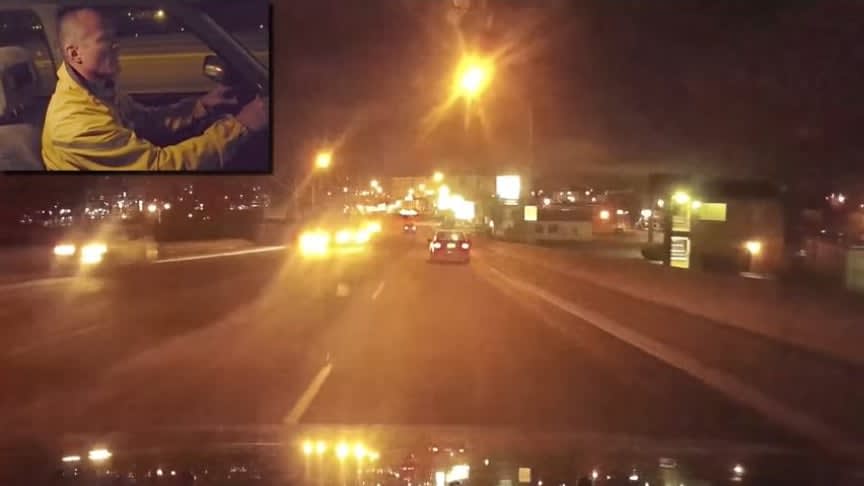
Fleet drivers can follow these 10 tips to reduce collisions after the sun goes down.
Image: Screenshot via Smart Drive Test.
An estimated 90% of all driver decisions are based on what the driver can see. Yet at night, one's vision is compromised, which may account for the fact that approximately 40% of all fatal motor vehicle accidents occur at night.
Now is a good time to remind your fleet drivers of steps they can take to ensure their safety when driving at night. Experts offer the following 10 tips for driving in the dark:
Keep Windshield and Windows Clean
Limiting the glare from other headlights is very important. A dirty windshield will make matters far worse. Try polishing glass with newspaper to remove all residue.
Clean and Adjust Exterior Mirrors
Dirty mirrors are just like a dirty windshield and can reflect and distort light that distracts the driver. So keep them sparkling clean.
Aim Headlights
Even in brand new vehicles, headlights are sometimes uneven or pointed lower than necessary. Take the time to review your owner’s manual and aim them correctly so they’ll light up the roadway as best as possible.
Turn Down Dash Lights
Today's vehicles come equipped with infotainment systems and more. These can bring a lot of unnecessary distracting sources of light into the cabin and diminish your vision. At night, turn down your dash lights to the lowest setting.
Don't Stare at Oncoming Lights
Bright lights aimed at your eyes can be distracting and fatiguing. Turn your gaze away from other lights on the road, and don't look at oncoming high beams. If a car behind you has its high beams on, use the switch on your rearview mirror to move it to reflect light backward to alert the driver, and to get the reflection away from your own eyes.
Slow Down
When driving at night, especially on rural roads that are not well lit, slow down. Obey the speed limit or drive slightly under the limit — this gives you ample time to react should you need to.
Follow Indicators to Find the Roadway
At night, road markings can be nearly invisible. To find the roadway in the distance, rely on the traffic ahead of you, watching which way it curves. In addition, utility poles, reflective street signs, and houses with lights can all serve as indicators for the shape and path of the roadway ahead.
Maintain Enough Following Distance
Never tailgate, but it's especially dangerous to do so at night. Maintain a safe following distance so you have plenty of time to react should something unexpected happen on the road.
Use High Beams Appropriately
On back roads that are poorly lit you'll be able to see much better by using your high beams, but only if driving on a relatively open road. Just make sure you switch them off when you see another vehicle approaching — you don't want to blind another driver which can cause a collision.
Scan Intersections and Crosswalks
Your vision is compromised at night. Be extra vigilant when approaching an intersection to look out for other cars. The same applies to crosswalks, where you'll want to be on the alert for difficult-to-spot pedestrians. In fact, 75% of pedestrian fatalities occur after dark, according to AAA.
More Safety
What’s Next for Fleet? Safety, AI & Industry Recognition | AF News Recap
Could your company's culture be encouraging distracted driving? This week, we're exploring how workplace expectations affect driver safety, what AI, EVs, and autonomous vehicles could mean for the future of fleet management, and how fleet professionals can strengthen their award nominations.
Read More →
Does Your Fleet's Culture Encourage Distracted Driving?
What happens when the people responsible for enforcing safety rules are the ones setting the wrong example? The answer may reveal why some of the biggest risks to fleet drivers have little to do with what's written in the employee handbook.
Read More →
Fleet Manager’s Ultimate Playbook: Navigating the New Standard in OEM Connectivity
Rising operating costs, driver safety concerns, and unplanned downtime are putting unprecedented pressure on modern fleets. Discover how fleet managers use embedded OEM connectivity and real-time vehicle data to cut TCO, prevent downtime, and protect drivers without aftermarket telematics hardware.
Read More →
From Driver Well-Being to EV Charging | AF News Recap
Mental health belongs in the fleet safety conversation. This week, we’re looking at five ways fleets can support employee well-being before a crisis, plus Holman’s expansion in Mexico, new one-day Fleet Forward passes, and why EV charging demand is outpacing infrastructure growth.
Read More →
Nexar-Nauto Merger Aims to Give Fleets Better Safety Intelligence Through Larger Driving Dataset
Stefan Heck tells Automotive Fleet that combining more than 10 billion miles of driving history with Nexar's AI models will give fleets deeper insights into driver risk and roadway conditions than either company could provide independently.
Read More →
Don't Wait for a Crisis: 5 Ways to Build Mental Health Into Your Fleet Safety Program
For Suicide Prevention Month, fleet and safety leaders have an opportunity to put mental health where it belongs: at the center of workplace safety.
Read More →
How Camera Data Can Strengthen a Fleet’s Insurance Renewal
Insights from a commercial insurance carrier and a broker show how fleets can turn video telematic data, driver coaching, and improved claims results into a stronger case at insurance renewal.
Read More →
The Safest Fleets Aren’t the Ones with the Most Technology
You’ve made the telematics investment. Here’s how to capture the other half of its value and build the safest fleet on the road.
Read More →
Hidden in Plain Sight: Fleet Compliance Risks
Fleet compliance isn't just about having policies — it's about consistently enforcing them. This practical guide reveals six hidden compliance risks common in public sector and shared fleet operations and outlines proven strategies to improve visibility, accountability, and audit readiness
Read More →
NETS Sets 2026 Fleet Safety Benchmark Conference for Indianapolis
The Sept. 15–17 program will feature fleet benchmarking data, case studies, emerging technologies, and implementation strategies while running alongside the NSC Safety Congress & Expo.
Read More →