




UPS Deploys 25 Hybrids in Houston
HOUSTON - UPS announced its fleet of alternative-fuel vehicles has expanded with the deployment of 25 next-generation hybrid electric delivery trucks to Houston.
HOUSTON- UPS announced its fleet of alternative-fuel vehicles has expanded with the deployment of 25 next-generation hybrid electric delivery trucks to Houston.
At the UPS facility in Stafford, Texas, Governor Rick Perry was on hand to welcome the new vehicles to Houston. He was joined by state Sen. Tommy Williams and state Rep. Elect Ron Reynolds.
Currently, 50 UPS hybrid electric vehicles (HEVs) operate in Atlanta, Dallas, Houston, and Phoenix. The 25 trucks deployed here are part of 200 new HEVs deployed recently to eight U.S. cities. The 200 new trucks will operate in Austin, Houston, Philadelphia, Chicago, Washington, D.C., Long Island, Minneapolis and Louisville.
"This technology, where properly used, can yield a 35-percent fuel savings, the equivalent of 100 conventional UPS delivery vehicles," said Bob Stoffel, UPS senior vice president of Supply Chain Strategy, Engineering, and Sustainability.
The 200 new HEV package cars are expected to reduce fuel consumption by roughly 176,000 gallons over the course of a year compared to an equivalent number of traditional diesel trucks. The hybrids also should reduce by 1,786 metric tons the amount of CO2 gases released annually into the atmosphere.
The new hybrid power system utilizes a conventional diesel engine combined with a battery pack, saving fuel and reducing pollution-causing emissions. The small diesel is used to recharge the battery pack and to add power when necessary.
The HEV fleet features a chassis from Freightliner Custom Chassis Corporation and a hybrid power system from Eaton Corporation. The external truck bodies are identical to UPS's other signature brown trucks, although they feature additional labeling identifying them as hybrid electrics. The trucks use lithium ion batteries, which offer a faster re-charging capability and last longer than previous generation HEV batteries. Additionally, these vehicles are much quieter than conventional UPS trucks.
The UPS alternative-fuel fleet is comprised of multiple technologies, including compressed natural gas, liquefied natural gas, propane, electricity, and hydraulic hybrid technology. Since 2000, the alternative-fuel fleet has traveled more than 165 million miles.
"The wide variety of technologies in our green fleet is indicative of UPS's 'rolling laboratory' philosophy to energy efficiency and reduced fuel consumption," Stoffel said. "Our goal is to reduce dependence on fossil fuels, but there is no silver bullet technology to achieve this. This dependence will rely on a multi-modal approach."
More Fuel

Fuel Prices Surge in September | September Fuel Update
September brought major fuel price swings, including diesel crossing $6 a gallon. Here’s how gas and diesel prices changed throughout the month, and where they stood heading into October.
Read More →
Turning Fleet Payment Data into Executive Insights
Ramel Lindsay of U.S. Bank Voyager discusses how fleets can transform payment and transaction data into actionable intelligence to reduce costs, improve oversight, and support executive decision-making.
Read More →
Why the IRS Raised Its Mileage Rate in the Middle of 2026
Fuel-price volatility drove the rare increase to 76 cents per mile, the fifth midyear adjustment since 2000.
Read More →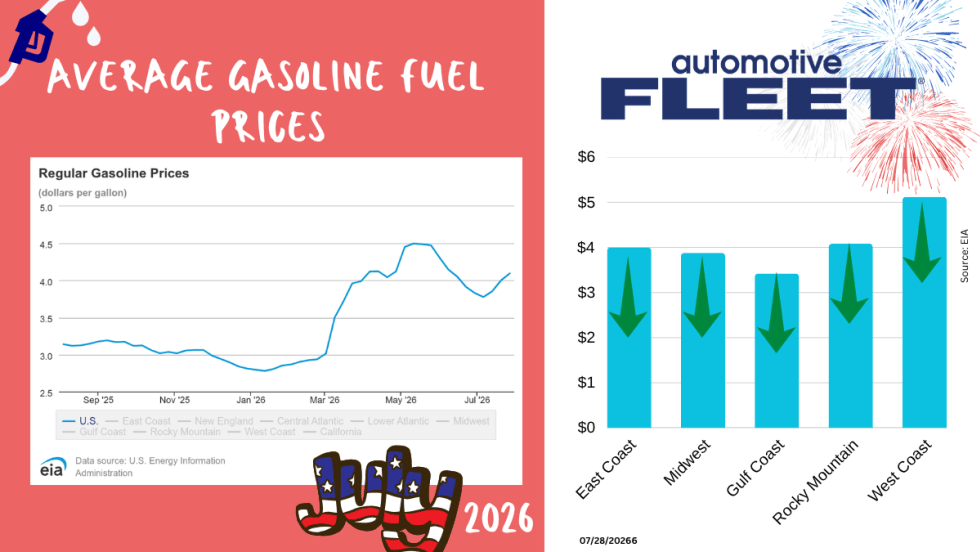
July Fuel Update: Prices Keep Rising in Light of More Conflict
Gas prices continue to rise as more and more conflicts do, too.
Read More →
Bob Adamsky on Fuel Volatility: "Don't Panic, Have a Plan."
When it comes to up and down fuel prices, Adamsky has a message for fleets: “Don’t panic.”
Read More →
How Fleets Can Gain Control of Non-Fuel Spend
Fuel often gets the spotlight, but non-fuel expenses can have a major impact on fleet costs. Ramel Lindsay of U.S. Bank Voyager discusses how fleets can gain better visibility and control over these often-overlooked expenditures.
Read More →
Fuel is Just the Start: How Middle East Tensions are Driving Up Fleet Maintenance Costs
The Middle East conflict is doing more than pushing up fuel prices. It’s also raising the cost of key maintenance products your fleet depends on, from motor oil to tires to windshield wipers. Here’s what you need to know about this budget-busting situation.
Read More →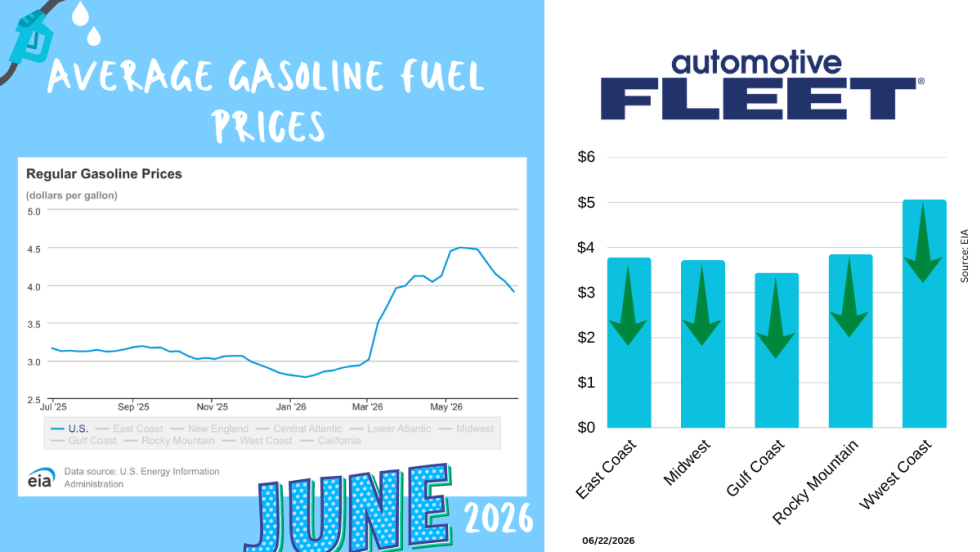
June Fuel Update: Prices Fall Below $4
Drivers are finally getting some relief at the pump. The national average gas price has dropped below $4 a gallon for the first time in months, with prices falling in 47 states as oil markets react to developments in U.S.-Iran negotiations.
Read More →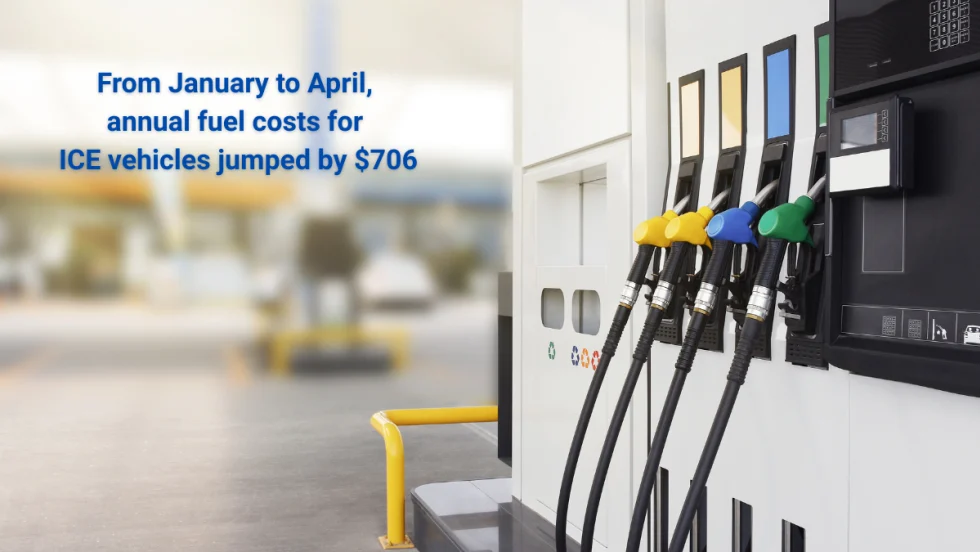
Study: How 2026's Gas Price Hikes Affect Different Vehicle Types
New data from iSeeCars reveals how rising fuel costs have affected different vehicle segments as gasoline prices climbed nearly 46% over the past four months.
Read More →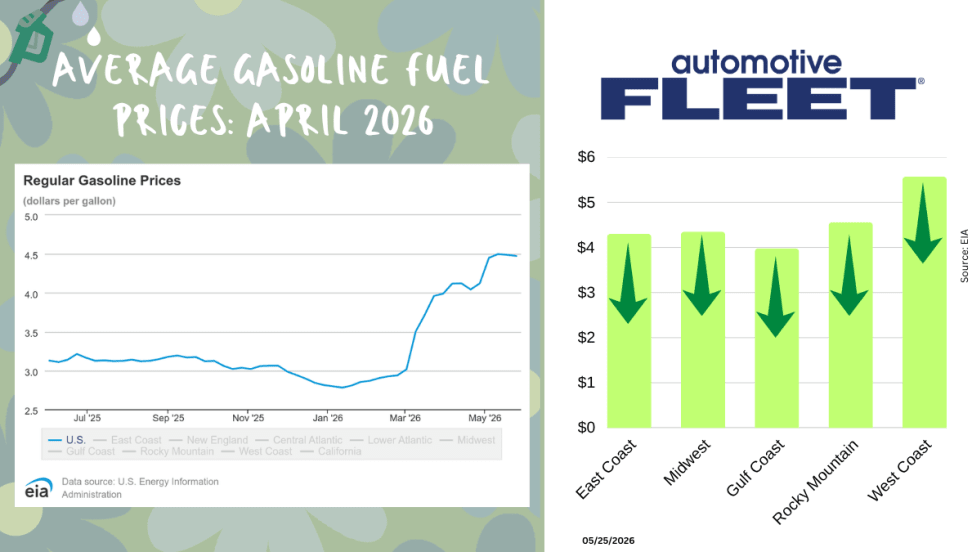
May Fuel Update: All Regions Experience Declines
Gas prices are finally easing in much of the country, but experts warn global tensions could quickly reverse the trend as the national average remains well above last month’s levels.
Read More →