




3 Essential Vehicle Safety Technologies
High-tech features and advanced driver assistance systems are becoming more readily available, and they have the potential to reduce the rates of crashes, fatalities and injuries on the nation’s roadways.

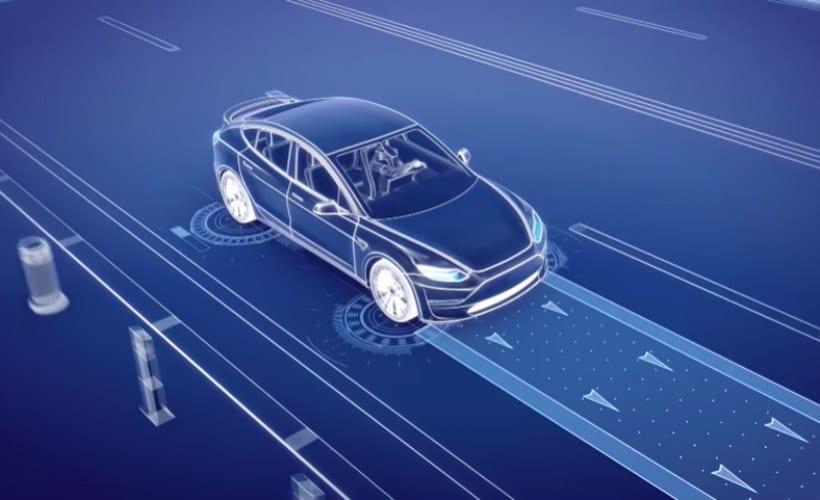
Automatic braking, backup cameras, and electronic stability control provide high-level safety technologies that have mostly become standard on new vehicles.
Screenshot via CR/YouTube.
High-tech features and advanced driver assistance systems are becoming more readily available, and they have the potential to reduce the rates of crashes, fatalities and injuries on the nation’s roadways.
Consider, for example, back-up cameras. Approximately 300 people lose their lives and another 18,000 suffer injuries every year due to back-over accidents, according to the National Highway Traffic Safety Administration. Today, all new cars must be equipped with rear-view cameras. NHTSA believes this simple, but safe, technology has the potential to greatly reduce back-over accidents.
However, certain technologies such as automatic emergency braking and forward collision warning, to name a few, are not yet standard in all vehicles. Moreover, though they are safety features, research shows that these technologies also present certain risks, including drivers ignorance of the limitations of specific technologies.
It's a smart idea to review the latest high-tech features with your drivers. Make assure they understand the function of each as well as the benefits and the risks. Experts share the following advice to help your drivers maximize the safety benefits:
Understand the Functionality
Drivers should take the time to read about and physically experience each safety feature in his or her vehicle. It’s important for drivers to know how the technology works, so there are no surprises once they are out on the road.
Beware of Limitations
Lack of awareness of the key limitations of any given safety feature can actually put a driver at risk. Consider the following research findings from the AAA Foundation for Traffic Safety:
Only 21% of owners of vehicles with blind spot monitoring systems correctly identified inability to detect vehicles passing at very high speeds as a limitation of the system; the remainder expressed various other misconceptions about its function or reported that they were unsure of the system’s limitations.
33% of owners of vehicles with automatic emergency braking systems did not realize that the system relied on cameras or sensors that could be blocked by dirt, ice, or snow.
Over-Reliance on Technology
Though advanced vehicle technologies can be lifesavers, drivers need to be reminded not to rely on them too heavily. It’s easy to get lazy and fall into bad habits. Remind your drivers of the following:
When using adaptive cruise control don’t get so comfortable that you begin to engage in other activities while behind the wheel. Distracted driving is always a safety risk.
When using blind spot monitoring, it’s still critical to visually check your blind spot when changing lanes. Don't become over-reliant on the technology.
The same applies to rear cross-traffic alert systems. Despite the technology, before backing up drivers should always look over their shoulder.
Advanced vehicle technologies hold much promise for making driving a safer experience. However, that potential will only be fully realized when drivers understand how to use them, use them as intended, and avoid misusing or becoming over-reliant on them.
More Safety

Fleet Manager’s Ultimate Playbook: Navigating the New Standard in OEM Connectivity
Rising operating costs, driver safety concerns, and unplanned downtime are putting unprecedented pressure on modern fleets. Discover how fleet managers use embedded OEM connectivity and real-time vehicle data to cut TCO, prevent downtime, and protect drivers without aftermarket telematics hardware.
Read More →
From Driver Well-Being to EV Charging | AF News Recap
Mental health belongs in the fleet safety conversation. This week, we’re looking at five ways fleets can support employee well-being before a crisis, plus Holman’s expansion in Mexico, new one-day Fleet Forward passes, and why EV charging demand is outpacing infrastructure growth.
Read More →
Nexar-Nauto Merger Aims to Give Fleets Better Safety Intelligence Through Larger Driving Dataset
Stefan Heck tells Automotive Fleet that combining more than 10 billion miles of driving history with Nexar's AI models will give fleets deeper insights into driver risk and roadway conditions than either company could provide independently.
Read More →
Don't Wait for a Crisis: 5 Ways to Build Mental Health Into Your Fleet Safety Program
For Suicide Prevention Month, fleet and safety leaders have an opportunity to put mental health where it belongs: at the center of workplace safety.
Read More →
How Camera Data Can Strengthen a Fleet’s Insurance Renewal
Insights from a commercial insurance carrier and a broker show how fleets can turn video telematic data, driver coaching, and improved claims results into a stronger case at insurance renewal.
Read More →
The Safest Fleets Aren’t the Ones with the Most Technology
You’ve made the telematics investment. Here’s how to capture the other half of its value and build the safest fleet on the road.
Read More →
Hidden in Plain Sight: Fleet Compliance Risks
Fleet compliance isn't just about having policies — it's about consistently enforcing them. This practical guide reveals six hidden compliance risks common in public sector and shared fleet operations and outlines proven strategies to improve visibility, accountability, and audit readiness
Read More →
NETS Sets 2026 Fleet Safety Benchmark Conference for Indianapolis
The Sept. 15–17 program will feature fleet benchmarking data, case studies, emerging technologies, and implementation strategies while running alongside the NSC Safety Congress & Expo.
Read More →
Off-the-Job Crashes Account for 43% of Employers’ $61.7 Billion Crash Burden
NETS quantifies costs dispersed across fleet, risk, HR, and other departments while providing new per-crash benchmarks for employers.
Read More →
Ram Recalls More Than 1.27 Million 1500 Pickups for Seat Belt Anchor Issue
The recall affects certain 2019-2026 Ram 1500 pickups that may have improperly attached second-row seat belt buckle anchors.
Read More →