




Related: How to Reduce Costs and Maintain an Efficient Fleet
How an RFI Can Improve Your RFP
A request for information (RFI) is a less-widely used tactical tool that can provide vital pre-RFP information, including a market analysis that can better inform an RFP when it does go out.

Paul Clinton・Former Senior Web Editor

Photo courtesy of deepblue4you via Getty Images
5 min to read
While requests for proposals (RFPs) remain a nearly mandatory process for government agencies in the purchasing process, they have been less prevalent in corporate procurement, especially outside of the Fortune 500.
An RFP gives an organization the ability to properly and thoroughly source its fleet vehicles, and other assets, because it collects detailed information that empowers the fleet manager or procurement executive to achieve a better result.
While RFPs are more known, a request for information (RFI) is a less-widely used tactical tool that can provide vital pre-RFP information, including a market analysis that can better inform an RFP when it does go out.
"Ideally, an RFI should serve as a signal to the market that an opportunity may be coming," said Dana Dorn, sales support and proposal manager for Element Fleet Management. "It should be used to gather a general understanding of the marketplace as it relates to the fleet services or financing. An RFP should be focused more on how the services in question will be delivered and the value the company can bring to your organization."
Why You Should Use an RFI
As a preliminary tactic, an RFI won't return in-depth information or include detailed specifications. It will help collect information in a uniform way so potential suppliers will be similarly compared.
"An RFI collects mostly qualitative information that helps determine if potential suppliers can meet the needs of the desired product or service," said Rob Daziel, director of supply chain management for Merchants Fleet Management.
"After using the information from the RFI and narrowing down the potential suppliers, an RFP is issued to describe in detail the specifications of the intended purchase," Daziel said.
An RFI occurs at the beginning of the procurement process and it helps a fleet purchaser articulate an ideal program in written form. It also helps narrow the playing field to a few primary respondents, which will reduce the amount of time needed to review many lengthy proposals later in the game.
An RFI can improve an RFP when you approach it with an open mind, Dorn said.
"Key stakeholders involved with the RFI should know how the potential services can impact its business, but the specifics of the services and the method for delivery should be treated as an unknown," Dorn said. "The results of the RFI should help you to clearly outline the concepts, services, or support that is most critical to your organization during the RFP phase."
Effective RFIs Can Improve Your RFP
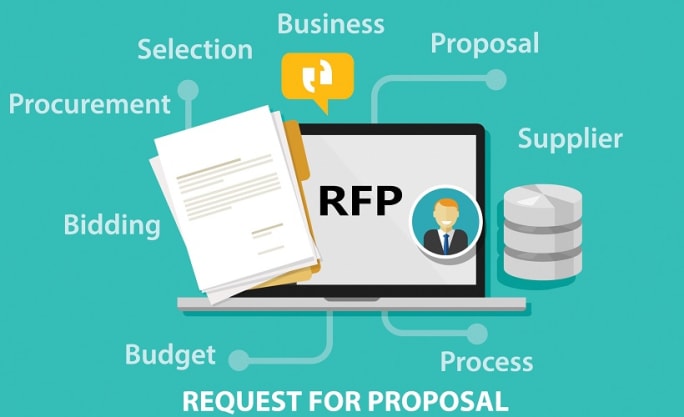
Graphic courtesy of Bakhtiar Zein via Getty Images
A successful RFI improves your eventual proposal because you can ask open-ended questions that help define the need, fill in details of a very complex purchasing project, and return a supplier list that's easier to compare.
Open-ended questions in an RFI "help you create a clear picture of your fleet priorities, the services available to you within the industry and the service-capability levels of all players," Dorn said.
These questions should focus on scope, services, capabilities, and even corporate culture. As one example, if you're looking for a multinational fleet program for your North American operations, it's important to confirm that the possible vendors can serve your fleet in countries where you maintain a presence.
These questions can be as basic as asking for the company address and information about the principal contact to ideas that are much more specific and complex such as the company’s annual gross revenue of the last three calendar years, defaults on any contracts in the last three years, company core competencies, and the number of years the company has been in business under its current management, said Jim Lecki, senior strategic sourcing manager for Cox Enterprises.
Complex projects benefit from RFIs because you usually need more clarity.
"By defining the need early on and asking suppliers to potentially provide solutions, as the industry experts, it will help the purchaser to better understand the topic of the RFI," said Candice Groth, director of purchasing for Merchants. "Some suppliers may offer solutions they used with other similar companies as part of the RFI response."
Obtaining Market or Pricing Analysis
An RFI can help with market analysis, but shouldn't be used for pricing analysis.
A market analysis helps a fleet procurement officer learn the broader landscape of who can meet the need.
"Fleet services can be provided by a host of organizations from banks to OEMs to tech companies," Dorn said. "A well-crafted RFI can help to identify the right market segments to fit the organization's need."
A competitive pricing analysis should be saved for the RFP. If an organization needs to determine a price range for budgeting reasons, the question could be asked in an RFI, but the information should be taken with caution because it may not be accurate.
Asking for pricing can also cause some confusion, Daziel said.
"You would not want to receive a price from a supplier that cannot meet your needs," Daziel said. "It would only cloud the pricing analysis with irrelevant data points."
Time Constraints and Budgets
Releasing an RFI does add another step to the process, so what about entities that have a "use it or lose it" budget or face a looming short-term deadline?
Organizations should still consider using it, because an RFI can often be put together quickly and its benefits outweigh any perceived penalties of delays in the process.
"Some basic questions and a request for marketing or thought leadership materials can give insight into a supplier's business model and cultural fit," Dorn said. "Unless you are in a public-sector organization, there is usually more flexibility in the RFI process."
What Should Your RFI Ask for?
• Annual gross revenues for the last three calendar years
• List of any outstanding liens, claims, or judgments pending
• Definition of the firm’s bonding maximum capacity for payment and performance bonds
• Number of years the company has been in business under current ownership/management
• Listing of prior names the company has done business under the same management
• Defaults on any contracts in the last three years
• Information on filings or petitioning for bankruptcy
• Pending lawsuits
• Company core competencies
• Customer references
Associate editor Andy Lundin contributed to this article.
Subscribe to Our Newsletter
More Operations
Here's When You Should Make an Exception to Fleet Policy
Fleet policies are designed to create consistency, but not every driver or situation fits neatly within standard rules.
Read More →
AI-Native or AI-Acquired: What Should Fleet Managers Look for in an AI Platform?
Six questions can help fleet managers look beyond AI marketing claims to evaluate integration, data access, and real-world operational performance.
Read More →
Sponsored•October 14, 2026
A buyer's guide to fleet management software in 2027
Buying fleet management software in 2027 means looking beyond features and price. As fleet operations, technology and expectations evolve, this guide explores what today’s fleet professionals should consider when choosing a system that can deliver value now and adapt to what comes next.
Read More →

What Will Shape the Next Era of Fleet Management?
EVs, AI, and autonomous vehicles are reshaping fleet management. Discover what’s ahead—and how fleet leaders can prepare for the next era.
Read More →
How Fleets Can Recruit and Train Veterans for Technician Roles
Here's how the technician shortage has affected uptime for fleets, and what to do about it.
Read More →
Avis Budget Group Deploys Neology Toll Management Technology Across Major Brands
Neology’s neoFleet platform will manage toll transactions and toll-authority operations for vehicles across Avis, Budget, Payless, Budget Truck and Zipcar.
Read More →
Fleet Personal-Use Charges Edge Higher in 2026
Nearly eight in 10 surveyed fleets allow personal use of company vehicles, while just over half of respondents report charging employees for the privilege.
Read More →
The Future of Fleet + What’s Changing Right Now | AF News Recap
Could developments overseas offer a preview of what’s coming for U.S. fleets? This week, we’re looking at the future of AI, autonomy, and electrification, plus Ford Pro’s new certified pre-owned program, smarter vehicle offboarding, and a new way for fleets to manage toll expenses.
Read More →
How to Handle Vehicle Offboarding
What do fleet managers need to do when a driver leaves?
Read More →
Sponsored•October 1, 2026
Fleet Manager’s Ultimate Playbook: Navigating the New Standard in OEM Connectivity
Rising operating costs, driver safety concerns, and unplanned downtime are putting unprecedented pressure on modern fleets. Discover how fleet managers use embedded OEM connectivity and real-time vehicle data to cut TCO, prevent downtime, and protect drivers without aftermarket telematics hardware.
Read More →