




How Telematics Impacts Fleet Fuel Management
While technology, such as telematics, will help fleet managers monitor fuel management, other upcoming technological advancements may sway the way fuel management as a whole is managed in the future.

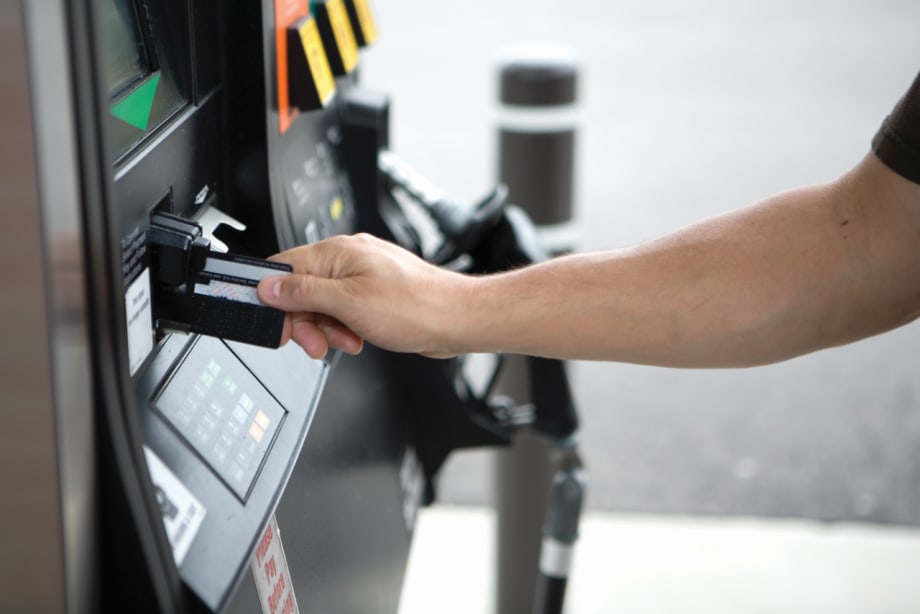
Photo courtesy of istockphoto.com/aabejon.
Photo courtesy of istockphoto.com/aabejon.
Fuel costs are a large portion of a fleet’s spend, so it’s up to the fleet department to find a means to reduce costs in this area. And while there are simple things that fleets can actively do to reduce fuel spend as cost concerns arise, a fleet manager who is actively seeking to reduce fuel spend in the long term must think ahead, which is possible, in part, through technology.
Since there are many components as it relates to fuel cost, fleet managers who operate strategically will have greater success in finding solutions to reduce fuel spend.
And one of the most prominent methods that a strategic fleet manager should consider when assessing future fuel trends are the tools available via telematics.
Telematics is still relatively in its infancy stages in terms of what it may truly be capable of. So considering the future of fuel management, whether just looking a few months ahead or five years ahead, telematics is a good place to start.
Telematics for Fuel Management
Blair Schober, U.S. fleet manager for Red Hawk Fire and Security, said his fleet utilizes telematics for the benefit of monitoring fuel, which he said helps in multiple ways, including observing idling, speeding, off-hours use, hard accelerations, and more.
Further still, Jeremy Muoio, director of asset management for MasTec AT, agreed that when thinking fuel management, fleets should turn to telematics, though there are some caveats.
“Telematics is far and away the No. 1 tool in our arsenal, though it bears mention that the best telematics system in the world won’t work if business or administrative process failures leave a company without an accurate picture of who is driving what, who is using what card, or what card is in what vehicle,” he said.
This is where developing technologies, such as biometrics may aid fleets in the future.
Other Future Tech
While fleets have access to telematics tools today, several fleet managers have observed other technological advancements that may sway the way that fuel management as a whole is managed in the future.
One such disruptive trend that Muoio of MasTec AT observed, which has impacted other industries, is how payment methods are changing.
“I see electronic payment methods like Apple Pay and Google Wallet as the next big disruptors, particularly when paired with company issued cellular devices. Company devices are significantly ‘stickier’ and more data-connected than traditional fueling cards, and thus payment methods linked to them should ameliorate some of the administrative burden companies face when trying to keep track of what’s where,” he said. “Additionally, and more importantly, electronic payment methods will mean that companies have real-time fueling transaction data from the point of sale. Inconsistency in data exchange speed between vendors and card companies can result in days of data lag for companies tracking fueling card transactions today. The move from near time to real time is significant for tight process construction,” said Muoio.
Looking farther still into the future, Schober of Red Hawk considered that the realization of biometrics may also become a prominent player in the future of fuel management.
“As biometrics are incorporated further, a fuel station could use facial recognition to identify a driver in fleet. No more fuel PINs. If the facial recognition data does not align to the specific fleet customer’s facial recognition database, the transaction is denied. No more fuel skimming either. Better fuel station reporting to fuel card and fleet management companies would then be available. The driver would definitely be known and we would know when and where fuel was purchased,” he observed.
Beyond this, the technology could be integrated with telematics, further bolstering the capabilities.
“Equipping a vehicle with a telematics device and linking location of the transaction to the facial recognition would be a second check and balance,” said Schober. “The vehicle would have to be a company vehicle (per GPS readings) and the face would have to be a recognized face within the company to get fuel.”
Issues of Fuel Fraud
A recurring issue with fleets recently has been fuel fraud. Indeed, since 2016, there has been an ongoing uptick in fuel card fraud. Considering its prominence, a strategic fleet manager should continue to look for ways to remediate the issue, which is what Muoio of MasTec AT and Schober of Red Hawk have done with their fleets.
“Fuel fraud is, in my estimation, a significant expense for any company that isn’t able to use either technology or one of the traditional processes like central fueling or receipt reconciliation to defeat it. We fall on the side of technology, and have virtually eliminated fraud as an obstacle in the last year using data from systems like our fleet management company, human resources management, fuel card provider and telematics provider to detect theft and alert appropriate managers on a transaction by transaction basis, and in near time,” said Muoio.
Schober noted that the internet of things may begin to significantly become more integrated into fleet daily transactions and interactions within the next five years, which will in part help curb fuel fraud.
One such fuel fraud issue that Schober has observed is skimming.
“This issue always rises when the fuel prices increase. I have seen four cards skimmed over the past six months,” he said.
However, regular monitoring and a simply disputing the fraudulent transactions have helped eliminate this issue for his fleet.
Looking at the near future in terms of fuel transactions includes an upcoming release from WEX Inc., which is releasing a more secure chip-based payment card to its fleet customers in 2019.
This new card will meet the payment industry’s EMV (Europay, MasterCard and Visa) standard and will include a microprocessor chip that stores and protects cardholder data in a more secure way than existing cards that use a magnetic stripe.
The chip card will also allow fleet managers to set 14 different prompting options — up from eight on the current card — that asks drivers to input odometer readings, miles per gallon, driver identification numbers, and other data at the pump.
A Future of EVs
Additional forward thinking that fleets might want to consider in regards to fuel management is the push for electric vehicles. Several automakers, countries, and even some fleets, are turning toward greater utilization of electric vehicles in the future.
Indeed, increasing concerns with fossil-fuel emissions is a global trend prompting change in many industries. This has resulted in the increased interest in alternative-fuel vehicles for countries like China, which is looking to ban the sale of gasoline and diesel vehicles, and fleets like Unilever, which is looking to electrify its entire fleet by 2030.
Unilever’s commitment was driven through its joining of the The Climate Group’s EV100 initiative, according to a release from Unilever. The Climate Group is an international non-profit that address clean technologies and policies.
Editors note: This article is part of a three-part package that addresses the future of fleet technology. Read related articles that offer an in-depth look at accident prevention and telematics.
More Fuel
Fuel Prices Surge in September | September Fuel Update
September brought major fuel price swings, including diesel crossing $6 a gallon. Here’s how gas and diesel prices changed throughout the month, and where they stood heading into October.
Read More →
Turning Fleet Payment Data into Executive Insights
Ramel Lindsay of U.S. Bank Voyager discusses how fleets can transform payment and transaction data into actionable intelligence to reduce costs, improve oversight, and support executive decision-making.
Read More →
Why the IRS Raised Its Mileage Rate in the Middle of 2026
Fuel-price volatility drove the rare increase to 76 cents per mile, the fifth midyear adjustment since 2000.
Read More →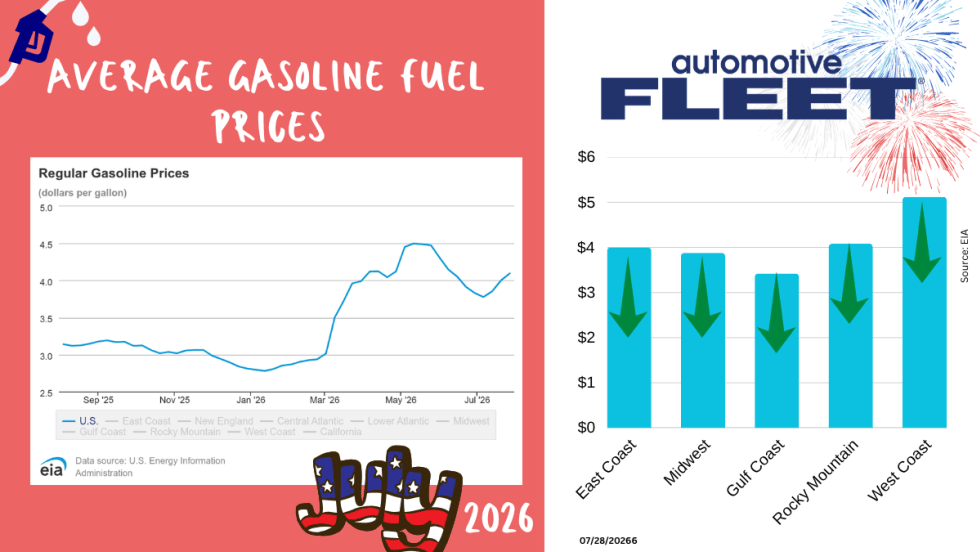
July Fuel Update: Prices Keep Rising in Light of More Conflict
Gas prices continue to rise as more and more conflicts do, too.
Read More →
Bob Adamsky on Fuel Volatility: "Don't Panic, Have a Plan."
When it comes to up and down fuel prices, Adamsky has a message for fleets: “Don’t panic.”
Read More →
How Fleets Can Gain Control of Non-Fuel Spend
Fuel often gets the spotlight, but non-fuel expenses can have a major impact on fleet costs. Ramel Lindsay of U.S. Bank Voyager discusses how fleets can gain better visibility and control over these often-overlooked expenditures.
Read More →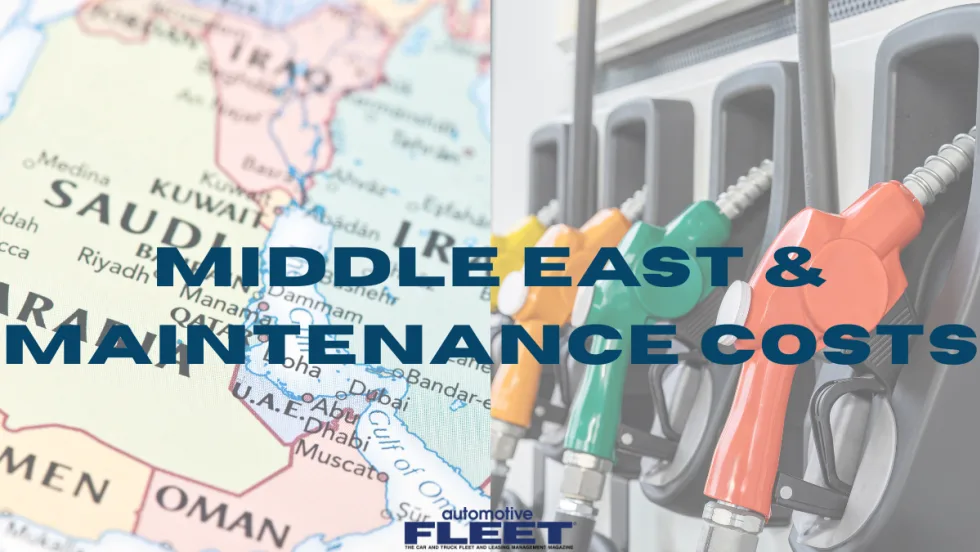
Fuel is Just the Start: How Middle East Tensions are Driving Up Fleet Maintenance Costs
The Middle East conflict is doing more than pushing up fuel prices. It’s also raising the cost of key maintenance products your fleet depends on, from motor oil to tires to windshield wipers. Here’s what you need to know about this budget-busting situation.
Read More →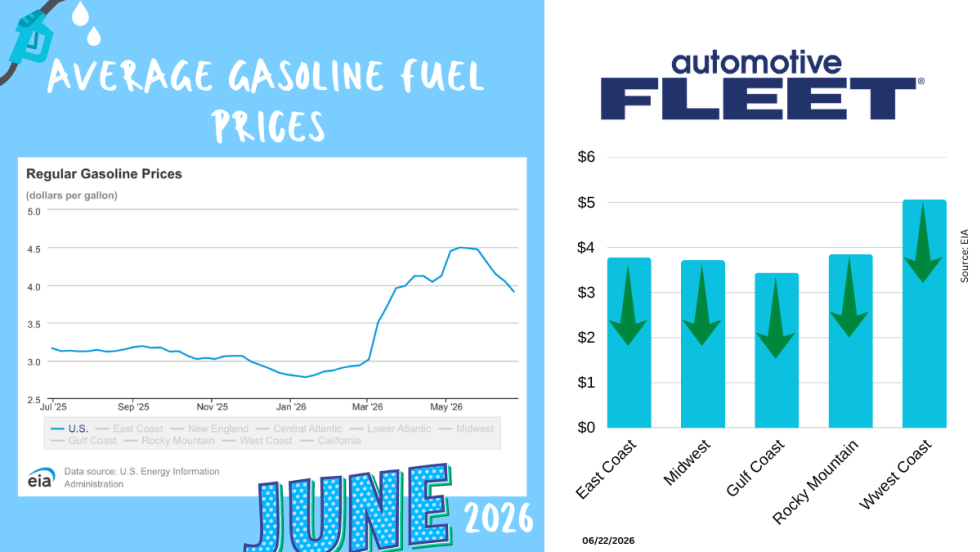
June Fuel Update: Prices Fall Below $4
Drivers are finally getting some relief at the pump. The national average gas price has dropped below $4 a gallon for the first time in months, with prices falling in 47 states as oil markets react to developments in U.S.-Iran negotiations.
Read More →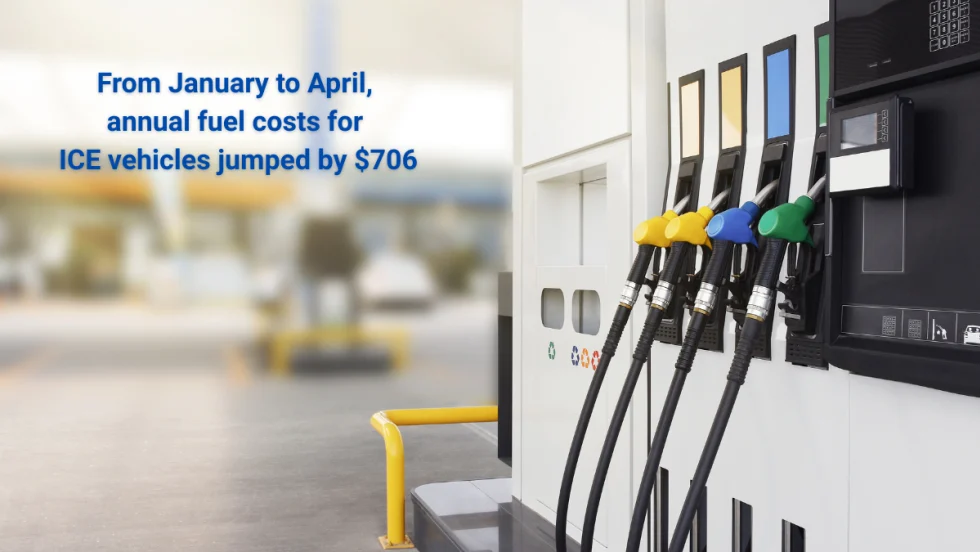
Study: How 2026's Gas Price Hikes Affect Different Vehicle Types
New data from iSeeCars reveals how rising fuel costs have affected different vehicle segments as gasoline prices climbed nearly 46% over the past four months.
Read More →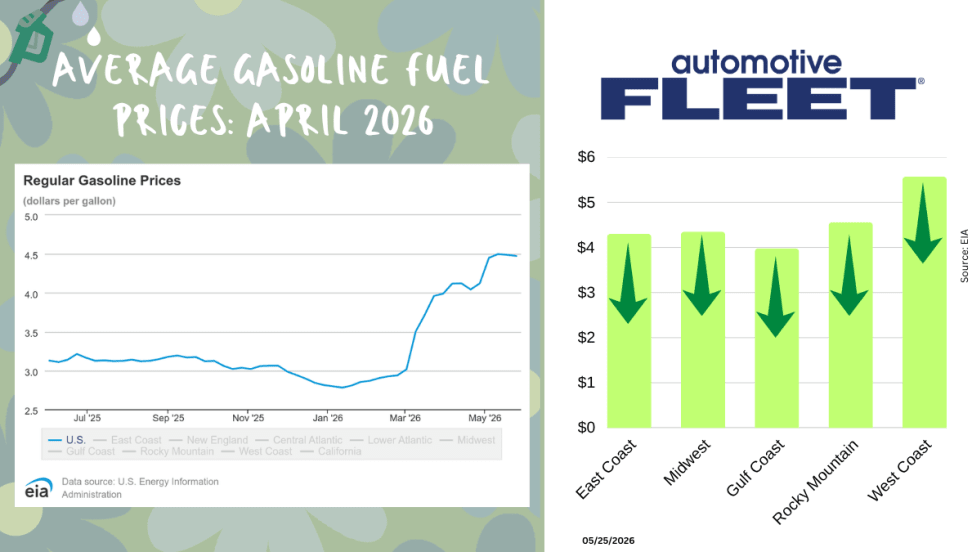
May Fuel Update: All Regions Experience Declines
Gas prices are finally easing in much of the country, but experts warn global tensions could quickly reverse the trend as the national average remains well above last month’s levels.
Read More →