





Related: Video Safety Tip: Lane Changes
Navigating a Lane Change Safely & Efficiently
Changing lanes is among the most basic traffic maneuvers, but heavy traffic or driver inattention can cause crashes. There are simple steps that fleet drivers can take to make lane changes safely and with confidence.
August 2, 2016

Photo courtesy of iStockphoto.com
3 min to read

Photo courtesy of iStockphoto.com
You can’t talk about safe driving without mentioning how to make a proper lane change. The essential elements that make a safe lane change ultimately serve as the components for safe driving, and they are always applicable in any amount of traffic.
Intention is the first step to take in making a proper lane change. “The first thing you’re going to do is signal. That’s a lost art. You have to signal your intent, check the area, check your mirror, do the glance over your shoulder, and, if it’s clear, then merge in,” said Phil Moser, vice president of Advanced Driver Training Services (ADTS).
Scanning is the second step to a safe lane change. Making the over-the-shoulder glance is a procedure that Moser suggests drivers do every time they change lanes and merge. Moser also suggests to check your mirrors every 5 to 7 seconds. However, the intervals of checking your mirrors may vary depending on the amount of traffic.
“You may have a tendency to check around you more often in heavier traffic, because there is a chance things are going to change more quickly, but drivers should take a positive glance over their shoulders before making a lane change no matter what,” said Moser.
Not following these basic steps is when drivers can get into trouble and be involved in a crash. “Let’s say you’re in lane three, you’re trying to merge into the center lane, and you just look in the center lane (and see there are no cars), there could be somebody shooting up from lane one, and merging in just as you are,” said Moser. “So you have to scan all lanes of travel.”
Scanning Your Surroundings
Constant scanning is only part of the equation of avoiding a crash while changing lanes.
“The two basic principles to avoid crashes is the 360-degree scan, and then knowing your escape space,” said Moser.
Knowing where your escape space is important due to how little time there is to react to a potential accident.
“You have three escapes spaces: to the right, to the left, or to the front — your stopping distance,” said Moser.
Moser said there are ultimately only four things a driver can do to handle a vehicle that is encroaching his or her lane: steer, break, accelerate, or sound the horn.
“If someone is trying to merge toward my rear, if I can accelerate and get away from them I will. But if someone is trying to merge in, and they’re toward my front, I’m probably going to go on the brake. But you have to watch out for the person behind you,” said Moser.
Reducing the Blind Spot
Drivers who are changing lanes, particularly in dynamic situations, such as highways, need to make sure that their mirrors are properly aligned prior to getting on the road.
To properly adjust their mirrors, drivers should place the left side of their head against the driver side window while sitting in their vehicles, and adjust the mirror on the driver’s side, so that their vehicle is barely visible in the mirror. If done correctly, the side of the vehicle should not be visible in the driver’s side mirror, said Moser. He also suggested drivers adjust their side mirrors to be angled out 15 degrees to help diminish the size of their blind spot.
For the passenger side, the mirror should be altered with the driver’s head in the center of the cabin (in line with the inside rearview mirror) and adjusted in the same way, where the driver can barely see the vehicle down alongside the vehicle.
Subscribe to Our Newsletter
More Safety

How Camera Data Can Strengthen a Fleet’s Insurance Renewal
Insights from a commercial insurance carrier and a broker show how fleets can turn video telematic data, driver coaching, and improved claims results into a stronger case at insurance renewal.
Read More →
The Safest Fleets Aren’t the Ones with the Most Technology
You’ve made the telematics investment. Here’s how to capture the other half of its value and build the safest fleet on the road.
Read More →
Sponsored•August 7, 2026
Hidden in Plain Sight: Fleet Compliance Risks
Fleet compliance isn't just about having policies — it's about consistently enforcing them. This practical guide reveals six hidden compliance risks common in public sector and shared fleet operations and outlines proven strategies to improve visibility, accountability, and audit readiness
Read More →

NETS Sets 2026 Fleet Safety Benchmark Conference for Indianapolis
The Sept. 15–17 program will feature fleet benchmarking data, case studies, emerging technologies, and implementation strategies while running alongside the NSC Safety Congress & Expo.
Read More →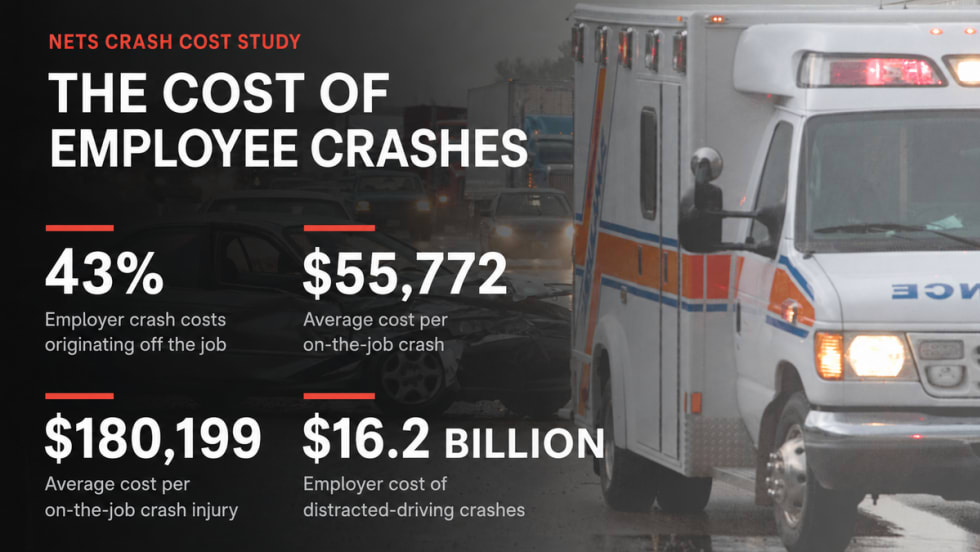
Off-the-Job Crashes Account for 43% of Employers’ $61.7 Billion Crash Burden
NETS quantifies costs dispersed across fleet, risk, HR, and other departments while providing new per-crash benchmarks for employers.
Read More →
Ram Recalls More Than 1.27 Million 1500 Pickups for Seat Belt Anchor Issue
The recall affects certain 2019-2026 Ram 1500 pickups that may have improperly attached second-row seat belt buckle anchors.
Read More →
Sponsored•July 17, 2026
How Better Visibility Cut Speeding Violations by 48%
Fleet leaders don't need more data, they need clearer visibility into what the data is saying. This case study explores how one utility replaced speeding-event counts with a single metric — miles driven in violation — to strengthen safety and significantly reduce speeding violations.
Read More →
Operation Safe Driver Week: Why the Industry's Oldest Safety Campaign Still Matters to Fleets
A look at how a 2007 enforcement initiative became one of the most consequential weeks on the fleet safety calendar, and what it means for your drivers in 2026.
Read More →
Nexar-Nauto Merger Aims to Give Fleets Better Safety Intelligence Through Larger Driving Dataset
Stefan Heck tells Automotive Fleet that combining more than 10 billion miles of driving history with Nexar's AI models will give fleets deeper insights into driver risk and roadway conditions than either company could provide independently.
Read More →
Sponsored•July 2, 2026
From Silos to Solutions: Relationship Management for Safer Fleets
From telematics adoption and driver accountability to policy consistency and risk mitigation, this episode breaks down what it really takes to build a safer fleet culture without slowing business down.
Read More →