




Hyundai Expands Commercial Fleet Market Share
Hyundai has been hard at work over the past five years keeping a focus on commercial fleet. Five years later, we catch back up to see how things are coming along.

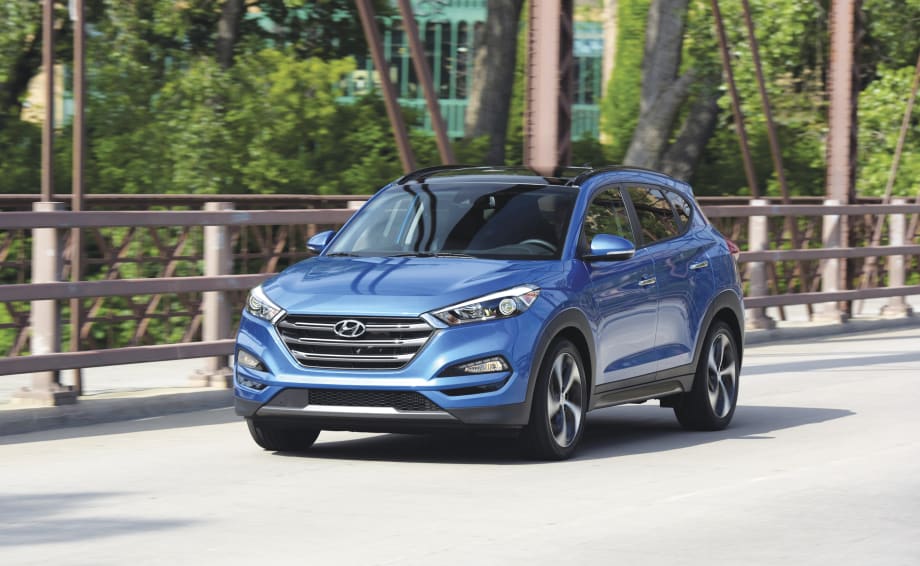
2016 Hyundai Tucson SE, photo courtesy of Hyundai.
2016 Hyundai Tucson SE, photo courtesy of Hyundai.
Just over five years ago, Hyundai Motor America (HMA) made a high-level corporate decision to actively pursue commercial fleet opportunities to increase exposure to Hyundai products.
Automotive Fleet sat down with Richard Pipenhagen, corporate sales manager at the automaker’s U.S. headquarters in Fountain Valley, Calif., to find out where the corporate fleet program stands today.
AF: How has Hyundai’s corporate fleet business been over the past five years?
Pipenhagen: In the past five years, we have developed a significant number of commercial and corporate fleet partnerships, much to do with infrastructure and a viable product lineup, which has piqued fleet managers’ and drivers’ interest. Corporate fleet is an important industry to Hyundai because it provides an opportunity for increased product exposure and incremental business we would not have ordinarily had.
AF: What’s new with Hyundai’s commercial fleet program?
Pipenhagen: We have launched many important facets that make partnering with HMA pleasant. For example, we offer a comprehensive website dedicated to fleet, a direct draft-secondary dealer code ordering platform, competitive national fleet incentives, a CAP program for high-volume achievers, a nationwide demo program, and seasoned (and growing) professional field representation (such as Ross Friedmann, commercial sales manager at HMA).
AF: What’s new with Hyundai’s commercial fleet vehicles?
Pipenhagen: As always, we are on the cutting-edge in safety, style, and technology. HMA’s all-wheel drive sedans, CUVs — such as the all-new Tucson — and SUVs continue to evolve in this growing and important market, especially in the Snow Belt.
In addition, the Sonata Hybrid and the all-new Plug-In Hybrid Sonata launching in the fall is of particular interest to fleets looking at alternative-fuel options.
The powertrain warranty of 10 years and 100,000 miles has always been high on the list of our value proposition for fleets and especially attractive for high-mileage drivers. And, the 24/7 Unlimited Mileage Roadside Assistance is a bonus. HMA affords a very competitive fleet incentive matrix year-over-year and is committed to this feature.
Also new, in an effort to mitigate the ability (thus the temptation) of texting while driving, Hyundai Motor Corporation (HMA’s parent) has discovered a feature to block texting while driving, and has, therefore, patented the technology. More details on this will be forthcoming.
Additionally, we are embarking on the launch of a comprehensive livery offering in partnership with Hyundai Capital America this fall.
AF: How is Hyundai’s courtesy delivery network coming along?
Pipenhagen: It is a work in progress, just like it always has been for all OEMs in this space. We have more than half of our 800-plus dealers signed up to participate in the program. So far, it has been very fluid and successful, exceeding my initial expectations. I am quite pleased and believe our customers are too.
AF: What are your goals for the next five years in fleet?
Pipenhagen: Over the next five years, we will focus on steady and consistent year-over-year growth. We will continue to provide terrific products with outstanding value, and ensure an ease of doing business with HMA commercial sales in this very important segment of the automobile business.
More Operations

90% Use Telematics. Are Fleets Getting Safer? | AF News Recap
This week, we're breaking down which industries have the highest rates, how Jamie McKay manages 2,400 vehicles, what's happening with the 2027 fleet awards, and why software-defined vehicles could introduce new costs.
Read More →
What's Best Handled by an FMC, and What's Better Done Directly?
Fleet managers continue to rely on FMCs for essential services but are taking a closer look at where working directly with suppliers can improve efficiency and responsiveness.
Read More →
Fleet Meets: Erin Gilchrist
Meet Erin Gilchrist, the inaugural Mike Antich Spirit of Fleet Award winner, as she shares insights on leadership, mentorship, the power of industry connections, and why people remain at the heart of fleet's future.
Read More →

How 2026 Fleet Visionary Jamie McKay Manages 2,400 Vehicles Across 37 States
How do you keep 2,400 vehicles running across 37 states? Fleet Visionary Award winner Jamie McKay shares how collaboration, flexibility, and a few simple strategies help her tackle fleet management challenges at Aptive Pest Control.
Read More →
Managing Fleet Costs in an Era of Permanent Volatility
Fleet operating costs have risen more than 20% since 2020, raising a key question: When does extending a vehicle's service life stop making financial sense?
Read More →
The Next Evolution of Fleet Management: Autonomous Operations
This opening keynote session at the Fleet Forward Conference highlights the future of autonomous driving for fleets.
Read More →
How to Reduce the Total Cost of Risk From Catalytic Converter Theft
A stolen catalytic converter can cost fleets far more in downtime and lost productivity than in repairs. A total-cost-of-risk approach can help fleet managers quantify their exposure and prioritize theft prevention.
Read More →
Personal-Use Charges Rise as Vehicle Values Fall | AF News Recap
Personal-use charges are climbing, wholesale used-vehicle values are declining, and commercial fleet sales growth is slowing. This week, we're breaking down the latest fleet data, plus how Element Fleet Management is helping Waymo prepare for its first Canadian robotaxi market.
Read More →
Here's When You Should Make an Exception to Fleet Policy
Fleet policies are designed to create consistency, but not every driver or situation fits neatly within standard rules.
Read More →
AI-Native or AI-Acquired: What Should Fleet Managers Look for in an AI Platform?
Six questions can help fleet managers look beyond AI marketing claims to evaluate integration, data access, and real-world operational performance.
Read More →