




An Interview With Budget's Morris Belzberg
A 26-year veteran of the daily rental business, Morris Belzberg speaks out on CDW, off-airport access fees, buy backs, and other industry issues. Also discussed is Budget's transition from a franchising to operating company.
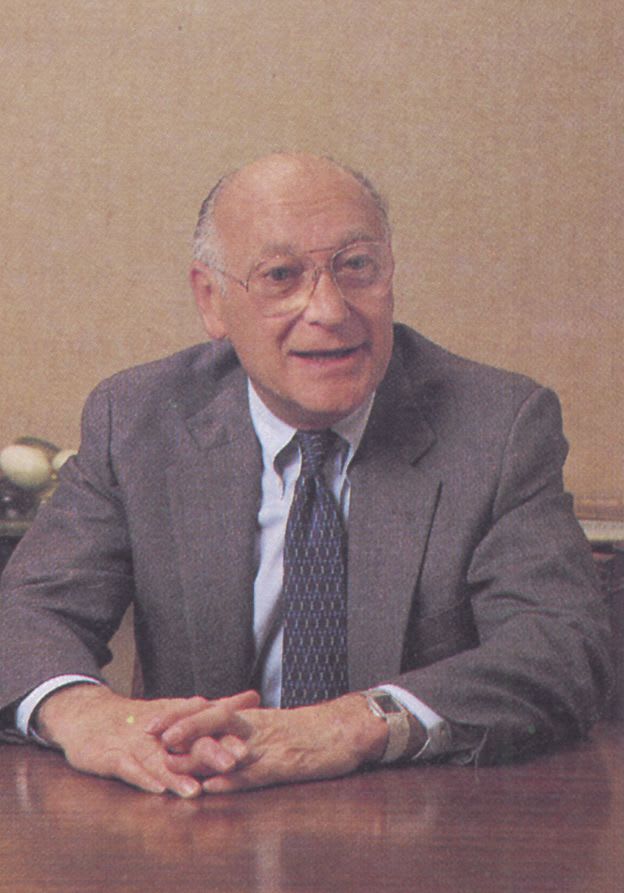
Morris Belzberg, Budget's president/CEO

Morris Belzberg, Budget's president/CEO
Morris Belzberg, who began his career as a Budget Rent A Car licensee, is the corporation's chairman of the board and chief executive officer. He was elected chairman in October 1987 and has been chief executive officer since 1971. Belzberg joined Budget Corp. in 1965 as vice president of Canadian operations and in 1967 was appointed vice president of franchising and marketing. When Budget was acquired by Transamerica Corp. in 1968, Belzberg was named executive vice president and became president of the company in 1969.
Born in Calgary, Canada, Belzberg began his association with Budget Rent A Car as its first licensee in Canada. He opened the first Budget location there in 1962 and acquired additional franchises over the next three years. In 1965, Belzberg joined the company's corporate headquarters in Chicago. His experiences as a licensee served as the impetus to spearhead a successful marketing and legal effort in the U.S. to open airport terminals to Budget licensees.
To get an up-to-date reading on Budget Rent A Car and the current state of the daily rental market, Automotive Fleet's Mike Antich recently interviewed Belzberg.
AF: How did the daily car-rental industry fare in 1987?
Belzberg: I think it was a good year for practically everyone. There was a lot of traffic in the airline industry and we at Budget had our best year ever.
AF: What are you forecasting for 1988?
Belzberg: We forecast another increase. We're looking for '88 to be another good year in its entirety.
AF: Is on-airport business increasing at the same rate as local, in-town rentals?
Belzberg: It varies city by city, however, I would guess that our non-airport is probably increasing at a higher rate of growth than our on-airport.
AF: Budget has been undergoing a significant transition from a franchising company to an operating company. What kind of effect has this had internally, and how has the transition taken place?
Belzberg: It has been very successful. And you use the right word "transitional." We're not picking up 20 cities a year: maybe three or four. It's been a very smooth and very productive transition for us. If nothing else, we've been able to upgrade our image for our customers because we put up a more uniform front. A new program we instituted is called the "Blueprint for Quality," which stresses improved customer service and satisfaction. Many of our licensees are participating in this program and all are running better operations as a result. I think it has been very productive.
AF: How many corporate-run locations do you have at the moment?
Belzberg: We have 194 corporate locations in over 20 cities, operating about 40 percent of the entire Budget fleet in the U.S. We have 350 licensees in the U.S. The rest of the worldwide locations are entirely franchised. We operate in 103 countries. With the exception of the U.S., everything we have is franchised.
AF: What do you see as the challenges facing the industry in 1988 and beyond?
Belzberg: There is more and more competition, as you're well aware, and we have to continue to improve our service level. Every service business does. It's not as easy as one might think. As we get larger, it gets more difficult to give the same degree of service. That is our major challenge.
AF: The sale of the collision damage waiver has been an important profit center for car-rental firms. What's Budget's view on state legislation attempting to regulate CDW?
Belzberg: We're in favor of it.
AF: You're in favor of regulating CDW?
Belzberg: I think it is a fait accompli anyway, so we might as well be in favor of it.
AF: There are all kinds of efforts to regulate CDW. What provisions do you favor? Are you in favor of the disclosure provision?
Belzberg: You're right, there is more than one provision. First, about CDW, I believe the attorney general in California will be successful in passing legislation on CDW and it will vanish altogether in time to come. What impact will that have? I believe that as long as it is a level playing field for all, it will be picked up in the retail price of the rates which we set for our rental fleets. So it shouldn't have too much impact. Maybe in the first three to six months it might have an impact, but it will then go away... In my own opinion, CDW is a thing of the past. It will happen in the next 24 months at the longest, and then it will go away.
AF: Does Budget offer its counter people spiffs for selling CDW?
Belzberg: On occasion.
AF: What's your opinion on the proposed ordinances by airport authorities to charge access fees to off-airport rental companies?
Belzberg: I'm in favor of that. The off-airport companies have to service their customers and those operators should pay the airports something for the privilege of that service. I don't know if they should pay the same as companies who have booths in the airport. I don't think that's fair, but I think there should be some reasonable charge.
AF: Did you participate in the recent meeting that took place with the states attorneys general?
Belzberg: Our lawyer was there.
AF: What is your opinion of that meeting and the attempt to regulate the advertising of the car-rental industry?
Belzberg: I think they are doing the right thing. It was a fact-finding meeting and they wanted to hear from all of the majors, and we were one of them. My feeling is that this is the right way for the attorneys general to behave, to find the facts.
AF: Would you support regulations the attorneys general may propose regarding the regulation of car-rental advertising?
Belzberg: Some of them, yes.
AF: Do you have any opinions as to what type of advertising practices ought to be regulated.
Belzberg: To sum it up, 1 think our advertising, just as any other industry, should be truthful. There should be nothing devious. If they want to legislate and strongly lean on the industry to be more truthful, then I'm all for that.
AF: Do you foresee the volume of no-risk cars increasing in rental fleets?
Belzberg: Yes, as long as the factories will cooperate. In other words, the ability to have no-risk cars is highly dependent on the commitment factories are willing to make. With more manufacturers, I would guess there would be more pressure on them for volume and to be more competitive. Therefore, I feel no-risk cars will be available. However, there is no guarantee. But we have, year after year, increased the number of no-risk cars in our fleet and I'm assuming my competitors are doing the same.
AF: What percentage of the cars in your fleet are acquired on a buyback or guaranteed depreciation basis?
Belzberg: With 1988, it will be between 60 and 70 percent.
AF: Do you see imports offering no-risk cars in the future?
Belzberg: I believe they will. There are already programs being offered and they are small numbers, but I think as the Japanese continue to increase their production in the U.S., they will have to address the competition with buybacks. I think they will enter into it. I'm told that by 1990, there will three cars produced for every two buyers. So as long as that situation exists, I would guess the manufacturers will have to do anything they can to put those cars out.
AF: What impact will buybacks have on the used-car market? What is your assessment?
Belzberg: I don't think they will affect it. I think the used-car market traditionally is cyclical. But from the past we know there are buyers for used cars and buyers for new cars. So I think that will continue, I don't see that the buybacks have any bearing on it.
AF: What's your assessment of today's used-car market?
Belzberg: I think it is strong.
AF: What impact will the Truth in Mileage Act and the regulations formulated by NHTSA to implement this legislation have on the used-car marketplace?
Belzberg: If anything, it will favor the buyback fleets of the rent-a-car companies because we have very low-mileage cars. Our cars go back within six months to 12 months, so none of our cars have more than 25,000 miles; many of them have 8,000 miles to 15,000 miles. The more pressure the government imposes to disclose accurate mileage can only improve rent-a-cars' resale values because we have low-mileage cars.
AF: What about liability insurance? Has the availability of liability insurance improved over the past year?
Belzberg: In the past 12 months we find there are more insurance companies offering liability insurance. And when that situation exists, you can rest assured that the prices will come down. Corporately, we are self-insured for collision and, for liability, we self-insure up to certain limits. We've been able to improve on our costs in the past 12 months. Of course the cycle will turn around, as it has for the past 50 years, and insurance costs will go up again.
AF: What about Budget's licensees? Are the licensees tied into the corporate self-insurance program?
Belzberg: In the last six months, we have assisted the licensees in putting together their own pool of insurance. So they have their own program now. It's up and running and is very desirable and beneficial to them.
AF: Could you briefly describe that program?
Belzberg: The licensees have banded together and pledged their entire fleet to one insurance contract. In doing so, they are, more or less, sharing their losses and lack of losses. So they will be able to take advantage of the savings of scale, just like we do. Many of them are self-insured up to a certain level, anyway. Many of them self-insure their collision completely.
AF: What do you think the future prospects are for unlimited mileage? Do you see it as a thing of the past?
Belzberg: No, that's not so. For our corporate travelers, we've had unlimited mileage since 1967, while our major competitors - Hertz, Avis, and National - have all instituted mileage caps on their corporate travel. Let's talk about that first. We have never put mileage caps on corporate travel nor do we intend to do it. So that's not a thing of the past at all. For the casual renter, or infrequent renter, we have put caps on some of them. But we still have unlimited mileage in Florida and Hawaii. There are some areas where we have instituted mileage caps, and I think that will stay. There will be unlimited mileage in certain branches of our business and, in others, there will be caps. But as far as corporate rentals, which is a very large share of our business, we have no intention of putting mileage caps on.
AF: What do you see the future being for imports in daily rental? Do you see market share increasing?
Belzberg: When you say imports, are you talking about imports that are going to be produced in the United States or the true imports?
AF: Yes, it's becoming a very gray area. I'm referring to non-domestic companies. I would include the transplants as foreign companies and I would count them in this question.
Belzberg: I can answer it from Budget's point of view. We're very happy with our associations and I don't see them changing for the next five years. Now, of course, we can't dictate what will happen in the economy, but let's assume a scenario where the economy becomes very tight and the imports want to become more competitive for one reason or another. Then they'll make inroads. Budget is not a big user of imports and I can't see us changing that. We like our association with the Ford factory. It's been a good one for us and I surely don't see it changing. There's another factor. Budget is the largest user of luxury cars in the industry and, at this point, the imports don't manufacture a full-size luxury car such as the Lincoln. So, as long as that is the situation, we would be foolish to use anything but our Lincolns.
AF: How is the Merkur Scorpio program going for you?
Belzberg: Scorpio is a limited-volume car. Our customers that have driven them love them, but we don't have large numbers in our fleets. There are not that many in our fleets because they are very expensive and, to date, the Town Car and the new Lincoln Continental four-door suffice.
AF: In regard to your fleet, what would you say are the home runs for 1988?
Belzberg: We've taken a large number of Taurus/Sables and they are just a knockout car. They are the best medium- to full-size cars in the industry. From a retail point of view, they've done best.
More Operations
Here's When You Should Make an Exception to Fleet Policy
Fleet policies are designed to create consistency, but not every driver or situation fits neatly within standard rules.
Read More →
AI-Native or AI-Acquired: What Should Fleet Managers Look for in an AI Platform?
Six questions can help fleet managers look beyond AI marketing claims to evaluate integration, data access, and real-world operational performance.
Read More →
A buyer's guide to fleet management software in 2027
Buying fleet management software in 2027 means looking beyond features and price. As fleet operations, technology and expectations evolve, this guide explores what today’s fleet professionals should consider when choosing a system that can deliver value now and adapt to what comes next.
Read More →

What Will Shape the Next Era of Fleet Management?
EVs, AI, and autonomous vehicles are reshaping fleet management. Discover what’s ahead—and how fleet leaders can prepare for the next era.
Read More →
How Fleets Can Recruit and Train Veterans for Technician Roles
Here's how the technician shortage has affected uptime for fleets, and what to do about it.
Read More →
Avis Budget Group Deploys Neology Toll Management Technology Across Major Brands
Neology’s neoFleet platform will manage toll transactions and toll-authority operations for vehicles across Avis, Budget, Payless, Budget Truck and Zipcar.
Read More →
Fleet Personal-Use Charges Edge Higher in 2026
Nearly eight in 10 surveyed fleets allow personal use of company vehicles, while just over half of respondents report charging employees for the privilege.
Read More →
The Future of Fleet + What’s Changing Right Now | AF News Recap
Could developments overseas offer a preview of what’s coming for U.S. fleets? This week, we’re looking at the future of AI, autonomy, and electrification, plus Ford Pro’s new certified pre-owned program, smarter vehicle offboarding, and a new way for fleets to manage toll expenses.
Read More →
How to Handle Vehicle Offboarding
What do fleet managers need to do when a driver leaves?
Read More →
Fleet Manager’s Ultimate Playbook: Navigating the New Standard in OEM Connectivity
Rising operating costs, driver safety concerns, and unplanned downtime are putting unprecedented pressure on modern fleets. Discover how fleet managers use embedded OEM connectivity and real-time vehicle data to cut TCO, prevent downtime, and protect drivers without aftermarket telematics hardware.
Read More →