




Single Source or Selector:Pros and Cons
The debate over whether to single source in fleet management extends to vehicle selection. The pros and cons of using a single manufacturer versus two or more should be analyzed as well.
Fleet managers make decisions on a number of fleet issues on a regular basis: to lease or to own, from whom to lease, how to handle maintenance and repair, and repairing accident damage. However, one of the most important decisions they make is what types of vehicles to put into service for the new model year. Selecting the right model, from the right manufacturer, with the right equipment will affect nearly every area of fleet operation for years to come. And just as in all other areas of fleet management, fleet managers must wrestle with the question of whether to single source or use multiple manufacturers (and models) when developing vehicle selection.
Accomplishing the Mission Before any questions can be asked about how to develop vehicle selection, fleet managers first must review a vehicle’s mission, whether or not it has changed and, if so, how. The next step is determining what kind of vehicle or vehicles can best accomplish the assigned mission. Not all manufacturers have the kinds of vehicles that every fleet needs; this fact alone can help reduce the number of selections.
There are some essential elements to the decision on whether to single source for vehicle selection:
Price - Basic vehicle cost, published fleet incentives, “rifle-shot” money.
Availability - Allocation for fleet sales, order-to-delivery times, and build-out dates.
Services - Handling of cancelled orders, out-of-stock purchases, and order errors.
Local representation - Who will handle the account? How often will they be available?
Multiple Vendors It has been a fairly common tradition in the industry for fleets to “spread the risk” by providing drivers with a selection of vehicles, sometimes at more than one level. The selection often includes two or more manufacturers’ offerings at each selector level. The vehicles are, of course, equivalent in price, size, and equipment. For example, a salesperson might have a choice between three different mid-size cars, a manager, three full-size, and so on.
The logic behind using multiple manufacturers is primarily based on spreading the risk a problem may occur in one or more of the following areas:
1. Fleet allocations can change during the model year. A vehicle that is plentiful during a fall buy may not be in the spring. Some models will build out sooner than others, leaving orders in the bank, which would be pushed forward to the next model year. The result is an accumulation of mileage beyond the replacement criterion and the risk of mechanical problems and downtime.
2. Mechanical problems and recalls can create havoc for fleet managers. Notifying drivers and getting vehicles into the shop for recall repairs can be a nightmare. Sometimes, a fleet manager will notice that a particular model begins to experience a rash of failures of a component; although there may not be a formal recall, the manufacturer may work with the fleet in recovering some portion of repair costs.
3. Drivers have individual preferences; some like Fords, some like GM products, others like Chryslers, still others may prefer Toyota, Nissan, or another import model.
Offering a selection of vehicles will not only spread the risk, but also simplify solutions should any of the described problems come into play. If one model on the selector, for example, builds out early, drivers can still order another offered model. {+PAGEBREAK+}
When recalls are issued, or when the fleet manager notices that a component failure occurs regularly, the entire fleet is not affected, and the downtime and expense of dealing with the problem is limited. Finally, drivers are given the option of choosing a model more to their liking; although there isn’t a dollar value attached to this benefit, fleet managers will tell you that this is one complaint they are happy to avoid.
The difficulties inherent in multiple sourcing are in both administration as well as hard and soft cost. It is simply more difficult to deal with more than one vendor in any area of fleet management, and vehicle suppliers are no exception.
The biggest drawback may be in negotiating pricing, specifically so-called “rifle-shot” incentives. Put simply, the more vehicles ordered, the greater the incentive. This may be ameliorated somewhat by the competition factor, where the manufacturers will “bid,” to some extent, in an effort to increase penetration. But volume speaks louder than anything else.
Single Sourcing Although fleets have been single sourcing for many years, it has become more popular recently. Competition among manufacturers is more intense than ever, and they have become very aggressive in pursuit of fleet market share. Fleets, too, are dealing in a difficult business climate, where management’s demand for cost reduction is relentless. With such willing buyers and sellers, pricing negotiations are intense as well. In return for minimum order guarantees, manufacturers can be very aggressive with special programs, cash rebates, off-invoice incentives, and other such programs. Naturally, single sourcing maximizes the economies of scale a fleet can generate.
This concept has been brought further along with global sourcing initiatives. Companies are finding that they can leverage volume globally, and manufacturers are eager to work with them on a global contract; a fleet can literally add thousands of vehicles to their negotiating leverage by including vehicles in other countries.
Single sourcing can also help a fleet in circumstances where component failure occurs that is not covered by a recall. All manufacturers are willing to provide relief for at least some portion of repair costs for a recurring problem. A fleet that single sources may find that the portion becomes larger, and the criteria for its provision becomes broader.
For some fleets, single sourcing is a good deal easier than for others. A service fleet consisting entirely of vans or pickup trucks lends itself more to single sourcing than a multi-level sales fleet.
The arguments against single sourcing simply mirror those in favor of multi-sourcing. If there is a mechanical problem, or even a recall, the entire fleet, or a major portion thereof, will be affected; although the remedies will be more generous, the fact remains that the fleet manager must deal with the issue across the board. The same holds true for issues of availability. When fleet allocation becomes tight, or if build out occurs early, fleet managers must contend with a dramatic extension of replacement (and the attendant possibilities of problems), increased mileage and lower resale proceeds, or the scramble to find a replacement.
Compromise
A middle ground does exist between sole and multi-sourcing. Fleets can single source, but within selector levels. For example, select one manufacturer’s vehicles for sales, one for field management, and another for upper sales management and executives. At the very least, a fleet can gain more leverage, and the attendant simplicity, by buying from one manufacturer at each level.
Both placing “all your eggs in one basket” as well as spreading the risk have benefits and drawbacks. As with all areas of fleet management, a thorough evaluation of these pros and cons will help fleet managers make the right decision.
More Operations
How to Manage Conflict for Your Fleet Operations
Conflict management is becoming a core leadership skill. Here are five strategies fleet leaders should know.
Read More →
Turning Connected Vehicle Data Into Decisions That Matter
Fleet leaders have more data than ever, but turning that data into clear, actionable decisions remains a challenge. This white paper shows how leading organizations are using connected vehicle data to improve safety, reduce costs, and optimize fleet performance. Learn how to turn insight into action across your fleet.
Read More →
Cameras, Safety and Insurance: From Reactive Claims to Real-time Prevention
Commercial auto remains one of the most challenging and costly lines of coverage for fleet operators and insurers alike. Learn more about how to effectively address these issues from Onur Aksan, Enterprise Business Development Executive, Geotab.
Read More →

Are You Tracking Your Fleet's True Total Cost of Ownership?
Bobit Business Media surveyed 190 fleet professionals and found that while most fleets are tracking costs, fragmented systems and data gaps are keeping true TCO visibility out of reach. With rising pressure to control spend in an increasingly volatile environment, the gap between what fleets think they know and what the data actually shows is wider than you might expect. See how your peers are managing costs today and where the industry still has room to improve.
Read More →
Turn Fleet Data Into Smarter Decisions
Fleet leaders have access to more operational data than ever, but disconnected systems and unclear metrics often slow decision-making instead of improving it. This whitepaper outlines five practical steps fleets can take to transform fragmented data into actionable insights that improve planning, safety, utilization, and long-term performance.
Read More →
Hybrids: Electrification Without the Challenges
For fleet managers, fuel is one of the biggest line items in the budget — and it's one hybrids can shrink without changing how your people work. Download the eBook to see the numbers, understand the technology, and get a step-by-step guide to making the switch.
Read More →
How NOV Uses Telematics to Improve Fleet Safety Across 160 Locations
James Victory of NOV discusses how the company manages fleet safety, maintenance, and telematics across more than 150 locations supporting oilfield operations throughout the U.S.
Read More →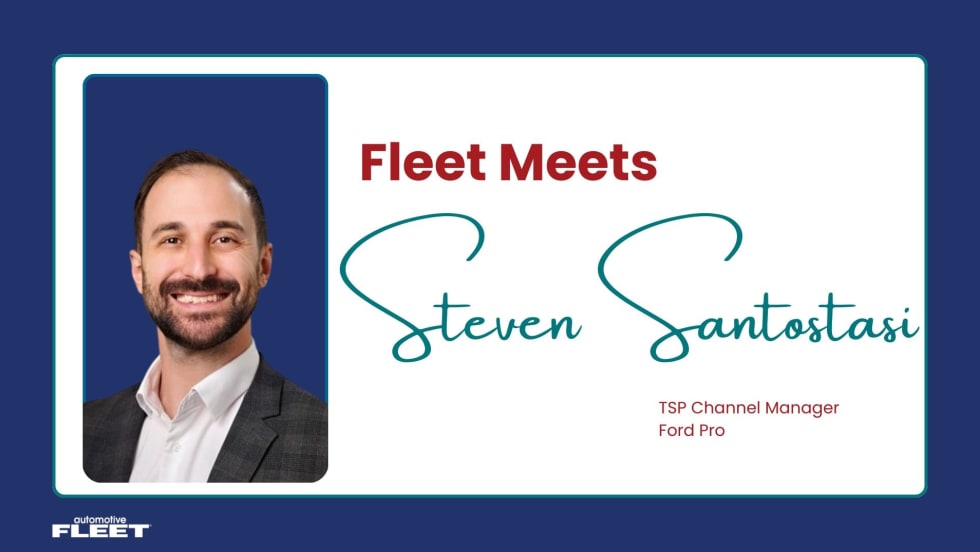
Fleet Meets: Steven Santostasi
This edition of the Fleet Meets series features Steven Santostasi, the current TSP channel manager for Ford Pro.
Read More →
Why Fleet Managers Are Replacing Departmental Vehicles with Shared Motor Pools
Departmentally assigned vehicles often create hidden costs through underutilization, poor visibility, and increased administrative burden. This white paper explores how shared motor pool strategies help fleets reduce costs, improve accountability, and optimize vehicle utilization.
Read More →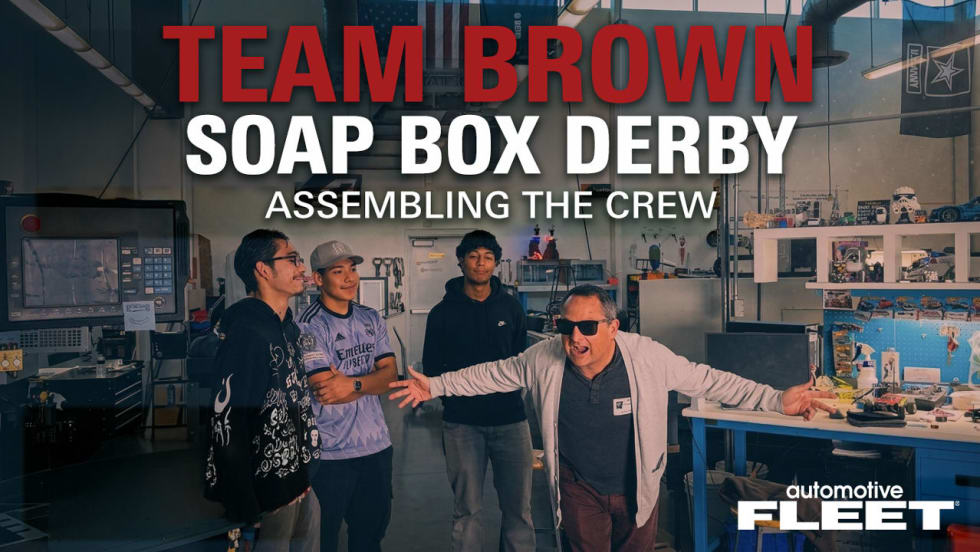
Soap Box Derby Challenge: Assembling the Crew
Meet Gabriel, Matthew, and Angel — the team helping bring this soap box derby build to life.
Read More →