




2026 Is an Inflection Point for Autonomy, If Policy Keeps Pace
After years of hype and setbacks, autonomy is back on track. But policy, not technology, will determine how fast fleets can deploy them.
April 9, 2026

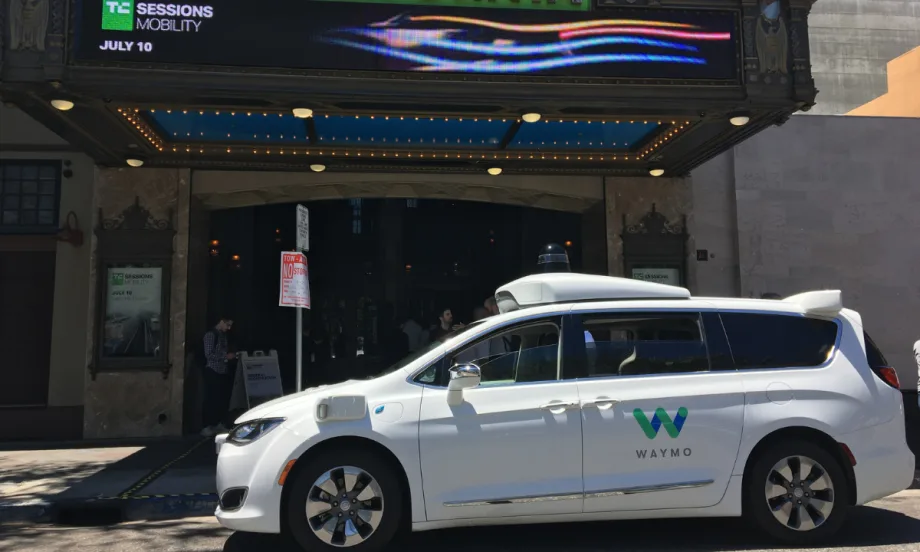
A Waymo vehicle sits outside a San Jose theater at a tech event in 2019, when autonomous deployment was still largely experimental. Autonomous vehicles have moved from pilot programs to real-world deployment, but are still waiting to scale.
Credit: Chris Brown
5 min to read
It was around 10 years ago that the acronym ACES (or CASE) took hold. The letters stand for “autonomous, connected, electric, and shared.” It was called New Mobility at the time, representing our optimistic future of transportation.
From then to now, none of those paradigms has taken a straight adoption path — though the C may be suffering through the fewest peaks and troughs, and S has yet to find its hockey-stick growth.
When it comes to the A, there were breathless proclamations that the next generation wouldn’t even need driver’s licenses. And then the autonomous Uber fatality in Phoenix in 2018, followed by the Cruise incident in 2023 in which a robotaxi dragged a pedestrian after it was hit by another vehicle, causing Cruise to shut down.
As A lay low in our consciousness for a while, the world turned its attention to the E, though A didn’t go away.
And suddenly, robotaxis are now everywhere, or at least if you live in one of Waymo’s 10 cities. (In Los Angeles, you’d be hard-pressed not to see 10 Waymos in an eight-mile commute.) On the trucking side, Aurora has already logged more than 100,000 driverless miles.
Autonomous technology is no longer theoretical; it’s here. But its expansion is now influenced less by engineering breakthroughs and more by regulatory momentum — or lack thereof.
According to Ariel Wolf, partner at Venable and one of the leading voices on autonomous vehicle (AV) policy, 2026 could mark a pivotal turning point.
Technology Is Ready; Policy Is Catching Up
“There are a lot of encouraging signs,” Wolf said, pointing to recent activity from the National Highway Traffic Safety Administration (NHTSA), including early implementation of technical updates to Federal Motor Vehicle Safety Standards (FMVSS) and an acceleration of its Automated Vehicle Exemption Program.
These actions show a federal government that is finally beginning to embrace a national framework that will enable the deployment of autonomous vehicles. Still, progress remains uneven and slow by industry standards.
NHTSA’s rulemaking process can take years, and current exemptions allowing AV deployment are capped at 2,500 vehicles per manufacturer annually. That’s manageable at today’s scale, but insufficient for widespread commercialization.
“It does not work to scale an industry,” Wolf said, referring to the current exemption framework.
A 50-Year-Old Rule Is Holding Back AV Trucking
The disconnect between technology and regulation is also apparent in autonomous trucking.
Despite billions of dollars in investment and years of development, one of the biggest barriers to scaling driverless trucks isn’t technical; it’s a 50-year-old regulation.
Specifically, a rule dating back to the early 1970s requires a human driver to place warning triangles within 10 minutes of a roadside breakdown. “You can’t scale the industry if you have to have someone put out warning triangles,” Wolf said.
The workaround today is temporary: AV companies can apply for short-term waivers to use alternatives, such as cab-mounted warning beacons. But those waivers must be renewed every 90 days, creating uncertainty and limiting long-term planning.
The result is a bottleneck that has slowed momentum in AV trucking, even as the technology itself has matured.
A Blurred Line Between State and Federal
Complicating matters further is the division of authority between federal and state governments.
Traditionally, the federal government regulates vehicle design and performance, while states regulate drivers, registration, and enforcement. But autonomous vehicles blur that line.
“Is the automated driving system the driver, or is it equipment?” Wolf said.
That unresolved question has led to a patchwork of state-level approaches. Texas has embraced a streamlined, self-certification model designed to accelerate deployment, while California maintains a more hands-on permitting structure and is pushing for greater oversight, including data reporting requirements.
While federal rules can preempt state regulation on vehicle design and performance, states still control how vehicles operate on public roads through permitting, enforcement, data reporting, and insurance requirements. That means even with federal action, states retain power over how and where autonomous vehicles can be deployed.
For fleets operating across multiple jurisdictions, that uncertainty adds complexity to deployment planning.
What Could Speed Up AV Deployment
Given the pace of federal rulemaking, the most meaningful near-term progress may come from legislation rather than regulation.
The proposed Self-Drive Act would create a permanent framework for autonomous vehicles, particularly those designed without traditional driver controls. It would also address current exemption limits and provide clearer guidance on how AVs can comply with federal safety standards.
If enacted, it could significantly accelerate deployment timelines by providing manufacturers and fleet operators with greater certainty about how to build, deploy, and scale autonomous vehicles.
Importantly, the bill includes provisions that reflect the industry’s push for accountability:
The bill would require a national crash database for AVs and a formal “safety case” from each company detailing system performance — provisions that the industry itself has embraced.
The legislation could be folded into the broader Surface Transportation Reauthorization Bill, which expires September 30, 2026. “That’s the most obvious place to put it,” Wolf said.
If passed, it could significantly accelerate deployment timelines by providing clarity that the current regulatory framework lacks.
What This Means for Fleets (and Consumers)
For fleet operators, the near-term outlook for autonomy is less about technology readiness and more about how quickly key policy barriers are resolved.
On the trucking side, Wolf said the long-standing warning triangle requirement is likely to be addressed, clearing the way for broader scaling.
Yet, in the bigger picture — and despite active negotiations — advancing the Self-Drive Act in the near term remains uncertain, especially if it fails to attach to the upcoming surface transportation bill.
If those pieces fall into place, autonomous trucking could move quickly from limited pilots to scaled operations.
For fleets weighing adoption, one commonly cited concern — liability — may be less of a barrier than assumed. As Wolf noted, removing the human driver simplifies the equation, shifting responsibility more cleanly toward product liability and system performance.
In that environment, fleets are likely to see a hybrid model take hold first, with autonomous trucks handling long-haul, hub-to-hub routes, and human drivers managing first- and last-mile delivery.
A much larger hybrid model will also continue to exist, where human drivers and autonomous vehicles share the road.
"It's just a simple fact,” Wolf said. “There's going to be a coexistence between autonomy and human-driven, CDL-driven trucks for a very long time."
Subscribe to Our Newsletter
More Mobility
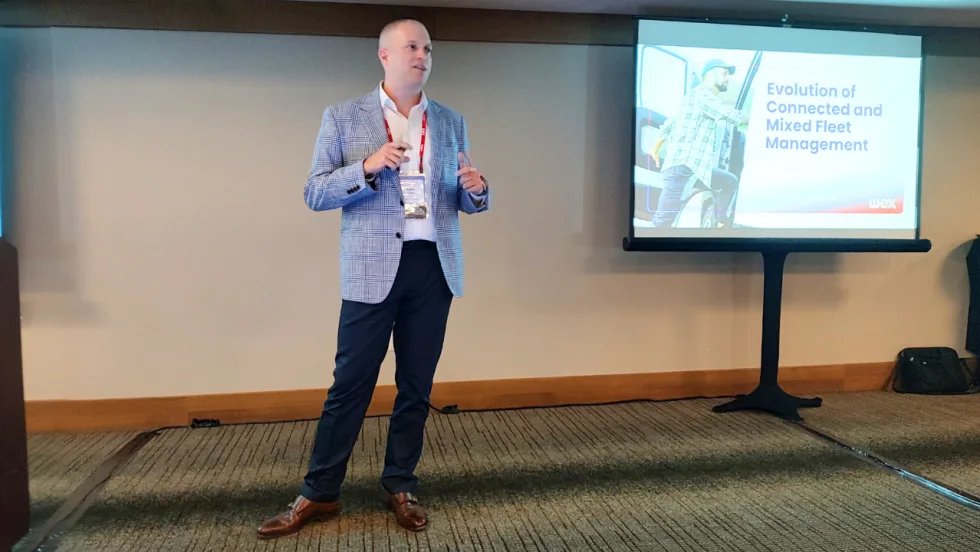
Industry Stakeholders Explore Innovation at the WEX North America Mobility Summit
What happened at WEX North America Mobility Summit?
Read More →
USPS, Zipcar, DPD UK, and Others Named Winners of The Optimizers Awards 2026
USPS, Zipcar, DPD UK, and other fleet organizations were recognized in the 2026 Optimizers Awards for initiatives involving route optimization, automation, AI, and fleet utilization.
Read More →
Safety by Design: Power and Protection in the Freightliner 114SD Plus
Fleet managers are under pressure to reduce accidents, control costs, and improve operational efficiency. See how advanced vehicle safety technologies are helping fleets operate smarter and safer.
Read More →
Clearly Defined Rush Hours Are Fading: What Does it Mean for Fleets?
The TomTom Traffic Index is based on real-world driving data, comparing actual travel times to free-flow conditions to show how congestion impacts mobility across cities and metro areas.
Read More →
AVOA Partners with AALA and NLC
The American Vehicle Owners Alliance (AVOA) recently announced its partnership with the American Automotive Leasing Association (AALA) and the National League of Cities (NLC).
Read More →
Enterprise Mobility Announced Acquisition with Hogan
Family-founded industry leaders combine to offer an expanded mobility portfolio.
Read More →
Element to Acquire Car IQ: What Does it Mean for Fleets?
AF connected with Element’s David Attard to learn how Car IQ will integrate into Element’s ecosystem and take vehicle-initiated payments beyond fueling and into maintenance, violations, and other service categories.
Read More →
Stellantis & Verra Mobility Launch Connected Vehicle Solution
Verra Mobility launched AutoKinex to provide drivers with secure in-vehicle payments and partnered with Stellantis for nationwide tolling.
Read More →
Despite World Troubles, Forward Thinking Guides Fleets
Fleet operators shared their challenges during an annual conference that embraced the latest advances across all aspects of running private- and public-sector vehicles.
Read More →
Automotive Fleet's Guide to Fleet Electrification
Unlock the secrets to a successful transition to electric fleets with Automotive Fleet's comprehensive Fleet Electrification Guide!
Read More →