




Managing the Driverless Fleet: What Corporate Operators Need to Know About AV Readiness
As software takes on the driving role, Dor Shay of Element's Autofleet details how fleets must rethink incident response, compliance, and operational control to safely scale AV deployments.

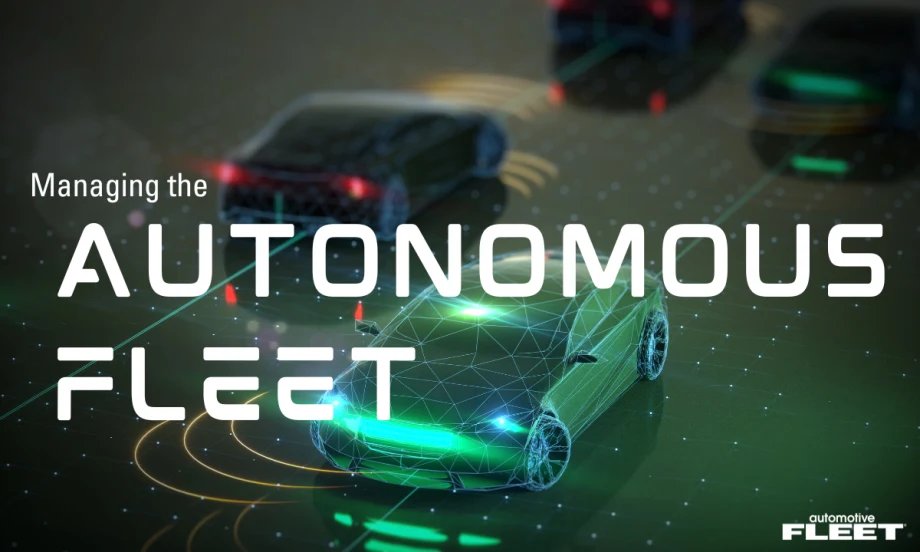
As autonomous vehicles move beyond ride-hailing into delivery, industrial shuttles, and controlled-route operations, fleet managers are shifting focus from the driving technology itself to the complex operational systems needed to manage AV fleets at scale.
Credit: Automotive Fleet
A recent Q and A with Dor Shay, senior vice president at Element Fleet Management and co-founder of Autofleet, reveals insights into how to make autonomous vehicles viable at scale for fleet operators to deploy and ultimately manage as a new business opportunity.
AF: Most discussions around AVs in fleets focus on ride-hailing. What commercial and corporate fleet use cases are being overlooked today?
Shay:AVs currently operate in limited, well-defined operating domains. In addition to ride-hailing, this includes delivery operations – both last-mile and middle-mile. One recent example of this is Gatik, a driverless trucking company that’s completing rides in select areas of the U.S., and announced partnerships with Tyson Foods, Walmart, and others.
However, even within this operating domain, the potential is huge - shuttle operations in industrial parks, using AV for off-road, low 3rd party risk environments where sending a driver may be risky, and the use of small delivery bots for short-distance deliveries are just a few of the examples being explored in the industry now. And we are not there yet but think about highly specialized use cases like street sweeping and snow plowing, or baggage carts at an airport. These will become autonomous soon as well.
The challenge isn’t what we can do with AVs, but how we manage operations and turn AVs into a viable, long-term, sustainable part of our reality.
AF: Where could autonomy solve labor constraints in commercial fleets — not by eliminating drivers, but by redeploying human labor more strategically?
Shay: AI replaces repetitive tasks, but humans a still required to handle complex tasks and make strategic decisions. Moreover, autonomy allows us to move away from the one-driver-one-vehicle paradigm. Our experience with AV operations management shows that by allowing AI to handle routine, continuous driving tasks, people can focus on more challenging and strategic challenges. This includes handling exceptions, providing an excellent customer experience, managing safety and compliance checks, addressing loading oversight, responding to incidents, and supporting multiple vehicles simultaneously.
AF: Are there controlled or geo-fenced environments where autonomy makes economic sense sooner than broader public-road deployment?
Shay: Yes, early deployments of AV technologies were focused on more controlled and predictable environments, such as campus shuttles, and in many regions of the world, these are still the early pilots. Another example is fixed-route shuttles and depot-to-depot routes, which include sections on the open road, but over predictable routes. Vehicles still need to be closely managed, but shifting to optimized, driverless vehicles for these use-cases have potential to deliver economic benefits to fleet owners.
That said, the success of an operation like Waymo shows that, with the right preparation and planning, broad public road deployment is a viable option.
AF: What are the biggest operational barriers preventing AVs from scaling in commercial fleet environments?
Shay: The operational stack of an AV fleet is highly complex, and as AV operations grow and scale, partnerships must be established to manage this complexity.
The biggest operational barriers to scaling AVs in commercial fleets are less about the driving stack and more about forming the partnerships that can run a reliable, auditable service. Our experience saw fleets struggling with fragmented multi-OEM data and tools that prevent a single “source of truth,” driverless incident response that requires new remote and field workflows, regulatory transparency demands that turn reporting into a hard operational requirement, depot bottlenecks for cleaning, inspections, charging, maintenance, and recovery, and ODD limits (weather, construction, edge cases) that force robust fallback plans and hybrid operations. All of this is compounded by the complexity of cross-team coordination and the difficulty of sizing depots, charging, and remote-ops infrastructure without strong operational visibility or simulation.
AF: How does managing an autonomous vehicle differ from managing a traditional fleet vehicle from a lifecycle perspective?
Shay: AVs remove both the main sensor and the main troubleshooter from the vehicle. When a driver has a flat tire or a vehicle malfunction, they handle it themselves. When this happens with an AV, it needs to be handled by a remote team. So, managing an autonomous vehicle is a tighter, more software- and workflow-defined operation, requiring automation and well-laid-out playbooks and plans.
Moreover, the reality of AV deployments is that there is more focus on safety, meaning operators must validate ODD fit and permissions, integrate and normalize OEM/AV-stack data into a single operational view, and run frequent software/HD-map/sensor calibration updates with controlled release management and audit trails.
Uptime also depends as much on depot orchestration (cleaning, inspections, charging, maintenance queues) and regulatory reporting as it does on dispatch, and end-of-life includes handling sensor/computing refresh cycles, data retention/compliance requirements, and recertification or reconfiguration when the vehicle changes geography, mission, or autonomy capabilities.
AF: Do AV fleets create a new service opportunity for fleet management companies (and other suppliers) to act as autonomous operations managers?
Shay: Yes, we see a tremendous opportunity for fleet management companies and service providers to support AV fleets. Fleet management companies are an ideal partner to AV providers, bringing specialized knowledge and experience in vehicle management.
Some of the same monitoring platforms and automated tasks used for traditional fleets – tracking maintenance/cleaning schedules, reporting incidents, managing EV charging, etc. – can be deployed for driverless fleets. In fact, having reliable, real-time monitoring for these items will be even more critical in AV use cases. As fleet managers transition to managing AV and traditional fleets, it’ll be important to create an ecosystem that enables communication and data-sharing among OEMs, operators, AV technology providers, maintenance partners, and insurers.
AF: What new risks does autonomy introduce that traditional fleet safety and risk programs aren’t structured to manage?
Shay: While the market is still developing, it’s clear that autonomy will change the risk mix for fleet operators and the commercial entities that deploy them. Autonomy introduces risks that traditional fleet safety programs are not designed to handle because the “driver” becomes a distributed system of software, sensors, remote operators, and field responders, such as:
You now have driverless incident management where no one on board can assess, secure, or communicate at the scene
Software and model change risk, where frequent updates can shift behavior and require release governance and validation
ODD boundary risk where weather, construction, or edge cases can suddenly degrade service and create stranded-vehicle scenarios
Multi-OEM data fragmentation that can hide critical health and safety signals across incompatible telemetry
Regulatory transparency and auditability risk with stricter reporting timelines and evidentiary expectations
Remote operations and escalation risk, including latency, unclear authority, and handoff failures
Cybersecurity and data integrity risk because connectivity and sensor data become safety-critical inputs, making spoofing, tampering, and misconfiguration operational safety hazards rather than just IT issues.
AF: In an AV environment, what does “fleet safety management” look like when the driver is no longer the primary variable?
Shay: In an AV environment, vehicles often encounter edge cases that could not be planned for. This is where safety becomes an issue and where human intervention is required. But each incident is also a learning and training opportunity for the AI. So, the key is to validate the solutions offered and implement them fleetwide across all AI drivers.
In this sense, “fleet safety management” shifts from coaching individual drivers to running a system-wide safety operation by:
Defining and enforcing ODD and geofencing policies
Continuously monitoring vehicle health and behavior through a unified data layer
Operating a clear incident detection and response program (remote assessment, escalation, field dispatch, and coordination with authorities) because there is no on-board first responder, governing software, and configuration changes with release controls and validation, and producing audit-ready safety and compliance reporting for regulators and partners.
Practically, safety becomes a combination of real-time operational control, disciplined pre-planned processes and playbooks, and cross-team coordination across remote ops, depot, field response, and compliance.
AF: For a 500- to 5,000-vehicle corporate fleet, what would need to be true operationally and financially for autonomy to become a rational investment?
Shay: Autonomy at scale requires a robust tech-based management layer: a unified data and control plane across OEMs, repeatable driverless incident response, depot and charging orchestration to protect uptime, and built-in compliance reporting so reliability improves as you add vehicles and sites.
In our experience, planning for scaling operations depends on thoroughly understanding the constraints you can plan for: the impact of depot locations and capacity, different staffing models, and operational strategies. Using a simulator like Autofleet’s Fleet Planning Simulator helps validate this scaling path by stress-testing growth scenarios and sizing infrastructure and staffing before you commit capital.
More Vehicle Research
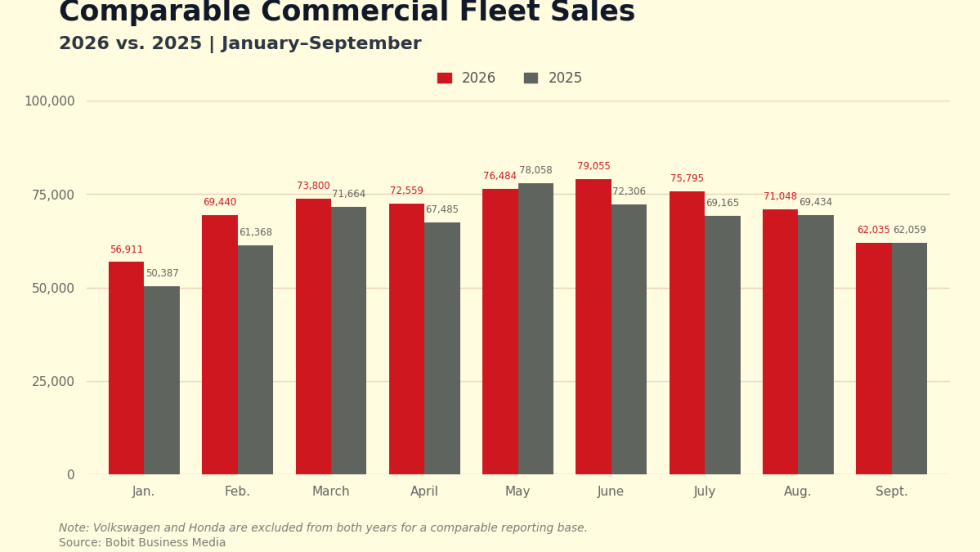
Commercial Fleet Sales Rise 5.8% Through September 2026
September commercial fleet sales were essentially unchanged from a year earlier, slowing year-to-date growth while keeping volume ahead of 2025.
Read More →
Hall of Fame Inductee: John Dmochowsky
The longtime Mondelēz International fleet executive joins the Automotive Fleet Hall of Fame.
Read More →
Hall of Fame Inductee: Lee Miller
After more than four decades at Boehringer Ingelheim, Lee Miller leaves a legacy built on fleet expertise.
Read More →
Hall of Fame Inductee: Mark F. Petersen
From managing fleets of thousands of vehicles to advancing safety and mentoring fellow professionals, Mark F. Petersen made his mark across both the corporate and supplier sides of fleet.
Read More →
When Charger Downtime Becomes a Fleet Availability Problem
As EV deployments move beyond pilot programs, charger reliability can directly affect vehicle readiness, driver productivity and route scheduling.
Read More →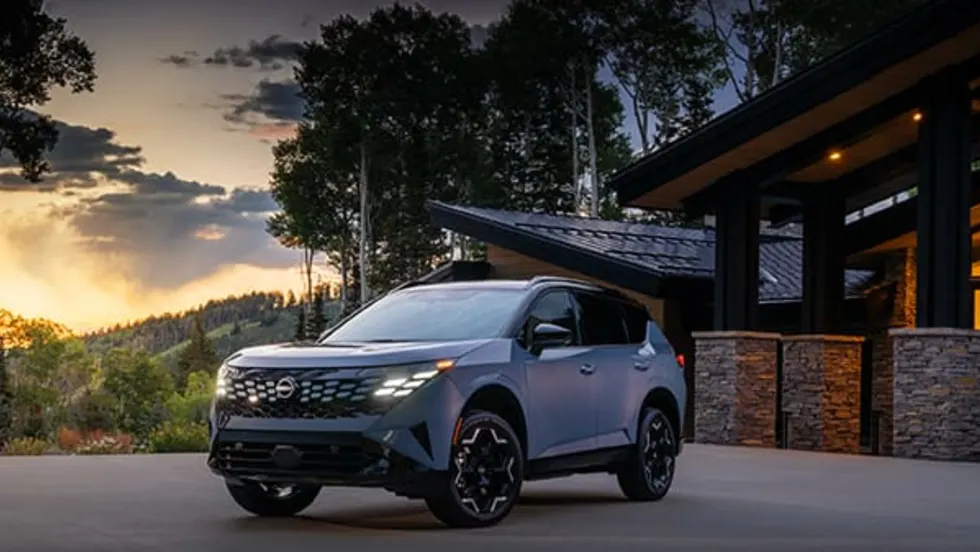
2027 Nissan Rogue Hybrid Adds e-POWER, Standard AWD
The new Rogue Hybrid uses Nissan’s e-POWER system with dual electric motors, offers an estimated 40 mpg and starts at $35,490.
Read More →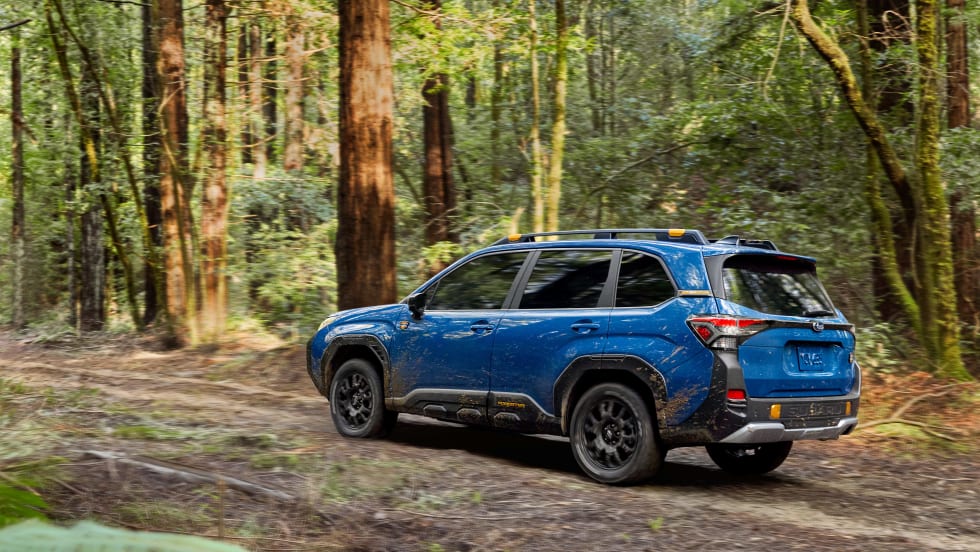
2027 Subaru Forester Adds First Wilderness Hybrid
The 2027 Forester lineup starts at $29,995 and adds a Wilderness Hybrid with 194 combined horsepower and 9.3 inches of ground clearance.
Read More →
EV Realty Names Henrik Holland President as Charging Platform Expands
The former Prologis Mobility and Shell executive will help expand EV Realty’s truck charging business and move its power-first infrastructure model into autonomous vehicle depots and other fleet sectors.
Read More →
Mercedes-Benz Introduces Electric GLC With Up to 350 Miles of Range
The GLC 400 4MATIC Electric features an 800-volt architecture, 330-kW DC fast charging and a 94-kWh battery, along with Mercedes-Benz's new MB.OS operating system.
Read More →
Fleet Has a Talent Pipeline Problem, not a Talent Problem
Where will the next generation of fleet leaders come from, and what does the industry need to do differently to find them?
Read More →