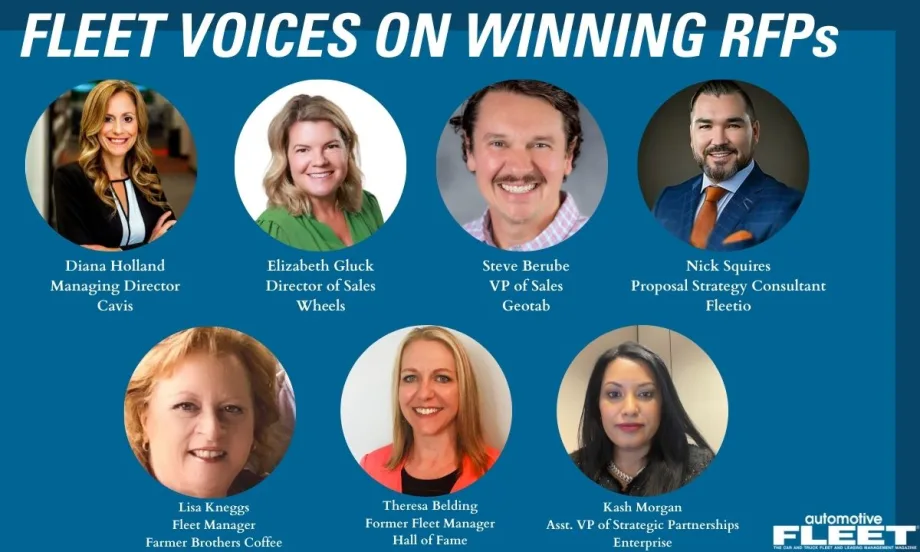
This second article details how to execute the RFP using four guiding principles: clarity, formatting, precision, and standardization.
After laying the foundation for your fleet Request for Proposal (RFP) through thorough research and internal alignment, the focus shifts to execution. Part 1 in our two-part RFP article series outlined how to prepare effectively. Part 2 explores the steps to structure and evaluate your RFP to ensure it is tailored to your fleet's needs.
This article covers structuring your RFP for maximum impact, devising outcome-based questions, and building an evaluation process that supports confident decision-making.
Crafting Quality Questions
The quality of your RFP questions determines the quality of the responses. Vague or overly broad questions often lead to generic proposals that fail to address your fleet's specific challenges.
Diana Holland, managing director at Cavis, a business consulting firm, advised fleet managers to focus on outcome-based questions that tie directly to operational goals. "Don't just ask what a supplier can do, ask how they'll deliver measurable results for your fleet," she said.
Holland and others offered best practices for more thoughtful RFP questions:
Define Desired Outcomes Clearly
Instead of asking open-ended questions like, "How would you optimize our fleet's efficiency?" Holland recommended specifying measurable targets.
For example: "Our goal is to reduce idle time by 15% within 12 months. Describe how your solution identifies and mitigates excessive idling, including the tools, processes, and reporting mechanisms used to track results."
This approach forces suppliers to provide detailed, actionable responses rather than marketing fluff.
Incorporate Data-Driven Scenarios
Providing suppliers with real-world data or operational constraints helps them tailor their solutions. For instance, share recent maintenance records or fuel usage data and ask, "Based on this data, how would your solution reduce our annual maintenance costs by at least 10%?"
Avoid Irrelevant Questions
Elizabeth Gluck, director of sales operations at Wheels, offered: "Avoid asking questions that aren’t relevant to your analysis of bidders and/or your current or envisioned fleet operations."
Address Predictable Pain Points
Your questions should reflect your fleet's unique challenges. Instead of generic prompts like, "Tell us about your fuel management tools," Holland suggested asking, "How does your solution ensure pricing accuracy and fuel card acceptance at our top 20 fueling stations, with real-time reporting to flag discrepancies?"
This specificity ensures responses align with your operational realities.
Make the Questions Practical
Steven Berube, vice president of sales at Geotab, suggests incorporating "day in the life" scenarios to make questions practical: "Ask vendors to describe how their solution supports a typical day for a driver, dispatcher, or maintenance technician to reveal real-world usability."
Turning Vague Questions into Focused Ones
Vague: "What's your approach to maintenance?"
Focused: "How does your platform predict and prevent failures on cargo vans? Provide examples of reduced downtime and ROI metrics from similar fleets."
Vague: "How can you help with compliance?"
Focused: "Explain how your telematics system ensures adherence to DOT regulations, flags non-compliance in real time, and supports audit preparation."
Lisa Kneggs, fleet manager for Farmer Brothers Coffee, underscored the value of precise questions: "Be very specific in the questions you want. Create a template for responders so every response follows the same order. It makes comparison so much easier."
Gluck advised against questions that rely on speculative costs: She said to avoid asking for projections like monthly maintenance or fuel expenses, as these are subjective and skew evaluations, and to focus on supplier-specific costs like interest rates or program fees.
Framing questions around outcomes will streamline the evaluation process and ensure suppliers address your priorities.
Structuring the RFP for Efficiency
A clear structure saves time and empowers better decisions. Nick Squires, proposals consultant at Fleetio, emphasized that standardizing responses with templates, clear headings, and consistent formatting allows evaluators to compare proposals "apples to apples."
"A well-structured RFP guides suppliers toward your goals and makes the evaluation process cleaner and more defensible," he said. "Prescribing sequence, formatting, and page limits eliminate noise and keep the focus on real value."
Said Gluck: "Keep it clear. Keep it simple. Keep it relevant. And above all, keep it objective."
Kash Morgan, assistant vice president of strategic partnerships at Enterprise Fleet Management, suggested to researching associations, co-ops, or group purchasing organization (GPO) that the business or fleet manager is affiliated that may have already issued a similar RFP. "You may find questions that will be useful to include in yours, or possibly piggyback off of the awarded RFP if available," Morgan said.
Key Sections of Your RFP Package
Executive Summary
Provide a concise overview of your goals, such as cost reduction, sustainability, or operational efficiency. "Suppliers need to know what you value most right away," Holland said. "This sets the tone for their entire response."
Company and Fleet Overview
Share details like fleet size, vehicle types, utilization rates, and geographic scope. This context helps suppliers tailor solutions. For example, Morgan advised including "a simple table summarizing the types of vehicles within your fleet and their functions" to clarify expectations.
Scope of Work
Define what's included and excluded. If your RFP focuses on light-duty vehicles, explicitly state that heavy-duty solutions are out of scope. Holland warned, "Ambiguity leads to irrelevant proposals that waste everyone's time."
Evaluation Criteria
Clearly outline how responses will be scored, including weights for key priorities. For example:
Pricing competitiveness: 40%
Innovation and ESG alignment: 30%
Account support depth, including local: 20%
References and experience: 10%
Theresa Belding, a Hall of Fame inductee and former corporate fleet manager, stressed the importance of including Service Level Agreements (SLAs) and payment terms: "SLAs set clear expectations upfront, and specifying payment terms is critical since billing often involves pass-through expenses."
Response Templates
Standardize responses with question templates and pricing tables. To ensure consistency, Squires recommended prescribing "clear headings, sequence, and even page limitations."
"Standardized templates make it significantly easier to evaluate proposals objectively," he said.
Timelines and Terms
Include specific submission, evaluation, final decision deadlines, and contract expectations. Morgan noted, "The clearer and more transparent you are upfront, the smoother the entire process will be."
Practical Tip: Time-Box Supplier Proposals
Holland suggested capping narrative sections at 3,000 words to keep responses focused and limiting supplementary exhibits to five. "This prevents suppliers from overwhelming you with irrelevant details and keeps evaluations manageable," she said.
Berube added, "A well-structured RFP should include dedicated sections covering key areas like security, productivity metrics, safety features, compliance, and expandability. This ensures suppliers address all critical aspects of your fleet's needs."
Guiding Suppliers to Solutions You Need
One of the biggest challenges in an RFP is ensuring suppliers propose solutions that address your actual needs.
Holland stressed the importance of early engagement, such as conversations with potential suppliers to communicate pain points and priorities, which sets the stage for relevant responses.
Strategies to Guide Suppliers
Pre-RFP Engagement: Belding echoed Holland's advice: "Well in advance of issuing the RFP, the fleet manager should be communicating what's important. Fleet management is a service, so share your service pain points." For example, if driver downtime is a concern, discuss this with suppliers during discovery calls to shape their proposals.
Involve Stakeholders Early: Berube from Geotab recommends involving internal stakeholders early: "Input from drivers, shop supervisors, IT, and safety personnel ensures your RFP questions cover all operational pain points, helping suppliers tailor their solutions."
Provide Contextual Data: Share operational data like fleet composition or maintenance costs to ground responses in reality. Morgan advised fleets to attach a spreadsheet that contains vehicle information like VINs, use function, odometers, and maintenance and fuel spend that will allow for a more tailored response and strategy.
Set Clear Expectations: Use the RFP to outline customer service expectations, such as frequency of meetings or escalation processes. "Be upfront about how hands-on you want the fleet management company to be. This helps everyone get on the same page from day one," said Morgan.
The Cost of an Unclear RFP
A cautionary tale from an anonymous supplier illustrates the cost of unclear RFPs. Due to vague RFP guidelines, the supplier submitted a dense proposal for a construction firm's 500-vehicle fleet.
"We threw in everything we could because we had no insight into their goals," the supplier said.
The result was elimination in the first round. Two years later, the firm reissued a clearer RFP with strict submission formats and pre-bid engagement, leading to a successful partnership. "The difference was night and day," the supplier noted. "Clear expectations saved time and aligned solutions with their needs."
Evaluating Supplier Responses Objectively
A robust evaluation process is critical to selecting the right supplier. Holland advocated for a structured, two-stage approach to minimize bias and ensure fairness. "A disciplined evaluation process separates a strategic RFP from a chaotic one," she said.
Two-Stage Review Process
Initial Evaluation & Scoring: Use standardized scoring sheets tied to your evaluation criteria. Have evaluators score independently to avoid groupthink, then convene to discuss. Squires emphasized, "Defining what 'excellent' versus 'acceptable' looks like for each criterion ensures consistency and reduces subjective scoring."
Final Presentations & Interviews: Shortlist top suppliers for presentations or demos. Focus on how they address your priorities and clarify any ambiguities. Holland advised, "Ask suppliers to demonstrate how their solution works in your specific context, like a 200-vehicle rollout across multiple regions."
Scoring Consistency Checklist
Use a uniform scoring rubric across evaluators.
Assign weights to prioritize key outcomes (like cost, innovation, support).
Require evaluators to justify scores with specific examples from proposals.
Next Steps Post-Selection
Selecting a supplier is only the beginning.
Holland emphasized that many RFPs falter during the transition to implementation if they are not managed carefully. "The contract and onboarding phases are where your preparation pays off," she said. "A smooth transition sets the tone for a successful partnership."
Negotiate with Fairness
Be transparent and collaborative during contract discussions. Ernie Garcia, director of fleet management at Gothic Landscape, advised, "Avoid ultimatums. A collaborative approach ensures suppliers feel invested in the partnership."
Watch out for fleet management contracts that offer a signing bonus or upfront incentives in exchange for long-term commitments. "These deals may seem attractive initially but can restrict your ability to adjust or exit the program if your business needs change or customer service expectations are not met," Morgan said. "Don’t let a signing bonus overshadow the importance of the long-term value of partnering with a provider who aligns with your strategic goals and enables you to focus on your core business."
Berube advised focusing on detailed SLAs and total cost of ownership: 'Negotiate clear SLAs for uptime, support response times, and reporting frequency, and ensure the contract reflects the total cost of ownership, including hardware, installation, and support fees."
To strengthen negotiations, involve finance teams early to assess the financial implications of supplier proposals. Morgan emphasized, "Involve the finance team to evaluate lease structures, such as capital versus operating leases, depreciation rates, and resale value. Understanding how suppliers maximize vehicle value at lease term ensures more resale equity returns to your company."
This financial rigor ensures contracts align with both operational and fiscal goals.
Implementation Planning
Start onboarding immediately after contract signing. Kneggs suggested, "Work directly with the vendor's project manager and create a detailed timeline. Implementation always takes longer than you think, especially with legal reviews." Belding agreed: "The fleet manager should lead implementation with the supplier to ensure alignment with operational needs."
Exit Strategy for Current Providers
Handle disengagement from incumbent suppliers professionally. Holland advised, "Maintain professionalism to preserve industry relationships. These vendors are part of your ecosystem, and you may work with them again."
The Value of a Strategic RFP
A well-executed RFP transforms fleet operations by securing suppliers that deliver measurable results. By crafting outcome-based questions, structuring the RFP for clarity, guiding suppliers to relevant solutions, and evaluating responses objectively, fleet managers can turn a procedural necessity into a strategic advantage.
Holland summed it up: "A strategic RFP isn't just about picking a vendor — it's about building a partnership that drives efficiency, innovation, and long-term value for your fleet."
With the groundwork laid in Part 1 and the execution strategies outlined here, your RFP process will deliver partnerships that align with your fleet's goals and set the stage for sustained success.